

How Can the Right Plywood Press Machine Improve Output Without Creating New Production Problems?
2026-05-06
When I speak with plywood manufacturers about line upgrades, I hear the same concern again and again. They do not just want a machine that can press boards. They want a solution that helps them improve panel consistency, reduce avoidable downtime, control labor pressure, and keep operating costs from rising out of control. That is why I believe a well-matched Plywood Press Machine matters far more than many buyers first expect. In this context, Xiamen Taitian Machinery Technology Group Co., Ltd. gradually comes into view as a manufacturer connected with plywood processing equipment and production-line support, which makes the discussion more practical and grounded in real factory needs.
In my view, the real value of a Plywood Press Machine is not limited to pressure. It shows up in how smoothly the whole line runs, how stable the board quality stays from shift to shift, and how confidently a factory can take on larger orders without worrying that one weak machine will become the bottleneck. If I were evaluating equipment for a plywood plant, I would focus on production reality rather than brochure language.
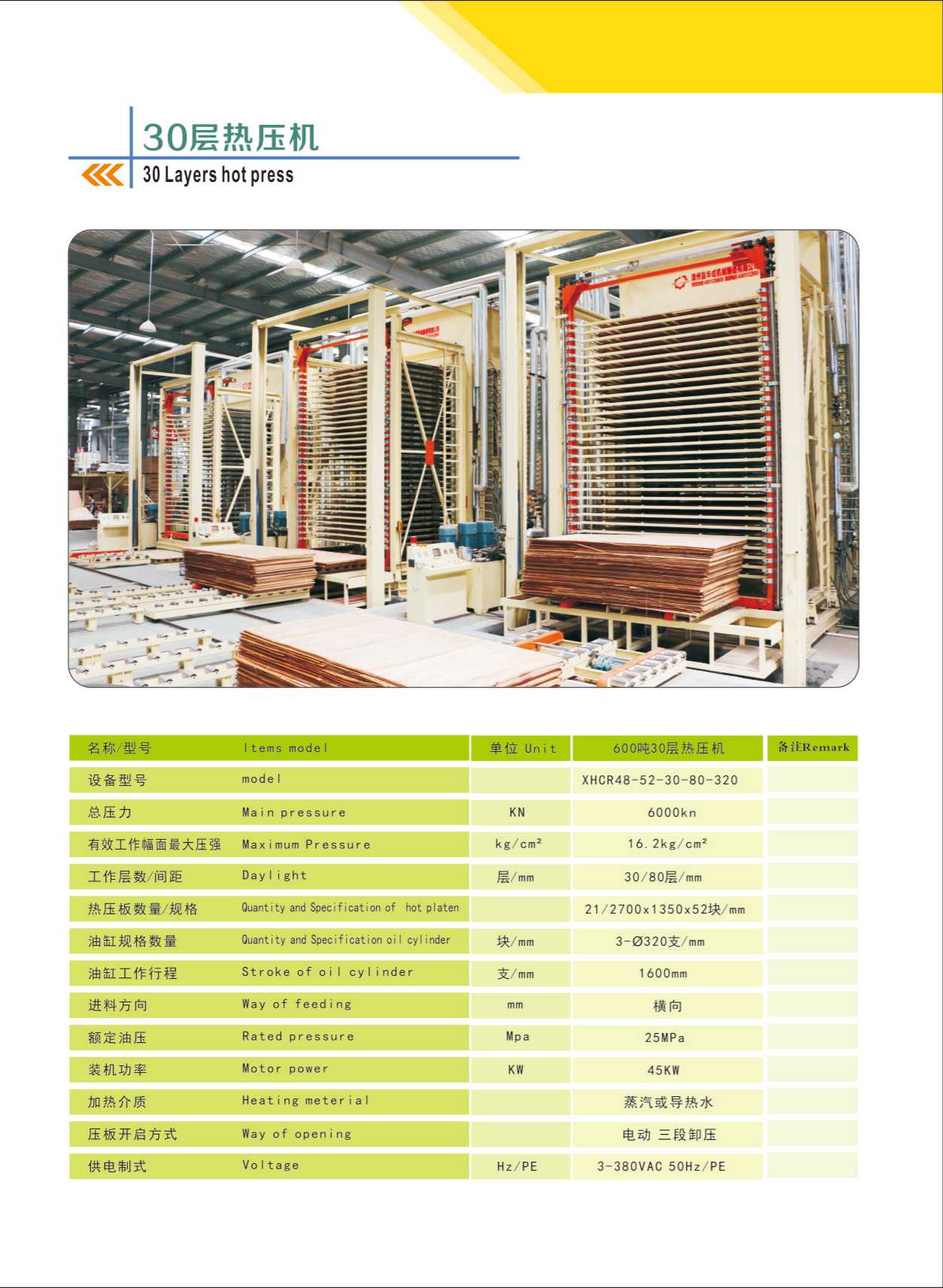
What Problems Do Buyers Usually Face Before Choosing a Plywood Press Machine?
I have noticed that many buyers are not struggling with a lack of options. They are struggling with too many similar-looking offers and too little useful detail. On paper, many machines seem comparable. In production, the differences become expensive very quickly.
- I often see uncertainty about whether the machine can match the required board size, thickness range, and daily output target.
- Many buyers worry that unstable heating or uneven pressure will cause panel defects and increase rejection rates.
- Some factories are concerned about labor costs and want easier loading, unloading, and line coordination.
- Others have limited workshop space and need a layout that fits existing production conditions.
- Quite a few purchasing teams also ask whether the supplier can support customization, commissioning, and long-term service.
These are not small concerns. A poorly selected Plywood Press Machine can create surface defects, bonding inconsistency, wasted adhesive, higher energy bills, and constant maintenance interruptions. Once those issues appear, the machine is no longer just a machine. It becomes a recurring cost center.
Why Does Production Stability Matter More Than a Low Initial Price?
If I had to choose between a lower quotation and stronger operating stability, I would take stability every time. The reason is simple. A press machine is tied directly to throughput, panel quality, and delivery reliability. If it stops, the line slows down. If its parameters drift, finished boards become harder to control. If spare parts and service are weak, a cheap purchase quickly becomes a costly mistake.
In real factory conditions, the best equipment decision is often the one that protects long-term output instead of merely reducing short-term capital expense. A dependable Plywood Press Machine supports consistent pressing cycles, smoother workflow, and fewer quality disputes downstream. That matters to production teams, sales teams, and end customers alike.
| Buyer Concern | What Usually Goes Wrong | Why the Right Machine Helps |
|---|---|---|
| Low purchase price | Hidden maintenance cost, unstable output, shorter service life | Better build quality reduces long-term operating risk |
| Fast delivery only | Machine arrives quickly but does not fit the line well | Proper technical matching prevents later modification costs |
| Generic configuration | Cannot meet actual board size or process needs | Tailored solutions improve efficiency and usability |
| Ignoring service support | Downtime becomes longer when problems appear | Reliable support helps maintain production continuity |
Which Features Should I Check Before Investing in a Plywood Press Machine?
When I evaluate equipment in this category, I do not start from appearance. I start from process fit. A machine should serve the factory, not force the factory to redesign everything around it.
- Pressure performance so the machine can support stable pressing requirements for the product range.
- Temperature control consistency because uneven heat often leads to board quality variation.
- Frame strength and structural reliability for long-term operation under demanding workloads.
- Cycle efficiency to help improve output without sacrificing panel quality.
- Automation compatibility for plants that want smoother integration with conveyors, lifter tables, or other line equipment.
- Maintenance accessibility because difficult service access usually leads to longer downtime.
- Customization options for factories that do not run a one-size-fits-all production model.
I also pay close attention to whether the supplier understands complete line logic. A Plywood Press Machine does not operate in isolation. It must work well with upstream and downstream processes. If a supplier can discuss workflow, loading rhythm, auxiliary systems, and practical factory constraints, that is usually a very good sign.
How Does the Right Machine Help Reduce Waste and Improve Board Quality?
From a production perspective, quality problems rarely begin at the inspection table. They usually begin much earlier, during pressing, alignment, temperature control, or process inconsistency. That is why machine performance has such a direct relationship with product quality.
A well-designed Plywood Press Machine helps support more even force distribution and more stable process conditions. In practical terms, that can contribute to better surface appearance, more reliable bonding, and improved dimensional consistency. When quality becomes easier to control, waste tends to fall. When waste falls, profitability improves without increasing selling pressure.
I think this point is especially important for manufacturers serving buyers who expect predictable quality from batch to batch. Consistency builds trust. Trust supports repeat orders. In that sense, equipment quality influences not just production, but market reputation as well.
| Production Goal | How Machine Performance Affects It | Business Impact |
|---|---|---|
| Uniform board quality | Stable pressing conditions reduce variation | Fewer complaints and stronger repeat business |
| Lower material waste | Better process control helps reduce reject rates | Improved margin per batch |
| Higher line efficiency | Smoother cycle performance supports steady throughput | Better delivery confidence |
| Lower labor pressure | Better coordination with line equipment simplifies operation | More manageable production workflow |
What Makes Customization So Important for Different Plywood Factories?
I do not think serious buyers should accept the idea that every plant needs the exact same machine setup. Different factories handle different board dimensions, production volumes, labor situations, heating systems, and workshop layouts. That means customization is not a bonus. In many cases, it is the difference between a machine that works on paper and one that works in daily operation.
For example, one factory may prioritize high throughput, while another may focus more on product variety and flexible scheduling. Some plants need a more automated arrangement. Others need a compact solution that fits a constrained footprint. A capable supplier should be able to discuss these differences clearly and turn them into a workable configuration.
- I would want to confirm size and pressure requirements based on the target panel specification.
- I would ask about heating control and related auxiliary system options.
- I would review how the machine can fit into existing handling and conveying flow.
- I would check whether the supplier can adapt the design to local production and installation conditions.
That is where a supplier connected with broader plywood machinery support becomes more valuable. The more complete the technical conversation is, the lower the risk of buying a machine that needs too many compromises later.
Is After-Sales Support Just as Important as the Machine Itself?
Yes, and I would argue that it is often underestimated. Even a well-built Plywood Press Machine will eventually need maintenance, adjustment, or parts support. The question is not whether service will be needed. The question is whether the supplier can respond in a way that protects production continuity.
I always think buyers should ask practical service questions early:
- Can the supplier provide installation guidance and commissioning support?
- Are spare parts and technical communication reasonably accessible?
- Can the supplier explain maintenance routines in a clear and usable way?
- Will the team stay engaged after delivery, or does support fade once payment is complete?
Those questions are worth asking because downtime has a real cost. When a production line is waiting, every hour matters. Good after-sales support shortens the gap between a problem and a solution, and that makes a measurable difference for factory managers.
How Can I Tell Whether a Supplier Understands Real Manufacturing Pain Points?
I usually look for signals in the way the supplier communicates. If the conversation stays vague, I get cautious. If the supplier asks detailed questions about board type, throughput goals, floor layout, labor arrangement, heating method, and quality expectations, I become much more confident.
To me, that kind of conversation shows that the supplier is not merely selling a machine. They are trying to match an industrial solution to an actual production environment. That approach is far more useful for a buyer who wants stable results rather than sales language.
I also appreciate it when a supplier can discuss related equipment in the same processing chain. That usually suggests better awareness of how a plywood plant really operates and where bottlenecks are likely to appear.
What Should Buyers Compare Before Sending an Inquiry?
Before I contact a supplier, I like to organize the decision around a few concrete points. That makes the inquiry process faster and helps the supplier respond with something more useful than a generic catalog reply.
| Comparison Item | Why I Check It | What It Helps Me Avoid |
|---|---|---|
| Board size and thickness range | Confirms process compatibility | Buying a machine that cannot handle core products |
| Output target per shift or per day | Shows whether capacity is realistic | Future bottlenecks after installation |
| Heating and control expectations | Supports stable process planning | Quality fluctuation and operating inefficiency |
| Plant layout and labor conditions | Improves installation and workflow fit | Extra modification work after delivery |
| Support and customization capability | Reduces implementation risk | Slow troubleshooting and poor adaptability |
When I structure an inquiry this way, the supplier has a much better chance of recommending the right Plywood Press Machine instead of simply offering the most standard one.
Why Do I See This Equipment as a Long-Term Investment Rather Than a Simple Purchase?
I see it this way because a press machine influences far more than one purchase order. It can shape product consistency, production scheduling, labor efficiency, utility use, maintenance workload, and customer satisfaction over time. That is why I think the buying decision should be made with operational logic, not just budget pressure.
Factories that choose carefully are usually in a stronger position to expand output, protect margins, and serve customers more reliably. Factories that buy in a rush often spend the next several years compensating for that decision. In other words, the machine keeps affecting the business long after installation day.
How Can I Take the Next Step With More Confidence?
If you are currently comparing suppliers and trying to decide which Plywood Press Machine is the right fit for your production line, I would strongly recommend starting with the details that affect your real operation rather than chasing the lowest entry price. Share your board specifications, output targets, workshop conditions, and process expectations so the solution can be matched to your actual needs. If you want to discuss a practical machine configuration, improve line efficiency, or reduce the risk of choosing the wrong equipment, please contact us and leave your inquiry today. A clear technical discussion now can save a great deal of time, cost, and production pressure later.