
Water Pump Supplier Selection: Key Factors for Reliable Performance
2026-08-10
Selecting the right water pump supplier can make or break your project's efficiency and uptime. From flow rate precision to material durability, every detail matters when reliability is non-negotiable. But with countless options flooding the market, how do you pinpoint a partner that truly delivers? Whether you're upgrading irrigation systems or managing industrial dewatering, understanding the key factors—like engineering support, after-sales service, and proven field performance—is your first step toward seamless operation. This guide breaks down the essentials, and with DINGBO POWER, you're already on the path to trusted, long-term pump solutions.
Evaluating Manufacturing Expertise and Technical Capabilities
A genuine measure of a manufacturer’s expertise often lies in the subtle details that emerge during site visits and conversations with the engineering team. Rather than relying solely on glossy capability lists, we look for how a partner handles complexity—whether it’s adapting a production line for a small batch of unconventional materials or solving a tolerance stacking issue that only becomes apparent during assembly. The depth of technical know-how shows through the questions they ask back to us, the equipment they’ve customized in-house, and the accumulated shop-floor judgment that can’t be taught in a seminar.
Supply chain resilience and process control are also quiet indicators of technical maturity. We’ve found it instructive to examine how a factory manages raw material traceability, whether their test protocols go beyond the basic checklists, and how they document and share process deviations. A technically capable manufacturer doesn’t just claim to have ISO certifications; they can walk you through the reasoning behind their in-process inspection points and show examples of how they’ve used feedback loops to eliminate recurring defects. It’s the difference between a facility that simply runs machines and one that continuously refines its methods based on data and frontline insights.
Finally, prototyping and scaling behavior reveal whether expertise runs deep. A partner worth trusting will highlight potential manufacturing risks in a design before we finalize it, suggesting adjustments that preserve function while making the part easier to produce consistently. During scaling, their proficiency is reflected in minimal drama—stable yields, predictable throughput, and a clear understanding of the cost drivers as volumes increase. These firms often maintain a library of legacy tooling and a mental catalog of past problem-solving, allowing them to anticipate issues rather than just react to them.
The Role of Material Quality in Pump Longevity
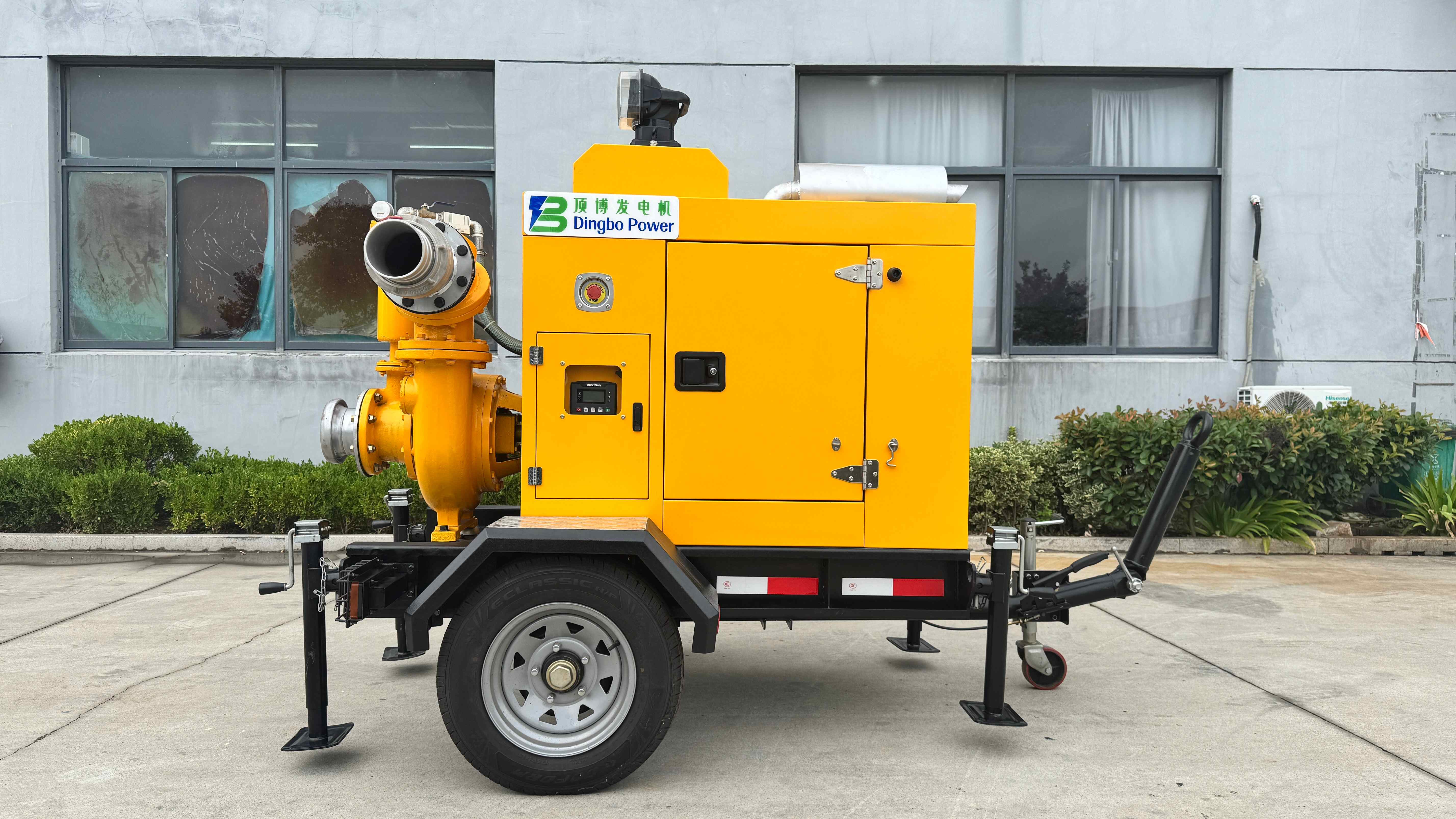
When it comes to pump longevity, the quality of materials isn't just a technical footnote—it's the foundation that quietly determines whether a pump will run reliably for years or become a maintenance headache. In demanding applications, from corrosive chemical transfer to high-pressure hydraulic systems, the initial material selection directly shapes the pump's resistance to wear, fatigue, and environmental attack. Inferior alloys or polymers might save upfront costs, but they often accelerate deterioration, leading to premature seal failures, impeller erosion, or housing cracks that disrupt operations and inflate lifecycle expenses.
Consider the subtle yet relentless ways material properties impact lifespan. Corrosion-resistant stainless steels, for instance, sustain their surface integrity when handling aggressive fluids, while a standard carbon steel component would quickly pit and weaken. Similarly, high-grade elastomers in mechanical seals maintain flexibility and chemical compatibility over millions of cycles, whereas cheaper alternatives harden or swell, causing leaks. Even in less obvious areas like shaft sleeves or wear rings, the difference between a hardened alloy and a basic metal can mean thousands of extra operating hours. These details rarely make the spec sheet headlines, but they accumulate into a clear performance gap over time.
Ultimately, the link between material quality and pump longevity is about resilience under real-world conditions. Temperature swings, abrasive particles, and fluctuating loads test every component. A pump built with carefully selected, application-specific materials adapts to these stresses without degrading rapidly. It’s the reason why some pumps in harsh mining or marine environments outlast their theoretical design life, while others falter early. Investing in superior materials isn't just about preventing failure; it's about ensuring consistent output, reducing unplanned downtime, and avoiding the hidden costs that build up long after the warranty expires.
Customization Potential for Specialized Applications
Every industry operates with its own set of rules, challenges, and workflows, which is why off-the-shelf solutions often fall short. True value emerges when a tool can be shaped to fit niche requirements—whether it’s adapting data models for clinical research, fine-tuning automation scripts in manufacturing, or embedding domain-specific logic into financial compliance checks. The ability to bend the software to unique operational realities, rather than forcing teams to adapt their processes to the tool, is what separates a generic platform from a genuine problem-solver.
Beyond cosmetic tweaks, meaningful customization touches the underlying architecture: extending APIs, modifying rule engines, or layering proprietary algorithms on top of core functions. A well-designed system exposes hooks that let specialists inject their own expertise without destabilizing the whole. This becomes especially critical in regulated sectors like aerospace or pharmaceuticals, where traceability, validation, and auditable custom modules aren’t luxuries—they’re prerequisites for staying compliant while pursuing innovation.
The most adaptable platforms don’t just allow one-off modifications; they treat customizations as durable, portable components that survive updates and can be shared across teams. This transforms ad-hoc tweaks into a living library of specialized capabilities. When users can assemble bespoke workflows from battle-tested building blocks, they move faster, reduce reliance on vendor roadmaps, and build institutional know-how directly into the toolchain—turning the software into a long-term strategic asset rather than a temporary fix.
After-Sales Support and Service Network Reach
A reliable after-sales framework isn’t just about fixing issues — it’s about being present where and when customers need you. That presence is defined by a service network that spans key regions, minimizing downtime and enabling faster resolutions. From urban hubs to remote job sites, your support footprint should reflect how your customers actually work and live.
Effective reach combines local expertise with centralized resources. It means having skilled technicians nearby, stocked parts hubs within logistical reach, and digital channels that let customers self-serve or escalate quickly. Blending on-ground support with real-time remote diagnostics often reduces unnecessary dispatches and speeds up incident handling.
What truly differentiates a service network is its adaptability — the capacity to scale during product launches, respond to seasonal demand spikes, or pivot when supply chains shift. When every contact point, whether a call center or a field engineer, feels like an extension of the customer’s own team, support transforms from a reactive cost into a strategic advantage.
Real-World Performance Metrics Beyond Spec Sheets
Spec sheets love to parade peak theoretical numbers, but those digits rarely survive contact with daily use. A processor might boast a 3.2 GHz turbo clock, yet thermal throttling on a stuffy commuter train can chop that by 30% within minutes. Battery stamina isn’t just about watt-hours; it’s shaped by how aggressively screen brightness, background sync, and your chatty group chats conspire to drain power. Real-world metrics—like sustained performance under mixed loads or how quickly Wi-Fi reconnects when you step off an elevator—paint the only picture that matters.
Nothing exposes a device’s character quite like multitasking chaos. Switching between a video call, a document editor, and fifteen browser tabs uncovers memory management quirks no benchmark captures—some phones choke, others glide. App launch latency is another silent truth: how many seconds vanish between tapping an icon and actually typing? And when signal strength dances between one bar and none, call clarity and data speeds reveal antenna design far better than lab readings. These lived-in tests separate polished software-hardware harmony from paper tigers.
Perhaps the most overlooked metric is endurance over time. Does the device stay snappy months later, or does OS cruft and degrading flash storage make every tap feel like a negotiation? Dust ingress, humidity tolerance, and the slow erosion of rubber seals in a “water-resistant” phone only show themselves weeks into ownership. Then there’s the subtle art of haptics and touch response—the difference between a hollow buzz and a precise click can define how premium a device feels. By chasing numbers that reflect actual human behavior, we uncover the tools that respect our attention instead of just impressing us in a showroom.
Balancing Upfront Cost with Long-Term Operational Savings
Investing in sustainable building design often sparks a debate between higher initial expenses and the promise of future savings. While conventional methods may seem cheaper at the outset, they typically overlook the cumulative operational costs that accrue year after year. By shifting the focus to energy-efficient systems, durable materials, and smart technologies, you can transform what looks like a premium into a strategic, long-term financial advantage. This approach ensures that every dollar spent upfront contributes to lower utility bills, reduced maintenance, and a healthier indoor environment.
Consider how passive solar orientation, high-performance insulation, and water-conserving fixtures work together to slash ongoing resource consumption. These elements often require a modest incremental investment during construction but deliver exponential returns by minimizing energy and water usage over the building’s lifespan. Moreover, incentives like tax credits and rebates for green building can substantially offset the initial outlay, making the economic case even stronger. When you factor in rising utility rates, the financial gap between conventional and sustainable choices narrows rapidly, revealing the true cost-effectiveness of forward-thinking design.
Beyond pure financial metrics, there’s a less quantifiable yet equally critical benefit: resilience. A building designed for longevity adapts to changing regulations, avoids premature retrofits, and maintains its value in a market that increasingly demands sustainability. By viewing the upfront cost as an investment rather than an expense, you align short-term budgets with a vision of enduring performance. In the end, the smartest financial decision isn’t about spending less today—it’s about ensuring that your building pays you back for decades to come.
FAQ
Look for ISO 9001 for quality management and ISO 14001 for environmental responsibility. If you're in a regulated industry, API or NSF certifications become critical. These aren't just badges—they mean the supplier follows documented processes that reduce variation and catch defects before a pump leaves the factory. Without them, you're trusting their word over audited proof.
Ask for case studies that mirror your operating conditions—similar fluid, temperature, and head requirements. Pay attention to how they handled unexpected challenges. Request a conversation with their application engineers, not just the sales team. A supplier worth their salt will probe your entire system, not just quote a pump curve.
Energy consumption over the pump's life can dwarf the purchase price. Look at wire-to-water efficiency across the entire operating range, not just the best-efficiency point. Factor in spare parts availability, mean time between failures in similar applications, and the cost of unplanned downtime. A cheap pump that fails during peak production costs far more than a well-engineered one.
Insist on a witnessed performance test to Hydraulic Institute standards, not just a standard curve check. For critical services, ask for complete pump and motor assembly testing, vibration analysis, and NPSH testing. The best suppliers will include a comprehensive test report with actual measurements, not just a pass/fail stamp.
Map their service network against your facility locations. Ask for typical response times for both phone support and on-site visits. Check if they stock wear parts locally or if everything ships from a central warehouse. A reliable supplier often provides remote monitoring readiness and predictive maintenance guidance to help you avoid emergencies altogether.
Even identical-looking alloys can perform differently depending on their melt source and heat treatment. A supplier should provide full material test reports linking each cast or forged component to its chemical analysis and mechanical properties. This documentation is essential for plant safety audits and helps avoid catastrophic failures caused by substandard materials.
Look beyond nominal trim to see if they prioritize robust shaft design, ample bearing life, and seal environment controls. A supplier focused on reliability will offer features like heavy-duty bearing frames as standard, explain their shaft deflection limits, and discuss how their hydraulics minimize radial loads—not just tout maximum efficiency numbers.
Conclusion
Selecting a water pump supplier goes beyond a simple price comparison—it’s about ensuring reliable, long-term performance under real operating conditions. A manufacturer’s deep expertise and technical know-how often surface in their engineering approach, from hydraulic design to tolerance control. When combined with premium material choices—like high-grade cast iron, stainless steel, or advanced composites—pumps resist corrosion, cavitation, and wear, directly extending service life. Equally critical is a supplier’s ability to adapt; off-the-shelf units rarely fit specialized industrial or municipal demands. Look for proven customization potential that aligns impeller designs, motor configurations, and sealing systems to your exact fluid, pressure, and environmental requirements. This fusion of tailored engineering and robust material science is what separates suppliers who deliver decades of trouble-free operation from those who merely push products.
Real-world data tells a story that spec sheets can’t: mean time between failures, energy consumption trends, and maintenance frequency under actual loads. A supplier who openly shares case studies or field performance records demonstrates confidence in their equipment. That transparency should extend to their after-sales ecosystem—a responsive service network with local parts availability slashes downtime when issues do arise. Finally, the smartest selection balances upfront capital against total lifecycle costs. A cheap pump that guzzles electricity, demands constant repairs, or fails prematurely is never a bargain. Prioritize suppliers who quantify long-term operational savings through efficiency curves and maintenance projections, proving that their solution pays for itself many times over. By weighing these factors together, you secure not just a pump, but a dependable partner for the long haul.
Contact Us
Contact Person: Rita
Email: [email protected]
Tel/WhatsApp: +8613481024441
Website: https://www.dbdieselgenerator.com/