

Vibration Plate Supplier: Key Factors for Sourcing Durable Fitness Equipment
2026-11-16
Sourcing vibration plates for commercial or home fitness use often comes down to durability, motor performance, and after-sales support—yet many buyers overlook how quickly low-cost units lose power or develop mechanical noise. Whether you are placing bulk orders for a studio or evaluating a single high-use machine, the supplier’s manufacturing standards matter just as much as the listed specs. Among brands gaining traction with fitness equipment buyers, XINGBU stands out for a practical balance of build quality and supplier transparency. This guide breaks down the key factors to check before committing to a purchase, so you can avoid common sourcing mistakes and choose equipment that holds up under real workout conditions.
What Actually Determines a Vibration Plate's Lifespan
Most people credit motor wattage for longevity, but the first component to give out is usually the drive assembly—specifically the bearings and bushings that absorb all the oscillation. A plate with a reinforced steel frame might still fail early if those small parts are poorly sealed or undersized for the stated weight capacity.
Usage habits matter just as much as construction. Running the plate at maximum speed for 40 minutes a day puts far more cyclic stress on the motor mounts and deck welds than shorter, moderate sessions. Dust, sweat, and storage in a damp corner accelerate corrosion around the hinges and control board contacts.
Finally, look at the design of the platform shell and the quality of the power supply. A sealed deck edge and a cooling path for the motor tend to add more useful years than a higher price tag. If the cord or transformer runs hot regularly, the internal capacitors age faster, and that is what eventually turns a workout tool into a paperweight.
Motor Specs That Separate Reliable Units from Short-Lived Imports
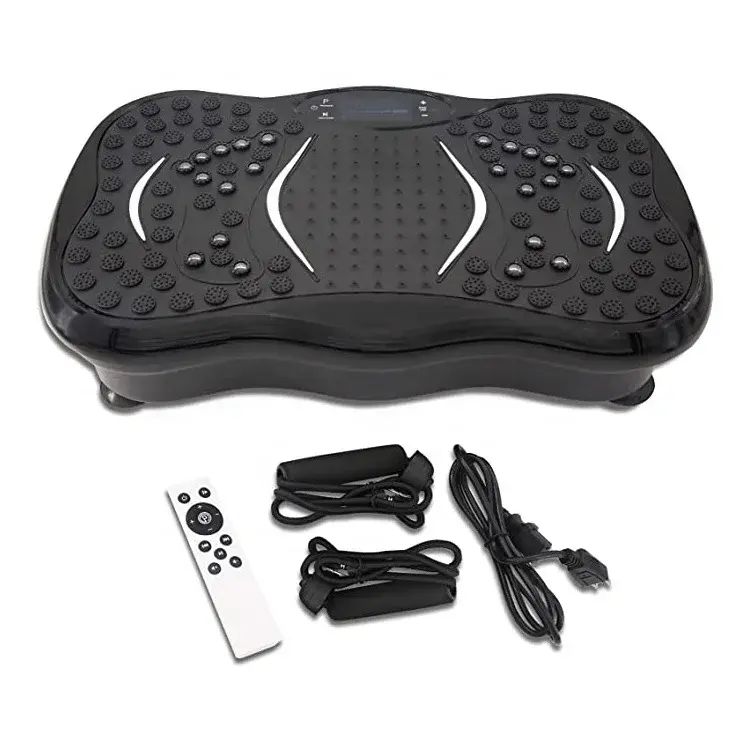
Most buyers fixate on wattage and RPM, but the real dividing line is in the winding and bearing choices. A unit built to last typically runs Class H insulation with a service factor above 1.0, and the windings are dipped or vacuum-impregnated rather than sprayed. Short-lived imports often skip that step, which leaves gaps for moisture and vibration to chew through the copper over time.
Another tell is the bearing spec. Reliable motors use oversized, double-shielded bearings and often specify regreasing intervals, while cheaper imports fit shielded or even open bearings behind a thin dust cover. That single difference changes how the shaft handles side load, heat cycling, and belt tension before it starts to growl.
Torque behavior matters just as much as peak power. A trustworthy motor holds rated torque across a wide speed range without sagging, and its thermal curve levels off under load instead of climbing toward a short shutdown. If the nameplate omits ambient rating, duty cycle, or insulation class, that missing information is usually the first sign the motor was priced for replacement rather than service.
Materials and Frame Construction Worth Asking About
A frame can look sturdy in a photo and still wobble by the second season. Ask whether the load-bearing parts are solid hardwood, kiln-dried softwood, or a mix with plywood and particleboard. The joints matter just as much: double dowels, corner blocks, and mortise-and-tenon construction tend to outlast staples and glue alone.
Upholstery materials often get the attention, but what sits underneath determines how long the piece keeps its shape. If you are choosing a sofa or armchair, request details about spring systems such as eight-way hand-tied or sinuous wire, and check whether the foam core is wrapped in fiber, feather, or a lower-density filler that breaks down quickly.
Frame construction also affects how a piece feels every day. A slightly heavier frame usually signals denser wood and better reinforcement, though weight alone is not a guarantee. Ask to see a cutaway sample or at least a spec sheet that names the wood species, joint method, and cushion support. That information often reveals more than fabric swatches ever will.
Certification Claims You Should Verify Before Committing
A badge on a supplier’s website doesn’t count for much until you trace it back to the organization that issued it. Companies often mention “ISO 9001 certified” or “organic compliant” in a brochure, but the actual certificate may belong to a parent company, apply to a single product line, or have lapsed months ago. Ask for the certificate number and run it through the registrar’s public directory before the claim influences a buying decision.
Scope matters just as much as the label. A manufacturer might carry a safety certificate for one facility while shipping from another, or a food producer might be certified for one crop but not the blend you are actually ordering. If the wording feels deliberately broad, request the audit summary or a copy of the certificate with issue and expiry dates visible. Legitimate certifiers usually make verification easy, and any hesitation is worth paying attention to.
It is also worth checking whether the standard aligns with what you actually need. Marks like CE, Fair Trade, or cruelty-free can mean different things depending on the region and product category. Rather than accepting the shorthand, pin down the exact standard that applies to your order and confirm the certificate covers the specific SKUs, volumes, and sites involved.
Warranty and Replacement Support Beyond the Sales Pitch
Warranty support often sounds identical across brands until you actually need it. We keep the process deliberately simple: if a product fails under normal use during the stated coverage period, send a short note or photo of the issue and we will ship a replacement without demanding the original packaging or a lengthy inspection form. That means fewer hoops, fewer delays, and no scripted answers designed to wear you down.
Replacements are handled by people who know the product, not a rotating queue of general agents. You will usually hear back within one business day, and once a replacement is approved, it leaves our warehouse with tracking details the same week. If a particular model is out of stock, we offer a comparable upgrade or a refund instead of making you wait indefinitely.
The point is not to bury you in warranty language. It is to make the support path short enough that you never have to think about it twice. Keep your proof of purchase, tell us what went wrong, and we take care of the rest.
Hidden Logistics Costs That Affect Your Final Sourcing Decision
Most sourcing spreadsheets stop at unit price, but freight quotes rarely expose the charges that show up after cargo is already moving. Detention, chassis splits, pre-pull fees, yard storage, and port congestion surcharges can quietly add hundreds of dollars per container, often without a clear line item until the invoice arrives.
These costs rarely hit every supplier equally. One factory may ship through a port with chronic trucker shortages, while another uses a routing that avoids overweight restrictions or appointment delays. A lower FOB price can easily be erased by a destination warehouse that charges for weekend unloading, limited dock hours, or non-palletized cargo.
Before finalizing a sourcing decision, ask forwarders and drayage providers for a realistic accessorial history on the specific lane, not a generic rate sheet. Then build those assumptions into the landed cost comparison. That step tends to reveal which supplier is actually cheaper after the container has cleared, not just on paper.
FAQ
Look beyond the advertised weight capacity. The base plate thickness, weld quality, and how the motor housing is sealed matter more in daily use. Commercial units should have a reinforced steel frame, a sealed motor chamber, and rubber isolation points that keep vibration from shaking internal wiring loose.
A brushless motor with sealed bearings usually outlasts cheaper brushed designs. Ask about continuous duty rating rather than peak power. If the supplier only lists peak watts, that is often a sign the plate is not built for long sessions or multiple users.
Request a live video walkthrough of the production floor, not just a brochure. Ask for recent export records, tooling photos, or a sample with custom labeling. A manufacturer can usually show the assembly line, welding stations, and motor testing area without hesitation.
ISO 9001 is a baseline for consistent production. For electrical safety and market access, look for CE, RoHS, or UL depending on your region. If the supplier sells into Europe or North America, they should readily provide test reports for the exact model you are sourcing.
Order a pre-production sample and open it up. Check the thickness of the base plate, the quality of the welds, cable routing, and whether bolts have thread-locking compound. A video inspection can cover the rest, but a physical sample tells you how the unit will hold up.
A two-year warranty on the motor and frame is now common, but the real test is how claims are handled. Ask whether they send replacement parts first, who pays freight, and if there is a local service partner. Vague warranty language often becomes a cost later.
Packaging for heavy items often gets underestimated. Dense foam, corner protectors, and pallet type affect freight damage rates. Customs duties, port handling, and replacement part inventory can add 10 to 15 percent to the landed cost if not priced early.
Line up quotes by total landed cost per usable unit, not just FOB price. Include freight, packaging, expected defect rate, warranty parts, and lead time variability. A slightly higher unit price with better packaging and lower defect rates usually wins over a cheap plate that arrives damaged.
Conclusion
Most sourcing conversations start with amplitude and frequency, but the real determinant of a vibration plate's lifespan sits in the motor and frame. Ask what type of motor is used, how long it can run continuously, and where the bearings come from. A unit with a cheap brushed motor may look identical in photographs but will overheat or lose torque after a few months of regular use. Frame construction matters just as much: find out the steel tube thickness, whether joints are fully welded, and what anti-corrosion treatment is applied. Certification is another area where verbal assurance is not enough. Request certificate numbers, check the issuing body, and confirm the standards actually cover the motor and electrical components, not just the plastic shell. Warranty should name the parts that are realistically going to fail, such as the motor, controller, and wiring, and specify how replacements are handled instead of offering a broad but hollow promise.
Hidden logistics costs often change the sourcing equation more than the unit price itself. Packaging dimensions, crate weight, port fees, tariff classification, and expected damage rates all sit between the factory quote and your warehouse. Ask the supplier to provide a breakdown under clear Incoterms and compare the landed cost across at least two shipping methods before committing. After-sales support should be judged the same way. How fast can a replacement motor or circuit board be dispatched, and is there a local service partner or clear video guidance for repairs? Request examples of past warranty claims to see whether the supplier solves problems quickly or drags out the process. A durable vibration plate supplier is not the one with the lowest sample price, but the one that can prove motor reliability, honest certification, realistic warranty coverage, and predictable delivery costs.
Contact Us
Contact Person: Hannah
Email: [email protected]
Tel/WhatsApp: +86 18266954198
Website: https://www.okmassager.com/