

Ultrasonic Atomizing Nozzle Manufacturer: Key Factors for Choosing the Best Partner
2026-08-20
Selecting the right ultrasonic atomizing nozzle manufacturer isn't just about specifications on a datasheet—it's about finding a partner who truly understands your process. Whether you're coating medical devices, humidifying cleanrooms, or spraying fine mists in demanding environments, the difference between mediocre results and exceptional performance often comes down to the supplier behind the nozzle. That's where Siansonic enters the conversation. In this guide, we'll strip away the marketing noise and focus on the real-world factors that separate a dependable partner from a costly gamble, so you can make a choice you won't second-guess.
Look Past the Brochure and Verify Their Atomization Lab
Most suppliers will happily send you a PDF with their lab's capabilities, but that document rarely shows the equipment actually being used. Insist on a live video tour where you can see the atomization testing rigs in operation—particle size analyzers, viscosity meters, and environmental chambers should be visible, not just mentioned. If the lab tour feels rehearsed or certain areas are 'under maintenance,' treat that as a warning sign.
Also pay attention to how they talk about failures. A genuine atomization lab keeps logs of rejected batches and can explain specific adjustments made to nozzle geometry or airflow. If every answer sounds like it came from a sales script, you're probably looking at a paper lab, not a working one. The best labs are a little messy, with technicians who can talk you through their most difficult formulation problems without pausing for a marketing-approved answer.
Materials That Handle Your Fluid Without Early Erosion
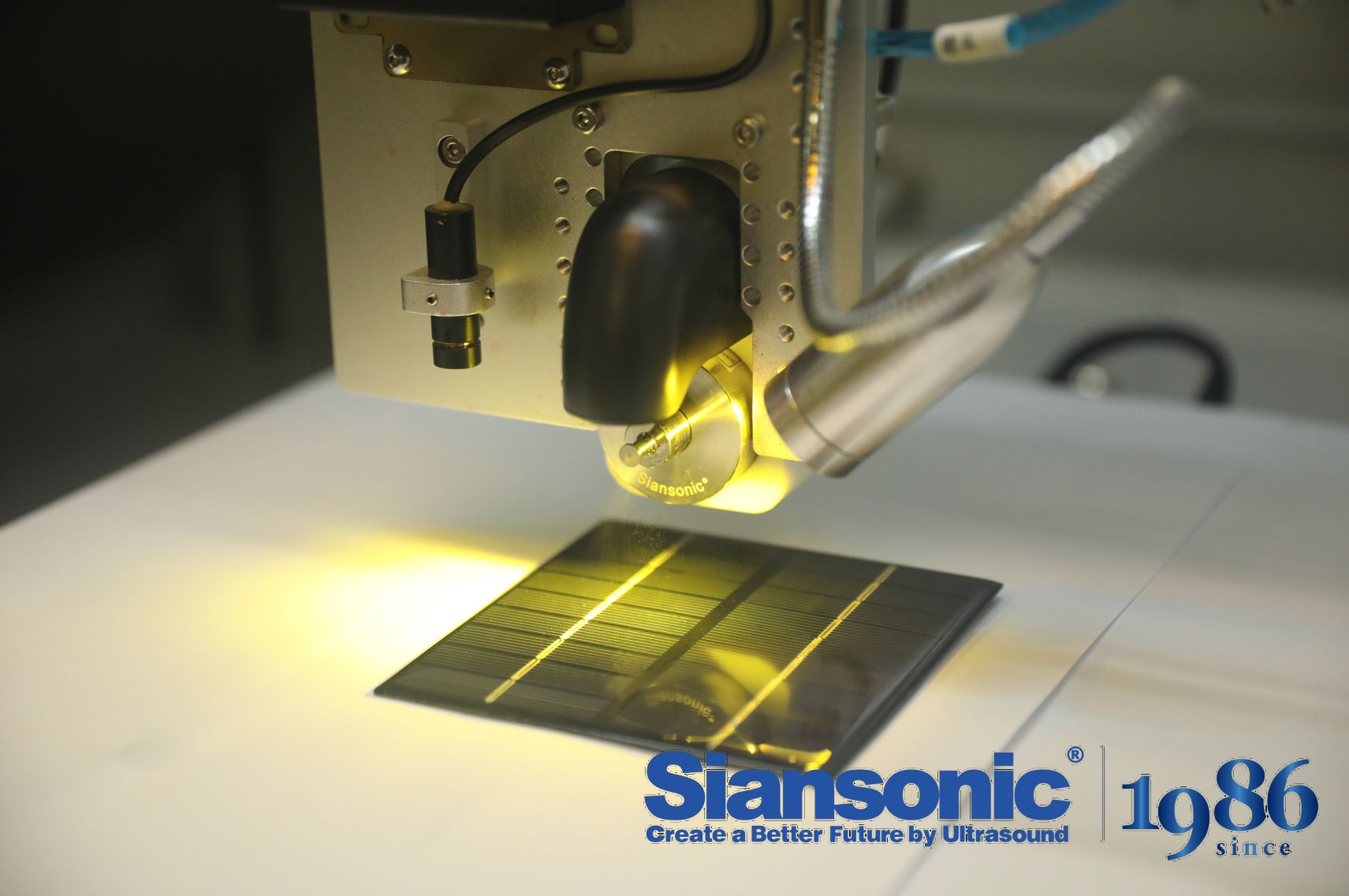
Choosing the right material for fluid-contact surfaces often comes down to how well it resists the slow, abrasive pull of moving media. High-chromium stainless steels and duplex alloys hold up better than standard grades when particles or high velocities are involved, while engineered polymers like UHMWPE offer a lighter alternative that sheds wear without corroding. The key is matching the material's hardness and toughness to the specific flow conditions rather than assuming a generic upgrade will solve the problem.
Surface finish plays an equally important role. A smoother bore reduces micro-turbulence and gives erosive particles fewer places to catch, but polishing alone cannot compensate for a soft base metal. In demanding lines, ceramic inserts or tungsten carbide coatings provide a hard face that extends service life dramatically. Even then, geometry matters: sudden expansions, sharp elbows, and misaligned joints can create localized erosion that eats through even premium materials if the flow path isn't designed with wear patterns in mind.
Custom Geometry Without the Endless Back-and-Forth
Traditional custom geometry often bogs down in endless email threads and marked-up sketches, where the designer's intent and the fabricator's reading of a curve drift apart. A different approach puts live parametric control and instant structural feedback at the center of the process. You manipulate the surface directly, and the system immediately shows how the change affects material use, joint angles, and load paths—no waiting for the next drawing revision.
This direct modeling environment makes every adjustment feel like a conversation with the form itself. Nudge the curvature of a vaulted shell and you see the subdivision of adjacent panels shift in real time. Open up a corner angle and the corresponding stress concentrations update on the spot. Because the design intent stays anchored in a single evolving model, everyone on the team works from the same live geometry instead of trading conflicting screenshots and outdated PDFs.
When the geometry is ready, the validated data and fabrication outputs are packaged automatically—no manual report stitching or last-minute export guesswork. The number of back-and-forth cycles drops dramatically because ambiguity is resolved at the source. Even complex double-curved surfaces and non-standard nodes become manageable, restoring a sense of continuity from first sketch to finished build.
Wet Testing Protocols That Reveal True Drop Size Control
There is a common misconception that a smaller drop is always better, but the reality is that true control comes from understanding how the drop behaves in different situations. In our wet testing, we do not rely on a single measurement; instead, we simulate real-world application conditions, such as varying flow rates, surface tensions, and nozzle distances. This approach reveals whether drop size can be adjusted on the fly or if it drifts beyond acceptable limits when pressure changes. Too often, product specs look perfect in a lab setting but fail when the operator makes a minor adjustment. Our protocols expose those weaknesses by testing not just the average droplet diameter, but also the full distribution, including the outliers that cause uneven coverage or drift.
Another overlooked factor is the interaction between the liquid and the air around it. We run wet tests in environments with controlled humidity and temperature, because these variables can change how droplets merge or evaporate before they reach the target. By observing the spray under high-speed imaging, we can see whether the drop size remains consistent or if secondary breakup occurs too early. This level of detail matters for anyone trying to achieve uniform coverage without wasting product. A nozzle that performs well in dry air may produce a completely different drop spectrum on a humid morning, and our testing makes that clear instead of hiding behind ideal conditions.
Finally, we measure what happens after the droplets land. True drop size control is not just about creation; it is about retention and spread. We use test cards with known absorption characteristics and then analyze the stain patterns under different lighting. If the drops are too large, they may run or pool in one spot. If they are too small, they may drift or evaporate before doing their job. By combining all these wet testing protocols, we give operators a practical picture of what to expect in the field, rather than a single number that means little once you leave the lab.
Support After Installation Most Buyers Forget to Ask About
Once the installer packs up and drives away, that's when the real test begins. Buyers often spend weeks comparing features and negotiating the initial price, but barely anyone asks what happens when something breaks at 4 p.m. on a Friday. The support agreement—or lack of one—can turn a minor hiccup into a full-blown operational headache. If you don't know whether a service call is included, how quickly they'll respond, or if you'll be charged for remote diagnostics, you're setting yourself up for surprise invoices and downtime.
Here's what usually gets missed: Do software patches and firmware updates come free, or are they treated as separate billable events? Is phone and email support limited to business hours, or does it cover weekends if your operation runs around the clock? Are there clear response-time guarantees, and do they apply to everyone or only to customers on a premium plan? And don't overlook training—will the provider stick around to walk your staff through the new system, or is that considered an extra? Many buyers assume these are all standard until the first problem lands on their desk.
The smart move is to ask for a written support scope before you sign anything. Get specifics: what's covered, what's excluded, how long typical fixes take, and whether there's a direct line to a technician instead of a ticket queue. If a vendor hesitates to put it in writing, that's your signal to keep looking. A clear post-installation support plan won't prevent every issue, but it'll keep a small glitch from becoming a costly, week-long standoff.
Scaling Production Without Losing Nozzle Consistency
As production volumes climb, the hardest part isn't making more nozzles—it's making them the same. Small shifts in material viscosity, tooling wear, or even ambient temperature start to show up as measurable drift in spray angle or flow rate. Teams that ignore this end up chasing field complaints tied to a batch that performed fine in the lab but differently on the line.
A practical way to hold consistency is to lock down the variables that actually matter. For nozzle production, that often means tightening tolerance on the orifice geometry, tracking batch-level pressure test data, and building in a quick verification step at set intervals rather than waiting for final inspection. Some lines use simple go/no-go gauges; others add automated vision checks—whatever fits the budget, as long as it catches drift before it becomes a trend.
Scaling shouldn't mean loosening the spec to hit output targets. It means rethinking how you measure. Instead of sampling two nozzles per shift, pull five at staggered times. Log the results by machine and operator, not just by date. When a shift does creep, you can trace it to a specific tool or setup change before it spreads. That kind of visibility is what keeps a ramp-up from quietly changing the product you worked hard to qualify.
FAQ
Look beyond sales claims and ask for concrete evidence of droplet size distribution control, frequency stability under load, and experience with your specific fluid. A capable partner will walk you through their transducer design choices, impedance matching approach, and how they prevent amplitude drift during continuous operation. If they hesitate to discuss these details, treat it as a red flag.
Request batch test reports that include actual measured droplet size (Dv50, Dv90), flow rate, and spray pattern images rather than just a certificate of conformity. Top manufacturers maintain a golden sample reference and test each production unit against it. Ask whether they use laser diffraction or high-speed imaging for quality checks, and whether they will share raw data for your own review.
The materials of the atomizing tip and transducer housing directly determine chemical resistance and wear life. For aggressive solvents or abrasive slurries, you need titanium alloys or fluoropolymer-coated surfaces, not generic stainless steel. A knowledgeable manufacturer will ask about your full chemical environment, temperature range, and cleaning procedures before recommending a configuration, rather than offering a one-size-fits-all solution.
Off-the-shelf nozzles rarely match the exact flow rate, droplet size, and spray shape that specialized processes demand. A partner with in-house machining, transducer tuning, and nozzle prototyping can adjust orifice geometry, frequency, and feed pressure to your target. This shortens iteration cycles and avoids the frustration of modifying your process around a rigid product.
The best partners stay involved after delivery, helping you fine-tune mounting position, liquid delivery pressure, and driving frequency to get stable atomization on your line. They offer troubleshooting guidance, spare parts availability, and sometimes remote diagnostics. If a supplier disappears after invoicing, long-term yield and uptime will suffer.
Expect a detailed inspection report with measured resonant frequency, impedance, spray flow rate, droplet size data, and a visual record of spray pattern under your specified conditions. Documentation should also include material certificates for wetted parts and a declaration of compliance with relevant safety standards. This paper trail is essential for validation in regulated industries.
Ask for examples where they moved from a lab-scale single nozzle to hundreds of units while maintaining performance tolerance. Check whether their production process includes automated assembly steps, transducer matching stations, and in-line testing. A manufacturer that relies only on manual craftsmanship may struggle with repeatability at scale.
Cheap units often suffer from short transducer life, inconsistent droplet size, and poor impedance matching that leads to overheating or driver failures. You may end up buying frequent replacements, paying for extra process adjustments, and losing production time. When you calculate total cost of ownership, a slightly higher upfront price from a proven manufacturer usually pays for itself within the first year.
Conclusion
A manufacturer’s marketing materials rarely tell you whether their atomization lab can reproduce your exact spray pattern. Before signing anything, ask to visit the facility or request a live video walkthrough. Watch how they handle viscous or shear-sensitive fluids, and pay attention to the materials they stock for nozzle bodies and tips—316 stainless is common, but if you’re spraying saline, acids, or solvents, you need Hastelloy, titanium, or silicon carbide from day one. The best partners also show you CAD files with dimensional tolerances tied to your fluid’s viscosity and surface tension, not just a generic nozzle drawing. One way to spot genuine expertise is their willingness to iterate on orifice size, horn length, and atomization surface geometry without charging for every revision.
Real confidence comes from wet testing under conditions that match your line speed, drying time, and target droplet size. Ask for a test report that includes DV50, span, and spray width measured at multiple pressures—not a single static image. After installation, the more useful vendor offers troubleshooting for power supply drift, transducer degradation, and nozzle clogging, often within the same business day. When you scale from a benchtop unit to a multi-nozzle array, consistency matters more than a perfect single-nozzle result. Ask how they match resonant frequencies across nozzles and whether they provide lifetime performance data for repeated cleaning cycles. That level of transparency is what separates a supplier from a long-term partner.
Contact Us
Contact Person: Ivy Zhang
Email: [email protected]
Tel/WhatsApp: +86 1081502288
Website: https://www.siansonic.com/