

Top Steel Pipe Tower Factory for Reliable Infrastructure Solutions
2026-11-02
When infrastructure projects demand strength that won't waver, the choice of steel pipe tower manufacturer matters more than most people realize. Anbang has built its reputation not on claims, but on the kind of quiet reliability that engineers and contractors come to depend on. This blog takes a closer look at what sets a top-tier factory apart—from raw material selection to the precision welding that holds everything together.
Inside the Fabrication Floor: How a Pipe Tower Takes Shape
Step onto the fabrication floor and the first thing you notice is the controlled chaos of steel meeting sparks. A pipe tower begins not as a single structure, but as a series of precisely cut sections—each ring and flange machined to tolerances tighter than a fingernail's thickness. Workers move between jigs and rotating positioners, tack-welding the base cone to the mid-can before the first full seam is even laid. It’s a process that rewards patience: every alignment check here saves hours of correction later.
What separates a routine tower from one built to last is how the shop handles distortion. As the welds cool, the steel wants to pull and warp, so crews use staggered sequences and localized preheat to keep the shell round. You’ll see chalk marks on the plate—notes from the last shift about which side to weld next, or where to add a temporary stiffener. These aren’t guesses; they’re the accumulated habits of fabricators who’ve learned to read the metal’s mood. The tower’s verticality is decided on the floor, long before it ever stands against the wind.
By the time the final flange is bolted and the paint booth doors roll shut, the pipe tower has passed through a gauntlet of inspections—ultrasonic tests on full-penetration joints, dimensional checks against a master template, and a trial fit of the ladder clips that will one day carry a climber. Each step is documented, but the real story is in the details that never make the report: a grinder smoothing a weld toe just enough to avoid a stress riser, or a fitter shimming a base plate with a strip of copper because the floor itself isn’t perfectly level. That’s where the tower earns its shape.
Why Wall Thickness and Weld Testing Decide Tower Lifespan
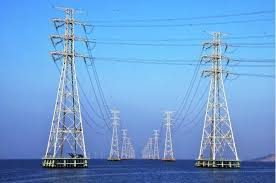
Wall thickness sets the baseline for how long a tower can resist thinning from corrosion, fatigue cracking, and occasional overloads. A section that starts too thin may still pass a static load test but fail years later after rust removes only a millimeter or two of steel. Thicker walls also change how a tower buckles—instead of a sudden local fold at a dent or imperfection, the shell redistributes stress over a broader area, buying time before visible deformation appears.
Weld testing matters because most tower failures don't begin in the middle of a plate; they start at a seam where two pieces were joined. Even a short lack of fusion or a small slag inclusion can act as a notch, concentrating stress every time the tower sways. Routine ultrasonic or radiographic inspection of those welds catches flaws that visual checks miss, and that early warning allows repair before a micro-crack grows to critical size.
Taken together, wall thickness and weld quality determine not just the initial safety margin but also how gracefully a tower ages. A design with generous wall allowance and verified welds can tolerate decades of weather, cyclic loading, and minor damage without needing constant attention. Where either factor is borderline, the tower may look fine on paper yet require frequent inspections and early reinforcement to avoid a sudden, expensive end of service.
Custom Tower Geometry Without the Custom Price Tag
Getting a tower to fit an awkward site usually means paying for a one-off design. But most of that so-called custom geometry is really just a smart rearrangement of standard components. Shifting leg positions, adjusting brace angles, or swapping in off-the-shelf transition sections can hit an odd footprint or clearance envelope without drifting into bespoke fabrication territory.
The key is to work from parametric kits that already cover the common variations. A five-degree slope change or a slightly narrower face width should not trigger a full engineering rework. Reputable fabricators keep a library of pre-approved details for exactly these adjustments, so the final structure stays economical while still looking like it was drawn for that site.
This approach also shortens lead times. Instead of waiting for custom drawings and special jigs, the shop can pull familiar profiles, cut them to the revised dimensions, and move the tower out the door. You get the shape the project needs with a price that sits much closer to stock.
Galvanizing and Coating: The Unsung Heroes of Corrosion Resistance
Every year, rust quietly eats away at billions of dollars' worth of steel structures, from highway guardrails to warehouse shelving. Galvanizing flips the script by dipping steel into molten zinc, creating a metallurgical bond that acts as both a shield and a sacrificial anode. When the zinc layer is scratched, it corrodes first, protecting the underlying steel for decades without a single maintenance call.
Coatings take a different path, using paints, epoxies, or powder finishes to create a physical barrier against moisture and oxygen. Unlike galvanizing, which relies on electrochemical protection, coatings demand precise surface preparation and periodic touch-ups. Yet they offer unmatched flexibility in color, texture, and chemical resistance, making them ideal for architectural panels, marine equipment, and food-processing plants.
The smartest engineers often combine both methods: a galvanized base layer for long-term durability, topped with a coating for aesthetics or extra chemical defense. This dual approach sidesteps the weaknesses of each technique while cutting lifecycle costs dramatically. In an age of tight budgets and harsher environments, these quiet technologies remain the backbone of infrastructure that simply cannot afford to fail.
From Order to Delivery: A Timeline That Won't Drift
Order confirmations often read like a promise, but the gap between "processing" and "out for delivery" is where deadlines quietly fall apart. Many teams set an initial date and then treat every subsequent step as flexible, which means a two-day slip in picking becomes a five-day delay by the time it reaches the carrier. The drift isn't caused by one big failure; it's the accumulation of small, unowned handoffs that nobody revisits until a customer asks where the package is.
A timeline that holds up starts with fixed dates for each transition: picking, packing, handoff to the carrier, and final mile scan. Instead of broad ranges like "3-5 business days," assign a single owner to each step and make them confirm the moment their part is done. When something slips by even a day, the next owner adjusts immediately rather than waiting for the original deadline to pass. This creates a chain of accountability where the schedule corrects itself at the point of friction, not after the fact.
The final layer is using buffer time sparingly. Put slack only where delays are most likely—such as carrier pickup windows or customs clearance—not across every task. If every step has padding, teams will consume it without urgency. Keep the timeline visible to everyone involved, and treat the customer-facing date as the one hard commitment. That simple shift from "expected" to "committed" is what keeps the whole sequence from drifting past the promised delivery.
Built for Utility Grids, Telecom Networks, and Everything in Between
Rugged deployments demand more than generic hardware. Our systems are engineered from the ground up for the specific stresses of utility grids—sustained high voltage, wide temperature swings, and physical isolation in substations or along remote distribution lines. We addressed every failure point that shortens field life, from corrosion-resistant enclosures to hardened power inputs that shrug off brownouts and surges common on aging grid infrastructure.
Telecom networks present a different set of challenges: dense equipment rooms, aggressive cooling demands, and the constant pressure to pack more capacity into less space. Our thermal and acoustic designs target those realities, keeping noise low for co-location with office spaces while maintaining airflow that protects line cards and optical transceivers during peak load. The same platforms adapt to edge sites where a cell tower might share a building with utility metering equipment, eliminating the need for separate, overspecialized hardware.
Between these two extremes lies a spectrum of critical infrastructure—railway signaling, water treatment telemetry, pipeline monitoring, and distributed generation controls. Instead of forcing you to choose between a utility-grade power supply and a telecom-grade chassis, we built one architecture that accepts either. Field-replaceable modules let you swap cooling, mounting, and connectivity options as site requirements shift, so a single hardware standard follows your project from a pilot in a switchgear room to a mass rollout across mixed-asset corridors.
FAQ
We focus on precision welding and rigorous load testing, so every tower leaving our facility can handle extreme weather and long-term stress without issues.
They are commonly deployed in power transmission lines, telecommunications networks, and railway electrification systems, but we also supply towers for wind monitoring and broadcasting.
We use high-grade steel with hot-dip galvanizing, perform full-penetration welds, and run fatigue simulations before production—so the final product stays stable even under cyclic loads.
Yes, we work from your structural calculations or provide our own engineering support to adjust height, flange connections, and bracing patterns for site-specific wind and seismic conditions.
Every batch of raw steel is traceable, and we inspect each weld using ultrasonic testing, then check dimensional accuracy with laser measurement before the tower is packed for shipment.
We maintain multiple automated production lines and keep a buffer stock of standard steel plates, which lets us scale output quickly while still following the same inspection checkpoints.
We can supply detailed assembly drawings, torque specifications, and even send a supervising engineer to your site if needed—this reduces erection errors and speeds up project handover.
We primarily use S355 or Q355 grade steel with a minimum yield strength of 355 MPa; this gives a good balance between weight and strength, making transportation easier without sacrificing structural integrity.
Conclusion
Walking through a top-tier steel pipe tower factory, you quickly realize that reliability isn't a marketing slogan—it's a physical outcome of how the floor is run. From the first coil of steel entering the fabrication line to the final torque check on a flange, every step is treated as a load-bearing decision. Technicians don't just roll and weld; they measure wall thickness at multiple points because they know a tower's lifespan is written in those millimeters. Weld testing isn't a box-ticking exercise either—ultrasonic and radiographic checks happen on critical joints, catching flaws that would otherwise surface years later under wind fatigue. And while customization sounds expensive, these factories have learned to standardize the underlying jigs and tooling, so tweaking leg slopes, bolt patterns, or cross-arm positions doesn't trigger a full engineering rework. That's how you get custom tower geometry without the custom price tag.
But the quiet heroes live in the finishing bays. Galvanizing and coating are never an afterthought here—they're treated as a second structural system, with zinc thickness verified against the harshest coastal or industrial exposure a tower will face. A well-run factory also respects the calendar. Order-to-delivery timelines are built around raw material buffers and in-house testing capacity, so a utility grid upgrade or an emergency telecom replacement doesn't drift into next season. And because the same fabrication standards apply whether the tower will carry high-voltage conductors, microwave dishes, or a small cell antenna, the factory becomes a single point of trust for infrastructure that can't afford to lean, crack, or corrode. That's what reliable actually means: not a promise, but a process you can walk through.
Contact Us
Contact Person: antor khan
Email: [email protected]
Tel/WhatsApp: 8613863903569
Website: https://www.qdabtower.com/