

Top Mid-Diameter Fiber Fusion Splicer Options for Reliable Fiber Connections
2026-08-26
In fiber optic networks, the reliability of every connection hinges on the quality of the splice. Mid-diameter fusion splicers have emerged as a sweet spot, balancing performance and portability for technicians who demand dependable field results. But with so many models clamoring for attention, how do you separate genuine workhorses from overhyped gadgets? This guide cuts through the noise, spotlighting top contenders that consistently deliver low-loss splices—including the DVP series, which has quietly built a reputation for rugged precision. Whether you're upgrading your toolkit or troubleshooting chronic splice failures, read on to discover which splicer deserves a spot in your case.
What Mid-Diameter Splicer Buyers Often Overlook
Most buyers fixate on splice loss specs and cycle time, but few ever ask how the machine handles real-world fiber variations. A splicer that performs flawlessly in a lab with pristine fiber can struggle on a windy jobsite with dusty connectors and slightly oval cladding. The overlooked detail is often the clamping mechanism—does it grip gently enough to avoid micro-cracks, yet firmly enough to prevent fiber slip during the heat shrink stage? Spending an extra ten minutes testing with a few dirty or aged fiber samples can save a month of field frustration.
Another blind spot is electrode maintenance ergonomics. Many mid-diameter splicers bury the electrodes behind tool-required covers or require a separate alignment jig that is easy to lose in a tool bag. Buyers rarely read the service manual before purchase, so they miss the fact that some models need electrode replacement every 300 splices, while others go past 1,000. That difference alone can determine whether your crew spends Friday afternoon splicing or cursing a machine that keeps throwing arc errors.
Finally, consider the onboard software's tolerance for odd splice combinations. A mid-diameter splicer designed mainly for loose tube ribbon fiber may choke on a 900μm tight-buffered drop cable paired with a 250μm coated fiber, unless you know where to find the hidden profile override. The machines that hold their resale value are the ones with a clearly labeled manual splice mode and an intuitive way to store custom heating programs—features buyers often skip over in the spec sheet but end up needing by the second week.
Mid-Diameter Fusion Splicers That Deliver on Real Job Sites
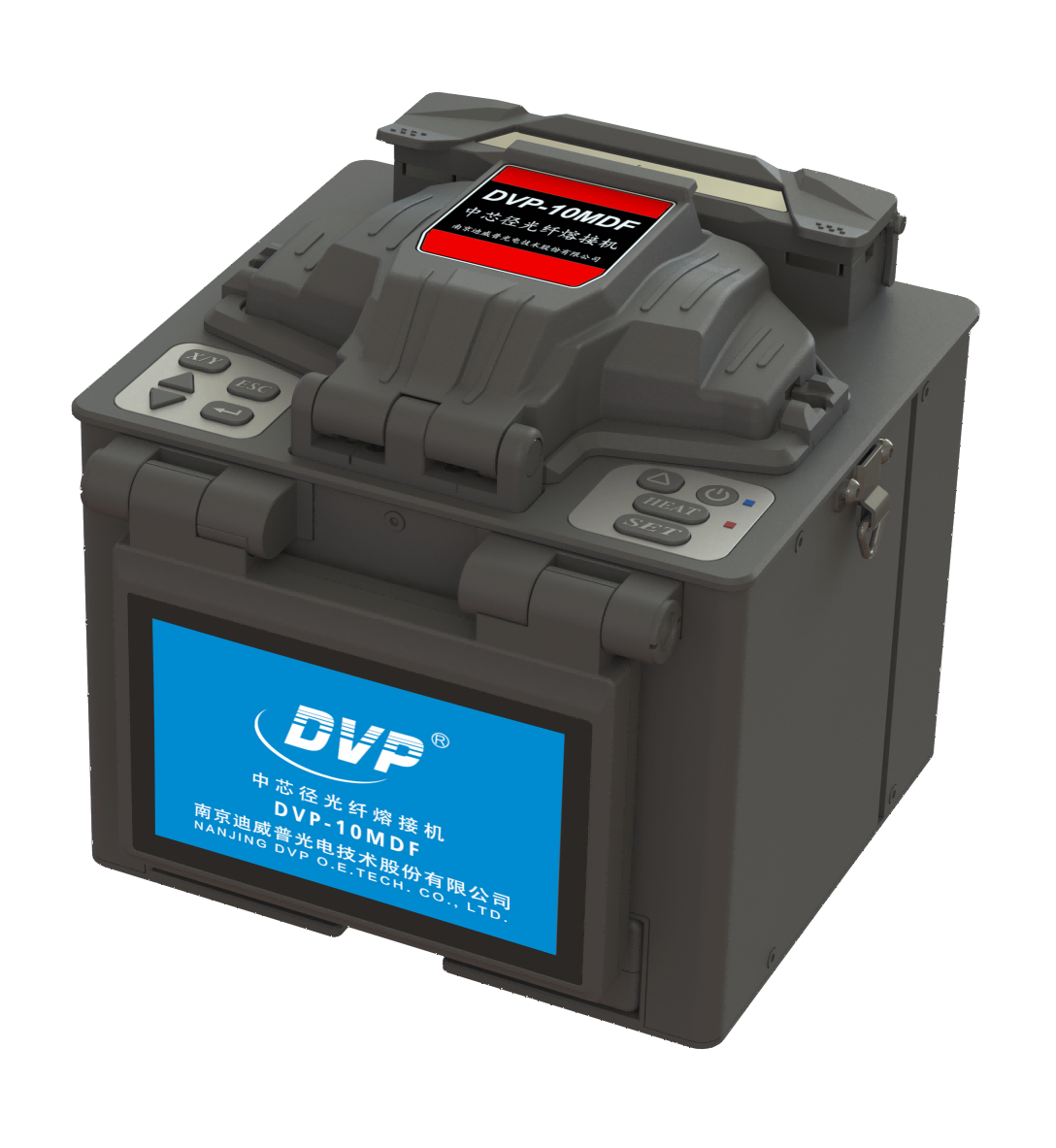
Real job sites don't come with climate control or clean benches. Dust from nearby trenching, sudden temperature drops, and winds that shake a folding table are all part of the day. A mid-diameter fusion splicer that actually delivers out here doesn't demand special handling. It boots up fast, keeps its alignment through the bumps, and lets you get the splice done without hunting for a sheltered corner.
The difference between a dependable tool and one that only works in a demo bay shows up in the details. Clamps hold tight without cracking a 250 µm fiber, the heater cycles evenly so sleeves don't slide, and the screen is bright enough to read in direct sunlight. You can move from loose tube to tight buffer without swapping out a tray of tiny adapters. That matters when you're on a ladder or working out of a truck box.
Maintenance has to be quick and forgiving, too. A splicer that needs a lab-grade environment to stay calibrated will leave you waiting for a service call when you should be closing the splice case. The best mid-diameter units let you clean electrodes, check the arc, and get back to the run in minutes. No special tools, no lengthy downtime, just a tool that keeps its calibration under field conditions.
Splicer Choices for Mid-Diameter Fiber That Keep Things Simple
When most splicer defaults are set for 250 µm coated fiber, a 200 µm mid-diameter strand can throw off clamp pressure and arc estimates enough to ruin an otherwise clean splice. The simplest fix is to look for a splicer that includes dedicated mid-diameter holders in the case from day one. Swapping in the right pair takes seconds, and you avoid the trial-and-error of trying to shim a standard holder or over-tightening the lid.
Beyond the hardware, the real time-saver is a stored profile. Set the arc power, pull test, and loss limit once for your specific mid-diameter fiber, then name it clearly. On a busy day, you can recall that profile without digging through menus or redoing a calibration splice. It also keeps the machine from treating every fiber like the thicker stuff it was originally tuned for, which makes the estimated loss numbers a lot more trustworthy.
You also don't need to chase flagship models. A solid mid-range core-alignment splicer with clean electrodes and a well-maintained V-groove handles mid-diameter fiber fine for most drop and closure work. Keep a couple of spare holders in the kit, wipe the lenses before the first splice of the day, and resist the urge to load profiles for fibers you rarely use. Simplicity here means fewer variables, and fewer variables means fewer splices you have to redo.
The Mid-Diameter Models Worth a Second Look
For years, the conversation around case sizes has swung between extremes—oversized statement pieces and vanishingly thin dress watches. Mid-diameter models, roughly 36mm to 39mm, rarely get the same applause, yet they often deliver the most balanced presence on a real wrist. They sit comfortably under a cuff without disappearing, and they carry enough visual weight to feel substantial during a long day. It's a quiet category that rewards attention.
What makes these proportions worth revisiting is their versatility. A 38mm case can shift from a leather strap on Monday to a steel bracelet on Friday without ever looking out of place. Designers who commit to this middle ground tend to focus on dial harmony and lug curvature rather than raw diameter, because there's no oversized canvas to hide behind. That restraint often results in cleaner lines and a more timeless profile.
Some of the most interesting recent releases in this range borrow from vintage field watches and mid-century chronographs, but they update the specs with modern movements and sapphire crystals. The result is a watch that feels familiar at a glance yet wears comfortably all week. If you've written off mid-size cases as too conservative, a second look might change your mind.
How to Pick a Mid-Diameter Splicer Without the Guesswork
Start by ignoring the marketing sheets and looking at the actual diameter range your jobs demand. A mid-diameter splicer that can't comfortably handle the cable jackets and buffer tubes you encounter weekly will slow you down more than any feature can make up for. Check the clamping mechanism and the way the splice protection sleeve gets handled, because that's where fumbling happens when the diameter is just slightly off from what the machine was designed around.
The alignment method matters more than the spec sheet suggests. Core alignment gives you lower loss on mixed fiber types, but if you're working with repetitive, same-batch cable, a clad alignment unit may be faster and cheaper to maintain. Ask for a real demo with your own cable samples, not a pre-set test fiber, and pay attention to how many attempts are needed before the machine reports a good splice.
One more thing to check is the consumables and service access. A splicer that requires proprietary splice protectors or has a sealed battery that can't be swapped mid-shift will introduce guesswork later. Find out what local support actually looks like, including firmware update turnaround and loaner availability, because any mid-diameter unit will eventually need recalibration.
Mid-Diameter Splicing Options That Balance Speed and Reliability
Mid-diameter cables tend to fall into a blind spot: they feel too large for micro-style quick splicing, yet too small for heavy-duty closure work. That gray area pushes many crews toward whichever habit they already know, which often means either adding unnecessary protection layers that slow the job down, or using connectors that don't grip the jacket well enough. A better route is to look for splicing options where the stripping length, cleave position, and protector sleeve are all matched to the actual diameter, not adapted from a different cable class.
Core-alignment fusion splicers with adjustable v-grooves handle the mid-range fiber size without constant recalibration, and pre-loaded splice protectors cut out the fiddly step of threading a loose sleeve after the splice is made. Mechanical splice kits with gel-filled sleeves can work too, but only if the cleave angle is checked at the start and the fiber ends aren't forced into a holder meant for a narrower buffer. The real balance comes from tuning the whole sequence to the diameter so each splice is completed once, instead of being tested, re-cleaved, and repeated.
In practice, a well-matched mid-diameter option shows itself through shorter verification loops. A quick visual fault locator pass after the splice catches any misalignment before the tray is closed, and because the protector fits snugly the first time, there's little reason to reopen the closure. Once a crew gets used to the specific tools for that diameter, a reliable splice can be finished in the same walk-up as a rushed one. That's the practical target: not raw speed, but speed that doesn't create follow-up repairs.
FAQ
Mid-diameter fiber usually covers cladding diameters from about 200 μm to 500 μm, sometimes up to 1 mm in specialty applications. Standard telecom fiber sits at 125 μm, so these larger sizes force different handling, alignment, and heating strategies. You'll often see them in medical devices, laser delivery, and sensing where a thicker cladding improves mechanical strength or light guiding.
For consistent results, look at specialty machines like the Fujikura FSM-100P or FSM-100M, Vytran LDC-400, or the Furukawa S183PMII. These units offer adjustable V-grooves, wider electrode spacing, and more flexible alignment routines than standard telecom splicers. If you only occasionally splice mid-diameter fiber, a reconfigurable core splicer with a large-diameter fiber holder kit can work, but dedicated machines save a lot of trial and error.
A reliable unit needs motorized or interchangeable V-grooves that accept several cladding sizes, a plasma arc with enough heat to melt larger glass volumes without cracking, and alignment algorithms that don't rely solely on core detection for non-circular or heavily doped fibers. Also check the clamping system—poor fiber retention causes offsets that look like bad alignment but are really mechanical slippage.
Cracking often comes from thermal shock or uneven heating. Pre-heat the fiber ends with a short, low-current arc before the main fusion, and use a slower pull-back or push speed if the splicer allows it. An anneal cycle after splicing also helps relieve stress in the larger glass cross-section. Make sure the fiber ends are cleaved squarely; a rough cleave on 400 μm fiber creates stress risers that standard fibers tolerate but thicker ones do not.
Yes, mid-diameter fibers tend to show slightly higher splice loss, often 0.05 to 0.15 dB, because mode-field diameters can vary more and alignment tolerances scale with cladding size. The best results come from matching mode-field diameter rather than just cladding diameter, and using a splicer that lets you manually offset alignment if needed.
High-power laser beam delivery, medical catheters and endoscopes, aerospace gyroscopes, and distributed sensing arrays all use mid-diameter fibers. In these fields, a bad splice can mean power leakage, fiber breakage under bending, or noisy sensor signals, so reliability is not optional. The thicker cladding often serves as a built-in protective layer, which is why you see it in harsh environments.
Yes, but it requires a splicer with a bridging mode or a special taper program. You need to gradually match the fiber diameters over several arc bursts to avoid a weak joint at the interface. Some splicers automate this with a "taper splice" or "diameter transition" option, but manual control over arc time and fiber positioning often yields lower loss.
Clean the V-grooves and electrodes after every 50-100 splices because larger fibers shed more debris. Check electrode condition more frequently than with telecom splicing—worn electrodes produce uneven arcs that cause the larger fibers to drift during fusion. Also recalibrate the alignment and arc power monthly if you switch between fiber sizes, since the machine's heat profile shifts with electrode wear and chamber humidity.
Conclusion
When crews start comparing mid-diameter fusion splicers, they often focus on splice loss specs and cycle time while missing the details that matter once the machine hits a dusty roadside or a cramped basement. Real job sites punish splicers with poor electrode access, flimsy v-grooves, and screens that wash out in sunlight. The models worth recommending are the ones that survive repeated clamping of 250 µm and 900 µm fibers without constant recalibration. Look for a splicer that lets you swap electrodes in the field without a service call, and check that the heating oven actually fits the splice protectors your team already stocks. A slightly slower splicer that holds alignment through a full shift will beat a spec-sheet champion that drifts after twenty splices.
Choosing a mid-diameter splicer without guesswork means rejecting the idea that more menu options equals more capability. The best options keep things simple: clearly labeled programs for common fiber types, one-button operation for standard splices, and a loss estimator that doesn't require a laptop to read. Some newer models balance speed and reliability by preheating the shrink oven while you align the next fiber, cutting total cycle time without rushing the arc calibration. Before buying, ask other field techs what they actually turn off or ignore—the settings nobody uses are often where complexity hides. A dependable mid-diameter splicer isn't the one with the longest feature list; it's the one that gets forgotten during a long day because it just works.
Contact Us
Contact Person: Mr XU
Email: [email protected]
Tel/WhatsApp: 86-25-85582828
Website: https://www.dvp.cn/en/