

Three-Phase Current Transformer Company: How to Choose a Reliable Partner for Precise Power Measurement
2026-09-04
Precision in power measurement isn’t just about specs on a datasheet—it’s about trusting the components between your equipment and the grid. A three-phase current transformer is only as reliable as the company that builds it, and choosing the wrong partner can lead to drift, downtime, or worse. That’s why Xiasen focuses on the details most suppliers overlook. In this post, we’ll walk through what actually matters when selecting a CT manufacturer, so you can measure with confidence instead of crossing your fingers.
What Accuracy Claims Actually Mean Once Installed
Lab sheets and brochures tend to paint a rosy picture. A sensor rated for ±0.1% in a controlled lab might drift well beyond that once it's bolted to a vibrating pump skid or squeezed between hot process lines. The published figure usually assumes a clean signal, stable temperature, and careful alignment, none of which survive contact with a real installation.
It's not that manufacturers are lying. It's that their numbers describe performance under ideal conditions. Once the device is mounted, you inherit the errors from the mounting bracket, the cable routing, the thermal gradient across the housing, and even the way the conduit pulls on the connector. Those little mechanical stresses stack up and quietly eat into the original spec.
So when you read an accuracy claim, treat it as a starting point, not a promise. The useful number is what you can verify after installation, with your own reference standard and your own process variables in play. That in-situ check will tell you more about real performance than any datasheet ever will.
Matching the Transformer to Your Real Load Patterns
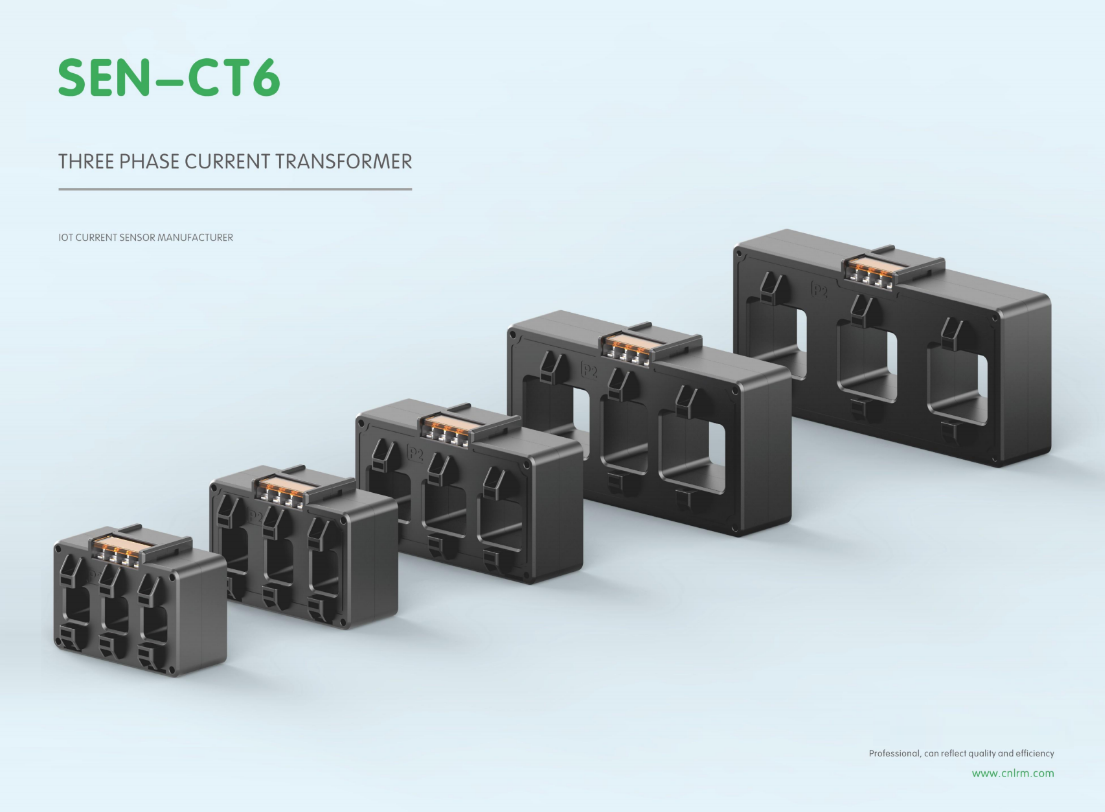
Most transformer selection guides push you toward nameplate ratings, but your real load rarely behaves like a clean, steady number. The best match starts with a few days of logged current demand—capturing morning inrush, midday peaks, and the lull after shifts. Once you see that pattern, you can stop paying for kVA you only touch for ten minutes a day, or avoid a unit that runs hot every afternoon.
Thermal behavior matters more than the label on the tank. A transformer can handle brief overloads if the average load stays within its insulation limits, but repeated spikes shorten life faster than a constant high draw. Plot your load duration curve and compare it against the unit's thermal time constant. If your peaks are sharp and short, a smaller transformer with active cooling or higher temperature rise rating may be the honest choice.
Also account for harmonic-heavy loads like drives and LED banks. They create extra heating that doesn't show up on a basic ammeter. In those cases, a K-rated unit or a slightly lower continuous loading is what keeps the winding temperatures in check. Matching isn't about adding safety margin on top of safety margin—it's about reading the actual shape of your demand and choosing a transformer that lives comfortably inside it.
Build Details That Show Up After a Few Years
You notice it in the door frames first. After three or four winters, the gaps that looked tight on day one begin to whisper when the heat kicks on. Cheap caulk shrinks, drywall seams ghost through the paint, and the slight slope in the hallway floor that nobody caught becomes a topic at breakfast. Builders who plan for this use real wood blocking behind the drywall, not just nails into air, so a towel bar doesn't pull loose the second time a kid yanks on it.
The same logic applies to exterior details. A roof flashing that's folded instead of taped will hold its shape long after the warranty expires. Window sills with an actual drip edge shed water away from the siding, while flat trim soaks it up and rots from the inside. These aren't things you can see in a walkthrough. They only surface after a few cycles of freeze-thaw, a couple of heavy rains, and the slow settling that every house does. When they don't surface, that's the detail.
Questions to Ask About Calibration and Drift
When you're evaluating any measurement tool, the calibration story matters more than the spec sheet alone. Ask how often the device is checked against a known reference, and whether that reference is traceable to a recognized standard. A vendor who shrugs and says "it's factory set" may be hiding a drift problem you'll discover later.
Drift isn't a yes-or-no question; it's about rate and direction. Find out what the typical drift looks like over weeks or months under real operating conditions. Does it move predictably in one direction, or does it wander? More important, can the system flag when drift exceeds a safe window, or do you need to catch it manually?
Finally, dig into the correction loop. If drift is detected, what does the recovery path look like? Is there a quick in-field adjustment, or does the unit need to go back for bench calibration? The best answers here won't rely on vague promises—they'll point to logged calibration history and a clear maintenance schedule.
Support That Matters When Measurements Go Wrong
A miscalibrated sensor, a slipped decimal, a unit that silently switched from metric to imperial—these aren't just errors on a spreadsheet; they're the moments your data stops making sense. When measurements go wrong, the loudest alarm rarely comes from the instrument. It comes from the gap between what you expected and what you actually got. The real support you need isn't a generic troubleshooting script or a chatbot that asks you to restart the device. It's someone who can read the silence in the numbers, trace the drift, and tell you whether the problem is in the probe, the process, or the person holding the clipboard.
What separates useful support from frustrating support is how it handles the messy middle: the half-logs, the intermittent faults, the readings that are only wrong on Tuesday mornings. A good support team doesn't just ask for the make and model—they ask what changed right before the anomaly. Was there a power surge? A firmware update nobody approved? A new operator who calibrated by eye instead of by procedure? They know that measurements fail in patterns, not in isolation. They'll walk you through checking the reference standard, the grounding, the ambient temperature, and the cable insulation, before ever blaming the hardware. And when they do find the culprit, they'll explain it in plain English, not a PDF of spec sheets.
That kind of support matters because every wrong measurement is a decision postponed, a shipment held, a safety margin quietly erased. You don't need someone to tell you the reading is off—you already know that. You need someone to help you trust the next reading. That means no rushed workarounds, no "just average the outliers," no closing the ticket before you understand the root cause. It means a support line where the person on the other end has seen this failure before and can say, honestly, 'Give me twenty minutes and I'll show you where the loop broke.' That's the support that turns a bad measurement from a crisis into a correction.
Learning From Existing Installations and Field Notes
Walking through an operating facility reveals what drawings alone cannot. Piping that looked straightforward on paper may snake around columns, access platforms never shown in plan view, or valve handles set at awkward heights. Field notes from these visits, scribbled during a shutdown or routine inspection, often capture the friction that designers miss: a drain that pools water, a cable tray that blocks a future tie-in, or a clearance that looks fine until someone tries to swing a wrench.
Those observations become the raw material for better decisions on the next project. Rather than repeating generic details, engineers can compare what actually worked against what caused repeated maintenance calls. Sometimes the most useful note is a photo of a corroded support base with a caption like "recoat before winter" or a sketch of a pump skid that had to be repositioned twice. Over time, these small lessons accumulate into a set of preferences that no code or standard can fully prescribe.
FAQ
Look for ISO 9001 for quality management, plus IEC 61869 compliance for instrument transformers. Depending on your market, you may need UL recognition or CE marking. A serious partner won't just list these—they'll show test reports from accredited labs and explain how their production line maintains consistency across batches.
Accuracy class tells you the error margin at rated current, like 0.5 or 0.2S. Burden is the load the secondary can drive without losing that accuracy. If you're measuring for revenue or energy management, you need a CT that holds its class across your actual burden range. A good manufacturer will ask about your metering device's input impedance before recommending a model.
Ask whether they use grain-oriented silicon steel or nanocrystalline cores, because that impacts linearity and saturation behavior. Then ask how they wind the secondary—uniform winding reduces leakage inductance and improves phase error. Companies that openly discuss these details usually have better process control than those that only quote a datasheet.
Request accelerated aging test data or field performance records from installations similar to yours. Also check whether they perform routine thermal cycling and vibration tests. Long-term stability isn't just about initial calibration—it's about how the epoxy encapsulation, core, and terminals hold up over 10 to 15 years in your operating environment.
If your switchgear or panel has unusual dimensions or your primary current range doesn't match standard ratios, customization saves you from using multiple CTs or oversized busbars. A supplier with in-house engineering can adjust the window size, ratio, and mounting without huge lead time. But for straightforward retrofit projects, standard models from a reliable catalog work fine.
Every unit should come with a traceable calibration certificate, ideally from an ISO 17025-accredited lab. Beyond that, ask if the manufacturer does 100% routine testing for ratio, polarity, and insulation resistance—not just batch sampling. If they can provide a serialized test report for each transformer you order, that's a strong sign of a measurement-focused company.
Look for void-free epoxy or polyurethane encapsulation that completely seals the windings against moisture and partial discharge. Ask about their curing process—vacuum potting reduces air bubbles that can become corona points. A visual inspection of a cutaway sample can reveal whether the core is centered and the windings are evenly spaced, which affects both safety and accuracy.
At minimum, they should offer technical guidance during installation, including burden calculation and wiring checks. If a batch fails in the field, they should be willing to analyze the root cause and not just ship replacements. Long warranty periods—five years or more—combined with responsive engineering contact indicate they stand behind their product's lifespan.
Conclusion
Selecting a three-phase current transformer partner goes beyond comparing datasheet accuracy figures. The real question is whether those numbers hold once the device is installed in your specific environment. A dependable manufacturer will discuss how the transformer behaves under partial loads, harmonic distortion, and fluctuating demand rather than just quoting a laboratory class rating. They should also ask about your actual load patterns—continuous, intermittent, or regenerating—because a transformer sized only by nameplate current can misread low-end currents and skew energy data. Over time, build quality becomes visible: terminal plating, encapsulation, and core stability determine whether the unit drifts or corrodes in humid or hot switchgear. Look for companies that can explain those material choices and show consistent field return data.
Calibration and drift deserve direct questioning. Ask whether the vendor provides traceable calibration certificates, expected drift curves, and recommendations for re-verification intervals. When measurements go wrong, the difference between a supplier and a partner is support: can they help you isolate whether the fault is in the transformer, wiring, or meter? Reliable partners often maintain field notes and case histories from similar installations, so they can point to patterns—e.g., nuisance tripping caused by inrush or zero-sequence errors—without you having to rediscover them. A company that openly shares lessons from existing installations, rather than hiding behind spec sheets, is more likely to keep your power measurement trustworthy over the long haul.
Contact Us
Contact Person: Liu Mengyang
Email: [email protected]
Tel/WhatsApp: 8618727589233
Website: https://www.cnlrm.com/en/