

Substantial Cement Grinding Aid for Enhanced Mill Output and Efficiency
2026-08-31
Every cement plant operator knows the grind: chasing higher mill output without sacrificing quality. Yet most grinding aids deliver only marginal gains. HAISEN takes a different route—formulating a substantial cement grinding aid that cuts through the usual trade-offs. In this post, we’ll unpack how its targeted chemistry reduces particle agglomeration, lowers energy consumption, and pushes mill throughput to levels that show up on your bottom line. If you’re tired of incremental tweaks, here’s where real efficiency begins.
When Mill Output Plateaus, Look at Particle Packing First
A plateau in mill throughput often triggers a hunt for worn liners, changes in ore hardness, or shifts in grind size. But before adjusting the control system or calling for a liner inspection, the first place to look is in the particle size distribution of the feed. Mill output doesn't just depend on how many tons you push through; it depends on how well those particles pack inside the grinding chamber. Poor packing leaves voids and uneven load distribution, making the mill work harder for the same result.
Particle packing directly influences energy transfer. When fines and coarse particles are out of balance, the grinding media can't get a solid grip on the material. Think of it like trying to crush gravel mixed with too much sand—the finer particles cushion the impact, while oversized rocks just bounce around. By adjusting the blend, particularly the ratio of fines to coarser material, operators can often recover lost throughput without touching speed or power settings.
The fix usually starts with a simple sieve analysis or an online particle size monitor. Don't assume the blend is right just because it comes from the same stockpile. Segregation during reclaim, changes in crushing circuit performance, or even seasonal moisture shifts can quietly alter packing behavior. Only after confirming the particle size distribution is optimized should you move on to more expensive or invasive troubleshooting.
The Link Between Grinding Aid Dosage and Specific Surface Area
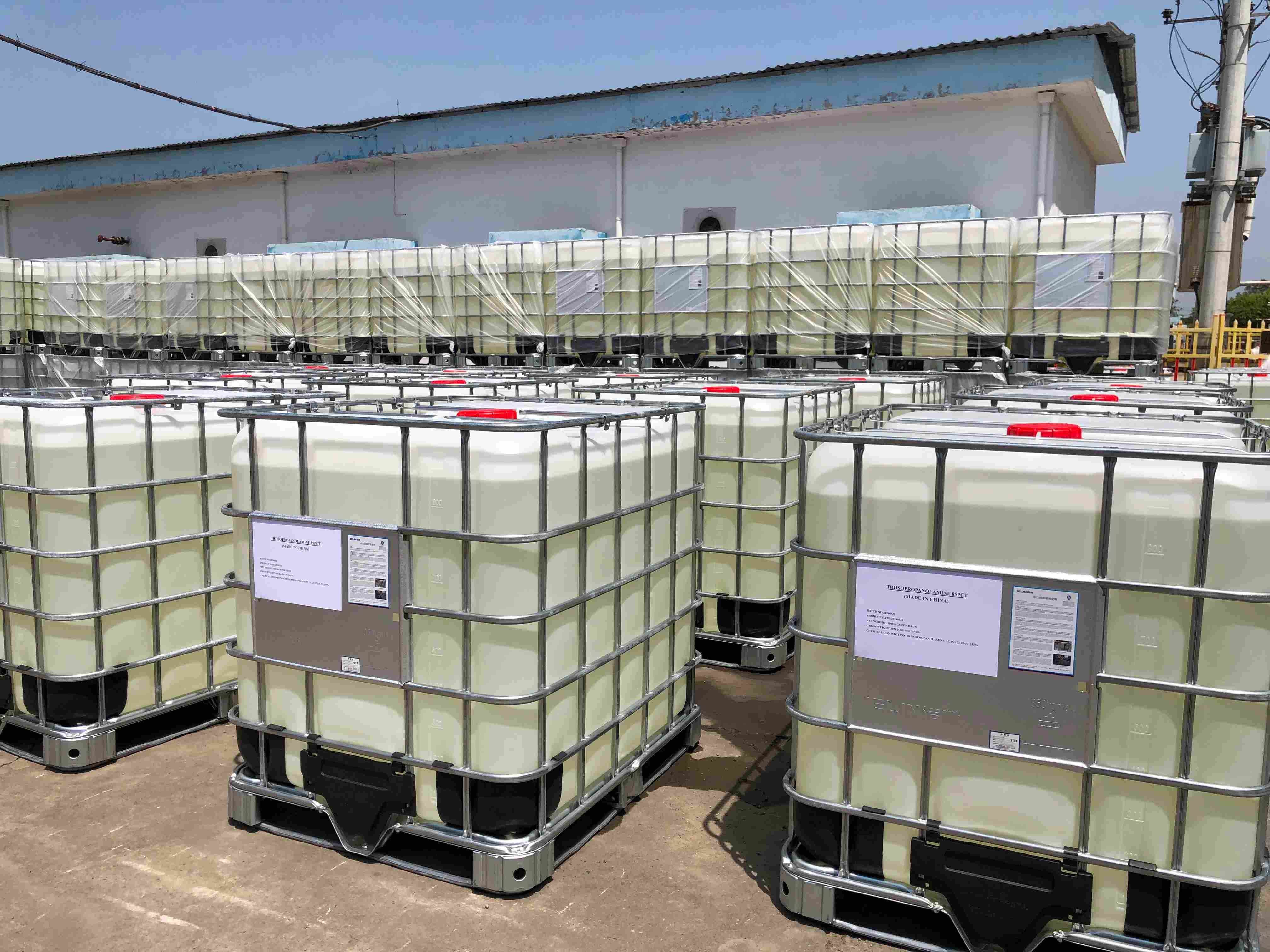
In cement grinding, the relationship between grinding aid dosage and specific surface area rarely follows a straight line. At low additions, surface area climbs quickly because the additive coats freshly fractured particles and prevents agglomeration, allowing more fines to pass through the classifier. But once the monolayer coverage is exceeded, extra molecules are no longer reducing surface energy in the same way; instead, they can form thicker films that interfere with particle-to-particle contact and even cause re-agglomeration. As a result, the Blaine value may plateau or dip even though dosage keeps rising.
Plant trials often show that doubling the grinding aid from, say, 0.02% to 0.04% by weight of clinker delivers a meaningful jump in specific surface area, while pushing beyond 0.06% brings only marginal gains or a slight loss. The exact turning point depends on clinker hardness, mill ventilation, and the chemistry of the amine or glycol-based additive. That is why a dosage-response curve is more useful than a single "recommended" number: it identifies where the surface area gain per gram of additive starts to fall sharply.
Operators sometimes mistake a higher surface area for better quality, but if it is achieved through excessive dosage, particle size distribution can become bimodal or the powder may flow poorly in silos. The practical target is therefore not maximum Blaine but the dosage at which surface area and grindability align with downstream performance, such as early strength or packing density. Tracking both surface area and residue on 45 µm sieve over a range of additive doses usually reveals this balance more clearly than any fixed dosage table.
Reducing Energy per Ton Without Touching the Separator
Operators often assume the separator itself is the only lever for cutting power draw, yet meaningful savings hide in the feed stream and auxiliary systems. One overlooked path is stabilizing particle size distribution before material ever reaches the separator. When the feed fluctuates between coarse surges and fine slumps, the separator works harder to maintain the same recovery, drawing extra amps just to cope with inconsistency. By tightening the upstream grinding circuit—whether through smarter media loading, better classification control, or simply damping surge bins—the separator sees a steadier load and runs closer to its best efficiency point. In practice, a 10% reduction in feed variability can translate into a 4–7% drop in specific energy, all without opening the separator's housing.
Another win comes from rethinking how material is presented to the separation zone. Slurry density and viscosity often drift outside the separator's sweet spot, forcing operators to push more energy through the drive just to maintain throughput. Instead of chasing higher motor output, teams can adjust dilution water upstream or tweak reagent dosage to lower pulp viscosity. Even something as simple as changing the feed entry angle or repositioning a splitter box—external to the separator—can distribute particles more evenly across the active zone. These tweaks lower the resistance the separator must overcome, directly cutting kilowatt-hours per ton while leaving the core machine untouched.
Finally, look at what happens after separation. A separator rarely works alone; it feeds downstream conveyors, pumps, and screens that can inadvertently create backpressure or recycle loads. If a poorly tuned pump sends part of the concentrate back for a second pass, the separator effectively processes the same tonnage twice, doubling its per-ton energy share. By fixing material handling bottlenecks—removing a constricted chute, resizing a transfer pipe, or syncing bin levels—the separator's true load drops without any internal modification. Energy per ton falls not because the separator changed, but because the whole circuit stopped making it fight against itself.
Why Dispersant Chemistry Outperforms Basic Glycol Blends
A basic ethylene or propylene glycol mix does a fine job lowering the freeze point and carrying heat, but it leaves every solid contaminant to settle wherever flow slows down. Dispersant chemistry changes that behavior at the molecular level. Instead of allowing hard water minerals, solder fines, or silicate particles to clump into sludge, dispersants surround those particles and keep them suspended in the fluid long enough to be captured by filtration or drained out during service.
The real performance gap shows up in systems with mixed metals or older piping. Glycol-only blends often form a stubborn layer of scale and sediment on heat exchanger surfaces, which quietly raises energy use and creates hot spots. A well-designed dispersant package prevents that insulating film from forming. It keeps corrosion byproducts moving, so they cannot bake onto tube walls or block narrow passages in plate exchangers.
That also translates into longer coolant life and fewer unscheduled cleanings. Basic glycol blends may look clean in a sample jar while a layer of sludge hides in low-flow zones. Dispersant chemistry holds that material in suspension, where it can be removed or filtered, rather than letting it accumulate until efficiency drops or a pump fails. It is a difference that comes down to whether the fluid simply tolerates debris or actively manages it.
Mill Retention Time and Its Overlooked Role in Throughput
Operators tend to fixate on feed rate, power draw, and classifier settings when chasing higher throughput, yet the time material actually spends inside the mill quietly determines whether those adjustments matter at all. Retention time isn't just a residence calculation—it's the hidden throttle on breakage efficiency. If slurry moves through too quickly, coarse particles escape before receiving enough impacts, forcing a recycle load that silently eats capacity. If it lingers too long, fines cushion the grinding media and waste energy on already-liberated material. The sweet spot varies with ore hardness, ball charge, and discharge design, but few plants actively measure or manage it beyond occasional tracer tests.
What makes retention time especially deceptive is how it shifts under load. When throughput increases, the mill often holds less material per ton because the discharge rate outpaces the feed surge—so retention time drops just when you need more grinding intensity. This creates a feedback loop: higher tonnage leads to coarser grind, which overloads the classification circuit, which returns more coarse material, further shortening effective retention. The result looks like a cyclone or pump problem, but the root cause is the mill losing its ability to retain particles long enough to break them. Tracking ball-to-pulp ratio and discharge viscosity gives a clearer signal than simple volumetric calculations.
The overlooked role becomes obvious when comparing mills with identical power and feed size but different internal configurations. A mill with a higher aspect ratio, narrower discharge grates, or a more aggressive pulp lifter design can achieve 15–20% higher throughput at target grind simply by holding the slurry a bit longer per pass. Conversely, a mill with worn grates or excessive water addition may look productive on paper while actually recirculating the same particles multiple times. For any grinding circuit audit, measuring actual residence time distribution—not just calculating nominal retention from volume and flow—often reveals the cheapest capacity gain available: adjusting slurry density or discharge geometry to make every ton spend its fair share inside the breakage zone.
Translating Lab Grindability Gains into Real Production Data
Lab-scale grindability improvements often look promising on paper, but the real test comes when those numbers meet the messiness of an operating plant. A 5% gain in Bond work index from a bench test doesn't automatically show up as a 5% throughput increase on the mill floor. The gap usually lies in feed variability, moisture swings, and the way recirculating loads shift once you're no longer dealing with a neat, split sample in a laboratory.
To bridge that gap, we started pairing each lab result with a short production trial instead of treating the lab report as the final word. For instance, when a new ore blend showed better grindability in the lab, we ran it through one of our smaller ball mills for a single shift, logging power draw, mill weight, and particle size every fifteen minutes. That gave us a direct line of sight from the lab's grams-per-revolution to the plant's kilowatt-hours per ton, and more importantly, it showed us where the lab numbers tended to overpromise.
What we learned is that the translation works best when you accept that the lab gives you a direction, not a destination. By tracking the ratio of predicted to actual energy savings across a dozen trials, we built a simple correction factor that accounts for our specific mill configuration and feed prep. Now when a lab test says grindability is up 8%, we expect roughly 4 to 5% in real production, and that's the number we use for scheduling and cost forecasts. It keeps expectations honest and avoids the usual finger-pointing between the lab and the operations crew.
FAQ
It comes down to how well it disperses fine particles during grinding. A substantial aid prevents them from coating the grinding media and re-agglomerating, so the mill keeps cutting instead of wasting energy on compacted material. That directly translates to more tonnes per hour.
Output gains typically range from 5% to 15%, depending on your mill design, clinker hardness, and current operating point. In some cases, especially with older open-circuit mills, the improvement can push past 20% once the circulating load stabilises.
Not if the dose is tuned properly. Overdosing can delay early strength development slightly, but most substantial aids are formulated to maintain or even improve late strength. A short mill trial with strength checks is always the safest way to confirm.
Yes, the two go hand in hand. Because the mill grinds more efficiently, the specific power consumption per tonne of cement usually drops. Many plants report a 3 to 8 kWh per tonne saving on the mill drive alone.
Look for coating on the grinding media, high mill outlet temperature, frequent blockages in the separator, or a rising circulating load without a matching output gain. These are classic symptoms of poor dispersion that a substantial aid can correct.
Start with a plant trial. Different clinkers and mineral additions respond better to certain chemistries—some aids favour slag or fly ash, while others are optimised for pure Portland. Ask the supplier for a lab grindability test first, then run a controlled mill trial.
Most products are applied at 0.02% to 0.1% by weight of cement. The exact rate depends on the aid’s concentration and your mill’s sensitivity, but even at the lower end you should see a measurable difference in throughput.
It often reduces pack set and improves silo discharge because the cement particles stay more separated and flow better. However, if you use very fine cements, you may need to re-evaluate airslide settings and baghouse performance to avoid dusting issues.
Conclusion
When mill output plateaus despite adjusting separator speed or grinding pressure, the first place to look is often the particle size distribution rather than the equipment itself. A substantial cement grinding aid shifts the packing behaviour of fine particles, reducing agglomeration and allowing the mill to produce a steeper, more efficient size distribution at the same Blaine. This effect is strongly tied to dosage: too little dispersant leaves surface area unoptimised, while a well-calibrated dose raises specific surface without over-grinding. The practical payoff shows up in kilowatt-hours per tonne, where even a small change in dispersion can lower energy consumption without touching the separator or altering circuit configuration.
Dispersant chemistry, particularly formulations built around polycarboxylate or amine-based polymers, consistently outperforms basic glycol blends because it addresses both surface charge and steric repulsion. Another overlooked lever is mill retention time; a shorter, more controlled residence time means fewer fines recirculate and more fresh feed gets processed, boosting throughput. Converting these gains from laboratory grindability tests to production data requires careful tracking of mill amps, classifier load, and clinker feed variability. Plants that treat grinding aid as a process variable rather than a commodity additive typically see an overall output increase of five to fifteen percent, with the largest gains coming from matching the dispersant chemistry to the specific clinker and separator conditions.
Contact Us
Contact Person: Sam Lee
Email: [email protected]
Tel/WhatsApp: 86-311-6617 8338
Website: https://www.horizonadmixtures.com/