

Stainless Steel Lag Bolt Solutions for Durable Outdoor Connections
2026-11-02
Outdoor projects live and die by their fasteners. A deck that creaks, a pergola that shifts, a gate that sags — more often than not, the culprit is a lag bolt that wasn’t built for the job. If you’re tired of rust streaks and snapped heads after one season, it’s time to look closer at stainless steel lag bolt solutions for durable outdoor connections. At Wanluo, we’ve seen how the right bolt turns a shaky assembly into a rock-solid structure. Here’s what to consider before your next build.
Stainless Steel Holds Where Plated Bolts Give Up
Plated fasteners look fine on a spec sheet until the first scratch breaks the zinc layer. From that point, rust creeps under the coating, and the bolt's strength quietly follows. Stainless steel doesn't rely on a surface shield. The chromium inside forms a self-healing oxide layer, so a gouge or thread nick won't start the same kind of hidden decay.
That difference shows up fast in marine, wastewater, or anywhere salt and moisture sit in joints for months. A galvanized bolt may outlast the warranty in a dry indoor frame, but bolt it to an aluminum trailer or a dockside bracket and the story changes. Stainless holds its tension, keeps threads from seizing, and doesn't leave rust streaks bleeding down the finished surface.
Replacing failed plated bolts isn't just the cost of new hardware. It's labor, downtime, and the risk of snapping a corroded fastener during removal. Stainless costs more up front, but the real savings come when you don't have to schedule that second visit.
Sizing a Lag Bolt Without Relying on Guesswork
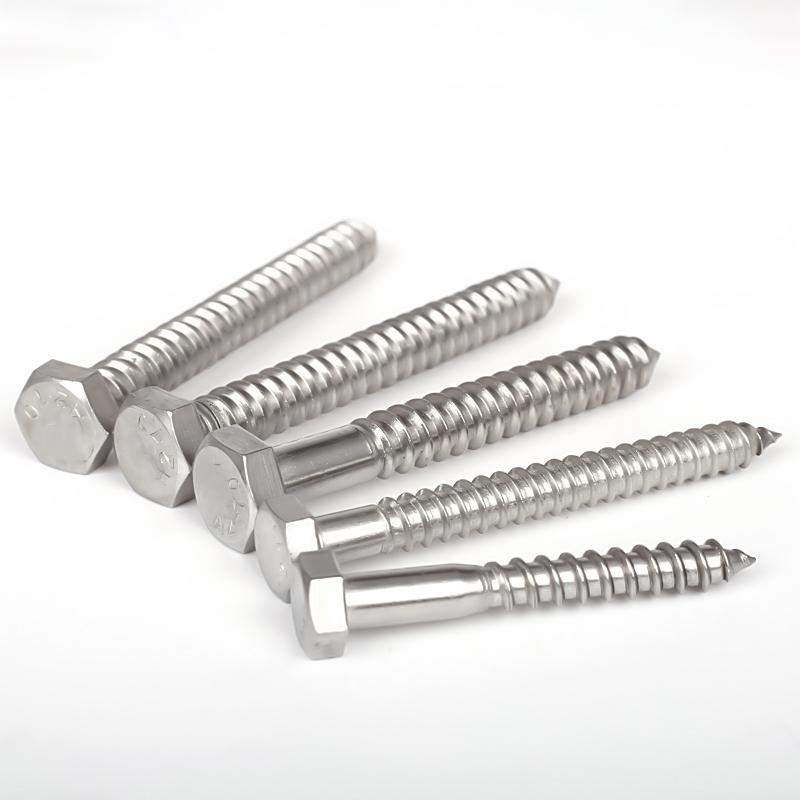
Nailing the right lag bolt size starts with understanding the load path, not just eyeballing the thickness of what you're fastening. Most guesswork comes from skipping the shear and withdrawal calculations that tell you whether the bolt needs to bite deeper or stand fatter. A quick way to anchor your choice is to measure the combined thickness of the materials being joined, then add at least half the bolt's diameter for the threaded engagement—but that's just the floor, not the final answer. If the connection will see vibration, cantilevered weight, or outdoor freeze-thaw cycles, you'll want a diameter one step larger than the minimum that fits the pilot hole, and a length that buries the threads fully into the main member rather than leaving them half-buried in the side piece.
Real-world sizing often fails when people treat lag bolts like ordinary wood screws and ignore the unthreaded shank. The shank section should span the thicker of the two materials so that the threads only engage the far side—this prevents the bolt from acting like a wedge that splits the near board. To check without charts, drill a pilot hole in scrap that matches the root diameter of the threads, run the bolt in by hand, and note where the shoulder stops. If the shoulder sits proud of the surface by more than a quarter inch, drop down a length or counterbore the hole. Conversely, if the threads bottom out before the head seats, you're losing clamping force and need a shorter bolt or a deeper pilot.
Another practical trick is to use the washer as a gauge: a lag bolt that's properly sized for its load will allow the washer to sit flat and snug without deforming the wood around it, while an undersized bolt will crush the fibers and start pulling through. When in doubt between two diameters, go with the larger one for shear and the longer one for withdrawal—the extra cost is negligible compared to a failed connection. Finally, keep a set of calipers or a bolt gauge on hand, because measuring the actual shank and thread pitch beats trusting the bin label at the hardware store every time.
Drill the Pilot Hole Right and the Timber Stays Intact
A pilot hole isn't just a nice step—it's what keeps the wood from fighting back. When you drive a screw into solid timber without one, the fibers have nowhere to go, so they push outward and split, especially near edges or in brittle species like oak or maple. The hole should match the screw's root diameter, not its full thread width. If you can hold the drill bit up against the screw and see only the threads peeking out past the bit, you're in the right ballpark.
Pay attention to depth too. Stop the bit just short of the screw's length so the tip still bites fresh wood at the bottom. In hardwoods, a drop of paste wax or soap on the threads eases the drive without softening the timber. For countersunk screws, follow the pilot with a countersink bit that cuts a clean recess; forcing the head flush without one crushes the surface fibers and leaves a ragged rim.
The drill itself matters less than a sharp bit and a steady hand. Run the drill at moderate speed and back it out once or twice if you feel resistance building—the chips need to clear, otherwise they pack the hole and can deflect the screw. On dense or resinous wood, bump the pilot diameter up a hair and test on an offcut. The goal is a screw that goes in straight, holds tight, and leaves the surrounding timber exactly as it was.
The Hidden Value of a Good Washer Stack
A good washer stack does more than save a few square feet; it quietly changes how a laundry space feels and functions. When the units are designed to sit together properly, the top controls land at a natural height, the door swings don’t fight each other, and the whole setup stops feeling like a compromise. You notice it in small ways—less crouching, fewer awkward reaches, and a room that finally makes sense even when the door is closed.
Build quality matters in ways that aren’t visible on a spec sheet. A solid stacking kit and a well-balanced lower unit absorb spin-cycle forces instead of passing them into the floor and walls. That means fewer rattles in adjacent rooms, less wear on internal components over time, and a machine that doesn’t gradually creep out of position. The hidden value here is longevity: a stable stack is less likely to develop leaks, drum misalignment, or the kind of chronic noise that makes people dread laundry day.
There’s also an underappreciated resale and rental angle. A clean, properly installed washer stack signals that the space was planned rather than improvised. Prospective buyers or tenants see an efficient laundry solution that doesn’t dominate the room, and they assume—often correctly—that the rest of the home received similar care. That perception can translate into real money, even though nobody lists “good washer stack” as a line item on an appraisal. It’s one of those background details that quietly improves daily life and long-term value at the same time.
Choosing Between 304 and 316 for Your Climate
Salt-laden air behaves differently depending on humidity and wind direction, so coastal selection is rarely a one-size-fits-all call. 316 holds up better where chlorides linger—think beachfront railings, shaded decks that never fully dry, or industrial zones with airborne particulates. 304 can work a few blocks inland if rain regularly rinses the surface, but stray salt deposits will eventually cause pitting around welds and crevices.
Arid inland climates pose the opposite challenge: low corrosion risk but higher surface dust accumulation, which can trap moisture overnight. Here 304 is usually plenty, unless you're near a heavily salted roadway or a swimming pool. If your local winter includes de-icing salts or your summer brings tropical downpours followed by intense sun, the extra molybdenum in 316 pays off by reducing the need for frequent cleaning and early replacement.
How Tight Is Tight Enough for an Outdoor Joint
Outdoor wood moves more than indoor stock, so tight doesn't mean cranked down until nothing can breathe. A properly fitted outdoor joint should close fully along its mating faces without forcing. If you need a clamp to pull a tenon into a mortise that you cut slightly oversized, that's fine. If you need a pipe clamp and a hammer, something is off.
For bolted or screwed connections, stop when the hardware is snug and the wood surfaces just begin to compress. You want enough pressure to keep water from pooling in the joint, but not so much that the surrounding fibers crush. In softwoods like cedar or pressure-treated pine, a fastener head can bury itself a sixteenth of an inch without harm; in hardwoods like ipe, flush is plenty.
After assembly, check the joint after the first few wet-dry cycles. A small hairline gap that opens in dry weather and closes after rain is normal. If it stays open or lets a feeler gauge slide in more than a quarter inch, tighten fasteners or shim the joint. The goal is a fit that holds its shape through movement, not one that is frozen solid.
FAQ
The chromium content in stainless steel forms a passive protective layer that resists rust and corrosion, so joints stay secure through rain, humidity, and temperature swings without needing paint or coatings.
Match the bolt length to the combined thickness of the materials plus enough bite into the receiving piece—typically about half the bolt's length in dense wood. Diameter should handle the shear load; for most decks and pergolas, 3/8-inch or 1/2-inch works well.
Yes, and they are actually recommended. Modern pressure-treated wood contains copper-based preservatives that can accelerate corrosion in ordinary steel, but stainless steel resists that chemical reaction and keeps the connection intact longer.
Always pre-drill in outdoor hardwoods and dense framing. A pilot hole slightly smaller than the bolt's core diameter prevents splitting and reduces driving torque, which is especially important when working near board edges.
304 offers good rust resistance for inland or lightly exposed areas, while 316 contains molybdenum for superior protection against salt spray and coastal moisture. If the project is within a few miles of the ocean, choose 316.
Use a slow drill speed, apply a small amount of anti-seize lubricant to the threads, and avoid over-tightening with impact drivers. Galling happens when friction generates heat, so steady pressure is safer than high speed.
No, the material does not suffer from hydrogen embrittlement or rust-related weakening the way coated steel can. As long as the joint is properly designed, the bolt maintains its clamping force for decades.
Decks, docks, pergolas, timber retaining walls, and exterior stair stringers all benefit, especially where the fastener is exposed to weather or in contact with damp wood.
Conclusion
When ordinary plated lag bolts surrender to rust, splitting, or shear, stainless steel keeps outdoor structures locked together season after season. The real difference shows up in coastal air or pressure-treated lumber, where 316 stainless shrugs off salt spray that quickly pits 304, and where 18-8 alloys outperform zinc coatings that flake away. Sizing a lag bolt isn't guesswork—rule of thumb is a diameter roughly one-third the thickness of the timber being fastened, but the pilot hole matters more than most builders admit. A hole too small invites splitting; too large strips the threads. Aim for a pilot diameter about 60–75% of the shank for hardwoods, slightly smaller for softwoods, and always clear the top board so the threads bite only the bottom member. Paired with a heavy flat washer and a split lock washer, the bolt head stops embedding into soft grain, and the joint stays rigid through seasonal expansion.
Tightening an outdoor lag bolt is a feel thing—you want the washer stack to just stop compressing the wood, not crush the fibers into a bowl. Back off a quarter turn if the timber shows cracks radiating from the head. For decks, pergolas, or ledger boards, over-torquing is the hidden killer: it preloads the wood past its elastic limit, then the first frost or wind gust finishes the job. Instead, use a torque wrench set to about 70% of the bolt's rated proof load, or simply stop when the head pulls snug and the washers stop spinning. The hidden value of a proper washer stack isn't just load spread—it's the way a thick fender washer plus a spring lock washer keeps the bolt from working loose under vibration from foot traffic or wind. Choose 304 for inland or dry climates where cosmetics matter, but step up to 316 anywhere within ten miles of salt water, near chemical runoff, or in constantly damp shade. Stainless steel holds where plated bolts give up, not because it's stronger on day one, but because it doesn't quietly corrode from the inside out. That's the difference between a connection you inspect every spring and one you forget about for twenty years.
Contact Us
Contact Person: Shane
Email: [email protected]
Tel/WhatsApp: 8613357785029
Website: https://www.wanluohardware.com