

Soaker Pad Machine Factory: A Look Inside Modern Absorbent Pad Production
2026-09-05
Ever wonder what actually goes on inside a soaker pad machine factory? It's not just about running fabric through rollers—modern absorbent pad production involves precision engineering, smart material choices, and a relentless focus on consistency. In this post, we're pulling back the curtain, and Womeng is your guide to the machinery making it all possible.
How a Modern Soaker Pad Machine Handles Fluff Pulp
Modern soaker pad machines treat fluff pulp as a precision material rather than a bulk filler. The pulp is fed through a hammermill or defibration unit that breaks compressed rolls into individualized fibers. Air-assisted forming then carries these fibers onto a moving wire or drum, where vacuum pulls them into a uniform mat. Sensors monitor basis weight and density in real time, adjusting feed rates on the fly to keep the core consistent.
Once the fluff layer takes shape, it passes under a spray or injection system that applies superabsorbent polymer in a controlled pattern. Some machines use a twin-layer process—fluff, SAP, then a second fluff layer—to lock the absorbent core together. The challenge is keeping the fluff from clumping or creating weak spots, so modern lines rely on closed-loop feedback and gentle compression rollers instead of hard pressing.
At the discharge end, the formed core is cut to length without densifying the edges. Quality checks compare moisture, thickness, and fiber distribution against the recipe, and any drift triggers automatic corrections upstream. That end-to-end control is what lets a single machine produce different absorbency profiles for adult care, feminine hygiene, or infant diapers without lengthy changeovers.
Inside the Forming Chamber Where Cores Take Shape
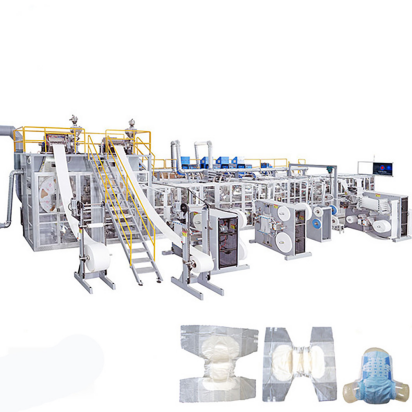
The forming chamber is tighter than most outsiders imagine, a steel box just wide enough for the core box and the blow plate above it. Sand enters at pressure, not gently—it hits the pattern in a burst that packs the grains into every thin rib and deep pocket. The smell is sharp, a blend of dry silica and warm resin, and the floor beneath the hopper carries a faint tremor while the cycle runs.
Inside, the real work happens in seconds. Air vents hidden in the tooling let trapped gas escape, otherwise the core would come out soft or split along its parting line. Once the sand has filled the cavity, an amine gas or heat pulse moves through the box to harden the binder. The chamber stays sealed until the core reaches a hardness that can survive ejection; open too early and you get a slumped edge, too late and the cycle time climbs.
A well-tuned chamber doesn't just make the same shape over and over—it reads what the sand is doing. Pressure sensors near the blow plate flag a clogged vent before it ruins a batch, and thermocouples track the cure curve for the shift lead to check. Tool changes happen through the side door, and the chamber's seals, pins, and wear strips get more attention than the core box itself. That's where the consistency comes from.
Ultrasonic Bonding Instead of Glue: A Cleaner Line
Replacing adhesive steps with ultrasonic bonding changes more than just the bill of materials. The line no longer needs curing racks, ventilation for solvent fumes, or the constant cleanup of squeeze-out. Operators spend less time wiping down fixtures and more time keeping throughput steady.
Ultrasonic energy welds the materials at the contact points in under a second. Because there's no wet chemistry involved, the risk of contamination on nearby surfaces drops sharply. That's especially useful when assembling medical or food-contact parts where residue is a real compliance headache.
The clean line also shows up in maintenance logs. Without adhesive pots to purge or nozzles to unclog, changeovers become a matter of swapping tooling rather than flushing fluid paths. It's a quieter, drier process that tends to make the whole cell feel less like a chemical station and more like a precision press.
The Real-Time Absorbency Checks Most Buyers Never See
On a busy production line, a thin stream of synthetic urine hits the core of a diaper at a precise angle and speed. Sensors track the liquid’s path across the surface, feeding data back to a screen that shows a live heat map of saturation. This isn’t a lab demo — it’s the type of real-time absorbency check that runs every few seconds on high-end lines, yet never makes it onto the packaging.
Most buyers only see the final claims: “holds up to X hours” or “12-hour dryness.” What they miss is the machine that randomly pulls samples mid-run and tests them under load, measuring not just total capacity but also how quickly liquid moves away from the point of contact. If the wicking speed drops by a fraction, the batch is flagged before it ever reaches a box.
These checks matter because real-world accidents don’t happen in perfect lab conditions. The best brands test with different flow rates, temperatures, and even pressure from a baby’s weight. The data from these invisible tests is what separates a diaper that leaks at 3 a.m. from one that stays dry until morning.
Quick Size Changeovers on a Soaker Pad Line
Switching between pad sizes on a soaker line used to eat up a full shift. The old setup required loosening dozens of bolts, repositioning side guides, and recalibrating the trim knives by eye. Now the changeover happens in under fifteen minutes, and most of that time is just walking around the machine. The key was replacing fixed stops with quick-release clamps and mounting the guide rails on linear bearings so they slide into preset positions. Each size has its own colored marker, so even a new operator can match the rails to the job without checking a manual.
What often gets overlooked is the effect on material waste. During a traditional changeover, you run scrap until the web tracks straight and the adhesive pattern lines up. With the new setup, the first pad off the line after a size switch is usually sellable. The team also stopped using trial-and-error adjustments on the folding plates. Instead, the plates are keyed to a size-specific cartridge that drops in from above, and a single cam lever locks it. That removes the need for wrenches and feeler gauges entirely.
The real benefit shows up when the schedule has multiple short runs in one day. A line that previously handled two sizes per shift can now switch five or six times without falling behind. Operators no longer dread the call for a different absorbency or width. And because the changeover is so repeatable, the quality team spends less time checking seam alignment on the first few pads. The whole line runs closer to nameplate speed right after a switch, which is rare in this category.
From Raw Bale to Sealed Bag: One Pad’s Journey
Inside the receiving dock, a compressed bale of fluff pulp sits heavy on the pallet, still carrying the faint scent of pine from the mill. Workers slice the steel straps and the bale relaxes outward, breaking into soft layers that will soon disappear into the line. The first machines tease the fibers apart with rotating pins, turning dense sheets into a cloud of airy cellulose. It’s not gentle—it’s deliberate, and every pass through the carding drums aligns the strands a little more, building the pad’s absorbent core from the inside out.
Further down, a thin sheet of nonwoven material is fed beneath the core, while a top layer of perforated film is rolled over it. Adhesive sprays hit the edges in quick, even pulses, and the sandwich is pressed between heated rollers until the layers bond without crushing the loft. A rotary knife slices the continuous web into individual pads, each one still warm as it drops onto the inspection belt. Cameras check length, width, and the placement of the core, rejecting anything off by more than a millimeter.
The last stretch is all about sealing. Each accepted pad is folded, wrapped in a poly film, and shuttled into a vertical form-fill-seal unit. Two jaws close around the package, heat-sealing the ends with a crisp hiss. The sealed bag tumbles onto a conveyor, passes a final weight check, and slides into a carton bound for the warehouse. What started as a raw bale is now a sealed, sterile, ready-to-use pad—no shortcuts, just a steady rhythm from fiber to finished product.
FAQ
It automates the layering, cutting, and bonding of absorbent materials into uniform pads used in products like medical underpads or food trays.
Modern lines use servo-driven feeders and vision systems to reduce manual handling, which improves consistency and lets a small crew run multiple machines.
Common inputs include fluff pulp, superabsorbent polymers, nonwoven topsheets, and polyethylene backsheets, all fed from rolls or bales.
Sensors monitor pad weight, thickness, and absorbency in real time, and out-of-spec units are automatically rejected before packaging.
Dedicated machines are tuned for high loft materials and precise fluid distribution, so they achieve faster cycle times and less waste.
Yes, most designs allow quick changeovers with adjustable cutting lengths and programmable glue patterns, supporting multiple product SKUs on one line.
Raw material storage is placed near unwinding stations, while finished pads move to packaging without crossing worker pathways, reducing contamination risk.
More factories are adopting IoT-enabled diagnostics and energy-efficient drying systems, along with bio-based films to meet sustainability goals.
Conclusion
Walking the floor of a soaker pad machine factory, the first thing that stands out is how raw bales of fluff pulp are opened and fed into the system without creating clouds of dust. A series of hammermills and air conveyors breaks the sheets apart, then moves the fluffed fiber into a forming chamber where rotating drums and precisely shaped pockets pull the pulp into a core. It is here that thickness, density, and edge definition get locked in before the pad moves on. Instead of a hot-melt glue station, many modern lines use ultrasonic bonding to seal the nonwoven layers around the core. The result is a cleaner process, no adhesive fumes, and a pad that feels softer at the edges. Along the line, cameras and sensors run real-time absorbency checks, dripping a measured amount of test liquid onto sample pads and tracking spread rate, rewet, and leakage far more often than most buyers assume.
What surprises many visitors is how quickly the machine can switch from one product size to another. Modular forming inserts, push-button recipe changes, and adjustable cutting and folding stations allow a line to jump from a slim feminine hygiene pad to a thick adult incontinence core in minutes, not hours. That flexibility changes how factories plan production and keep inventory lean. Watching a pad travel from raw bale to sealed bag, it passes through embossing, slitting, folding, stacking, and packaging, with metal detection and code printing before the bag is sealed. The whole journey is continuous and surprisingly quiet. The real difference in a modern absorbent pad line is not just speed, but the ability to hold tight tolerances pad after pad, while quality checks happen inside the process instead of at the end of the run.
Contact Us
Contact Person: Jessie Lai
Email: [email protected]
Tel/WhatsApp: 86-188594442931
Website: https://www.wm-machinery.com