

Sidewall Cleated Conveyor Belt Manufacturer Insights for Reliable Incline Material Handling
2026-11-19
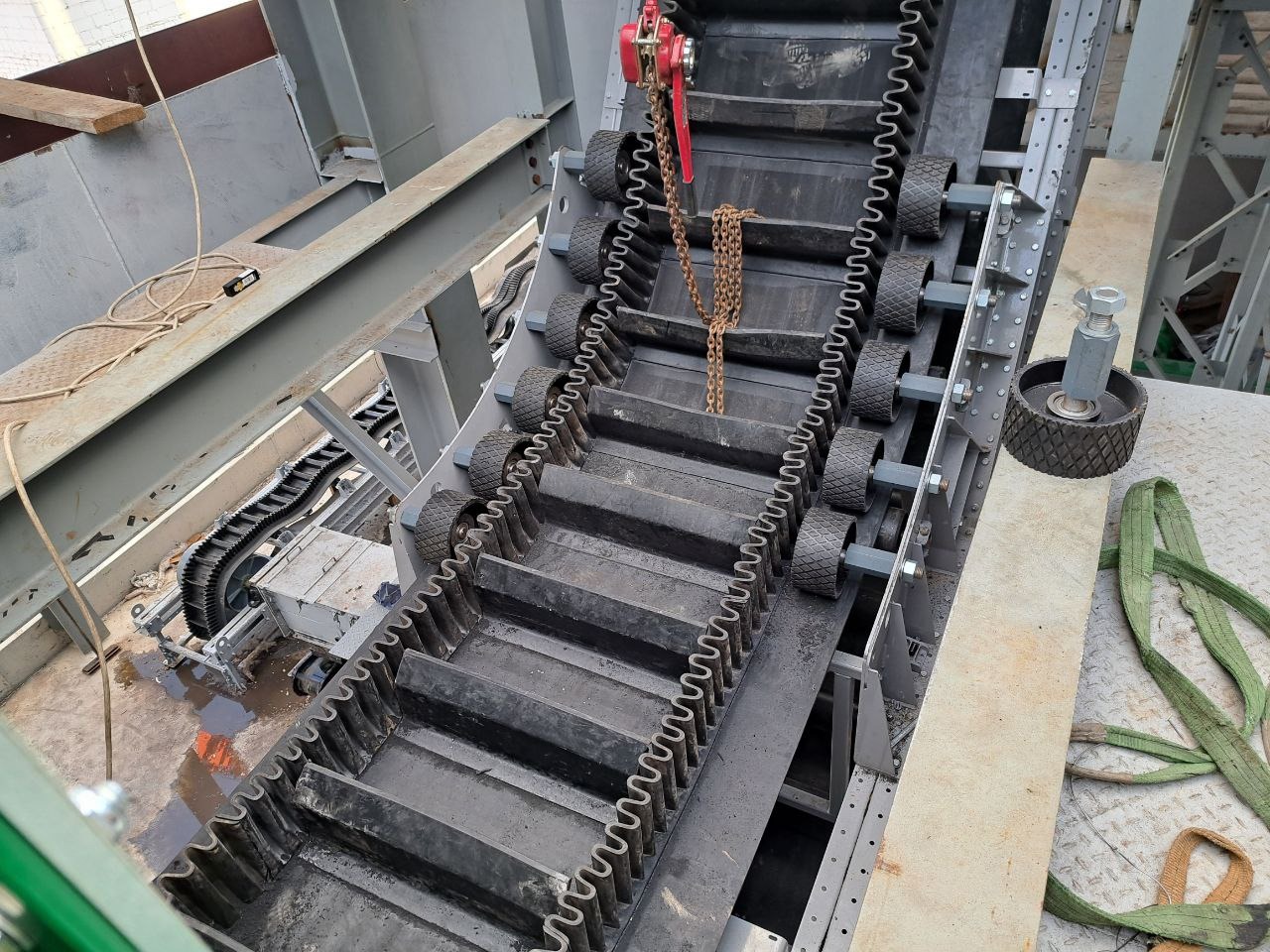
Moving material up a steep incline often exposes the weakest points in a conveyor system—spillage, tracking drift, and premature edge wear. YUFENG brings a different approach to sidewall cleated conveyor belt manufacturing: matching cleat profile, base belt flexibility, and sidewall bonding to real incline conditions instead of relying on one-size-fits-all stock. In this post, we share practical manufacturer insights that help you specify a belt that holds its line and keeps material moving reliably.
The Hidden Geometry Behind a Reliable Steep-Angle Belt
Most people assume a steep-angle belt lives or dies by its cleat pattern, but the actual foundation is less visible. The hidden geometry starts at the pulley interface, where the belt's transition from flat to troughed is mapped against the natural sag curve between idlers. If that curvature is too aggressive, the belt fights itself on every revolution. The result is not sudden failure but a slow, expensive fatigue that shows up as edge cracking, splice fatigue, and cover wear that never seems to follow a logical pattern.
What separates a reliable steep-angle belt from a constant maintenance headache is how well the cross-rigid breaker and the longitudinal cords negotiate conflicting demands. The belt must be stiff enough across its width to hold material in the pockets, yet flexible enough along its length to wrap the small-diameter terminal pulleys without internal shear. That compromise is rarely visible in a brochure, but you can feel it in the belt's hand — a slight cupping that resists flattening, yet bends smoothly in one direction only. When this balance is off, no amount of cleat redesign will fix the underlying stress concentration.
Finally, the geometry of the sidewall base deserves more attention than it usually gets. The transition from rigid sidewall to flexible belt body is a stress riser hiding in plain sight. A properly engineered steep-angle belt uses a graduated rubber wedge that spreads that bending energy over a wider area, almost like a fillet weld in structural steel. If that transition is too abrupt, the sidewall begins to peel at the root, and the failure looks like poor adhesion — but it is really a geometric problem that was built in from the start.
What Cleat Design Tells You About Material Control
Look closely at the base of a molded cleat and the whole molding sequence starts to reveal itself. Sharp transitions where the studs meet the plate usually mean the polymer was injected fast and cooled unevenly, leaving residual stress that turns into hairline cracks after a season of hard cuts. A softer radius and a gradual wall thickness at the stud base, by contrast, point to slower fill and a stronger handle on fiber orientation. Those shapes are not cosmetic. They record how carefully the material was held from gate to final freeze.
The surface finish tells the same story from the outside. A high-gloss, almost wet plate can result from a hot mold and fast skin cooling, which stiffens the outer layer but leaves the core less predictable. A matte or lightly etched finish often reflects a tooling decision to improve venting or release without changing the flex character. Small as these details seem, they separate a plate designed for repeatable flex from one built mainly to keep cycle times short.
Hardness transitions are where the design intent becomes clearest. Some plates keep a stiff heel and midfoot while allowing forefoot flex by varying thickness within a single polymer. Others switch materials at an obvious boundary. When that boundary sits away from high-stress flex points and stays consistent across sizes, it shows the design team accounted for shrinkage and local load. When it wanders or lands under the ball of the foot, the look was likely approved before the mechanics were worked out.
Matching Belt Carcass Strength to Incline Loads
On steep inclines, the carcass does more than carry a static pile of material. Every meter of lift adds a tension component that must be pulled through the belt’s load-bearing cords, and this component climbs quickly once the slope angle moves past roughly 10 degrees. A belt that looks adequate on a horizontal profile can fail prematurely on a slope because the effective working tension is dominated by the vertical rise, not just idler friction or material weight.
Selecting the carcass rating starts with the peak steady-state tension at the high-tension side of the drive, but incline lines need extra scrutiny for regenerative braking, loaded stops, and restarts. If the drive holds back a fully loaded belt on a decline or restarts it on an upward slope, transient forces can exceed the steady-state value by a wide margin. The carcass, splice, and pulley diameters should be evaluated together, since a heavier carcass may require larger pulley diameters and a stronger splice to actually deliver its rated strength.
Because the carcass also resists edge ripping, impact, and troughability limitations, the right choice is rarely just the next standard rating above the calculated number. It is worth checking the actual installed tension, the weakest splice point, and the duty cycle before finalizing the belt specification.
Spotting Manufacturing Shortcuts Before Installation
Most shortcuts won't announce themselves with a missing bolt or an obvious crack. They hide in places people rarely look during receiving: the back side of a bracket, the evenness of a powder coat inside a flange, the spacing of welds that should be consistent but drift once the fixture was rushed. Before you sign the delivery paperwork, grab a bright light and a mirror and spend ten minutes checking those awkward areas. Mismatched fastener heads, grind marks under fresh paint, thin spots in galvanizing, and overspray that doesn't belong often point to a supplier who wanted to save time rather than do the work twice.
The paperwork should match the metal, not just the purchase order. Compare the material test reports against the heat numbers stamped on the parts, and make sure the revision on the drawing is the one sitting in front of you. If a serial number is missing, a traceability tag looks reprinted, or the certification only covers part of the order, treat it as a warning rather than a clerical error. For critical dimensions, don't rely on the supplier's own inspection sheet. Check a few bores, threads, and mating faces with your own micrometer or plug gauge before the equipment gets buried into an assembly where a few thousandths can cause a shutdown later.
When something feels light, sounds dull, or looks a little too clean, slow down. A casting that rings oddly under a light tap may have internal voids. A flange face that appears freshly painted may be hiding pitting or a repair that should have been disclosed. Torque a sample of fasteners to the specified value, and if any one of them moves before it should, recheck the lot. The cost of rejecting or quarantining parts at the receiving dock is minor compared with discovering a manufacturing shortcut after the equipment is installed and the warranty clock is already running.
How Sidewall Height Shapes Capacity and Cleanability
Raising the sidewall does more than just make a vessel look deeper. With free-flowing materials, a taller wall often translates into useful volume only up to the point where the product’s angle of repose takes over. Beyond that height, material builds in the center while corners and edges stay empty, so the nominal capacity gain disappears under real loading conditions. For cohesive or fluffy products, the opposite can happen: higher walls allow vibration or compaction to settle the load, squeezing out trapped air and adding weight without widening the footprint.
Cleanability rarely improves with height. Deep sidewalls block line of sight, limit arm reach, and create shaded zones where rinse water or spray balls lose pressure before they hit the surface. Product tends to pack into the lower corners and along the wall-floor junction, exactly where a taller sidewall makes access awkward. Adding removable panels, larger radii, or drainage slopes helps, but every extra inch of vertical surface adds area that must be wetted, inspected, and dried.
The practical balance usually comes from matching sidewall height to the largest realistic batch rather than the absolute maximum fill. Splitting a deep vessel into lift-out sections or using a sloped wall with a smooth transition to the floor can preserve capacity while keeping cleaning manageable. Where formulations change frequently, a lower profile with a wider base often wins because it shortens washdown time and makes visual inspection more reliable than a taller, harder-to-reach configuration.
Asking Suppliers the Right Questions on Steep Conveying
Material behaviour rarely gets the attention it deserves when people compare steep conveying options. Ask whether the supplier has run the same product at a comparable angle, and make them show how the system handles fines, moisture, and oversized lumps without burying the tail section or choking the discharge. A quick 'yes, we can do that' is not enough; you want the specific point where carry-back begins, where impact wear concentrates, and what changes when the feed swings outside the design range.
Capacity numbers look clean on a data sheet but rarely match the way a plant actually runs. Ask what happens when the upstream process surges, when the material is wet on a Monday morning, or when the belt runs half-empty for an entire shift. The useful answer is not the rated tonnes per hour but the supplier's explanation of drive sizing, tracking control, and clean-out access under those less-than-ideal conditions.
Maintenance people will judge the purchase long before the project team signs off. Ask how the supplier expects the skirt liners, scrapers, and belt splices to be reached on a steep section, and how long a planned stop really takes. Request a reference site with similar lift and operating hours, then ask what that site would change if it were buying again.
FAQ
The corrugated sidewalls and transverse cleats work together to hold material in place, so you can move bulk products up angles that would cause spillage on a standard flat belt. That reduces the need for long horizontal runs and extra transfer points.
They show up in mining, construction, agriculture, recycling, and port operations. Anywhere bulk solids like grain, gravel, coal, or fertilizer need to be lifted quickly without building a massive inclined structure.
It depends on the material and cleat profile, but many installations run at 30 to 45 degrees. Some designs reach 60 degrees or more, especially for free-flowing materials with properly matched cleat heights and belt stiffness.
Look at how they size the cleat type, sidewall height, and belt carcass for your specific material density and lump size. A reliable maker will ask about throughput, moisture content, temperature, and drop height rather than offering a generic belt.
The basics still apply, but inspections should focus on sidewall cracking, cleat detachment, and edge wear. Tracking is especially important because a misaligned belt puts uneven stress on the sidewalls and shortens service life.
It helps to match the cleat profile to the material's flow characteristics and use a belt cover with the right release properties. In some cases, adding small vibrators or belt scrapers near the discharge point also keeps the cleats from packing.
They often can, particularly when you want gentler handling, higher capacity, or less spillage around the loading zone. That said, bucket elevators still win in some very high-lift or heavily abrasive applications, so the choice depends on the full system layout and operating costs.
Conclusion
Reliability on a steep incline rarely comes from a single feature; it starts with geometry that is easy to overlook. The spacing, base width, and profile of cleats determine whether material stays controlled through the transfer zone or slips backward under surge loads. A taller sidewall does not automatically mean better handling. If the corrugated sidewall is too high or too stiff for the product, discharge can become sluggish and cleanup more difficult, especially with moist or sticky materials. Equally important is what sits under the cleats: the carcass must absorb the repeated flexing and tension changes that occur as the belt rounds small pulleys while carrying a raised load. Skimping here shows up later as edge cracks, delamination, or premature splice failure.
Supplier conversations reveal more than datasheets. Ask how cleat profiles are matched to burden characteristics and whether the manufacturer runs adhesion tests across the full width, not only at isolated sample points. Look for evidence that base belts are built with enough transverse rigidity to keep the sidewalls upright under load. It is also worth asking about tolerances on cleat height and spacing; uneven geometry creates localized wear and tracking problems. The difference between a dependable incline belt and one that constantly spills, tears, or tracks poorly is often hidden in these manufacturing details rather than in the catalog rating. Vendors who can explain those choices plainly tend to build belts that hold up where the angle gets steep.
Contact Us
Contact Person: Jayce
Email: [email protected]
Tel/WhatsApp: 8615318787602
Website: https://www.yuphengbelt.com/