

Rooftop Guardrail Companies from China: Top 10 Manufacturers to Watch
2026-11-02
Rooftop safety is no longer just about meeting code—it’s about choosing partners who combine structural integrity with smart solar integration. As China cements its role as a global hub for rooftop guardrail manufacturing, a handful of companies are redefining what buyers should expect. Among them, Topfencesolar has drawn attention for its approach to merging guardrail systems with solar functionality. But they’re not alone. This list profiles ten manufacturers worth watching, from established exporters to fast-moving innovators.
Not Just Metal Bars: How Chinese Suppliers Rethink Rooftop Fall Protection
For years, rooftop safety meant one thing: heavy galvanized steel bars welded into place, often as an afterthought. Chinese suppliers are now dismantling that assumption. Instead of treating fall protection as a static metal cage, forward-thinking manufacturers are introducing modular aluminum systems that click together without welding, resist corrosion in coastal climates, and can be reconfigured as roof layouts change. The shift is less about replacing steel with another metal and more about rethinking the entire user experience—from installation speed to long-term maintenance.
A second wave of innovation comes from blending safety with building intelligence. Some suppliers now embed load sensors and tilt indicators directly into anchor points and guardrail bases, feeding real-time status to a facility manager’s phone. This turns a passive physical barrier into an active monitoring network. At the same time, designers are using powder-coated finishes and low-profile bases to make rooftop equipment blend with modern architecture rather than scream industrial add-on.
Cost remains a decisive factor, but Chinese manufacturers are proving that affordable does not have to mean crude. By engineering high-strength aluminum alloys and using automated extrusion lines, they deliver fall protection that meets international load requirements at a fraction of the weight and price of traditional steel. The result is a quiet shift: rooftop safety is becoming a considered part of the building envelope, not just a row of metal bars bolted to the edge.
From Shenzhen to Sydney: Export-Ready Guardrail Systems Built for Local Codes
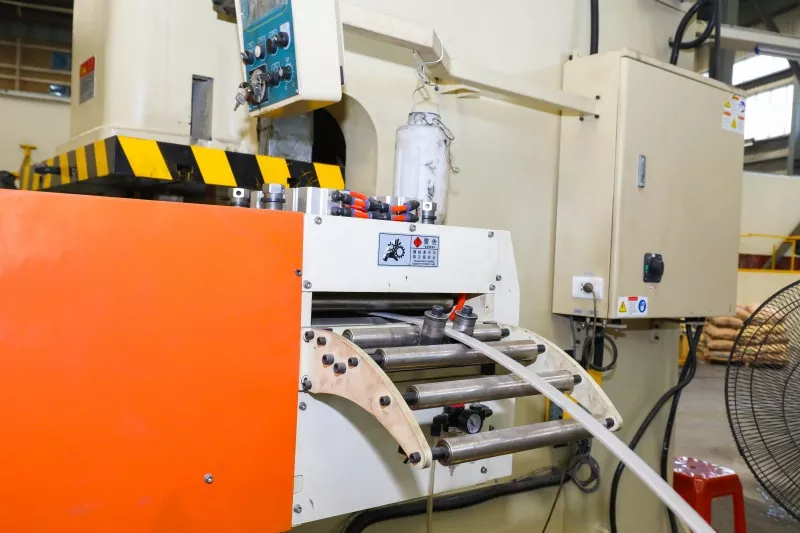
Manufacturing in Shenzhen gives these guardrail systems a practical edge that goes far beyond lower labour costs. The city's metal fabrication district has refined the art of fast design iteration, so when a Sydney engineer flags a non-standard post spacing or an unusual wind load requirement, the adjustment rarely adds weeks to the schedule. Every batch is checked against AS/NZS 1170 load combinations and the relevant parts of the National Construction Code before it leaves the floor, which means the product arriving in Sydney is already aligned with local structural expectations.
Sydney's coastal environment is another factor built into the design rather than treated as an afterthought. Hot-dip galvanising and marine-grade powder coating are standard on export orders, with extra attention given to weld seams and cut edges where corrosion tends to start first. The result is a guardrail that looks clean on a harbour-side walkway or a commercial rooftop, but does not demand constant maintenance from the facilities team.
Logistics from Shenzhen to Sydney are managed as part of the product package, not left to chance. Components are pre-assembled in labelled modules, packed into containers with clear installation drawings, and documented to clear Australian customs without delay. That level of preparation allows local installers to move quickly on site, reducing the usual back-and-forth that comes with imported systems and keeping the project on track from dock to handover.
The Hidden Testing Labs Behind China's Toughest Rooftop Rails
Somewhere on the industrial outskirts of Guangdong, behind a nondescript metal door, a rooftop rail gets yanked sideways by a hydraulic ram until it screams. The engineers watching the strain gauges don't flinch—this is just Tuesday. These aren't product showrooms or certification offices; they're private testing pits run by the manufacturers themselves, where China's strictest rooftop guardrail standards are chased down to the last millimeter of deflection.
The work leans heavily on failure. Samples are baked under UV lamps for weeks, doused in salt spray, then frozen and struck with a weighted pendulum meant to mimic a grown man running full tilt into the rail. One lab even has a roof deck mounted on a shaker table to reproduce the low-frequency wobble of a high-rise in a typhoon. The goal isn't to prove the rail survives—it's to find the exact point where it doesn't, so the next batch gets a thicker post or a deeper weld.
What makes these labs hidden isn't secrecy; it's pragmatism. They sit inside factories, staffed by night-shift machinists who tape over the brand names on competitor samples before cutting them apart. No glossy reports get published. The only output is a quietly updated spec sheet and a rail that holds when someone's life leans against it.
Why European Contractors Are Switching to Chinese Edge Protection
Cost pressure remains the obvious driver. With project budgets tightening across the continent, European contractors are finding that Chinese edge protection systems now deliver comparable—and often superior—impact resistance at a fraction of local prices. The early skepticism about quality has largely faded as leading Chinese manufacturers have invested heavily in automated production lines and third-party testing. Many now hold ISO 9001 certification and submit their products to EN 13374 testing, giving site managers the documentation they need without endless back-and-forth.
What is less talked about is the flexibility. A contractor working on a retrofit in Rotterdam or a bridge rehab in Lyon rarely needs off-the-shelf lengths. Chinese suppliers routinely accommodate custom profiles, non-standard hole spacing, and mixed-colour orders with lead times that European mills struggle to match. This agility means fewer delays on site and less waste from cutting standard sections to fit awkward geometries. It is a practical advantage that shows up directly in the programme.
Word of mouth has also shifted. Five years ago, specifying Chinese edge protection might have raised eyebrows in a site meeting. Today, it is increasingly common to hear a project engineer mention a Chinese brand that performed well on a previous job. The combination of documented compliance, shorter delivery windows, and a supply chain that does not buckle under seasonal demand has turned a once-risky choice into a routine procurement decision for contractors across Germany, the Netherlands, and Scandinavia.
BIM-Ready or Custom? What Top Chinese Manufacturers Actually Deliver
Many Chinese suppliers advertise BIM-ready product libraries, but the files often fall short in practice. A generic RFA with a few dimensional parameters doesn't survive coordination meetings when connectors, clearance zones, and service schedules are missing. Top manufacturers have invested in in-house BIM teams that build native Revit families, IFC models, and sometimes add-ins for automated placement. They understand that architects need more than a 3D block—they need parametric behavior, accurate material data, and clear LOD statements.
On the custom side, the story shifts. Custom fabrication is common, yet some factories still hand off CAD drawings only, forcing design teams to remodel every bespoke panel or bracket. The better suppliers now deliver custom orders with a matching BIM model as part of the package, using design automation to generate geometry straight from the approved shop drawings. That's the real dividing line: not whether a factory can cut steel or aluminum, but whether the digital deliverable matches the physical part without extra rework.
Five Red Flags When Vetting a Rooftop Guardrail Factory in China
A factory that hesitates to send unedited video of their welding line or a live walk-through usually has something to hide. I've had suppliers promise ISO-certified production, then send photos from 2018. Ask for a ten-minute video with that week's newspaper in frame—if they stall, move on.
Another tell is pricing that undercuts the local cost of raw aluminum and galvanized steel. When a quote comes in 30% below the next bid, it's rarely because they're efficient. It's thinner base plates, weaker post anchors, or recycled alloy that won't hold up to a 200-pound side load. Insist on seeing the actual mill certificates, not a scanned logo.
The third flag is test reports that look polished but can't be traced. Any legitimate rooftop guardrail factory should be able to name the third-party lab, the standard they tested to—like OSHA 1910.29 or EN 14122—and the specific product batch. If the report only says 'passed load test' with no date, no lab phone number, and no batch code, treat it as decoration. Also watch for factories that keep changing their story about weekly capacity or lead time; a shop that truly runs two shifts will know their welding output within a hundred units.
FAQ
Focus on material thickness, weld consistency, and the type of anti-corrosion coating. Ask for load test reports and third-party certificates like ISO 9001 or EN 14122. A live video tour of the welding and galvanizing lines often reveals more than a polished brochure.
Many of the top names have years of export experience and regularly build to OSHA, EN ISO 14122, and AS/NZS standards. They usually provide structural calculations, material certificates, and test data from labs such as TUV or SGS. Still, it's wise to confirm code compliance for your specific region before placing a deposit.
Hot-dip galvanized steel is the most common because it balances cost and durability. Aluminum appears frequently for coastal or high-corrosion sites, while stainless steel is reserved for food, pharmaceutical, or marine environments. Powder coating over galvanized steel is also offered for color matching and extra chemical resistance.
The stronger players avoid competing only on price. They invest in modular designs that reduce on-site drilling, offer welded-free assembly, or integrate mounting points for solar panels and HVAC walkways. Some promote wind-tunnel-tested systems for typhoon zones, while others focus on fast delivery of pre-engineered kits.
For standard modular components, expect two to four weeks of production. Customized lengths, colors, or heavy-duty load ratings can push that to six or eight weeks. Ocean freight typically adds another two to five weeks depending on the destination port, so forward planning is essential.
Yes, experienced suppliers routinely work from site photos, roof plans, and even simple sketches. They can generate CAD drawings, adjust post spacing for penetrations or parapet walls, and calculate wind and snow loads. Some offer free design validation if the project volume is large enough.
Expect inbound material checks, in-process weld inspections, dimensional tolerance measurements, and coating thickness tests on every batch. Many factories do a trial assembly of each order before packing, then pull random samples for destructive testing. Ask for a detailed inspection report, not just a final certificate.
Beyond the initial shipment, reliable manufacturers provide installation guides, spare parts lists, and quick replacement of defective components. Warranty periods for structural integrity are commonly five to ten years, while coating warranties vary by environment. The best suppliers assign a technical contact who can answer questions during installation, not just before payment.
Conclusion
China's rooftop guardrail sector has moved far beyond generic metal bars. Leading manufacturers are rethinking fall protection from the ground up—integrating modular designs that align with export standards from Shenzhen to Sydney. Behind many of the toughest rails are hidden in-house testing labs that simulate extreme loads, corrosion, and weather, often exceeding the requirements of AS/NZS and EN codes. This quiet investment in verification is why European contractors are increasingly switching to Chinese edge protection systems, drawn by a mix of rigorous compliance and cost efficiency that was once hard to find outside local suppliers.
What truly separates the top ten manufacturers to watch is how they deliver. Many now offer BIM-ready models or fully custom fabrication paths, letting engineers drop guardrail assemblies into digital project files without guesswork. Of course, due diligence still matters. When vetting a factory, watch for red flags like vague test certificates, inconsistent material thickness, or reluctance to share past export documentation. The best suppliers welcome scrutiny, while weaker ones hide behind glossy catalogs. For contractors and importers tracking this space, the companies combining transparent engineering, local code fluency, and genuine after-sales support are the ones poised to dominate rooftop safety worldwide.
Contact Us
Contact Person: Nancy
Email: [email protected]
Tel/WhatsApp: +86-13365923720
Website: https://www.topfencesolar.com/