

Recommend Gantry Crane: Top Picks for Efficient Material Handling
2026-07-29
Efficient material handling is the backbone of any thriving industrial operation, and choosing the right gantry crane can make all the difference. Whether you're outfitting a busy workshop or streamlining a large-scale construction yard, the perfect lift solution boosts productivity and safety. In this guide, we dive into the top gantry crane picks tailored to modern demands, with LugongMachinery leading the pack thanks to its innovative designs and proven reliability. Stay tuned to discover which model best fits your workflow—you might be surprised by the game-changers we've uncovered.
Spotlight on Single-Girder vs. Double-Girder: Which Fits Your Workflow?
When you're mapping out a lifting setup, the choice between a single-girder and a double-girder crane isn't just about load capacity—it's about how the equipment will move through your day-to-day operations. Single-girder designs tend to be lighter, faster to install, and more forgiving when headroom is tight or the building structure can't handle extra weight. They shine in smaller facilities, maintenance bays, and assembly lines where the hook needs to travel quickly over modest spans without demanding too much from the runway. The simplicity also means fewer parts to inspect and keep aligned, which can trim long-term ownership costs.
Double-girder cranes, by contrast, earn their keep when work gets heavier and hooks need to reach higher. Because the hoist rides on top of the girders rather than underneath, you gain extra lift height—sometimes the difference between clearing a tall fixture or not. This layout also handles wider spans with less deflection, so you can cover a broader area with a single crane. In foundries, steel warehouses, or heavy fabrication shops, that extra sturdiness under intermittent full-capacity loads isn't just nice to have; it's what keeps the workflow from stalling. The tradeoff is a taller profile and a bit more steel in the structure, which can push installation time and foundation requirements.
The real tipping point often comes down to what the crane will do most of the time, not just its maximum rating. If you're running a mix of light fabrication and occasional heavy lifts, a single-girder with a capable hoist might handle 90% of your needs without the overhead investment—literally and financially. But if every lift pushes the limits, or you need precise, vibration-free positioning under load, the stiffness and hook height of a double-girder can prevent workflow bottlenecks that no amount of operator skill can fix. Matching the crane's everyday strengths to your operation's rhythm is where the smartest spec decisions happen.
Unlocking Capacity Gains Without Overbuying: A Practical Sizing Guide
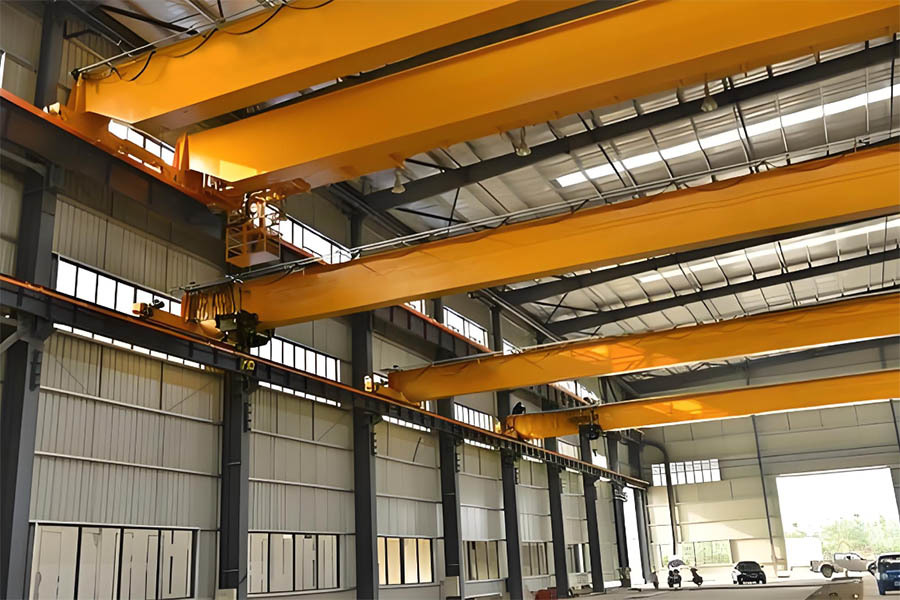
Most teams panic when demand spikes, rushing to provision resources that end up half-idle once the surge subsides. The smarter move is to study your actual usage patterns—not just peak loads but the valleys in between. You’ll often discover that a slight adjustment in scheduling, batching, or auto-scaling thresholds can absorb sudden bursts without a single extra server. This isn’t about running on bare-minimum infrastructure; it’s about matching capacity to reality curves instead of fear-driven guesses.
What’s rarely discussed is how internal bottlenecks mimic capacity shortages. When a database query bloats from missing indexes or a microservice chain adds latency under load, the symptom looks identical to infrastructure strain. Sizing correctly means distinguishing between genuine resource ceilings and fixable code-level drag. A quick audit of recent incidents usually reveals that 30-40% of “capacity issues” were never about hardware at all—they were software constraints wearing a hardware mask.
Portable Powerhouses: When a Mobile Gantry Outshines Fixed Systems
Fixed gantry systems have their place, but they demand a permanent footprint and heavy upfront investment. A mobile gantry sidesteps all that, rolling in exactly where needed and then out of the way when the job changes. This makes it a natural fit for workshops that reconfigure frequently, field repairs, or any scenario where lifting needs migrate from bay to bay.
Cost efficiency often tilts the scales toward a portable unit. Instead of buying and installing multiple fixed systems to cover scattered work zones, a single mobile gantry can service them all. Maintenance facilities, loading docks, and even temporary job sites get the lifting capacity they need without pouring concrete or sacrificing floor space permanently.
Portability also unlocks outdoor and remote capabilities that static structures simply cannot match. Whether it’s hoisting equipment onto a truck bed, assembling components in a laydown yard, or performing emergency repairs on stalled machinery, a well-built mobile gantry transforms any flat, solid surface into a lifting station. The speed of setup and teardown means less downtime and more productive hours.
Overlooked Safety Enhancements That Actually Prevent Downtime
It’s the quiet routines that often save operations from grinding to a halt. Something as mundane as verifying that a machine guard hasn’t loosened over time can stop a minor vibration from turning into a misalignment—and eventually a broken shaft. These checks rarely make it into formal risk assessments because they don’t feel like “safety” in the traditional sense, yet they prevent the kind of cascading failures that shut down production lines for hours. A sticky emergency stop button or a slightly frayed cable might not seem urgent, but each one is a thread in a safety net that, when neglected, lets downtime slip through.
Another underrated layer is the habit of listening to frontline operators. They notice when a bearing sounds different or when a guard requires extra force to close, but if reporting feels like a burden, those signals fade. Companies that make it effortless to flag these nuances—without requiring lengthy forms or fear of blame—catch degradations before they trigger a safety stop. A worn belt replaced during a planned pause is infinitely cheaper than one that snaps mid-shift, and it’s the culture of valuing these observations that quietly keeps machines running.
Weathering the Elements: Outdoor Crane Features That Endure
Outdoor cranes face a relentless assault from rain, salt spray, wind, and extreme temperatures. To hold up under these conditions, manufacturers have moved far beyond basic steel and paint. Modern units rely on a combination of high-grade stainless alloys, engineered composite bushings, and multi-layer protective coatings that actively resist pitting and flaking. Bolted connections are often isolated with marine-grade gaskets, while sensitive components are tucked away in pressurized enclosures that keep moisture and debris out even during power washing.
Electrical systems, typically the weakest link in harsh environments, now feature gold-plated connectors and fully potted circuit boards to prevent corrosion creep. Hydraulic cylinders are fitted with double-acting wiper seals and hard-chrome plated rods that shrug off scratches and salt crystal buildup. Even exposed fasteners are swapped for titanium or high-nickel alloys that won’t fuse themselves solid after a few seasons in the elements.
Beyond materials, the design itself accounts for weather resilience. Sloped surfaces eliminate standing water, while integrated heating elements inside critical housings fight condensation and ice buildup. Breather vents use hydrophobic membranes that equalize pressure without letting moisture in. These features aren’t just add-ons—they’re part of a philosophy that expects the crane to operate reliably after sitting idle through a stormy weekend or a winter shutdown, without morning warm-ups or emergency maintenance calls.
Quiet Wins: Maintenance Routines That Double Crane Life
It’s easy to overlook the small, daily acts of care that keep a crane running smoothly—greasing a fitting here, checking a cable there. Yet these quiet routines are exactly what separate a machine that barely makes it through its expected service life from one that doubles it. Instead of waiting for a breakdown to demand attention, crews that build short, consistent checks into every shift catch wear before it becomes damage. A five-minute walkaround can reveal a loose bolt, a weeping seal, or unusual vibration that would have gone unnoticed until a costly failure.
What really stretches a crane’s lifespan isn’t a single heroic overhaul; it’s the accumulation of modest, disciplined habits. Setting torque on critical fasteners, documenting slight variations in hoist performance, and replacing worn parts on a schedule rather than on a prayer—all of it adds up. These practices don’t require fancy tools or a huge budget, just a shift in mindset. When operators and technicians treat maintenance as an ongoing conversation with the machine, they learn its subtle signals. That dialogue quietly pushes the replacement timeline years further out, saving capital and reducing downtime without fanfare.
The real quiet win is how these routines transform safety and reliability into byproducts of a well-tended crane. A hoist that gets its limit switches tested weekly, a bridge that sees its rails cleaned of debris, a trolley whose bearings are relubricated on time—they don’t just last longer. They perform with a steadiness that eliminates the drama of emergency repairs. No one writes a press release about a crane that never breaks down, but the teams working under it know the value of that silence. It’s proof that the most powerful maintenance strategy doesn’t need to make noise; it just needs to be done.
FAQ
Start by looking at the weight and dimensions of the loads you move daily. Consider the maximum lift height you’ll need, how wide the span should be, and whether you’ll use it indoors or outdoors. Also think about power source – electric for indoor cleanliness, diesel for outdoor ruggedness – and how often it’ll run. Don’t forget to check the floor or ground conditions where it’ll travel, and leave room for future workload growth.
If you regularly lift under 20 tons and don’t need extremely high hook height, a single girder is often cheaper and simpler. It also requires less headroom, which suits many workshops. Double girders are the go-to for heavier lifts, wider spans, or when you need extra lift height because the hoist can ride on top of the girder. They also make maintenance access easier. Weigh the daily tonnage against your budget and ceiling clearance, and the choice becomes clearer.
For rugged outdoor jobs, look at rubber-tired gantry cranes (RTGs) used in shipping yards, or custom-built double girder cranes on rails. Brands like Konecranes, Demag, and Street Crane offer heavy-duty models with corrosion-resistant coatings and all-weather components. If you’re moving massive structural steel or containers, a semi-gantry with one leg running on a ground rail can be a smart pick. Always check the crane’s IP rating and wind resistance specs.
Portable gantries are incredibly versatile but typically cap out around 5 to 15 tons. Fixed gantry systems, bolted down or on rails, can handle upwards of 200 tons or more. If you need to move the crane between work areas and your loads are moderate, a portable model with casters is ideal. But for sustained high-capacity lifting, a fixed installation is the only safe bet. The key is the structural frame and stability.
At minimum, you’ll want overload protection, emergency stop buttons, limit switches for hoist travel, and a warning horn or light. More advanced models offer soft-start drives, anti-sway control, and zone-locking systems to prevent collisions. If your crew works at height, insist on maintenance platforms and fall arrest anchor points. Regular load testing and a culture of daily pre-use checks are just as vital as the built-in gadgets.
Daily visual checks of ropes, hooks, and electrical cables catch early wear. Weekly, inspect the structure for cracks, loose bolts, and brake performance. Monthly, test limit switches and overload cutouts. Every year, bring in a certified technician for a full strip-down inspection, including NDT on welds and wire rope replacement if needed. Clean and lubricate moving parts on schedule, and keep a log – it’s the best way to spot trends before they become breakdowns.
Absolutely. Many manufacturers offer compact, single-girder electric cranes that run on standard 220V or 480V power and fit into tight spaces. They’re clean, quiet, and can be floor- or ceiling-mounted with minimal runway structure. Look for models with push-button pendant controls and variable speed drives for delicate positioning. Some even plug into a regular wall outlet, making them a no-fuss upgrade from manual chain hoists. Just measure your aisle widths carefully.
Conclusion
Selecting a gantry crane that truly streamlines material handling starts with matching the crane’s structural design to your daily operations. Single-girder models offer a lighter, more cost-effective footprint for moderate lifts and tighter spaces, while double-girder configurations provide the rigidity and hook height needed for heavier, high-cycle tasks. The key is sizing exactly to your workflow—overestimating capacity wastes budget and floor space, yet underestimating leads to bottlenecks. A practical sizing guide helps you pin down lift capacity, span, and duty cycle without overshooting. If your facility demands flexibility, mobile gantry cranes bring lifting power wherever it’s needed, outshining fixed systems when production lines shift or maintenance zones move frequently. These portable workhorses let you reconfigure workflows on the fly, turning a single investment into a multi-area asset.
Beyond the frame, genuine efficiency gains often hide in safety features and proactive maintenance. Modern overload protection, collision avoidance sensors, and variable frequency drives don’t just meet regulations—they prevent the abrupt halts that crumble schedules. For outdoor setups, corrosion-resistant coatings, sealed electrical enclosures, and wind-rated tie-downs ensure uptime through harsh weather. Yet even the hardiest crane falls short without consistent care. Simple, quiet routines—like weekly rail alignment checks, monthly gearbox oil analysis, and real-time wear monitoring—can double the service life of your equipment. When these elements align, a gantry crane becomes more than a lift: it’s a reliability backbone that keeps materials flowing and crews working without interruption.
Contact Us
Contact Person: Zhang Zhenlai
Email: [email protected]
Tel/WhatsApp: 8618563210000
Website: https://en.lugongmachinery.com/