

PTFE Guidewire High-Quality Manufacturer Essentials for Top-Tier Device Performance
2026-10-03
In the demanding world of minimally invasive surgery, PTFE guidewires are critical for navigation and device delivery, yet performance hinges on manufacturing quality. INT stands out by mastering the essentials that top-tier device performance demands. But what exactly separates a truly high-quality PTFE guidewire from the rest? Read on to uncover the key factors—and why INT is the partner you can trust.
Friction Behavior That Stays Predictable Across Shelf Life
Friction doesn't need to drift once a product leaves the line. We've seen too many cases where initial slip feels just right at final inspection, yet six months later the same surface behaves entirely differently on the shelf. It's rarely the base material alone—more often, it's additives migrating, low-level crosslinking continuing, or micro-texture relaxing under storage conditions. By treating shelf life as part of the design envelope from day one, you avoid chasing a moving target after launch.
A predictable friction profile across months comes down to controlling the quiet variables. Trace plasticizers, residual monomers, even ambient humidity absorption can nudge static and dynamic coefficients in opposite directions. The trick is to lock the surface energy and roughness stability early, using accelerated aging that actually mirrors real warehouse cycles rather than a single hot-box snapshot. When the interface stays consistent, so does the feel in the customer's hand—whether the part is three weeks or three years old.
What matters is not the absolute coefficient, but its repeatability over time. We've found that mapping friction drift against storage temperature and humidity gives a reliable envelope that product teams can trust. That way, no one has to guess whether a silicone overmold or a coated metal will still meet spec after sitting in a distribution center through two summers. Predictable shelf-life friction means fewer field complaints and fewer last-minute material re-qualifications.
PTFE Extrusion Parameters That Limit Micro-Voids
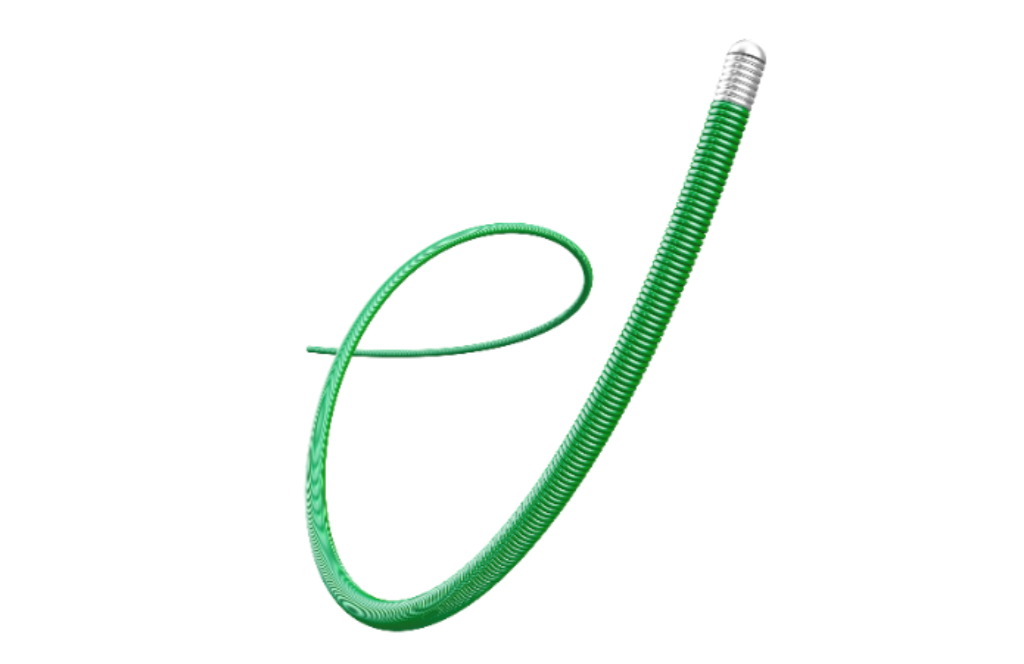
Micro-voids in PTFE extrusions often trace back to a handful of process variables that are easy to overlook. Preform pressure stands out: if the preform is compacted too quickly or unevenly, trapped air never gets a chance to escape before the billet enters the die. A low, steady compaction cycle with dwell time at peak pressure lets particles rearrange without leaving pockets that later become voids.
Ram speed matters just as much. Extruding too fast forces the material through the die before it can fully densify, especially in the transition zone where PTFE particles are still consolidating. Slowing the ram down slightly—often below what production targets suggest—gives the polymer time to knit together. Die land length also plays a role; a longer land increases back pressure and helps eliminate internal porosity.
Thermal profile during extrusion and the subsequent sintering step cannot be ignored. If the preform or die is too cold, PTFE particles remain stiff and resist deformation, leaving microscopic gaps. Conversely, overheating near the die exit can cause premature melting or degradation, which weakens the structure. A balanced gradient, combined with a sintering ramp that holds the part long enough above its melting point, is what ultimately closes any remaining micro-voids before they become permanent defects.
Core Wire Preparation for Flawless Coating Adhesion
Getting a coating to grip the wire starts long before any spray booth or dip tank. Residual drawing lubricants, fine metal dust, and even invisible oxidation films act as release agents if left on the surface. A multi-stage alkaline wash followed by a deionized rinse pulls these contaminants out of the microgrooves, leaving a substrate that is chemically naked and ready for bonding.
Surface profile matters just as much as cleanliness. Light mechanical abrasion—whether by blasting with fine alumina or running the wire through a conditioning die—creates a uniform microroughness that gives the coating thousands of tiny anchor points. Over-roughening, however, can trap air and create stress risers, so the target is typically a Ra between 0.8 and 1.6 microns depending on coating chemistry.
Finally, bringing the wire to the right temperature before coating eliminates the condensation layer that otherwise forms on cool metal in humid air. A short in-line preheat to just above ambient drives off surface moisture without promoting flash oxidation. When the clean, profiled, and thermally stable wire enters the coating zone, the adhesion mechanism shifts from hopeful contact to mechanical and chemical interlocking.
Distal Tip Shaping Without Sacrificing Coating Integrity
Achieving a precise distal tip profile on coated medical shafts usually forces a trade-off between geometric control and surface protection. Instead of accepting micro-cracks or delamination as inevitable, the shaping step can be re-sequenced around a localized, low-stress forming zone. By limiting heat exposure to the outermost few millimeters and using a thermally conductive mandrel as a heat sink, the polymer coating remains below its glass transition temperature even while the underlying shaft material becomes pliable.
Tooling design also matters more than peak temperature. A split-die cavity with a compliant, non-stick insert distributes pressure evenly and prevents edge scoring at the transition between the shaped tip and the coated shaft. After forming, the tip is quenched under controlled airflow rather than water immersion, which avoids hydration-induced coating swelling. This combination of localized heating, even pressure, and dry cooling preserves the original surface finish, lubricity, and adhesion at the distal segment.
Sterilization Validation That Preserves Surface Glide
Validating sterilization without sacrificing the lubricious feel of a device surface is a balancing act that demands more than just a standard cycle. Many teams rely on terminal sterilization parameters that meet microbiological safety requirements, only to discover later that the surface glide has degraded, leaving the device tacky or prone to increased friction during clinical use. The key is to treat surface performance as a critical quality attribute from the start, not as an afterthought once the sterilization method is locked in.
A practical approach involves screening the device material against the actual sterilization modality—whether that's ethylene oxide, gamma, electron beam, or vaporized hydrogen peroxide—early in the design phase. Instead of relying solely on supplier data, run small-batch exposures and measure glide properties using a reproducible test method, such as a friction sled or a dynamic mechanical analysis under hydrated conditions. This catches incompatibilities before full validation, saving months of rework and avoiding a situation where you're forced to choose between a sterile device and one that functions smoothly.
Finally, document the validation with attention to surface effects, not just sterility assurance levels. Include post-sterilization glide testing in your routine monitoring plan, and set acceptance criteria that reflect real clinical handling, not just a pass/fail lubricity threshold. When auditors ask how you know the device still glides after sterilization, you'll have data that ties the sterilization validation directly to user experience—no template answer needed.
Traceability Data Supporting Every Production Lot
Every production lot carries a digital thread that links raw material batches, machine settings, operator shifts, and in-process quality checks back to the exact units shipped. This granular linkage means a single lot number can reveal the full manufacturing history in seconds, from the supplier of a specific resin batch to the calibration date of the sealing equipment. Such depth isn't just about record-keeping; it's what lets engineers pinpoint whether a deviation originated in mixing, molding, or final assembly without guesswork.
When a client asks for evidence behind a lot, the traceability dataset includes not only final test results but also mid-line adjustments, environmental readings, and hold/release decisions made by quality technicians. That level of context transforms a simple lot code into a defensible narrative, useful for internal audits or a customer's incoming inspection team. Instead of a static certificate, they get a living record that shows how the lot actually behaved on the floor.
The practical payoff appears during containment events. Rather than quarantining an entire month's output, traceability data can isolate a single shift, a specific feeder, or a narrow range of raw material lots. Production planners then review only the lots that share those exact variables, cutting response time and preserving unaffected inventory. Over time, these data patterns also help refine control limits, giving each new lot a stronger starting point than the one before it.
FAQ
The difference usually shows up under repeated bending and torquing. A dependable wire keeps its PTFE jacket intact without micro-cracking or delamination, and it transmits rotation from handle to tip with almost no lag. That comes from careful core grinding, a tightly controlled taper profile, and coating adhesion verified through destructive flex testing rather than just visual checks.
Ideal thickness often lands between 0.0005 and 0.0015 inches depending on wire diameter, but uniformity matters more than the absolute number. High-quality manufacturers hold variation within a few microns across the entire length, because uneven coating creates friction spikes and unpredictable tip behavior in tortuous anatomy.
Stainless steel cores offer strong pushability and shape retention for access work, while nitinol gives superior kink resistance and flexibility for navigating difficult curves. Many top-tier lines use a hybrid approach: a nitinol distal segment and a stainless steel proximal shaft, both coated after achieving the exact transition geometry.
Visual checks miss most subsurface voids and weak adhesion zones. Experienced manufacturers rely on continuous diameter gauging, in-line coefficient-of-friction testing, and post-coating bend or abrasion cycling. Peel tests on sample lots also help confirm the jacket will not separate from the core during clinical use.
Many teams focus on lubricity but forget that the slickest PTFE layer is worthless if it lifts away from the wire. Poor adhesion can cause flap formation, increased thrombogenicity, or even embolization risk if fragments detach. Proper surface preparation, such as plasma treatment or chemical etching before coating, is what prevents those failures.
It is not just about adding more PTFE. The core wire design and coating finish must work together. A slightly textured PTFE surface or a controlled wall thickness can preserve guide catheter compatibility without sacrificing one-to-one tip response. Top suppliers tune both the jacket and the underlying core stiffness through iterative bench testing.
Yes, and this is often underestimated. Gamma irradiation can alter PTFE surface chemistry and increase brittleness if doses are not validated, while ethylene oxide may leave residues that affect biocompatibility. A robust manufacturer tests finalized, sterilized units for friction, coating integrity, and mechanical performance instead of relying on pre-sterilization data.
Beyond clean rooms and ISO certifications, look for full lot traceability from raw PTFE resin through finished device, in-process torque and friction data collected on every batch, and a willingness to share design validation reports. The best partners also co-develop custom tapers, lengths, and coating profiles rather than forcing a catalog-only approach.
Conclusion
Achieving top-tier device performance in PTFE guidewires demands more than just a slick coating—it requires manufacturing discipline that keeps friction behavior stable from the first day on the shelf to the last. Predictable glide starts with extrusion parameters tuned to minimize micro-voids in the PTFE layer, because even submicroscopic gaps create inconsistent surface roughness and moisture ingress that degrade performance over time. Equally critical is core wire preparation: without a meticulously cleaned and chemically primed substrate, coating adhesion becomes a lottery, leading to delamination under flexural stress. Manufacturers who treat these steps as inseparable produce guidewires whose lubricity doesn't drift, whether the device is used in a straightforward diagnostic procedure or a complex tortuous intervention.
Distal tip shaping presents a hidden threat to coating integrity—excessive heat or mechanical force during tip forming can crack or lift the PTFE, creating catch points on vessel walls. The best manufacturers use controlled thermal profiling and post-shaping inspection to preserve the continuous low-friction surface all the way to the atraumatic tip. Sterilization validation is another non-negotiable: the chosen cycle (often ethylene oxide or gamma) must be proven not to alter surface energy or leach plasticizers, because even a slight increase in static friction undermines the guidewire's tactile feedback. Finally, robust traceability data for every production lot—raw material batch, extrusion parameters, coating thickness, sterilization records—ties all these essentials together. It allows rapid root-cause analysis if a field complaint arises and demonstrates a level of process control that separates commodity suppliers from true high-quality partners in vascular device manufacturing.
Contact Us
Contact Person: Jeffrey
Email: [email protected]
Tel/WhatsApp: 86-0633-2230056
Website: https://www.sd-intmedical.com