

Professional High Voltage Generators: Essential Buying Guide
2026-05-23
When high voltage becomes the heartbeat of your operations, settling for anything less than perfection isn't an option. Whether you're powering advanced industrial equipment or conducting critical research, the generator you choose directly shapes performance, safety, and long-term costs. But with a flood of options on the market, how do you pinpoint the one that truly fits your demands? This guide cuts through the noise, spotlighting the technical essentials most buyers overlook—and introducing Hichai Power, a brand engineered to exceed expectations where it matters most. Get ready to rethink what a professional high voltage generator should be.
How Voltage Output Stability Shapes Operational Precision
In precision-driven fields, even the slightest voltage fluctuation can cascade into significant operational errors. A laser interferometer, for instance, relies on a rock-solid reference voltage to resolve nanometer-scale displacements; ripple or drift in its supply directly translates into measurement uncertainty. Stability isn’t just about low noise—it’s about maintaining a predictable baseline over time and temperature, so every control signal, sensor reading, or actuator command stays true to design intent.
When voltage output wavers, it often introduces low-frequency perturbations that mimic real process variations, tricking feedback loops into overcorrection. In semiconductor lithography, a few millivolts of wander in the stage driver supply can blur the finest features on a wafer, sabotaging yield. The real precision killer is often not the magnitude of the instability but its spectral character: power supply artifacts that coincide with mechanical resonances or sampling rates can amplify errors in insidious ways that standard noise specs never capture.
Achieving operational precision demands more than a stiff DC rail. It requires an ecosystem of distributed regulation, remote sensing, and dynamic compensation that actively fights the impedance of cabling, thermal gradients, and load transients. By treating voltage stability as a dynamic, end-to-end discipline—grounded in layout parasitics and control-loop bandwidth—engineers can push the repeatability of motion axes, analytical instruments, and test cells beyond what datasheet numbers alone would suggest.
Unpacking Dielectric Strength for Reliable Generator Performance
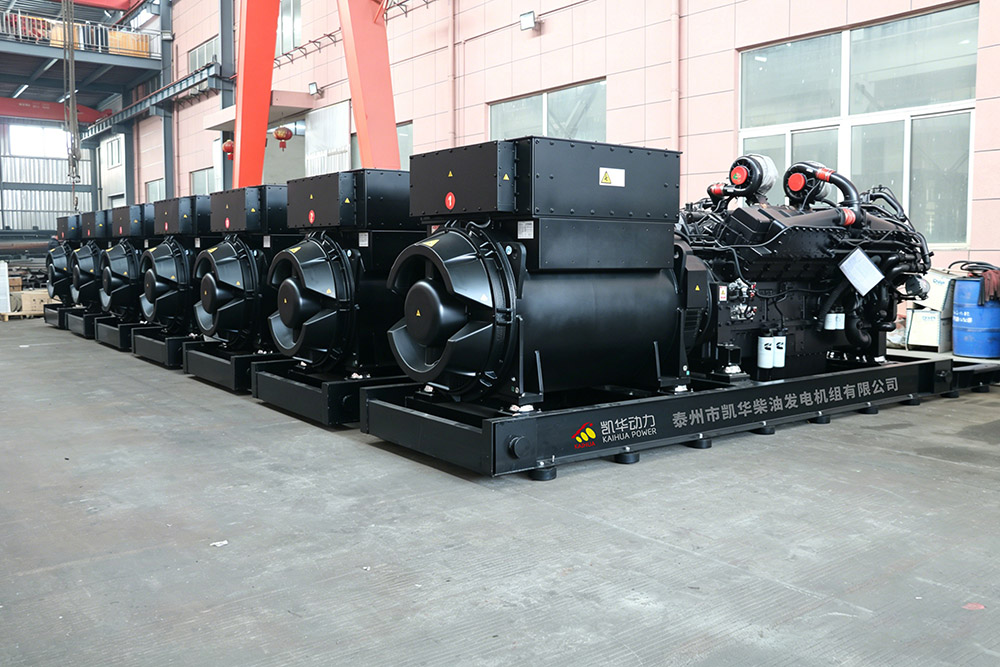
Dielectric strength sits at the heart of generator insulation design, quietly determining whether your equipment hums smoothly or breaks down under stress. It’s not just a lab value on a data sheet—it’s the threshold at which insulation materials give way when voltage spikes, contaminants creep in, or years of thermal cycling take their toll. Overlooking this property during selection or maintenance invites partial discharges that erode windings from the inside out, turning a minor oversight into a costly forced outage. Real reliability starts when you treat dielectric strength as a dynamic, mission-critical parameter rather than a static specification.
In practice, dielectric performance is shaped by more than the factory test voltage. Field conditions like moisture absorption, winding movement under load, and transient overvoltages from grid disturbances push insulation closer to its limits every day. A generator might ace a withstand test upon commissioning, yet degrade silently in a humid environment or after repeated startup thermal shocks. That’s why savvy operators look beyond initial certification—they track trending data from partial discharge monitors and contamination indicators, correlating them with dielectric strength loss over time. This proactive lens reveals the true health of the insulation system long before a catastrophic failure manifests.
Choosing the right insulation system means marrying material science with operational context. Modern epoxy-mica composites offer high initial dielectric strength, but their long-term stability depends on processing quality and a tight grip on manufacturing tolerances. Meanwhile, older asphalt-mica windings might perform well for decades if kept dry and cool, yet lack the resilience modern grids demand. The key is to align dielectric requirements with your actual duty cycle—continuous baseload, cyclic operation, or standby—while baking in a margin for environmental nastiness. When done right, robust dielectric design fades into the background, letting your generator deliver megawatts without drama.
Customizable Control Interfaces That Simplify Complex Workflows
Off-the-shelf software often forces teams into rigid processes that don't match how they actually work. Customizable control interfaces flip that dynamic, letting you arrange tools, shortcuts, and data panels around your real workflows instead of the other way around. This kind of flexibility means that every team member can build a workspace that mirrors their mental model, reducing friction and the constant need to switch contexts.
When you can tweak the interface itself—hiding irrelevant options, surfacing frequent actions, or automating multi-step sequences with a single click—complexity fades into the background. Instead of wrestling with a generic dashboard, your team interacts with a system that has been shaped to fit their daily tasks. Over time, these small customizations compound, turning a cumbersome tool into something that feels almost invisible, because it gets out of the way.
The real power shows up in how easily new team members get up to speed and how fewer mistakes slip through. Because the controls are tailored to specific roles, there's less guesswork and less training overhead. And when processes evolve, the interface can evolve with them—no waiting for a vendor update or a developer's help. It puts continuous improvement directly in the hands of the people who know the work best.
Cooling Mechanisms: From Air to Liquid and What Fits Your Setup
Picking a cooling method isn’t just about slapping on a fan or a radiator—it’s about understanding how your machine actually behaves under load. Air cooling draws heat away from components using metal heatsinks and fans that push the hot air out. It’s straightforward, needs minimal maintenance, and handles moderate thermal loads with ease. Most stock coolers fall into this category, and they’re perfectly adequate for everyday tasks, office builds, or light gaming sessions where the CPU rarely pegs at full tilt for hours.
Once you step into consistent high-performance scenarios—think video rendering, sustained gaming, or overclocking—liquid cooling reveals its strengths. By using a pump to circulate coolant through a block and then radiating heat away via a large radiator, liquid systems can move heat far more efficiently and quietly. Closed-loop all-in-one solutions simplify installation, while custom open loops let you cool multiple components with a single circuit, often turning the interior into a visual centrepiece. The trade-off is complexity, cost, and the distant but real possibility of leaks.
The right choice rarely boils down to a spec sheet alone. Physical space inside your case, the tolerance for pump hum versus fan whoosh, and your willingness to periodically check fluid levels or dust filters all tilt the scale. If you’re chasing thermal headroom for aggressive clocks in a compact build, a 240 mm or 280 mm liquid cooler could be the only way to keep temperatures in check without acoustic misery. For a locked processor in a budget tower, a quality air cooler often delivers better value and one less point of failure. Matching your cooling to your actual workload—not your aspirational one—keeps both your components and your sanity intact.
Matching Load Characteristics to Generator Topology
Selecting the right generator topology isn't just about power ratings—it's heavily influenced by the nature of the electrical load it will serve. Resistive loads like heaters are straightforward, but reactive loads such as motors or transformers draw current out of phase with voltage, stressing windings and excitation systems. A topology that handles reactive power well, like a wound-field synchronous generator with an automatic voltage regulator, might be essential here, whereas a simple permanent magnet alternator could struggle with voltage regulation under varying inductive loads.
Load dynamics play an equally critical role. Steady base loads allow for simpler, less robust topologies, but frequent cycling or sudden surges demand designs with higher thermal endurance and mechanical resilience. For instance, an induction generator might suit a grid-tied constant-load scenario, but its poor response to abrupt changes makes it a poor fit for islanded operations with unpredictable demand. Matching the generator's inherent strengths to the load's profile prevents premature wear and keeps efficiency from cratering.
Navigating Compliance Without Compromising Efficiency
Regulatory frameworks are often viewed as cumbersome hurdles, but they don't have to be. By embedding compliance into operational DNA rather than treating it as an afterthought, organizations can maintain momentum without sacrificing rigor. The key lies in integrating checks and balances into workflows so seamlessly that they become second nature—much like a well-designed safety feature in a vehicle that protects without impeding the drive.
Smart automation tools can shoulder much of the burden, tracking shifts in legislation and flagging potential risks before they escalate. Instead of reacting to audit findings with panic, teams that build continuous monitoring into their processes stay ahead of the curve. This isn't about cutting corners; it's about crafting systems where accountability and speed coexist, allowing professionals to focus on higher-value decisions rather than drowning in paperwork.
Ultimately, the most resilient companies are those that view compliance not as a checklist but as a guardrail that actually enables faster, safer navigation. When oversight is intuitive and evidence is easy to gather, regulatory demands transform from a drag on productivity into a catalyst for operational clarity.
FAQ
A professional high voltage generator is a device designed to produce voltages well above standard levels, often ranging from kilovolts to megavolts. These units are essential in testing insulation in power cables, transformers, and switchgear. You'll also find them in medical imaging, particle accelerators, and industrial processes like electrostatic painting. Their precise output and reliability make them indispensable in research labs and quality assurance departments.
Focus on output voltage range, current capacity, and stability under load. Ripple and regulation figures tell you how clean the power is, which matters for sensitive measurements. Also check the duty cycle—continuous operation might be needed for long tests. Physical factors like size and cooling method (air, oil, or solid insulation) can’t be overlooked, especially if the unit will move between sites.
Start by identifying the test standards your equipment must meet, as they often prescribe voltage levels. Add a safety margin—typically 20-30% above the maximum test voltage—to account for future needs and slight variations. Power rating ties directly to the load: capacitive test objects draw more reactive power. Overlooking this can lead to an undersized generator that trips or fails during critical tests.
Look for automatic discharge circuits that bleed stored energy after shutdown—this prevents accidental shocks. Interlock systems that kill output when access panels are opened are non‑negotiable. Overcurrent and overvoltage trips protect both the device under test and the operator. Visible indicators and audible warnings add an extra layer of defense in busy lab environments.
Broadly, you’ll encounter DC, AC, and impulse generators. DC units suit cable testing and electrostatic applications, while AC sets are closer to real‑world conditions for dielectric testing. Impulse generators replicate lightning strikes. Your choice hinges on the test standard: partial discharge measurements often need very low‑noise AC sources. Matching the waveform to the application avoids misleading results.
Extremely. A generator that’s light enough to carry yet rugged enough to survive dust, moisture, and temperature swings saves time and repair costs. Sealed enclosures with ingress protection ratings like IP54 keep internal components clean. Wheeled frames or carrying handles make a difference when you’re navigating substations or remote test sites. Never underestimate the wear that humidity and vibration inflict on unprotected electronics.
Regularly inspect high‑voltage connectors for corrosion or pitting, as even minor damage can cause flashovers. Keep cooling fans and filters clear; overheating is a silent killer. For oil‑insulated units, periodic dielectric strength tests of the oil reveal moisture ingress. Calibration checks every 12–18 months ensure output accuracy stays within spec. Document all readings so you can spot trends before they become failures.
Many manufacturers offer modular platforms where you can add features like ramp control, polarity reversal, or computer interfaces. If your work involves unusual waveforms or extremely low ripple, a custom‑wound transformer stack might be the answer. Collaboration with the engineering team early on avoids costly retrofits. The goal is a generator that slots into your existing setup without requiring a complete workflow overhaul.
Conclusion
Selecting a professional high voltage generator demands careful attention to how output stability directly influences precision in sensitive applications. A unit that maintains consistent voltage under varying conditions ensures repeatable results, whether in medical imaging or industrial testing. Equally critical is the dielectric integrity of insulation materials; robust dielectric strength prevents breakdowns and extends operational life, especially in harsh environments. Modern systems go further by offering customizable control interfaces, which streamline complex workflows through intuitive software or modular settings, allowing operators to tailor parameters without disrupting processes.
Cooling mechanisms are another pivotal factor: air-cooled designs suit lower-power, clean environments, while liquid cooling handles dense, continuous loads more efficiently. Matching the generator’s topology to the load characteristics—such as capacitive or resistive—averts inefficiencies and potential damage. Finally, navigating regulatory compliance should not force sacrifices in performance; the best designs integrate safety standards seamlessly, maintaining high efficiency and low harmonic distortion. By weighing these interconnected aspects, buyers can secure a system that delivers both immediate functionality and long-term adaptability.
Contact Us
Contact Person: Ms. Lu
Email: [email protected]
Tel/WhatsApp: 8618917899306
Website: https://www.hichaipower.com