

Professional Econom Press Brake Advantages for Modern Fabrication Shops
2026-10-01
Every bend matters when margins are tight. Modern fabrication shops face a constant tug-of-war between precision and cost—but what if you didn't have to choose? The rise of professional econom press brakes has quietly reshaped how small and mid-sized shops compete, delivering accuracy that rivals premium machines without the premium price tag. At the heart of this shift is HUNSONE, a brand that's redefining what 'economical' means on the shop floor. In this post, we'll break down the key advantages—from energy efficiency to repeatable bending—that make these machines a smart investment for any fabrication operation looking to stay lean and sharp.
Bending Accuracy That Eliminates Rework
Every bend in sheet metal carries a hidden cost—the moment you discover the angle is off by half a degree after the part has already moved down the line. That discovery triggers a chain of rework: recalibrating, re-clamping, re-cutting, and often scrapping the piece entirely. Our approach removes that chain by locking in angular precision before the first bend is made. Using real-time feedback from sensors mounted at the bend apex, the machine adjusts pressure and stroke length on the fly, accounting for material springback, grain direction, and even slight variations in sheet thickness. The result is a first-part-good rate that stays above 99% across mixed batches.
What separates this from standard CNC backgauge correction is that the system doesn’t just measure after the bend—it predicts. A short pre-bend cycle flexes the metal just enough to map its actual yield behavior, then feeds that signature into the control algorithm. So when you run a job with 200 brackets made from three different heats of mild steel, the bend angle stays consistent without manual tweaks. Operators stop hovering over the bend indicator, and downstream welding or assembly fixtures stop receiving parts that need persuading with a hammer. That predictability is what eliminates rework: not a faster way to fix errors, but a process where the error never gets a chance to form.
Rework also hides in places that aren't obvious at first glance—like the small kink near a bend line caused by the wrong die opening, or the slight twist that appears only after the part is released from the clamp. Our tooling geometry and crowning system are designed to distribute force so evenly that residual stress is nearly symmetric. Coupled with automatic angle correction after the first test piece of a new batch, the line keeps moving while other setups would be stopped for adjustment. For fabricators, that translates to fewer scrap bins, less overtime spent on hand-straightening, and quotes that don't need a hidden contingency for second attempts.
Setup in Minutes, Not Hours: The Econom Advantage
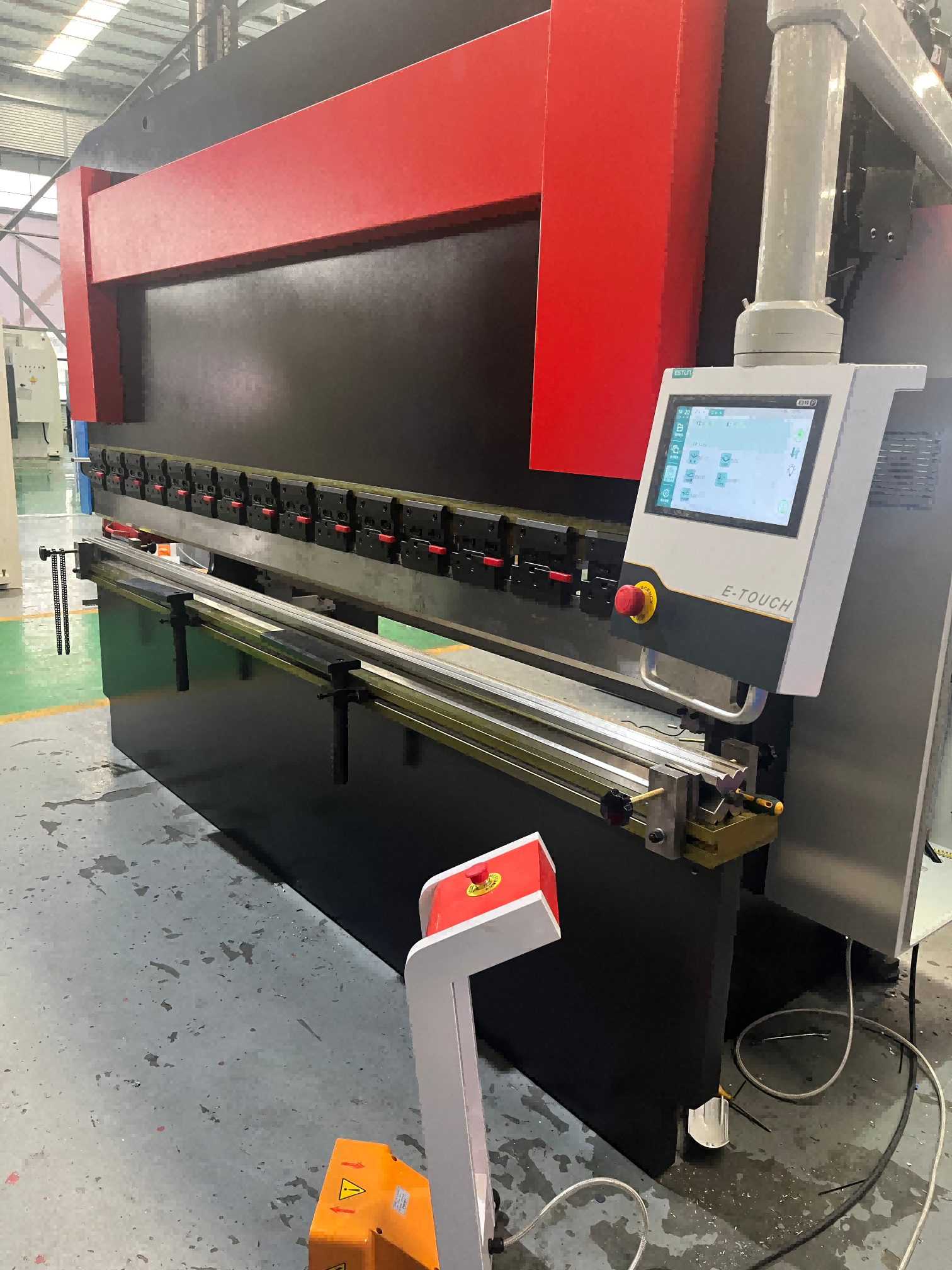
Most platforms make you wade through wizards, connect a dozen services, and still leave you guessing at the end. Econom flips that. The first run asks three questions—your industry, your current spend, and one outcome you actually care about. After that, the dashboard assembles itself, pulling in live data without a single CSV upload or API key hunt.
There is no 'onboarding week' here. You can go from sign-up to a working view of your cost drivers in roughly the time it takes to finish a coffee. The interface skips the usual empty-state tours and instead drops you straight into a populated snapshot, with the few configuration toggles placed exactly where a finance lead would look for them, not hidden inside nested settings.
What really sets Econom apart is that setup feels less like configuration and more like a conversation. The system asks a short follow-up question only when it genuinely needs the answer—never to pad a checklist. That restraint means you are not building a tool; you are already using it while the last pieces click into place in the background.
Where Press Brake Efficiency Meets Your Bottom Line
Every minute a press brake sits idle or cycles slowly, your operating costs climb while output stalls. Efficiency here isn't just about bending speed—it's about how quickly you can move from flat sheet to finished part without rework, scrap, or setup delays. When your press brake runs lean, those savings flow straight through to your profit margin, not into wasted labor hours or repeated trial bends.
Think beyond the machine's rated tonnage. The real bottom-line impact comes from how well the tooling, programming, and operator workflow mesh together. A press brake that reduces changeover time by twenty minutes per job, or eliminates the need for secondary straightening, pays for itself in weeks—not years. That's where efficiency stops being a spec sheet number and starts working as a financial lever.
Multi-Axis Flexibility for Complex Part Geometries
Complex contours, undercuts, and deep cavities often push conventional 3-axis equipment past its practical limits. Multi-axis machines sidestep those constraints by letting the cutting tool approach the workpiece from continuously changing angles. Instead of resetting fixtures between operations, a single setup can reach angled pockets, blend intersecting surfaces, and maintain consistent chip load across curved profiles.
The payoff shows up most clearly on parts with twisted vanes, porting channels, or blended fillets. Five-axis simultaneous motion keeps the tool normal to the surface or tilted just enough to avoid collisions, which reduces hand blending and secondary finishing. For workholding, this means fewer custom jaws and less tolerance stack because the part doesn't bounce from vise to vise.
Rotary tables and trunnion setups also open up shorter cycle times on families of prismatic parts. By indexing the part instead of the tool, you can machine multiple faces without breaking setup. That flexibility becomes valuable when a shop has to jump between low-volume prototypes and repeat production runs without rethinking the entire process.
Operator-Friendly Controls That Reduce Training Time
Most machine interfaces fail before a new operator even touches them. Dense button arrays, cryptic icons, and multi-step menu paths turn basic tasks into memory drills. The fix starts with cutting visual noise: big, color-coded buttons for the actions operators actually use every day; secondary functions tucked into clearly labeled tabs; and a screen that shows what the machine is doing right now, not what it theoretically can do. When someone can stand at the panel and guess the next step just by looking, training time drops sharply.
One overlooked trick is consistent physical logic. If the lift control always sits in the same corner on every screen, and the emergency stop is the same red mushroom button regardless of mode, muscle memory forms within hours. Add layered access: a basic run mode with three choices—start, pause, reset—keeps new hires productive on day one, while a maintenance mode unlocks deeper settings for experienced staff. This "progressive disclosure" means nobody has to learn everything before they can do anything.
The payoff shows up in onboarding numbers. Facilities that switch to these controls often cut hands-on training from five days to one or two, and they see fewer early mistakes because the interface guides instead of punishing. Operators stop fearing the panel and start trusting it. That confidence matters more than any manual: a worker who can recover from a fault without calling a supervisor already knows the machine, not just the buttons.
Long-Term Reliability Under Daily Production Stress
Every machine looks good on day one. The real test starts when shifts blur together and the line never stops. Components that were perfectly aligned at installation start to drift under constant vibration, temperature swings, and operator haste. Bolts loosen by fractions of a millimeter. Belts stretch just enough to throw off timing. Seals that held fine during commissioning begin to weep after three months of thermal cycling. This is the reality of daily production stress, and it separates equipment that survives from equipment that merely performs when the auditors are watching.
Most reliability failures trace back to small design compromises made months earlier. A bearing chosen for its low cost rather than its wear resistance under contaminated air. A wiring harness routed too close to a heat source. A software routine that assumes steady-state operation but gets hammered by rapid start-stop cycles. Over time, these choices compound. What worked flawlessly in a clean demo environment degrades predictably in a plant where dust, humidity, and overwork are constants. The key is not overbuilding everything; it is identifying which components will see the harshest duty and giving them enough margin to absorb abuse without failing.
Testing for long-term reliability under daily stress requires a different mindset than functional testing. You need to simulate the grind, not just the occasional spike. Run the machine at production speed for weeks, not hours. Introduce deliberate misalignments, power flickers, and bad material batches to see what breaks first. Log every deviation, no matter how minor, because those are the seeds of future downtime. Good operators know this instinctively—they listen for changes in sound, feel for new vibrations, and smell for overheating insulation. Engineering teams that ignore these daily stress signals end up chasing emergencies instead of preventing them.
FAQ
It swaps between jobs without a lot of fuss. The backgauge positions itself quickly, and the control remembers previous setups, so you can go from a run of fifty small brackets to a couple of large panels without spending half the shift on changeover.
The ram repeatability stays within a tight range even after hundreds of cycles. Combined with the crowning system that compensates for deflection, it keeps angles consistent across the full length of the bed, which matters when you're stacking parts that need to fit together later.
Yes, because the control interface is laid out around the actual bending sequence, not a pile of abstract parameters. Someone who can read a basic print can usually pick it up in a day or two, and the machine's prompts reduce the chance of entering a wrong flange length.
It's mostly daily checks: hydraulic oil level, clean the guides, wipe down the tooling. Oil and filter changes are based on hours, usually every 2,000 to 3,000 hours depending on the shop environment. The manual gives clear intervals rather than leaving you guessing.
It supports common file formats for offline programming, and the controller has standard communication ports. You can load bend sequences from your CAD/CAM system, or connect a robot for simple load/unload tasks without needing a custom middleware layer.
The frame is built heavier than some competitors in the same tonnage class, which reduces twist under load. High-tensile steel tends to spring back more, but the machine's angle correction can compensate automatically once you store the material properties in the library.
It uses a variable-displacement pump that only draws power when the ram is actually moving. On standby, consumption drops sharply. Shops replacing a conventional hydraulic brake from the 1990s often see a noticeable drop in their monthly electric bill, though exact savings vary with usage.
The light curtains are positioned to allow fast part handling while still stopping the beam if something enters the danger zone. There's also a slow-down point before the punch contacts the material, which gives operators an extra beat to react without killing productivity.
Conclusion
For modern fabrication shops, the Professional Econom press brake stands out by turning precision into a routine outcome rather than a constant struggle. Its bending accuracy is designed to eliminate rework from the start, with controlled ram movement and repeatable positioning that keep every part consistent from first to last piece. Setup time drops from hours to minutes thanks to tooling systems and backgauge presets that adapt quickly between jobs, freeing operators to move from one batch to the next without long changeovers. This combination of speed and exactness doesn't just save time on the floor—it directly protects profit margins by reducing scrap, overtime, and the hidden cost of redoing parts that should have been right the first time.
Beyond straight bends, the machine's multi-axis flexibility handles complex part geometries that would otherwise require secondary operations or creative workarounds. The control interface is intentionally simple, so new operators become productive after minimal training instead of spending weeks learning nested menus or obscure parameters. Under daily production stress, the Econom press brake holds its own: frames, hydraulics, and electronics are built for sustained cycles without drifting out of tolerance or demanding frequent adjustments. For a shop that needs to meet tight deadlines and varied part mixes, this press brake offers a practical way to raise throughput without adding headcount or compromising on part quality.
Contact Us
Contact Person: James Chen
Email: [email protected]
Tel/WhatsApp: 86 13770803946
Website: https://www.hunsone.com/