

Professional 5G Core Network: Architectures, Protocols, and Deployment Strategies
2026-07-29
The shift to 5G standalone (SA) networks is reshaping mobile connectivity, placing the 5G Core at the heart of this transformation. Understanding its cloud-native architecture, service-based interfaces, and deployment strategies is essential for anyone navigating the next era of telecommunications. This blog draws insights from the book Professional 5G Core Network: Architectures, Protocols, and Deployment Strategies to untangle the complexities of 5GC design and practical rollout. From slicing to edge computing, we'll explore how operators can build agile, scalable networks—and how innovators like IPLOOK are turning these blueprints into real-world solutions. If you're ready to go beyond the hype and grasp what truly powers 5G, you're in the right place.
Rethinking Core Network Design: The 5G Service-Based Architecture
The shift toward a service-based architecture in 5G marks a fundamental departure from the rigid, hierarchical designs of previous generations. Instead of relying on monolithic network nodes, the core is now composed of modular, cloud-native functions that communicate via well-defined APIs. This decoupling allows operators to scale, update, or replace individual services without disrupting the entire network, enabling faster innovation and more efficient resource utilization.
A key advantage of this approach is its inherent flexibility. Network functions like authentication, session management, and policy control can be distributed across data centers, running on virtualized infrastructure or containers. This not only supports dynamic slicing for diverse use cases—from massive IoT to ultra-reliable low-latency communications—but also simplifies the introduction of new services. Developers can leverage standard web-based protocols, accelerating deployment and reducing operational complexity.
Perhaps most significantly, the 5G service-based architecture redefines how networks interact with applications. By exposing capabilities through service-oriented interfaces, it opens the door to programmable, on-demand connectivity. This fosters closer collaboration between telecom providers and third-party developers, paving the way for tailored experiences that go beyond traditional voice and data. The result is a more agile, responsive core network that can evolve alongside emerging demands.
Protocols at the Heart of 5G: HTTP/2, JSON, and Beyond
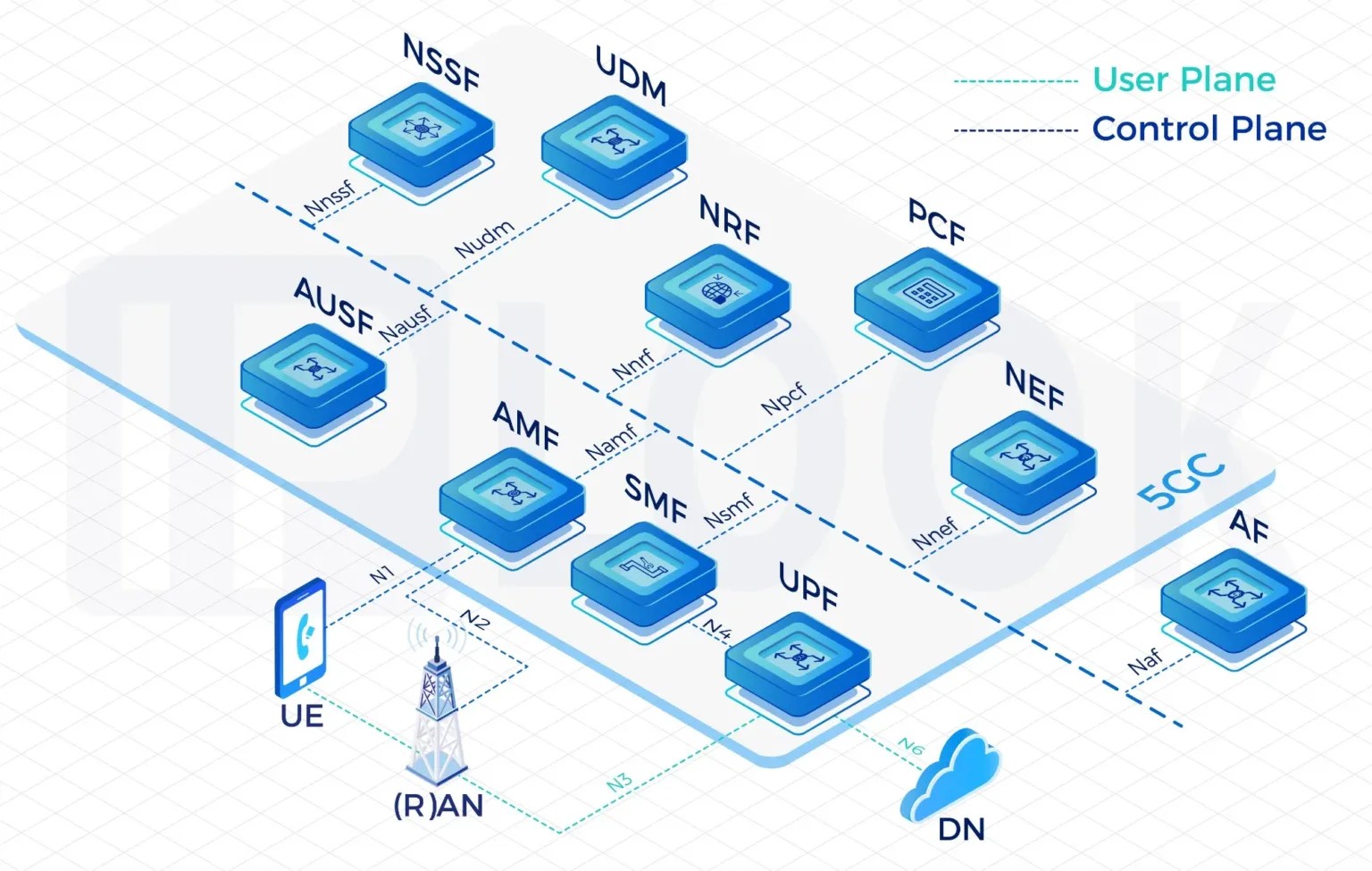
The shift to 5G isn’t just about faster radios—it’s a fundamental rethinking of how network functions talk to each other. At the core, you’ll find protocols borrowed from the web: HTTP/2 and JSON. They replace the telecom-specific stacks of older generations with something far more flexible. Why? Because 5G’s service-based architecture demands lightweight, text-based communication that developers already know. HTTP/2 brings multiplexing and header compression, slashing latency for the dozens of simultaneous API calls flying between network functions. JSON, meanwhile, keeps the payload simple and human-readable, speeding up integration and troubleshooting in a multivendor landscape.
But it’s not a simple copy-paste from the web. The 3GPP has profiled HTTP/2 strictly—no server push, mandatory TLS, and careful connection handling to avoid head-of-line blocking in the core. JSON payloads are schema-validated against OpenAPI definitions, ensuring consistency across the network. Interestingly, the reliance on text-based protocols also opens doors that telcos didn’t plan on: it makes 5G cores easier to virtualize, containerize, and even run on public cloud infrastructure. The same tools that manage web services now manage the cellular core, collapsing the boundary between IT and telecom.
Look beyond HTTP/2 and JSON, and you’ll spot protocols that fill very specific gaps. The Packet Forwarding Control Protocol (PFCP) handles the user plane with binary efficiency, a contrast to the control plane’s text-heavy style. Between the radio and the core, NGAP (Next Generation Application Protocol) carries signaling over SCTP, ensuring rapid and reliable delivery. Even DNS gets a starring role, with service discovery leveraging NRF queries that resolve to API endpoints. The design isn’t a monolith; it’s a carefully orchestrated dance of protocols, each chosen for its strengths—some venerable, some modern—held together by the common thread of RESTful thinking.
From Theory to Practice: Deployment Models for 5G Core
The shift from 5G core theory to real-world implementation hinges on choosing the right deployment model. Traditional purpose-built hardware is giving way to software-centric approaches that run on commercial off-the-shelf servers, cloud infrastructure, or hybrid setups. Each model—standalone, non-standalone, and various cloud-native configurations—brings its own operational nuances, cost structures, and performance trade-offs. Operators weigh these against their existing network assets, spectrum availability, and service goals, turning abstract 3GPP specifications into tangible network slices that can flex with demand.
Virtualization has evolved from simple VM-based network functions to containerized microservices orchestrated by Kubernetes. This shift enables fine-grained scalability and fault isolation but also introduces complexity in lifecycle management and inter-component latency. Some deployments embrace a fully cloud-native core distributed across edge sites for ultra-low latency use cases, while others centralize control plane functions for efficiency. The choice often mirrors an operator’s appetite for operational transformation and the maturity of their DevOps pipelines.
Practically, many operators start with a Non-Standalone (NSA) architecture, leveraging existing 4G EPC with a 5G RAN, before migrating to a Standalone (SA) core. This phased approach reduces risk and allows teams to build expertise gradually. The SA core, meanwhile, unlocks advanced capabilities like network slicing and enhanced mobile broadband with true low-latency support. The deployment model isn’t a one-size-fits-all; it’s a strategic decision shaped by regulatory environments, enterprise customer demands, and the relentless push toward automation and AI-driven network operations.
Network Slicing: Tailoring Connectivity for Diverse Verticals
Imagine a single physical network that can simultaneously serve a self-driving car's need for ultra-low latency, a factory's demand for deterministic communication, and a live video stream's appetite for high bandwidth. That's the promise of network slicing. It breaks a shared infrastructure into multiple virtual networks, each tailored to specific technical requirements. This isn't about adding more hardware—it's about intelligently partitioning resources so that each slice behaves like an independent network with its own architecture, security, and performance characteristics.
What makes slicing truly transformative is how it aligns technical performance with business intent. A slice for massive IoT sensors prioritizes energy efficiency and dense connectivity over raw speed, while a slice for augmented reality combines edge computing with guaranteed throughput. Operators can define these slices programmatically, spinning them up or down as demand shifts. The result is a network that bends to the needs of each vertical industry without the cost and complexity of building dedicated infrastructure.
Real-world adoption hinges on how seamlessly these slices integrate with existing back-end systems and service-level agreements. For instance, a smart grid slice might require foolproof isolation and extreme reliability, whereas a slice for a temporary event needs rapid deployment and elastic scaling. The underlying orchestration handles this by weaving together virtualized core and radio functions, but the magic is in making it all transparent to the end user—delivering what feels like a private, purpose-built network over a common fiber and air interface.
Securing the 5G Core: Threats, Protocols, and Countermeasures
The shift to a service-based architecture in the 5G core introduces a radically different threat landscape compared to previous generations. Instead of tightly coupled network functions communicating over proprietary interfaces, the core now relies on HTTP/2-based APIs, cloud-native deployments, and widespread virtualization. This openness brings agility but also expands the attack surface—attackers can target API vulnerabilities, exploit container escape flaws, or abuse the intricate web of inter-network function signaling. The real challenge isn’t just defending against external intrusions; it’s the internal trust model, where a single compromised network function can pivot laterally, sniffing or manipulating signaling traffic across the entire control plane without triggering traditional perimeter alarms.
Protocol-level protections like the Security Edge Protection Proxy and the N32 interconnect security framework are mandatory, yet they often fall short when faced with novel attacks. For instance, the HTTP/2-based Service Communication Proxy is intended to enforce TLS and authorization between functions, but subtle implementation gaps—like improper certificate validation or overlooked rate-limiting—can let a rogue function flood the Network Repository Function with discovery requests, causing cascading failures. A harder-to-spot menace lies in the JSON Web Tokens used for API access; libraries with known vulnerabilities, lax signature verification, or reliance on the “none” algorithm have already been seen in real-world deployments. Moreover, the sheer volume of signaling requests means that stateless filtering alone is insufficient—stateful, cross-protocol inspection that understands the semantics of 5G procedures becomes essential to spot deviations like an AMF suddenly querying subscriber data it shouldn't need.
Countermeasures must evolve from traditional bolt-on security to an intrinsic, zero-trust fabric woven into the core’s design. This means continuous authentication and authorization between all network functions, not just at the edge, and deploying protocol-aware anomaly detection that models normal signaling behavior to catch surgical attacks. Hardening the container runtime with immutable images, kernel isolation, and runtime security monitoring prevents a single microservice compromise from becoming a cluster-wide disaster. A pragmatic step often overlooked is the enforcement of strict schema validation on all API messages; many attacks start with a malformed JSON payload that passes basic parsing but triggers unexpected logic in the target function. Finally, regular fault injection and chaos engineering in the signaling plane—simulating compromised peers or overload scenarios—exposes hidden weaknesses before adversaries do, turning reactive patching into proactive resilience.
Interworking and Migration: Integrating 5G with Legacy Networks
Rolling out 5G doesn't mean you can simply unplug yesterday's networks. Carriers face a delicate balancing act, weaving new radio access and core technologies into a fabric already threaded with 4G LTE, 3G, and even 2G systems. The trick lies in leveraging existing investments while gradually ushering customers and services toward a standalone 5G future.
In the early phases, most operators lean on non-standalone (NSA) architectures, anchoring control signaling to an LTE core while 5G radios handle the data deluge. This pragmatic approach speeds up time-to-market, but it also ties network evolution to the limitations of legacy evolved packet cores. True interworking demands seamless handovers and session continuity—engineers must finesse everything from radio level dual connectivity to core network function upgrades, ensuring a subscriber moving from a 5G hotspot to a 4G macro cell never notices the switch.
Migration isn't a flip of a switch. It's a multi-year journey of virtualization, cloud-native refactoring, and careful spectrum refarming. Network slicing emerges as a powerful tool here, allowing operators to carve out dedicated logical networks that can coexist with older systems while delivering next-gen performance. The end game is a standalone 5G core that fully exploits service-based architectures, but getting there requires patience, rigorous testing, and a mindset that views legacy networks not as baggage, but as the foundation upon which 5G's promise is built.
FAQ
The service-based architecture (SBA) transforms network functions into modular services that communicate via HTTP/2 REST APIs. This design allows operators to deploy, scale, and update individual functions independently, speeding up service delivery and enabling cloud-native operations. It marks a departure from the rigid point-to-point interfaces of earlier cores.
Network slicing in 5G core is end-to-end and native to the architecture. Using identifiers like Single Network Slice Selection Assistance Information (S-NSSAI), the core can instantiate dedicated logical networks with isolated resources and policies per slice. This goes beyond 4G’s basic APN-based separation by integrating slicing into session management, mobility, and policy control.
The 5G core introduces HTTP/2 with JSON as the serialization protocol for service-based interfaces, replacing Diameter. It also employs PFCP (Packet Forwarding Control Protocol) for the N4 interface between SMF and UPF, and NGAP for the N2 interface between gNB and AMF. These protocols enhance efficiency and flexibility.
In standalone mode, the 5G core is fully deployed with a new radio, delivering all 5G features like slicing and ultra-low latency. Non-standalone mode relies on an existing 4G EPC core with an eNB, using 5G NR just for data capacity. This approach lets operators launch 5G quickly but limits advanced capabilities until core modernization occurs.
5G core enforces encrypted IMSI transmission (SUCI) to prevent eavesdropping, introduces a unified authentication framework capable of handling non-3GPP access, and integrates the Security Edge Protection Proxy (SEPP) for secure inter-operator roaming. It also mandates stronger ciphering algorithms and integrity protection for user plane data.
The NRF acts as a dynamic registry where network functions register their profiles and discover peers. When a service consumer—like an AMF—needs an SMF, it queries the NRF with functional criteria. The NRF returns a list of matching instances, enabling resilient and automated network scaling without hardcoded references.
Migration involves integrating new cloud-native infrastructure with legacy systems, managing dual connectivity for ongoing 4G services, and retraining staff on SBA and CI/CD pipelines. Operators must also handle temporary coexistence of EPC and 5G core during the transition, which complicates routing and policy synchronization.
Conclusion
The evolution to 5G core networks represents a fundamental shift from monolithic, appliance-based architectures to a cloud-native, service-based design that unlocks unprecedented flexibility and efficiency. Central to this transformation is the Service-Based Architecture (SBA), which decomposes network functions into granular, reusable services communicating over standardized APIs. By embracing web-scale technologies like HTTP/2 and JSON, the 5G core enables lightweight, extensible signaling that accelerates feature rollout and third-party innovation. Protocols such as RESTful APIs and Protobuf extend beyond traditional telecom stacks, fostering a developer-friendly ecosystem that blurs the line between IT and telecom domains. This architectural rethinking not only simplifies operations through automated lifecycle management but also lays the groundwork for dynamic resource orchestration, where network capabilities can be composed on demand to meet diverse application requirements.
Bridging theory with practice, deployment strategies must account for interworking with legacy 4G LTE infrastructures and the strategic introduction of network slicing, which tailors connectivity to verticals like autonomous vehicles, smart factories, and immersive entertainment. Such slicing demands robust isolation mechanisms and end-to-end security frameworks that address new threat surfaces exposed by virtualized, software-driven cores. Practical migration paths often involve phased rollouts, coexisting with evolved packet cores while gradually transitioning to standalone 5G cores. Concurrently, security countermeasures—ranging from encrypted inter-service communication to AI-driven anomaly detection—become critical in safeguarding distributed control planes. Ultimately, a successful 5G core deployment hinges on harmonizing these technical pillars: agile architectures, intelligent slicing, seamless interworking, and resilient security, enabling operators to deliver differentiated experiences and unlock revenue streams far beyond traditional connectivity.
Contact Us
Contact Person: Shimmy
Email: [email protected]
Tel/WhatsApp: 85253392231
Website: https://www.iplook.com