
Private Label Levelling Agent: How to Select the Best Formula for Your Brand
2026-07-24
Choosing the right private label levelling agent can feel like navigating a maze of technical specs and marketing claims. But here’s the truth: the formula you pick defines your brand’s reputation for performance and reliability. It’s not just about finding a product that works—it’s about securing a consistent, high-quality solution that your customers will trust. At HAISEN, we’ve seen firsthand how the right levelling agent transforms floors and fortifies brands. So, how do you cut through the noise and select the best formula for your unique needs? This guide unpacks the key factors you need to consider, from raw material quality to technical support, giving you the clarity to make a confident, brand-building choice.
Understanding the Hidden Impact of Levelling Agents on Final Product Performance
Levelling agents are often viewed solely through the lens of surface aesthetics—reducing orange peel, cratering, or brush marks. Yet their influence runs much deeper, quietly altering film formation dynamics in ways that shape long-term durability. By modifying surface tension gradients, these additives dictate how a coating flows and sets, but they can also unintentionally trap solvents or create micro-heterogeneities in the cured matrix. These subtle structural shifts may later manifest as reduced hardness, unexpected softening, or even early loss of adhesion when exposed to moisture or thermal cycling.
Beyond the visible surface, the choice and dosage of levelling agent can reconfigure interfacial properties between coats in multi-layer systems. An additive that migrates excessively to the surface might compromise intercoat adhesion, leading to delamination under stress. In some formulations, it competes with other functional additives—like defoamers or wetting agents—disrupting their intended balance. This hidden competition can result in inconsistent gloss retention, pinholes that only appear after aging, or a drift in color stability that defies standard quality checks.
Formulators often overlook how levelling agents interact with pigment dispersion and binder crosslinking. A poorly matched agent can hinder the development of full mechanical properties, leaving the film more vulnerable to scratch and mar. In industrial applications, where precise film thickness and uniformity are critical, even minute variations induced by the levelling package can affect electrical insulation, corrosion resistance, or light transmittance. Recognizing these concealed effects turns additive selection from a routine step into a strategic decision—one that directly influences the product's real-world lifespan and reliability.
Mapping Your Brand’s Unique Needs to the Right Chemical Profile
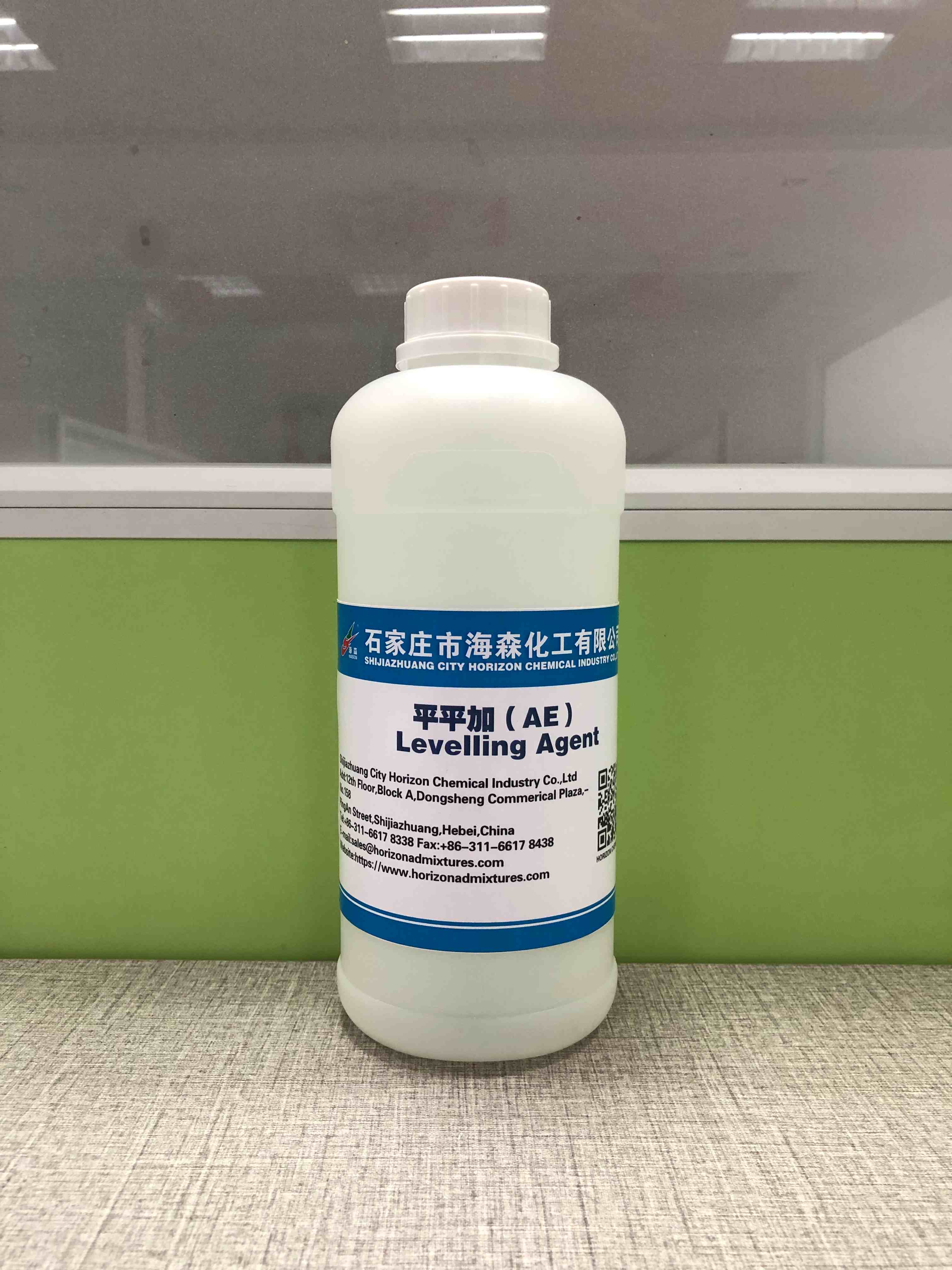
Every brand carries a distinct identity shaped by its values, target audience, and product promises. Translating that identity into a chemical profile isn't about ticking boxes on a spec sheet—it’s about understanding how each ingredient’s performance, stability, and sensory impact align with what your customers expect. Start by defining the non-negotiables: Does your formulation need to withstand extreme climates, deliver a certain texture, or exclude specific compounds? These functional and ethical priorities become the backbone of selecting the right molecular partners.
The true challenge lies in balancing ideal characteristics with real-world constraints. A profile that’s perfect on paper might prove impractical due to supply chain volatility, compatibility issues, or cost thresholds. Instead of pursuing a one-size-fits-all solution, successful brands engage in iterative testing—marrying raw data with hands-on trials to uncover synergies that spreadsheets can't predict. Often, the most elegant formulations emerge when a brand’s non-typical requirements inspire custom modifications, turning a perceived limitation into a unique selling point.
Ultimately, the right chemical profile feels inevitable only in retrospect. It’s the result of frank conversations between your product developers, suppliers, and even end-users, where subjective feedback on attributes like scent or after-feel is weighed as heavily as technical benchmarks. By anchoring decisions in your brand’s narrative rather than industry averages, you create a profile that not only performs consistently but also tells a compelling story—one batch at a time.
Navigating the Overlooked Trade-offs in Formulation Compatibility
Formulation compatibility isn't just about ensuring ingredients coexist without visible separation. The real challenge lies in the silent compromises that shape a product's stability, aesthetics, and performance over time. A thickener might deliver that desirable gel-like texture at the bench, only to gradually lose its viscosity when paired with a specific surfactant system under temperature cycling. These delayed effects are rarely flagged by routine accelerated tests but surface unexpectedly in consumer use, eroding trust in the brand.
Another subtle trade-off emerges between sensory appeal and active bioavailability. Achieving a lightweight, non-greasy feel often requires emollient blends that limit the penetration of key actives, effectively sacrificing efficacy for elegance. Formulators must weigh the cost of adding penetration enhancers that could destabilize the emulsion or alter the product's tactile profile. It's a delicate balancing act where small adjustments cascade through the formula, affecting pH, preservation needs, and even the interaction with packaging materials.
Ignoring these interdependencies risks expensive reformulations and missed market opportunities. Successful navigation demands a holistic view that respects the dynamic nature of ingredient interactions. By mapping out the domino effect of each component choice, formulators can anticipate compatibility pitfalls before they derail a launch, turning overlooked trade-offs into strategic advantages.
Decoding Supplier Claims to Uncover Real-World Effectiveness
供应商的声明往往像包装精美的礼物,华丽却不一定实用。要真正看清产品在实际环境中的表现,就必须抛开那些经过美化的规格表和测试数据,转而关注它在真实场景下的稳定性、兼容性和长期可靠性。只有亲手验证过的体验,才能剥离营销话术,还原技术真相。
实验室里的理想条件与生产环境相去甚远,因此独立的压力测试至关重要。通过在贴近实际的工作负载下反复检验,我们能够发现那些隐藏在宣传背后的小问题——比如峰值性能下的降速、非标准组的兼容性波动,或是持续运行时的资源泄漏。这些细节才是衡量真实效力的关键。
最终,一套系统或工具的价值,不在于它标榜自己能做什么,而在于它在你的日常任务中表现如何。从实际案例中总结经验,比任何白皮书都更具说服力。只有持续追问“这在我的场景下真的有效吗?”,才能建立起基于证据的信任,避免被浮夸的供应商叙事所误导。
Future-Proofing Your Formula with Sustainability and Regulatory Insights
Staying ahead in the supplement industry means embedding sustainability and regulatory foresight into every stage of formula development. It’s no longer enough to simply meet today’s standards—brands must anticipate shifts in consumer expectations and evolving global regulations. By proactively sourcing ethically produced ingredients and adopting clean-label practices, you build a foundation that withstands scrutiny and positions your product as a responsible, long-term choice.
Regulatory landscapes are shifting faster than ever, with new restrictions on additives, stricter purity requirements, and region-specific labeling demands emerging regularly. Integrating real-time regulatory monitoring into your R&D process helps you sidestep costly reformulations and market withdrawals. More importantly, it allows you to design formulas that don’t just comply but thrive under multiple frameworks, giving you a competitive edge in an increasingly borderless marketplace.
A truly future-proof formula also aligns with tangible sustainability goals—reducing waste, lowering carbon footprint, and supporting biodiversity. When these elements are woven into the product story, they resonate with a growing segment of values-driven consumers. The result is a brand narrative that’s authentic, defensible, and primed for enduring growth, no matter what the next regulatory wave brings.
Testing Strategies That Reveal True Differentiation, Not Just Compliance
Traditional testing often falls into the trap of confirming whether a system meets a predefined checklist, but that approach rarely uncovers what truly sets a product apart. To get beyond mere compliance, you need to design experiments that stress the system in unexpected ways—forcing it to demonstrate adaptability, resilience, and creative problem-solving under conditions that mimic real-world unpredictability. This means crafting scenarios where the right answer isn't scripted, and observing how the technology navigates ambiguity reveals its genuine depth.
One effective technique is to introduce fuzzy inputs or conflicting requirements and see if the system can prioritize intelligently or offer a reasoned trade-off. Instead of verifying that a feature works when used as intended, try using it in combinations or sequences that were never explicitly planned. The goal is to catch those moments where the system either collapses under the unfamiliar or rises with an elegant, unplanned solution. Such responses highlight whether the design possesses true flexibility or is merely a rigid facade.
Another angle is to involve testers who think like end-users from diverse domains, not just the expected audience. They will naturally probe edges and apply unconventional logic that scripted tests miss. By collecting these qualitative insights—where the system surprised, delighted, or frustrated—you build a picture of differentiation that no compliance matrix can capture. Ultimately, the tests that reveal character are those that measure not just correctness, but the system's capacity to handle the unknown with grace.
FAQ
A private label levelling agent is a specialty coating additive that helps paint or coatings flow out smoothly after application, reducing brush marks, orange peel, and other surface defects. It’s crucial for maintaining a high-quality finish, which directly impacts your brand’s reputation and customer satisfaction.
Start by analyzing your target surface and application method. For high-gloss finishes, you’ll need an agent with strong flow promotion and minimal silicone interference. For matte or satin coatings, a balanced blend that avoids over-levelling is better. Ask your supplier for technical data sheets and request small batch samples for trial runs.
Focus on the carrier solvent or resin compatibility. Acrylic-based agents work well with waterborne systems, while silicone additives are common for solvent-based coatings. Avoid chemistries that clash with your binder system—if you're using a polyurethane dispersion, steer clear of agents that can cause gelling or haze.
Absolutely. Check for VOC content limits in your target market, like those from the EPA or EU regulations. Some silicone oils and solvents may be restricted. Also ensure the formulation doesn’t contain substances of very high concern (SVHCs) under REACH, as that could limit your export options.
Consistency comes from strict quality control of raw materials and blending processes. Work with a manufacturer that provides certified batch analysis. Also, test the agent at scale—not just in the lab—to spot any sensitivity to temperature or mixing speed. A small variation in your production line can magnify performance differences.
Run a thorough compatibility and performance trial using your own production equipment and real substrates. Apply the coating under worst-case conditions (low airflow, high humidity) to see how the levelling agent handles. Measure dry film thickness, gloss, and surface smoothness with a profilometer or visual standards to make an objective decision.
Conclusion
Selecting a private label levelling agent goes far beyond ticking performance boxes—it’s about understanding how this additive quietly shapes the final product’s surface quality, durability, and user perception. Many brands overlook the subtle ways levelling agents influence gloss, clarity, and even scratch resistance over time. The key is to map your brand’s specific priorities—whether it’s ultra-fast drying, exceptional smoothness, or robust chemical resistance—to a chemical profile that truly delivers. This means digging into the nuances of resin compatibility, solvent balance, and additive interactions that are often hidden in generic technical sheets. The trade-offs are real: a levelling agent that gives flawless flow might compromise intercoat adhesion or yellow under certain curing conditions. Disregarding these formulation-level details can lead to inconsistent batches and costly performance gaps that undermine your brand promise.
Beyond the lab, the selection process demands a healthy skepticism toward supplier claims. Data sheets can paint a rosy picture, but real-world effectiveness only emerges through testing under your exact application conditions—not just standard compliance panels. This is where true differentiation happens: designing evaluation protocols that reveal how the agent performs on your substrates, with your application method, and across environmental fluctuations. At the same time, forward-thinking brands weave sustainability and regulatory insight into their choices. Opting for low-VOC, readily biodegradable, or REACH-compliant options isn’t just about risk mitigation—it’s about aligning with market expectations and future-proofing your formula. Combining rigorous in-house testing with a clear-eyed assessment of environmental and regulatory trends empowers you to choose a levelling agent that embodies your brand’s identity and builds lasting market confidence.
Contact Us
Contact Person: Sam Lee
Email: [email protected]
Tel/WhatsApp: 86-311-6617 8338
Website: https://www.horizonadmixtures.com/