

Printed Faux Rabbit Fur Carpet: Top Picks and How to Choose a Good One
2026-09-04
If you've scrolled through home decor feeds lately, you've probably spotted printed faux rabbit fur carpets stealing the spotlight. They're plush, eye-catching, and way easier to live with than the real thing—but quality varies wildly. This guide cuts through the noise with top picks and practical tips for choosing a carpet that actually lasts. And for curated options that don't compromise on softness or style, Senseco is worth a look.
Why This Carpet Steals Attention in Any Room
A rug usually sits quietly underfoot, but this one refuses to be ignored. The pattern doesn't repeat in a predictable loop—it shifts slightly as it stretches across the floor, so your eye keeps searching for where one motif ends and another begins. That small irregularity is what makes a room feel less staged and more alive.
Then there's the color. It's not the safe beige or muted grey you see everywhere. The deep indigo base gets interrupted by threads of burnt orange and bone white, and depending on the light, those tones either recede or jump forward. In the morning it looks cool and almost blue-black; by evening, the warm fibers catch the lamp glow and the whole piece seems to breathe. That kind of shift pulls attention without shouting.
Finally, the texture does something unexpected. It's dense enough to feel substantial, but the weave isn't perfectly flat. Run your hand across it and you'll notice low loops next to clipped sections, creating a subtle topography. Furniture legs sink in just a little, grounding the space, while bare feet get a faint massage. Most carpets either look good or feel good—this one manages both, which is exactly why it ends up being the first thing guests comment on.
Bold Prints That Don't Overwhelm the Space
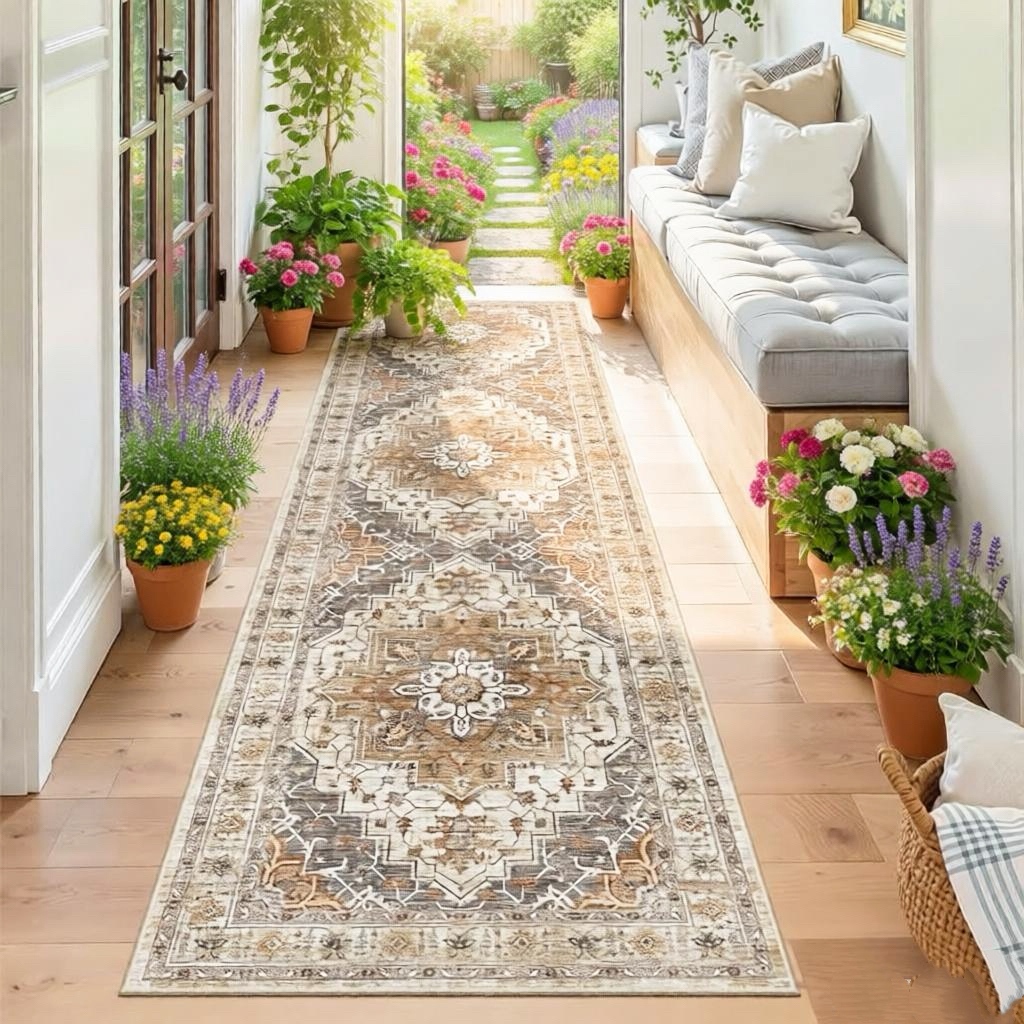
Scale usually matters more than color when you want a bold print to feel livable. A full wall of loud, small-repeat florals can close in fast, but the same motif blown up to an oversized, almost abstract scale reads as intentional art. Pair it with bare floorboards and a single solid-colored chair, and the pattern anchors the room instead of competing with every object in it.
Another route is to let the print carry one unexpected neutral. A paisley or ikat that includes chalky lilac, warm sand, or faded denim will sit naturally beside plain textiles in those tones, so the eye moves around without hitting a wall of contrast. Restraint in the surrounding surfaces—think matte plaster, unpatterned linen, soft wood—gives the print room to breathe without turning the space into a gallery exhibit.
The Plush Factor: What Your Feet Notice First
Your heel lands first, and before your eyes can even confirm what you're standing on, the surface compresses by a fraction of an inch. That initial give isn't just softness—it's a signal. If the material rebounds too quickly, it feels hollow. If it sinks and stays, it feels like a trap. Feet are surprisingly good at measuring this within the first half-second.
The real difference shows up in fiber density and foam cell structure. Loosely packed polyester might feel cloud-like for a moment, but it collapses under pressure and leaves your arches searching for support. A high-density memory foam or a tightly woven plush rug offers a slower, more controlled descent. Your weight spreads evenly, and that's when the plush factor stops being a novelty and starts feeling like rest.
A No-Nonsense Guide to Pile and Durability
When people talk about pile, they usually mean the little loops or cut ends of yarn that make up the walking surface. A tighter twist and shorter height tend to hold up better in busy rooms, while a loose, fluffy pile will show wear and flatten faster. If you want something that still looks decent after a few years of real life, go with a dense, low-profile option rather than something that feels plush for the first month.
Durability also comes down to fiber and backing, not just how tall the pile is. Wool bounces back well after furniture marks, and solution-dyed synthetics resist fading and stains in sunny or messy spots. Check the stitch count and pull on a sample if you can; a sturdy backing and tightly packed tufts usually mean the floor will keep its shape instead of getting crushed and balding in the traffic lanes.
Editors' Picks for Style and Everyday Wear
Every few months, the team gathers around a rail of returns, samples, and personal purchases to argue about what actually earns a place in our workweek rotation. The result is this short list of pieces we'd rescue first if the office fire alarm went off.
Think washed cotton shirts that stay crisp through a morning of back-to-back calls, wide-leg trousers with a waistband that doesn't dig in by 3 p.m., and a canvas tote that transitions from laptop to farmer's market without complaint. It's less about a unified aesthetic and more about the small details that keep you comfortable when no one's taking photos.
We don't chase micro-trends here. If a jacket appears below, it's because at least two of us have worn it to threads—or fought over the last size in the sample closet. That's the bar.
Simple Upkeep That Keeps It Looking New
Most people assume a fresh look requires constant effort, but the trick is working smarter, not harder. A quick wipe with a damp microfiber cloth after each use prevents buildup before it starts. For textured surfaces, keep an old toothbrush in the drawer—gentle enough for crevices yet firm enough to lift grime without scratches. The goal isn't perfection every day; it's creating small habits that stop wear from becoming visible.
Once a week, give attention to the areas everyone forgets: edges, seams, and any spot where dust tends to settle. A soft-bristle brush or a vacuum with a brush attachment works wonders here. Skip harsh chemicals—mild soap and warm water handle ninety percent of routine cleaning. For stubborn marks, a paste of baking soda and water applied with a cotton swab, then rinsed thoroughly, often does the job without damaging the finish.
Finally, rotate how you use the item if possible. Shifting cushions, alternating sides of a cutting board, or moving decorative pieces occasionally evens out exposure to light, touch, and pressure. This prevents that uneven, worn-in look that ages things prematurely. It's not about babying your belongings—it's about giving them a fair chance to stay presentable with almost no extra time on your end.
FAQ
Look for carpets that mention heat-transfer or dye-sublimation printing rather than a simple surface spray. A good quality printed faux rabbit fur will have color reaching deeper into the fibers, so even if the tips get brushed or vacuumed, the pattern doesn't turn patchy. Rub a small hidden corner with a damp white cloth when you first get it; if color transfers immediately, it's likely to fade fast.
Real rabbit fur has a very fine, dense undercoat that feels almost slippery. Printed faux rabbit fur gets close by using micro-denier polyester or acrylic fibers with a similar length and density. The printing process can slightly flatten the tips, so brushing the carpet gently after unrolling helps restore the plush feel. Most people can't tell the difference by touch alone, but faux fur is much easier to clean and doesn't shed organic fibers.
Yes, as long as you pick a low-pile or medium-pile version with a non-toxic, water-based print. Some printed faux rabbit fur carpets have a slight chemical smell when new, so air it out for a day or two before placing it in a baby's room. Avoid very long pile if your child is crawling, because loose fibers can end up on clothes and toys.
Around 1.5 to 2.5 inches works well for a printed faux rabbit fur carpet. Anything shorter feels more like a flat fleece and loses that rabbit-fur depth. Anything longer tends to trap dust, hair, and crumbs deep down, and vacuuming can pull at the printed fibers. Stick to medium pile if you want it to look good without needing constant grooming.
It can work, but I'd treat it as a decorative runner rather than a workhorse. The printed tips will flatten and show wear faster in a hallway because shoes grind against the pattern. If you still want it there, choose a design with a darker or busier print, which hides matting better, and add a rug pad underneath to reduce movement.
Shake it outside first, then vacuum with a suction-only attachment—no rotating brush. For small spills, blot with a cloth dampened in cold water and mild soap, but don't scrub in circles because that can blur the printed pattern. Let it air dry completely before walking on it. Machine washing is risky; even if the label says it's possible, the print can crack or peel in warm water, so spot clean whenever you can.
A backing with a dotted or waffle-textured non-slip surface is your best bet. Some printed faux rabbit fur carpets come with a thin cotton or felt backing that feels soft but slides easily, so you'd need a separate rug gripper. Check that the backing is sewn or heat-bonded along the edges, not just glued, because glued edges tend to peel when the carpet is moved or washed.
Conclusion
A printed faux rabbit fur carpet quickly becomes the focal point of any room without demanding constant attention. Its soft, plush texture is what your feet notice first, offering a cozy welcome that plain rugs simply can't match. The key is picking a bold print that complements rather than overwhelms your space—think geometric lines or subtle animal patterns in muted tones. When shopping, don't just fall for the look; check the pile height and density. A medium pile around 30–40 mm strikes the right balance between cushioning and practicality, while denser fibers hold up better to foot traffic and resist matting over time.
Durability comes down to the backing and fiber quality. Look for tightly woven backing and fibers that spring back when you press them. Our editors' top picks lean toward carpets with a mix of softness and resilience, perfect for living rooms and bedrooms where you want everyday wear without constant fuss. Upkeep is refreshingly simple: a weekly vacuum with a brushless attachment and an occasional shake outdoors keeps shedding minimal. For minor stains, spot clean with a damp cloth and mild soap, then let it air dry away from direct heat. With the right choice and minimal care, this carpet stays plush and vibrant for years, proving that bold style and everyday function can go hand in hand.
Contact Us
Contact Person: Ivy Yin
Email: [email protected]
Tel/WhatsApp: +86 18519681805
Website: https://www.sensecomarketing.com/