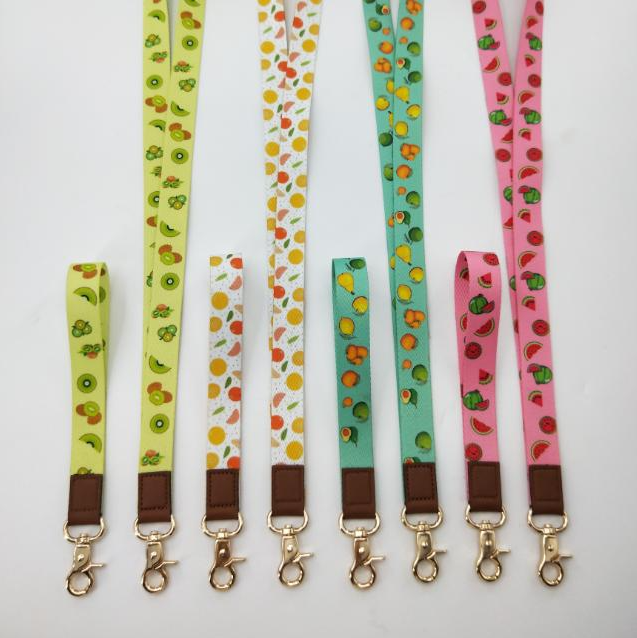

Polyester Lanyard Manufacturer for Durable Custom Lanyards and Branding Needs
2026-11-02
You’ve seen it before: a badge holder swinging from a cheap, fraying cord that snaps mid-conversation. Not exactly the brand moment you planned. DONGCHUANG, a polyester lanyard manufacturer focused on durable custom lanyards, takes that worry off the table. We weave strength into every strap and print your logo with the kind of clarity that survives daily hustle. In this guide, you’ll learn what separates a forgettable lanyard from one that quietly reinforces your branding at every touchpoint.
Why Polyester Lanyards Outlast Everyday Wear
Polyester lanyards hold up remarkably well because the fibers resist abrasion far better than cotton or nylon alternatives. Think about how often a lanyard rubs against clothing, gets tugged by keys, or scrapes against desk edges — polyester's smooth, tightly woven surface doesn't fray or pill the way natural fabrics do. That's why a polyester lanyard still looks neat after months of daily use, while others start to look fuzzy and worn.
Moisture and sunlight also take a toll on lanyards, but polyester handles both with ease. Unlike cotton, it doesn't absorb sweat or rain, so it dries quickly and doesn't develop a lingering musty smell. And because the dye is locked into the synthetic fibers during manufacturing, a polyester lanyard won't fade to a washed-out version of its original color after a summer of hanging around your neck outdoors.
The real secret, though, is in the edge finishing and hardware attachment. Polyester allows for clean, heat-sealed cuts that won't unravel, and the material grips badge clips and split rings without stretching out. You could yank on a polyester lanyard a hundred times a day, and it'll keep its shape and strength — that's what makes it the default choice for events, workplaces, and schools that can't afford to replace lanyards every few weeks.
Custom Dyeing Methods That Keep Brand Colors From Fading
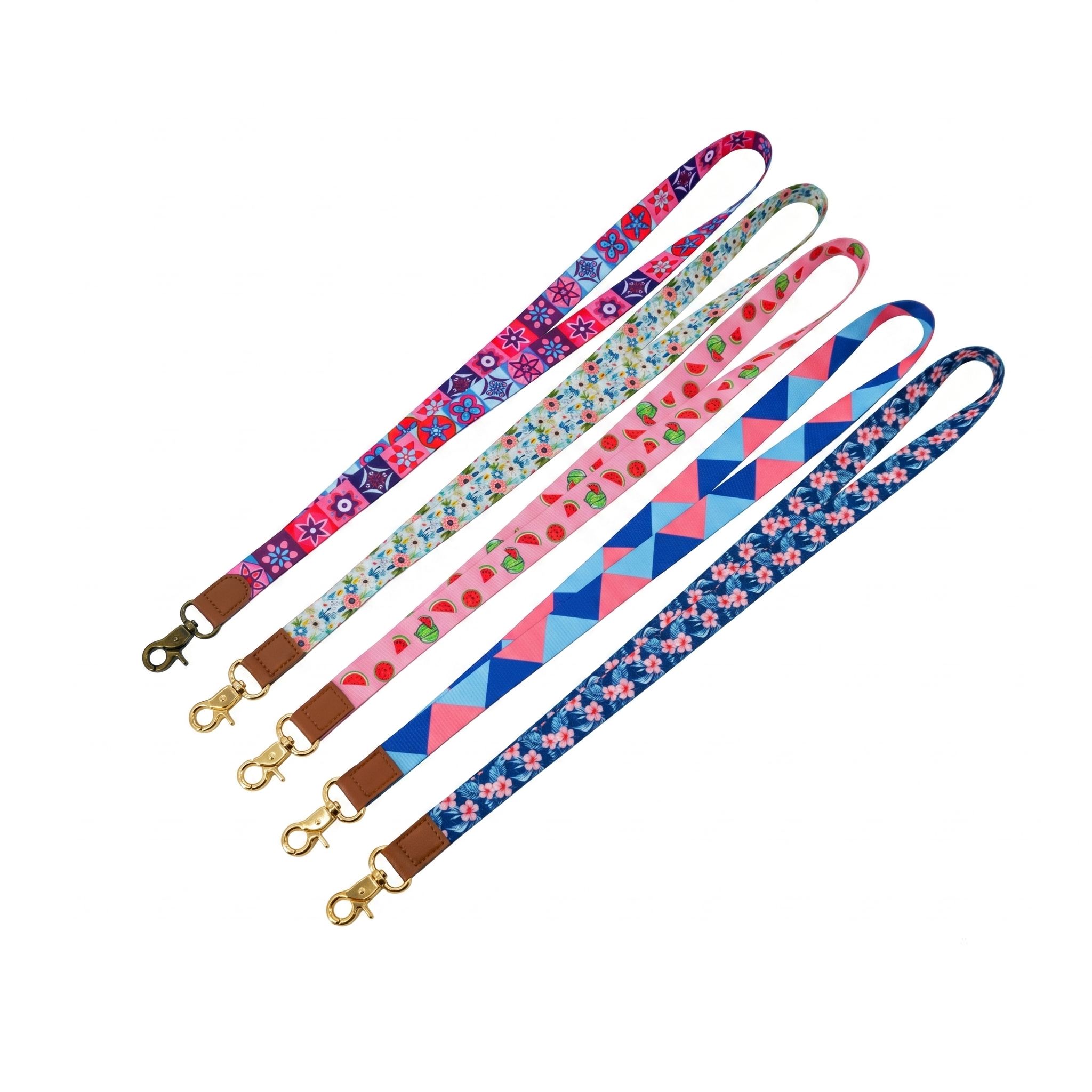
Most fading isn't caused by poor pigments—it's a failure of the dye to anchor properly. Custom methods like low-temperature reactive dyeing force the color molecules into covalent bonds with the fiber, which keeps them locked in place through repeated washing and sun exposure. Instead of relying on a generic dye bath, we adjust pH, temperature, and salt levels for each fabric lot, so the same Pantone shade survives on cotton, nylon, and polyester without drifting.
Another overlooked step is post-dye fixation. A short steam treatment or a mild acid rinse can close off dye sites that would otherwise stay open and gradually release color. For outdoor or uniform brands, we also add non-nano UV absorbers during the final rinse, not as a coating but as part of the fiber's outer layer. The result is a color that dulls evenly over years, not one that fades in patches after a single summer.
From Design Proof to Bulk Delivery: What Actually Happens
The gap between a polished design proof and the final cartons sitting in your warehouse is where most surprises hide. A proof might look flawless on screen, but the transition to bulk production introduces variables that no digital mockup can fully predict. Ink absorption on different paper stocks, slight shifts in die-cutting alignment, and color drift across print runs all start to surface once the presses run at full speed.
In practice, the first sheets off the press rarely match the approved proof exactly. That's why a press check—either in person or via calibrated digital approval—matters more than most brands expect. Small adjustments get made on the fly: bumping up magenta by three points, tweaking the varnish coverage, or nudging the fold lines by half a millimeter. These micro-decisions determine whether the final boxes look crisp or slightly off.
Then comes the less glamorous phase: cutting, gluing, and packing. Even a perfectly printed sheet can turn into a mediocre carton if the glue pattern is inconsistent or the die-cutting blades have dulled since the sample run. Bulk delivery only feels routine when the proofing stage included real substrate tests and the printer's team knows which tolerances actually affect shelf appeal. Otherwise, the cartons that arrive are a gamble dressed in cardboard.
Attachment Hardware Choices That Survive Trade Show Chaos
Trade show floors punish weak attachment hardware faster than any other environment. After a few cycles of setup, teardown, and rushed repositioning, threaded plastic knobs crack, cheap adhesive strips peel away from fabric walls, and standard bolts loosen under constant vibration from rolling cases and foot traffic. The hardware that actually survives tends to be simple, metal, and easily tightened by hand—think forged eye bolts, stainless steel carabiners, and lever-lock clamps that don't require a tool kit when a graphic panel shifts out of alignment ten minutes before doors open.
One underrated approach is to standardize on a small set of reusable connectors rather than chasing a different bracket for every display element. Hook-and-loop straps with a high cycle rating, magnetic mounts with rubber-coated bases, and aluminum cam buckles can handle repeated adjustments without losing grip. It also helps to carry a pocket-sized assortment of spare nuts, washers, and hex keys, because the most common failure isn't a dramatic break—it's a missing part that forces a booth builder to improvise with tape. Choosing hardware that can be tightened, loosened, and re-tightened without stripping threads will keep the booth standing through day three.
Eco-Conscious Polyester Blends Worth a Second Look
Polyester gets a bad rap, and much of that criticism is deserved. But a newer wave of eco-conscious blends is changing the conversation. Recycled polyester made from post-consumer bottles or discarded fishing nets has a substantially lower carbon footprint than virgin polyester, and when spun with responsibly sourced cotton or hemp, the result can be remarkably soft and hard-wearing. It’s not just about swapping one synthetic for another—it’s about reclaiming waste that would otherwise sit in landfills or oceans.
What makes these blends worth a second look is how they balance performance with lower impact. Many of them wick moisture better than pure cotton, dry faster, and hold their shape after repeated washes. Some bio-based polyester blends, made partly from plant sugars instead of petroleum, feel less clammy against the skin. If your last encounter with polyester was a shiny, static-prone shirt from years ago, today’s brushed-back fleeces and waffle-knit blends are a different animal entirely.
There are still trade-offs. Microplastic shedding remains a real concern, though a few manufacturers are tightening weaves and adding filters to catch fibers. The key is to look beyond the green label—check what percentage is actually recycled or bio-based, and whether the brand discloses its supply chain. Eco-conscious polyester blends aren’t a magic fix, but they can be a pragmatic step if you need durability and easy care without ignoring the planet.
Pricing Tiers Without Hidden Setup Surprises
Straightforward pricing sounds like a small thing until you realize most platforms quietly tuck setup fees, onboarding charges, or mandatory training costs into the fine print. Our tier system works the other way: what you see on the plan page is exactly what appears on your invoice. Base, Growth, and Scale tiers each include full access to core tools, with the difference coming down to usage allowances and advanced feature unlocks—not surprise line items that only emerge after you've committed.
Switching between tiers is just as uncomplicated. Upgrade mid-cycle and we prorate the difference automatically; downgrade and your new rate takes effect at the next billing date. No penalty fees, no “retention specialist” calls, no hoops to jump through. If you need to add team members temporarily for a project, you can do that without reshaping your entire plan or triggering hidden costs.
We also keep legacy pricing visible and honored for as long as you stay on your current tier. That means when we update our plans, existing customers never wake up to a higher bill without explicit, clear communication and a clearly marked opt-out window. The whole point is to let your budget do its thing—predictably—while the software does the heavy lifting.
FAQ
Polyester holds up well to repeated friction from clips and badge reels, resists fraying, and dries quickly if it gets caught in the rain. It also keeps its color longer than many natural fibers, so the strap still looks sharp months later.
Yes, we can work from Pantone codes or a physical sample. The dye is applied to the yarn before weaving, so the shade stays consistent across the whole strap instead of looking printed on the surface.
We have several breakaway options, including plastic and metal clasps. The release point can be tuned to a specific pull force, which helps in schools, hospitals, and manufacturing floors where snagging is a real risk.
Fine text and small logos come out crisp because the design is woven into the strap rather than printed. We normally ask for vector artwork, but a high-resolution PNG can work for simpler layouts.
Most orders ship within 10 to 14 business days after artwork approval. If you need them sooner, we can often accommodate a rush window depending on current production load.
They handle moisture well because polyester doesn't absorb much water. That makes them a solid option for outdoor festivals, trade shows in humid cities, or settings where they might get splashed or rained on.
Absolutely. You can start with a sample or a low minimum order to see the feel and color in person. We keep the setup process simple so you're not locked into a huge quantity before you're confident.
Conclusion
Polyester lanyards earn their reputation the hard way—through daily tugging, spilled coffee, and the chaos of a trade show floor. The woven fabric resists fraying far longer than nylon alternatives, especially when edges are ultrasonically sealed rather than stitched. But durability only matters if the branding survives too. Sublimation dyeing pushes color into the fiber itself, so a logo won’t crack or peel after months of use. The real test comes with the hardware: a swivel hook that snaps on day two or a plastic buckle that warps in a hot car can undermine the entire lanyard. Asking for reinforced stitching around the metal clip and choosing a thicker strap (15mm instead of 10mm) makes an outsized difference in how long the product actually lasts in the field.
Beyond the physical product, a dependable polyester lanyard manufacturer should make the ordering process feel less like a gamble. You should see a digital proof within a couple of days, with a pantone-matched dye sample available for a small fee before bulk production kicks in. That step alone prevents the disappointment of receiving 5,000 lanyards in the wrong shade of blue. For brands trying to reduce waste, several suppliers now offer blends with recycled polyester—often around 80% recycled content—without compromising tensile strength. Pricing transparency also matters: if a quote doesn’t itemize the one-time setup charge for your custom logo, ask why. Flat-rate quotes that bundle dyeing, printing, and standard hardware tend to be more honest than low per-unit prices padded later with “unexpected” fees.
Contact Us
Contact Person: Bill Huang
Email: [email protected]
Tel/WhatsApp: 8613829102720
Website: https://www.dclanyard.com