

ODM Metering Unit: Precision Solutions for Energy Management
2026-07-05
In today’s energy-conscious world, precision is no longer a luxury but a necessity. ODM metering units are reshaping how industries monitor and manage power consumption, offering tailored accuracy that off-the-shelf solutions simply can’t match. At the forefront of this innovation stands Fanchang Machinery, crafting bespoke metering systems that turn raw data into actionable insights. This blog unpacks the technology, benefits, and real-world impact of these advanced units—and why they might be the missing piece in your energy strategy.
What Makes ODM Metering Units Essential for Modern Energy Grids?
In today's rapidly evolving energy landscape, the push toward decentralization and smarter resource management has placed unprecedented demands on measurement infrastructure. ODM metering units step into this gap by offering purpose-built designs that go far beyond basic consumption tracking. Their ability to handle bidirectional power flows, log granular data in real time, and communicate seamlessly with upstream management platforms transforms them from passive sensors into active nodes within the grid. Without this level of precision and adaptability, utilities would be flying blind when trying to balance intermittent renewables, predict load shifts, or pinpoint faults before they cascade.
What truly sets these units apart is their engineered durability and modularity. Unlike generic metering solutions that buckle under the strain of harsh substation environments, ODM devices are built to withstand extreme temperatures, electromagnetic interference, and physical vibration. The modular architecture means utilities can swap out communication modules or upgrade firmware without replacing the entire unit—an often overlooked advantage that drastically reduces lifecycle costs. Field technicians appreciate this pragmatic design because it slashes downtime and makes maintenance far less of a headache, keeping the grid instruments accurate and available year after year.
Perhaps most critically, the data integrity and cybersecurity layers baked into these units were not an afterthought. Every measurement is timestamped and authenticated, creating a trustworthy audit trail that regulators and grid operators rely on. In an era where a compromised sensor could theoretically destabilize a local grid segment, ODM metering units employ hardware-rooted encryption and secure boot processes that keep bad actors out. This combination of ruggedness, precise analytics, and hardened security doesn’t just make them useful—it makes them indispensable for any grid that aims to be both responsive and resilient in the face of tomorrow’s challenges.
How ODM Precision Cuts Operational Waste in Real Time
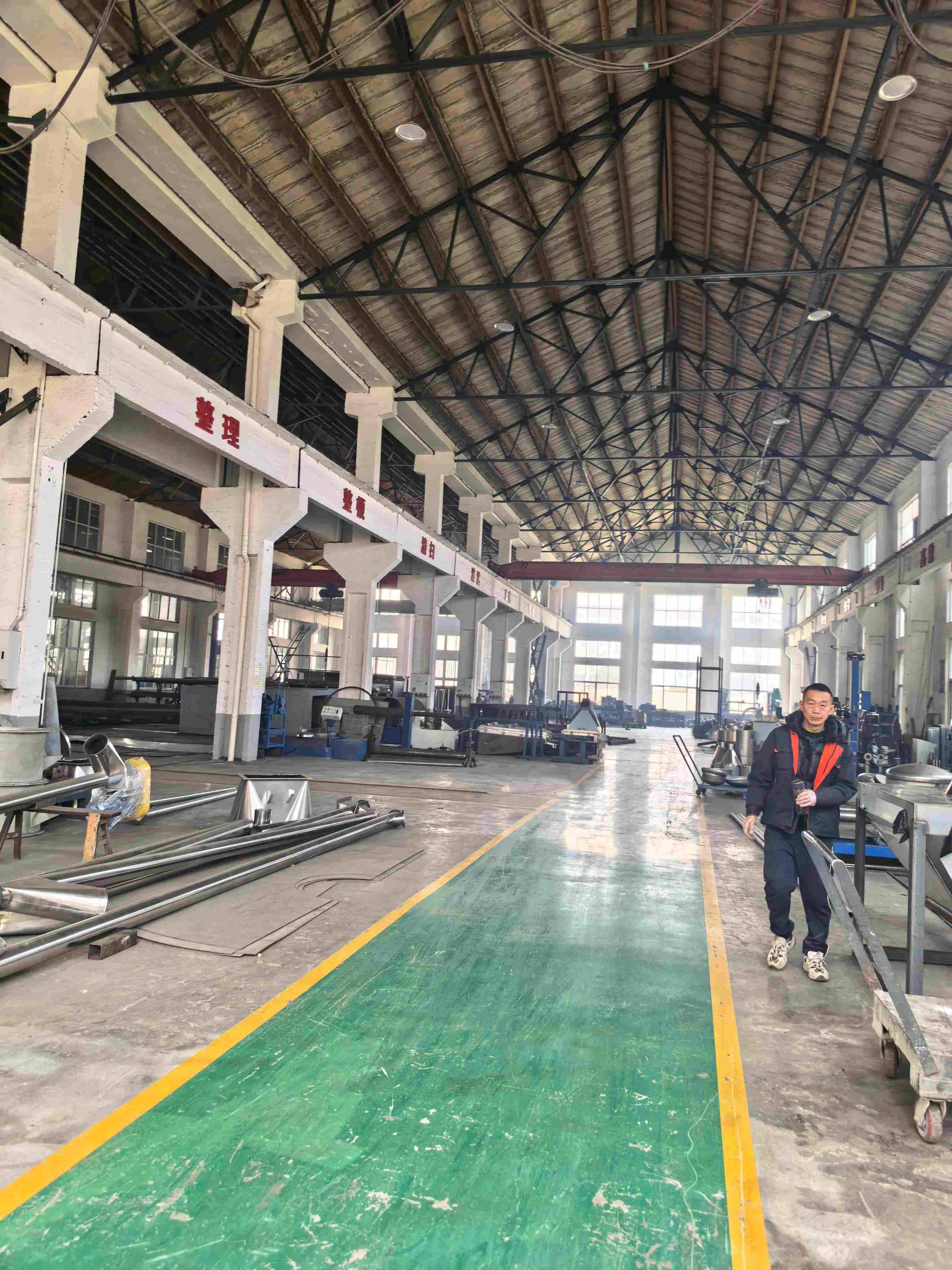
Time is money on the factory floor, but hidden inefficiencies often drain both without anyone noticing until it’s too late. ODM Precision takes a different route—embedding real-time monitoring right into the production flow. Sensors on critical equipment and material handling systems feed a live dashboard that flags anomalies the moment they happen, from a spindle vibrating out of spec to a conveyor idling longer than expected. Instead of waiting for a shift report, supervisors get instant alerts, letting them adjust on the fly and keep waste from piling up.
What makes the approach stick isn’t just the technology—it’s how it turns data into immediate action. Machine learning models trained on historical performance spot patterns that signal upcoming tool wear or batch inconsistencies, triggering preemptive maintenance or recipe tweaks without human guesswork. The result: fewer scrapped parts, less overprocessing, and material usage that stays razor-thin. Even energy consumption gets reined in, as systems power down non-critical units during brief idle windows rather than keeping everything humming at full tilt.
The real difference shows up in the culture shift. Operators aren’t just reacting to alarms; they’re part of a feedback loop that refines processes daily. When a particular line starts drifting from its optimal throughput, the team can drill into the real-time metrics, pinpoint the bottleneck, and test fixes before a shift ends. It’s the kind of lean thinking that doesn’t get stale—because every second of saved cycle time and every millimeter of avoided material waste gets measured, shared, and celebrated.
The Hidden Cost of Inaccurate Metering – And How ODM Eliminates It
When metering systems drift out of tolerance, the financial impact rarely shows up as a single alarming line item. Instead, it leaks steadily through overbilling disputes, wasted raw materials, and energy consumption that nobody can fully account for. A fraction of a percent error might seem trivial on paper, but across thousands of measurement cycles per day, that fractional loss compounds into six-figure gaps by year-end. ODM's approach directly addresses this by replacing periodic spot-checks with continuous, high-resolution validation, ensuring every reading reflects actual usage rather than an accumulated guess.
Beyond the direct monetary drain, inaccurate metering erodes the foundation of process control. Operators make real-time decisions based on data they trust; when that trust is violated, they begin second-guessing the numbers and inserting manual overrides. This reactive behavior introduces more instability than the original measurement error. ODM eliminates that uncertainty at the source by embedding redundant, cross-referenced sensor arrays and self-diagnostic algorithms. The system flags deviations before they influence production parameters, preserving both the integrity of the data and the confidence of the people who depend on it.
Perhaps the most overlooked consequence is the shadow inventory created by unmeasured discrepancies. Material that enters a facility but never appears on a flowmeter essentially vanishes from the books, distorting yield calculations and triggering unnecessary reorders. ODM's synchronized metering architecture closes these gaps by capturing every pulse, every gram, every watt with forensic precision. The result is a tightly audited stream of data that transforms metering from a potential liability into a strategic asset for operational clarity.
Inside the Adaptive Design of ODM Units for Harsh Environments
ODM units destined for harsh environments aren't just ruggedized versions of standard designs—they're fundamentally rethought from the ground up. The adaptive design philosophy starts with material selection, where every alloy, polymer, and coating is chosen not just for strength but for how it behaves under thermal cycling, salt spray, or constant vibration. Engineers often opt for custom-machined housings with integral cooling channels rather than bolting on aftermarket solutions, which reduces failure points and improves thermal dissipation in ways that generic enclosures simply can't match.
What sets these designs apart is the use of modular, self-diagnosing subsystems that can be swapped out without recalibrating the entire unit. For example, power regulation modules might include redundant feedback loops that automatically compensate for component drift caused by temperature extremes, while sensor inputs are galvanically isolated and filtered to reject the electromagnetic noise common in industrial settings. This layered resilience means the unit doesn't just survive harsh conditions—it maintains performance specs where off-the-shelf hardware would degrade or shut down.
The real innovation, however, lies in how these units leverage conformal coating and potting compounds not as afterthoughts but as integral parts of the thermal and structural design. By simulating fluid dynamics and stress distributions early in the development cycle, design teams can direct potting material to simultaneously dampen vibration, conduct heat away from hotspots, and seal against moisture ingress—all while keeping serviceable components accessible. It's this kind of holistic, anticipatory engineering that allows ODM units to operate reliably in places where failure is simply not an option.
Why Data Granularity Matters More Than You Think
There’s a quiet assumption that as long as you have data, you’re already ahead. But the truth is, the level of detail in that data—its granularity—often means the difference between spotting a subtle shift in customer behavior and being blindsided by a trend you should have seen coming. When you work with aggregated or high-level summaries, you’re essentially smoothing out the very texture that holds the insights. It’s like trying to understand a city’s traffic patterns by only looking at highway exits instead of every intersection; you’ll miss the congestion building on the smaller streets until it’s already gridlock.
Coarse data can trick you into thinking you understand a situation when you’re actually operating on a dangerous oversimplification. For instance, monthly sales totals might look stable, but item-level daily transactions could reveal that a best-selling product is losing momentum in certain regions while a niche item is quietly gaining traction. Without that granular view, you might keep allocating resources the same way, wondering why margins are slowly eroding. The patterns that matter most rarely announce themselves at a surface level—they live in the spikes, the outliers, and the micro-trends that only fine-grained records expose.
The speed at which market conditions evolve now demands that organizations stop coasting on top-line metrics. Granular data isn’t just about more rows in a spreadsheet; it’s about the agility to pivot before a problem becomes expensive, or to capitalize on an opportunity while competitors are still looking at yesterday’s dashboard. When you can drill down to the why behind the numbers, you’re no longer reacting to lagging indicators—you’re shaping outcomes. That shift in perspective turns data from a rearview mirror into a living map, and that’s something no aggregated report can ever replicate.
Future-Proofing Energy Assets with ODM Integration
As the energy landscape continues to shift, the ability to adapt becomes a defining trait of resilient infrastructure. Original Design Manufacturing (ODM) integration offers a pathway to keep energy assets relevant over time. By embedding flexible hardware and modular firmware from the start, systems can evolve without costly overhauls. This approach lets operators introduce upgrades or retune performance as requirements change, sidestepping the rigidity of off-the-shelf components. Rather than betting on a static configuration, ODM partnerships create a foundation designed to accommodate tomorrow’s unknowns.
A less visible but equally critical advantage is the streamlining of supply chains and support cycles. When a single partner owns the design and manufacturing, component obsolescence and compatibility snags fade into background noise. The result is a longer operational lifespan for assets that might otherwise face early retirement. Maintenance teams benefit from clearer documentation and version-controlled updates, cutting down on guesswork during troubleshooting. It’s a practical form of future-proofing that operates beneath the surface, keeping deployments humming as external conditions shift.
Perhaps most importantly, ODM integration empowers energy providers to respond to emerging regulations and market demands without reinventing the wheel. Custom-designed modules can be adjusted to meet new efficiency thresholds or interface standards, while the core architecture remains intact. This agility translates into reduced capital risk and a faster time-to-market for incremental improvements. In an industry where adaptability often separates leaders from laggards, threading ODM capabilities into the asset lifecycle is a quiet but decisive step toward staying ahead of the curve.
FAQ
It stands for Original Design Manufacturer. Rather than off-the-shelf products, these metering units are developed and tailored by the manufacturer to meet specific client requirements, from hardware design to firmware, giving you a solution that fits your energy management system precisely.
By providing high-accuracy measurements and flexible integration, these units let you track power consumption in real time, identify inefficiencies, and automate controls. Since they're built to your specs, you get data that’s directly relevant to your operations, making it easier to cut waste and reduce costs.
They use high-grade current transformers, advanced analog-to-digital conversion, and calibrated measurement algorithms. The result is typically Class 0.2 or 0.5 accuracy, meaning you can rely on the data for billing, auditing, or delicate power quality analysis without second-guessing the numbers.
Absolutely. Whether you need multi-channel 3-phase monitoring, support for DC circuits, or rugged enclosures for harsh environments, the ODM approach lets you specify exactly what the hardware and software should do. This is especially valuable in factories, renewable energy sites, or data centers where standard meters fall short.
Depending on your needs, manufacturers can build in Modbus RTU/TCP, BACnet, MQTT, or even DNP3. The firmware can also be adapted to speak proprietary protocols if you're integrating with legacy systems. This ensures seamless data flow to your central management platform or SCADA.
Beyond basic meter readings, they can capture harmonics, voltage sags, swells, and transients. With fast sampling and on-board analysis, you get early warnings of equipment stress, allowing preventive maintenance before failures occur. The precision here isn't just about kWh—it's about the health of your electrical infrastructure.
Surprisingly, yes. While the upfront engineering may be higher, you avoid paying for features you don't need and reduce integration headaches. The long-term savings from accurate monitoring and energy optimization often outweigh the initial investment, making it viable for many mid-sized operations, not just large enterprises.
Conclusion
ODM metering units have become indispensable for modern energy grids, delivering a level of precision that transforms raw data into actionable insights. Unlike conventional meters that often mask inefficiencies, these devices capture granular consumption patterns in real time, enabling operators to pinpoint energy losses and operational waste with surgical accuracy. The adaptive design—engineered to withstand extreme temperatures, humidity, and electromagnetic interference—ensures reliable performance even in the harshest industrial or outdoor environments, making them a versatile backbone for critical infrastructure.
Beyond robust hardware, the true impact of ODM technology lies in its ability to eliminate the hidden costs of inaccurate metering. Even minor measurement errors can cascade into billing discrepancies, misallocated resources, and compromised grid stability. By integrating high-resolution sensor arrays and intelligent calibration algorithms, ODM units close this gap, providing a trustworthy foundation for demand forecasting and load balancing. Moreover, their modular architecture and open communication protocols allow seamless integration with legacy systems and IoT platforms, future-proofing energy assets as organizations transition toward smarter, more decentralized networks. This data-rich approach doesn’t just optimize day-to-day operations—it redefines how businesses understand and manage energy, turning a routine utility into a strategic advantage. In an era where every watt matters, ODM metering isn’t a luxury; it’s the new standard for accountable, efficient energy management.
Contact Us
Contact Person: Darye WANG
Email: [email protected]
Tel/WhatsApp: 86-13501017897
Website: https://www.fcntd.com/