

Mobile Trailer Generator Manufacturing Explained
2026-09-05
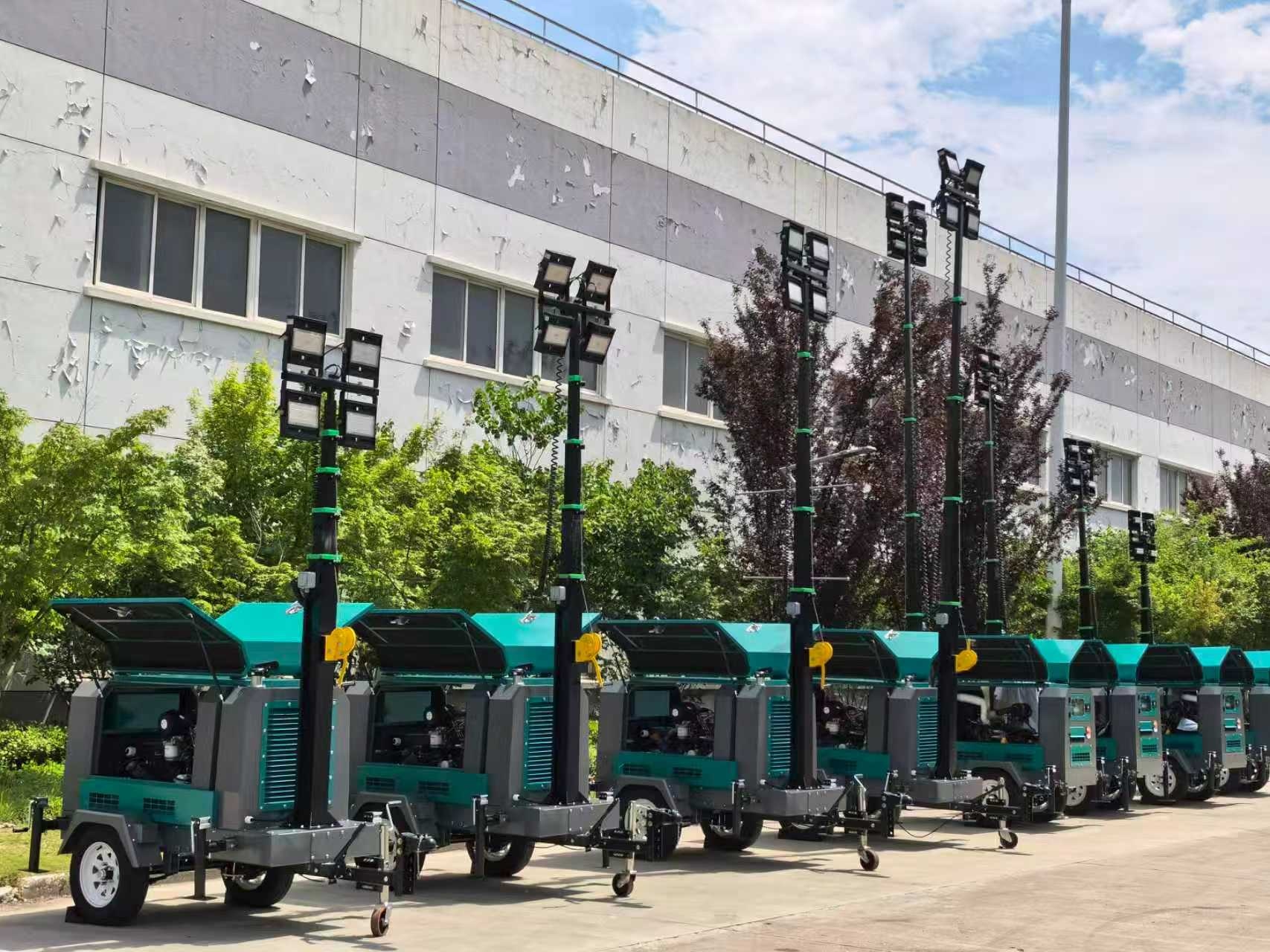
Ever wondered how mobile trailer generators go from raw steel to ready-to-roll power stations? The manufacturing process is a fascinating blend of heavy fabrication, precision electrical work, and brutal real-world testing. At the heart of this industry, DINGBO POWER has carved out a reputation for building units that survive the road less traveled. In this post, we peel back the panels and walk you through each stage of production — from chassis strengthening to final load bank verification — so you know exactly what makes a trailer generator truly mobile, reliable, and worth its weight in diesel.
Why Mobile Trailer Generators Start as a Chassis-First Design
A generator trailer lives or dies by its chassis. Unlike a stationary genset bolted to a concrete slab, a mobile unit faces dynamic loads from road shock, cornering, and braking long before it produces a single watt. Starting with the chassis means defining the backbone that carries the engine, alternator, fuel tank, and weatherproof enclosure through potholes and highway speeds. The chassis also sets the gross vehicle weight rating, tongue weight, and hitch class, which in turn limit how large a generator set can actually be towed. So chassis-first is not a styling preference; it is the only order that keeps every downstream decision honest.
Chassis layout also drives weight distribution and service access. If you pick a generator set first, you often end up with a trailer whose axle is in the wrong place or whose fuel tank crowds the control panel. By designing chassis rails, crossmembers, and axle placement around the expected center of gravity, you avoid adding counterweights or extending the tongue later. It also lets you integrate cable trays, battery boxes, and lockable enclosures without resorting to bolt-on afterthoughts.
Another reason chassis-first matters is vibration and fatigue. Mobile generators shake, and the chassis is the first line of defense against that movement. A well-designed chassis uses damped mounts and reinforced stress points so that road vibration and engine vibration do not combine into cracks at the welds. That means longer trailer life, fewer breakdowns on the way to a site, and a unit that can handle repeated relocation without loosening critical connections.
Inside the Frame: How Vibration and Road Shock Shape Component Choice
Every pothole sends a frequency through the fork, headset, stem, and handlebar before it ever reaches your hands. That chain of metal and carbon isn't just structure; it's a filter. Choosing alloy over carbon, 31.8mm over 35mm clamp, or a bar with a flattened top section changes how much of the road buzz gets translated into fatigue. The same logic applies to seatposts and saddles, where a few millimeters of flex can mean the difference between finishing a century with feeling in your fingers or numbness by mile sixty.
But stiffness is not always the enemy. Too much compliance in the wrong place—like a noodly bottom bracket under hard pedaling—saps momentum and makes the bike feel vague. The trick is isolating vibration where it hurts (contact points) while keeping the drivetrain and frame's spine direct. That's why high-end frames often pair a laterally stiff down tube with a tapered steerer, yet leave room for a 27.2mm seatpost and a tire pressure 10psi lower than the sidewall lists. The road tells you exactly what each component is doing; you just have to listen before you spec the next build.
The Welding and Coating Steps Most Buyers Never See
The final product looks clean and smooth on the outside, but the real story starts long before the first bead is laid. In many shops, the metal arrives covered in mill scale, oil, and light surface rust. Welders spend a good chunk of time grinding and wiping down every joint area until it is bright and free of contaminants. That prep work does not show up in the catalog photos, but it is the difference between a weld that holds for decades and one that cracks under stress.
Once the parts are fitted and clamped, the actual welding parameters are rarely set-and-forget. A skilled welder constantly adjusts amperage, travel speed, and torch angle based on how the puddle flows. Thin sections need a quick, low-heat pass to avoid burn-through, while thicker plates call for a slow weave with multiple passes. These micro-adjustments happen in seconds and leave no visible trace in the finished piece, so buyers only see the end result: a uniform, penetrating weld with no undercut or porosity.
Coating is another invisible battlefield. The best finishes start with a blasted or chemically etched surface, which opens up microscopic peaks and valleys for the coating to grip. Then the primer or powder goes on in a controlled environment, often with a specific humidity and temperature window. If the shop skips the pre-bake or rushes the curing cycle, the coating might look fine for the first month but will flake or bubble later. Buyers never see the oven logs or the thickness gauge readings—they only notice whether the paint still looks good after a year in the sun and rain.
Wiring for Weather: Sealing Connections Against Dust and Moisture
Outdoor wiring fails most often at the joints, not the cable runs. A connector that looks snug can still breathe in fine dust during dry spells or wick moisture through capillary action once rain arrives. The first line of defense is choosing connectors designed with an environmental seal—usually a silicone or EPDM gasket that compresses around each wire. But a good connector alone isn't enough. The real seal happens at the jacket-to-connector interface, where movement, temperature swings, and UV exposure gradually break down ordinary plastic or vinyl.
Heat-shrink tubing with a hot-melt adhesive liner is one of the most reliable ways to close that gap. When heated, the adhesive flows into the wire strands and the back of the connector, creating a waterproof plug that also resists pull-out. For applications that need to be re-enterable, dielectric grease packed inside a connector before crimping keeps oxidation at bay and fills microscopic voids that would otherwise collect dew. Then wrap the whole assembly with self-amalgamating silicone tape—it bonds to itself without adhesive, forming a solid rubber boot that sheds water and shrugs off dust.
Don't overlook the enclosure. A weatherproof box with a foam gasket is only as good as its strain relief. Use cable glands or cord grips that match the cable diameter exactly; an undersized grip lets dust sift in, while an oversized one cracks the housing under vibration. For buried or fully exposed runs, consider potting the connection in a two-part epoxy or polyurethane resin. It's messy and permanent, but nothing else seals as completely against both fine particulates and standing water. Inspect twice a year for signs of shrinking, cracking, or chalkiness on the seal surfaces—those are early warnings that the weather is winning.
Load Bank Testing: Simulating Real-World Demand Before Delivery
Load bank testing is often treated as a box-ticking exercise, but it is actually the closest you can get to replicating a facility's actual operating conditions without flipping the main breaker. Instead of running a generator at idle or relying on manufacturer specs, a load bank applies a controlled electrical load, pushing the system to a measurable percentage of its rated capacity. This reveals how voltage regulators, cooling circuits, and fuel delivery behave under stress—things no static inspection would catch. The goal is not to prove the equipment can start; it's to confirm it can hold a realistic load without overheating, misfiring, or tripping protection relays.
Before delivery, this test matters because site conditions rarely match the factory floor. Altitude, ambient temperature, exhaust backpressure, and even the quality of the installation can shift performance in ways that only become visible under load. A 2 MW generator that runs flawlessly in a climate-controlled test bay might struggle at 90% load on a rooftop in summer. Load bank testing before handover gives engineers a chance to tune governors, adjust voltage setpoints, and verify that the automatic transfer switch reacts correctly under real demand—not just in a staged no-load sequence.
There is also a practical side: catching weak connections and underrated components before they turn into warranty claims. When current flows through every busbar, breaker, and cable at full rated capacity, thermal imaging can spot hot spots that would otherwise remain hidden. That kind of pre-delivery scrutiny shortens commissioning, reduces field troubleshooting, and gives the client a baseline performance curve to compare against future tests. It is not about making the generator work harder than it ever will; it is about making sure the promised output is actually there when the building needs it.
From Raw Steel to Road-Ready Power: A Walk Through Final Assembly
Raw coils of steel don't hint at the end product. They arrive in dull grey loops, then get sliced, blanked, and pressed into door skins, hoods, and floor pans within hours. The stamping hall runs on rhythm more than spectacle—each hit of the die leaves a recognizable shape, but nothing feels alive yet.
From there, panels move into the body shop where robots lay thousands of spot welds and a few laser seams. It's fast, but the real test is the gap-and-flush station: workers run their fingers along door edges and hood margins, rejecting anything over a millimeter off. The bare shell gets dipped, sealed, and painted while still unpowered—a silent chassis waiting for its spine.
The final stretch is where personality shows up. The painted body meets the engine, transmission, and suspension on a moving platform. Fuel lines clicked, harnesses plugged, first start happens under bright lights with a laptop watching every sensor. Then it rolls onto a short dyno, tires spinning against steel rollers, before heading out for a quick road loop. Only after that does it earn its badge and leave the line under its own power.
FAQ
It's a portable power station built onto a towable trailer, combining an engine-driven generator, fuel storage, controls, and protective housing so it can be hauled to remote sites and supply electricity on demand.
The core parts include the prime mover (diesel or gas engine), alternator, heavy-duty trailer chassis, fuel tank, cooling system, exhaust, control panel, circuit breakers, and often a sound-attenuated enclosure to keep noise levels manageable.
Usually it begins with fabricating or sourcing the trailer frame, then mounting the engine-generator set onto vibration isolators. After that, fuel lines, wiring harnesses, and exhaust routing are installed before the outer enclosure is fitted.
Structural steel is the standard choice due to its strength and durability, often hot-dip galvanized or powder-coated to resist corrosion. Some lighter models use aluminum for reduced towing weight, but steel remains more common for heavy-duty units.
The engine and alternator are coupled together and mounted as a single skid, which is then bolted or welded onto the trailer bed using anti-vibration mounts. Alignment is critical to prevent driveline stress, and flexible connectors are used for fuel, exhaust, and electrical connections.
Manufacturers typically include emergency stop buttons, automatic shutdown for low oil pressure or high coolant temperature, spark-arresting exhaust, fuel containment basins, lockable access doors, and proper grounding lugs. Fire-rated insulation may also be added inside the enclosure.
Yes, the same trailer platform can often accommodate generator sets ranging from around 20 kW to over 500 kW. Customization includes changing the alternator size, engine horsepower, fuel tank capacity, and adding features like dual-voltage output or remote monitoring systems.
Conclusion
Mobile trailer generators aren't simply assembled from a catalog of parts; they begin with the chassis, because everything from axle placement to weight distribution hinges on how the unit will travel. Engineers treat the frame as the backbone, selecting components that can endure constant vibration and road shock rather than just static loads. This chassis-first thinking directly influences which alternators, engines, and mounts make the cut—if a part can't survive potholes and highway harmonics, it doesn't belong. What most buyers never witness is the care hidden beneath the paint: multi-pass welds ground smooth, zinc-rich primers, and urethane topcoats applied in controlled booths to fend off corrosion for years of outdoor service.
Once the steel work is done, the focus shifts to electrical integrity. Every connection is sealed against dust and moisture, often using heat-shrink, dielectric grease, and gasketed enclosures, because a generator that fails after the first rainstorm is no generator at all. Before any unit leaves the shop, it faces a load bank test that pushes it to full rated output, mimicking real-world demand spikes rather than a gentle idle run. This catches weak links in cooling, voltage regulation, and fuel delivery. Finally, raw steel becomes road-ready power through careful final assembly: mounting the enclosure, aligning the drivetrain, routing hoses and harnesses, and torquing every bolt to spec. The result is not merely a machine on wheels but a portable power plant built to work hard from day one.
Contact Us
Contact Person: Rita
Email: [email protected]
Tel/WhatsApp: +8613481024441
Website: https://www.dbdieselgenerator.com/