
Leading China Dredging Machinery Dealer: Expert Insights for Your Next Purchase
2026-05-12
Navigating the world of dredging equipment can feel overwhelming, especially when every supplier promises the best deal. But what truly sets a leading dealer apart? At YaKai Dredger, we don’t just sell machinery—we deliver decades of on-the-ground expertise that transforms complex buying decisions into clear, confident moves. Whether you’re tackling coastal reclamation or maintaining inland waterways, the right insights can save you from costly missteps. In this post, we pull back the curtain on what industry leaders consider before a purchase, sharing the kind of hard-won knowledge you won’t find in glossy brochures. Ready to explore how smart choices today become long-term success? Let’s dive in.
Decoding China’s Dredging Equipment Market: What Buyers Need to Know
China’s dredging equipment scene has shifted dramatically over the past decade, moving from a landscape dominated by imported machinery to one where homegrown manufacturers like CCCC and IHC-like firms set the pace. For buyers, this means navigating a market where price, capability, and after-sales support vary wildly. A standard cutter suction dredger might look similar on paper, but the real differentiators lie in the metallurgy of the cutter head, the efficiency of the pump drive, and the control system’s adaptability to different soil types. Ignoring these nuances often leads to costly downtime when operations move from silty riverbeds to hard-packed clay or gravel.
Beyond the spec sheets, the procurement journey in China hinges on understanding regional supply chains and the unspoken tiers of quality. First-tier suppliers with export experience integrate European hydraulics and Siemens automation, while second-tier yards might substitute local components that struggle under continuous duty. Buyers should also pay attention to the commissioning process: many Chinese yards offer competitive ex-works pricing but require on-site adjustments. A smart buyer builds in a two-week commissioning period with the manufacturer’s engineers, which often surfaces issues like misaligned pipelines or underrated cable insulation that would otherwise plague operations.
Finally, the regulatory and financing environment adds another layer. Export controls on advanced dredging technology can delay shipments, and import duties in the buyer’s country may change based on how the equipment is classified. Leasing arrangements or government-backed ECA financing from China can ease upfront capital, but they come with strings attached, like mandatory use of certain spare parts suppliers. Buyers who treat these elements as afterthoughts of the purchasing process find themselves losing months to bureaucracy, while those who engage local maritime lawyers and logistics partners early get their vessels into the water on schedule.
Unveiling the Machinery That Reshapes Waterways
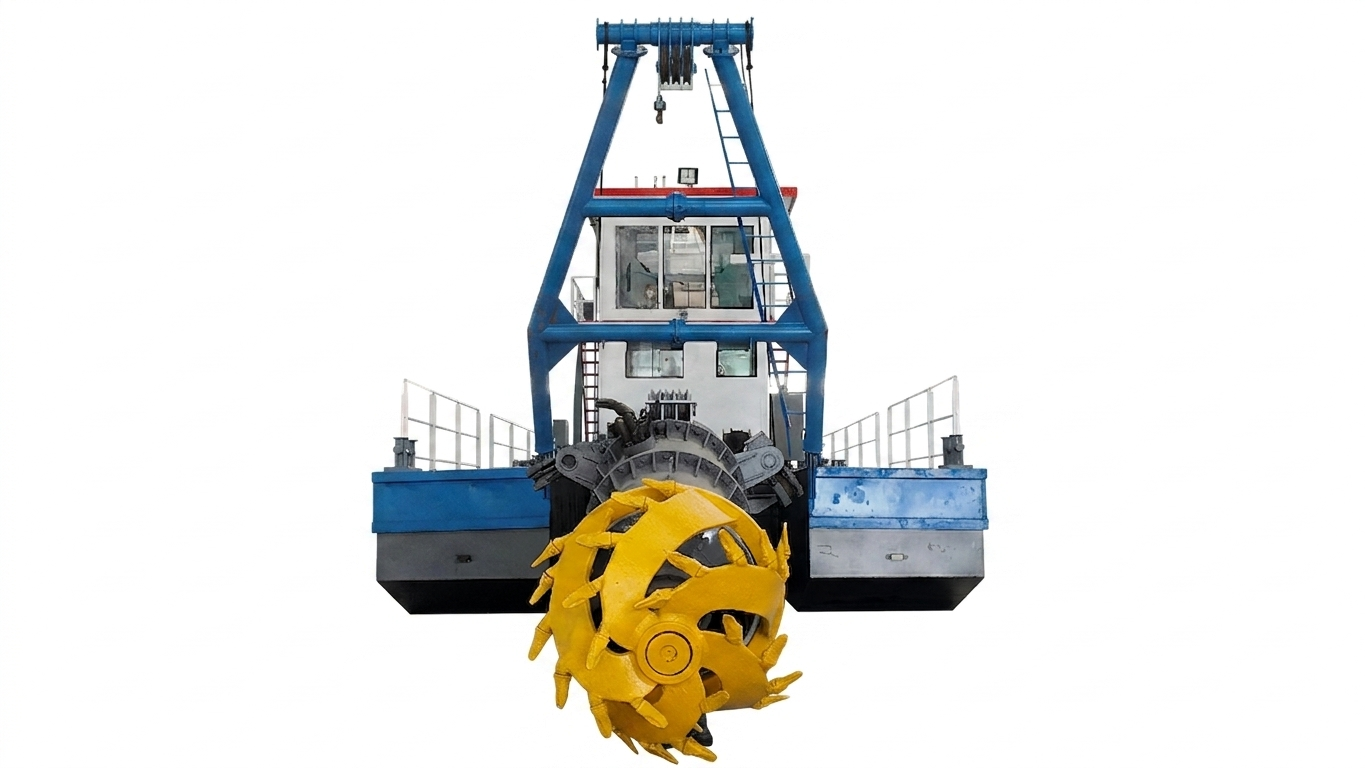
Beneath the surface of rivers and canals, a fleet of specialized machines works tirelessly to alter the landscape of our waterways. Dredgers with their rotating cutterheads chew through sediment and rock, transforming shallow channels into navigable depths. These vessels act like floating factories, sucking up debris and pumping it through pipelines to designated disposal sites, methodically reshaping the seabed to meet the demands of modern shipping.
Backhoes and clamshell dredges bring mechanical muscle to the task, using articulated arms and grab buckets to scoop out consolidated materials that suction alone cannot handle. Their rhythmic clawing carves precise contours into harbors and turning basins, while amphibious excavators wade into marshy edges where traditional equipment dares not venture. Each machine leaves its own distinct signature on the waterway's profile, dictated by the geology it bites into.
On the surface, tugboats and workboats orchestrate the ballet of barges and floating pipelines, ensuring the extracted material finds its way to reclamation sites or deep-sea discharge zones. Hydrographic survey vessels glide ahead, mapping the submerged terrain with sonar pulses to guide the next cut. Together, this ensemble of machinery continuously redefines our aquatic arteries, balancing engineering ambition with the fluid dynamics of nature.
Navigating Your Purchase: A Dealer’s Inside Perspective
Most buyers walk into a showroom fixated on beating the sticker price, never realizing the game has shifted before they even sit down. The numbers on the window are just a starting point, and smart shoppers pay closer attention to how a vehicle arrived on the lot than the markup itself. Dealer trades, aged inventory, and factory incentives create hidden pockets of flexibility that never appear in online listings. When you understand which cars the sales team is actually motivated to move, you stop negotiating against yourself and start working with the reality of their floorplan.
There’s a subtle art to letting the deal come to you rather than chasing it. Seasoned managers can smell desperation from the first handshake, and it usually costs you more than any option package ever could. Instead of firing off lowball offers across five dealerships, invest a single afternoon in building rapport with one reputable desk. Ask pointed questions about service records on used units or manufacturing holdbacks on new ones, and watch how quickly the conversation shifts from monthly payments to genuine transparency. The best deals I’ve seen weren’t hammered out over email at midnight; they happened when a customer demonstrated they understood the business well enough to earn a fair number the first time.
Moving past the numbers, the real test is how a dealership handles what comes after the signatures dry. The purchase price fades from memory a lot faster than the feeling of being dodged on a warranty claim or a promised detail that never happens. I’d always advise someone to walk the service drive before signing anything. Look at the faces of people waiting for repairs, peek at the technicians’ bays if you can, and note whether the coffee station is clean and stocked. Those details tell you more about long-term value than another hundred dollars off the sale price ever will.
Quality, Cost, and Reliability: The Triple Equation
Engineering rarely offers a free lunch, and nowhere is that more obvious than in the constant push-and-pull among quality, cost, and reliability. These three factors don’t march in lockstep; improving one often nudges the others sideways. Chase top-tier quality, and costs spiral while time-to-market stretches. Obsess over trimming expenses, and suddenly field failures creep up. It’s less a balancing act and more a series of deliberate trade-offs that demand a clear-eyed view of what the product actually needs to do.
Savvy teams stop treating the equation like a fixed formula and start using it as a framework for asking sharper questions. Instead of aiming for “the best” in all three, they figure out which axis matters most to the end user and design accordingly. A rugged industrial sensor might sacrifice upfront cost for a decade of flawless operation, while a disposable consumer item prioritizes price over repairability. The art is in aligning those choices with real-world priorities, not chasing a hollow ideal of perfection across the board.
Behind the Scenes with a Trusted Equipment Partner
It starts long before any machine hits the production floor. A real partnership means sitting down together, studying your flow, understanding the quirks of your operation, and asking the tough questions most suppliers skip. Our engineers spend days on-site, not hours, mapping out material movement and pinpointing bottlenecks you might not even notice. We look at your goals not as a sales opportunity but as a shared challenge. That early deep dive builds a foundation of trust and ensures every recommendation comes from genuine insight rather than a catalog.
Customization happens in the details. Instead of pushing stock solutions, we co-design equipment around the way your team actually works. A slight modification to a conveyor height, reengineering a sensor placement, or integrating legacy controls into a modern system can transform performance. Our shop becomes an extension of your team, often prototyping and testing configurations under simulated conditions. You get regular progress updates, including the occasional problem we encountered and how we solved it, because transparency is just part of how we operate. By the time equipment ships, it feels less like a purchase and more like a tool purpose-built for your hands.
After installation, the relationship deepens rather than fades. We shadow your maintenance staff, leave behind documentation written in plain English, and stay reachable for those 2 a.m. calls when a new line hiccups. Over the years, we track wear patterns, predict replacements, and sometimes even talk you out of unnecessary upgrades because that’s what a partner does. It’s this ongoing commitment that turns a one-time project into a multi-decade alliance. No flashy promises, just quiet reliability that keeps your operation running smoothly, day after day.
Future-Proofing Your Investment in Dredging Technology
Investing in dredging equipment isn’t just about meeting today’s project deadlines—it’s about staying ahead of tomorrow’s challenges. When you choose technology that adapts, whether through modular components, software-driven upgrades, or energy-efficient systems, you’re building a fleet that evolves with regulatory shifts and environmental demands. This approach minimizes downtime caused by obsolescence and reduces the need for costly complete overhauls down the line.
Another often-overlooked aspect is data integration. Modern dredgers that feed real-time performance metrics into centralized platforms allow operators to fine-tune processes, predict maintenance needs, and extend equipment lifespan. By embracing these smart capabilities now, your investment gains a layer of resilience that manual operations simply cannot match, ensuring you remain competitive as the industry digitizes.
Finally, consider the long-term value of a supplier partnership built on continuous innovation. A manufacturer that regularly releases retrofit kits, software patches, and training updates ensures your machinery doesn’t stagnate. This relationship turns a one-time purchase into an evolving asset, safeguarding your capital against the rapid pace of technological change in dredging.
FAQ
It's largely driven by the blend of advanced manufacturing and competitive pricing. Chinese yards have invested heavily in modernizing production, so you get machinery that meets international standards but at a more accessible cost. Plus, many dealers offer flexible customization that Western manufacturers often price at a premium.
Dig into their track record with projects similar to yours. Ask for case studies, not just brochures. Check the engine and pump brands they use—reputable names like Cummins or Cat are a good sign. And don't overlook the simplicity of the control system; a machine that's overly complicated can drain your training budget.
Look at the cutter head design and power. Dealers with in-house engineering teams can often reinforce the cutter and adjust the drive for heavier materials. Ask them to specify the cutter power and wear protections. A trustworthy dealer will be upfront about limitations and might propose a custom solution rather than overselling a standard model.
It can be, if you choose the right partner. Leading dealers now station service hubs in key regions or have partnerships with local technicians. Before signing, pin down their warranty response times—the best ones guarantee a technician on-site within 48 or 72 hours. Also, see if they offer remote diagnostics; that's a real time-saver.
Freight and import duties are the obvious ones, but people forget about spare parts inflation if the dealer has no regional warehouse. Also, factor in training for your crew—some control interfaces aren't intuitive. A transparent dealer will walk you through the total lifecycle cost, not just the sticker price.
Customization is a key advantage here. Many Chinese dealers expect modification requests, from adjusting discharge distances to adding eco-friendly features. Just be clear about your specs early on. The more detailed you are, the better they can tailor the machine—but always validate that modifications don't compromise warranty coverage.
Modern models are surprisingly competitive. Many now integrate load-sensing hydraulics and efficient engine packages, so fuel burn per cubic meter is on par with European brands. Operational costs often come down to availability of replacement parts—dealers with a robust parts network can keep your per-hour cost remarkably low.
Conclusion
Understanding China's dredging equipment market means looking beyond price lists and spec sheets. Buyers entering this space soon discover that the machinery shaping coastlines and waterways is as varied as the projects themselves. From versatile cutter suction dredgers to amphibious multipurpose platforms, each piece of equipment carries a story of engineering adaptation to different sediment and site conditions. The real insight comes from recognizing that no single machine fits every task; what works in a silt-heavy river delta may falter on a rocky seabed. This is where a knowledgeable dealer adds value: by decoding the supply landscape, clarifying the strengths of different manufacturers, and matching technology to real-world challenges without letting flashy claims obscure pragmatic needs.
The decision to invest hinges on a deeper calculation that fuses cost, durability, and after-sales dependability. A trusted dealer operates like an insider partner, vetting factories for consistent quality and ensuring that the machinery's lifecycle costs align with operational budgets. Through candid conversations and site visits, they help buyers see past initial price tags to assess fuel efficiency, wear-part longevity, and modular upgrade paths. This partnership becomes crucial when future-proofing an investment: whether it's integrating automation for precision dredging or ensuring compatibility with stricter environmental regulations, the right guidance turns a simple purchase into a long-term asset. Ultimately, the difference lies not in the metal alone, but in the expertise that steadies your next move.
Contact Us
Contact Person: Nancy
Email: [email protected]
Tel/WhatsApp: (+86) 13869631558
Website: https://www.yakaidredger.com/