

High Quality Concrete Vibrator Makers Leading the Industry in Durability and Performance
2026-07-22
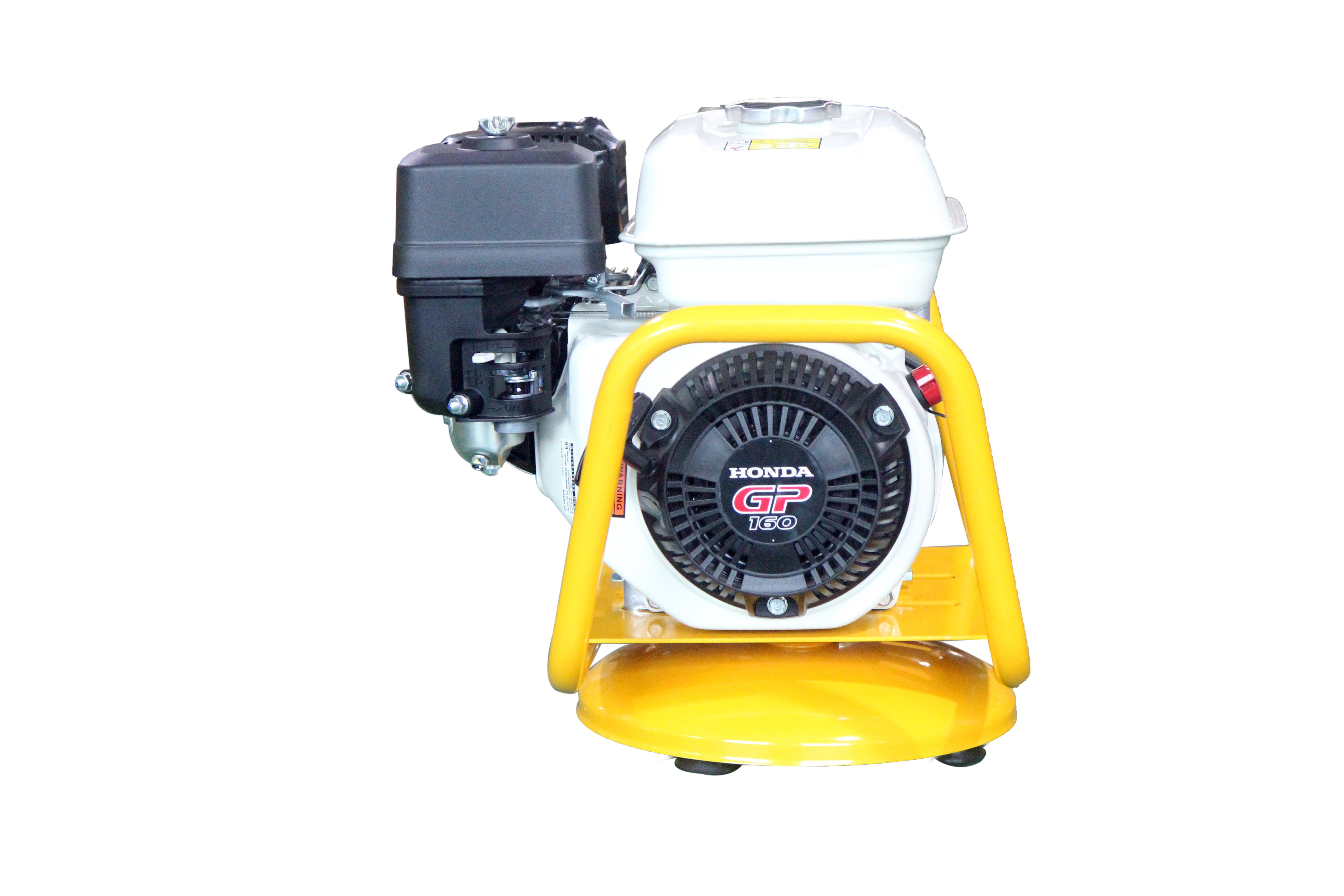
When it comes to high-quality concrete vibrator makers, durability and performance aren't just buzzwords—they're the foundation of every successful pour. In an industry where time is money and structural integrity is non-negotiable, the right equipment makes all the difference. Enter Dynamic, a brand that has quietly redefined what contractors expect from their concrete vibrators. But what sets them apart in a crowded market? Let's explore the engineering, materials, and real-world results that put Dynamic at the forefront.
What Sets These Concrete Vibrators Apart in Tough Jobsites
On a grueling construction site, equipment faces constant abuse from dust, moisture, and heavy impacts. The standout feature here is the reinforced motor housing that shields internal components from debris and accidental drops. It’s not just a thicker shell—engineered ventilation channels prevent overheating without letting in the fine silica dust that chokes lesser vibrators. This design has been tested in demolition-heavy environments and pours with high rebar density, where tools are often knocked around. The result is a tool that keeps humming long after standard models would have seized up.
Another overlooked detail is the vibration transmission itself. Instead of just increasing amplitude, these units use a precisely balanced eccentric rotor that delivers consistent compaction force even as voltage fluctuates—common with portable generators on remote jobs. The flexible shaft is constructed with a proprietary steel alloy that resists kinking and unwinding, a common failure point when vibrating around tight formwork. Operators report fewer hand fatigue issues because the oscillations are tuned to avoid the resonant frequencies that make long shifts unbearable.
Maintenance reality sets these apart too. The quick-release cap for lubricating the shaft bearings can be operated with muddy gloves on, and the carbon brushes are oversized and angled for replacement without disassembling the entire unit. When a vibrator sinks into wet concrete for the hundredth time, these practical design choices keep downtime measured in minutes, not days. It’s the cumulative effect of such field-driven improvements that earns trust on the harshest sites.
Engineering the Core: How Materials Science Powers Long-Lasting Tools
The secret to a tool that outlasts years of heavy use lies in the molecular arrangement of its materials. Take high-speed steel, for instance: the deliberate dispersion of tungsten, molybdenum, and vanadium carbides within an iron matrix creates a microstructure that resists deformation even at red-hot temperatures. This isn't just metallurgy—it's a careful orchestration of phases and grain boundaries that shrugs off wear while maintaining a sharp cutting edge.
Beyond metals, advanced ceramics like silicon nitride are engineered from the ground up to thrive where steel fails. Powdered raw materials are sintered into dense, covalent-bonded structures that laugh at corrosion, extreme heat, and abrasive slurries. The absence of a metallic grain structure means there's no softening point—just a gradual, graceful resistance to stress. It's this kind of atomic-level design that keeps pump seals and nozzles going thousands of hours past their expected lifespan.
Sometimes the real innovation happens at the surface. Diamond-like carbon coatings, deposited through plasma-enhanced chemical vapor deposition, fuse a layer of nearly frictionless, extreme-hardness material onto cutting edges and bearing races. The process isn't merely a coating—it's a marriage of material and substrate, with tailored sp³ bonding density that can triple component life in high-load applications. From the core to the outermost atoms, materials science gives tools the endurance to keep performing when lesser designs would have long given up.
Real-World Results: Contractors Share Their Experiences
When we first started using the new material on the downtown high-rise, I’ll admit I was skeptical. But three months in, the feedback from the crew said it all—fewer callbacks, faster installs, and the client actually noticed the difference. One project that used to take us six days we now wrap up in four, and the finish quality has been so consistent that the site supervisor joked he was getting bored. That’s the kind of boredom I can live with.
On a warehouse retrofit last fall, we ran into a headache with moisture levels in the slab. The usual approach would have added at least two weeks to the schedule—and a heap of extra cost. Instead, our team switched to a surface treatment we’d been testing on smaller jobs. Not only did it solve the moisture issue in three days, but the final floor came out tougher than anything we’d done before. The building owner was so impressed he had us back for a second phase six months early.
I keep track of the numbers pretty closely, and since we changed our approach, our rework rate has dropped by over 40%. That’s not just a statistic—it translates to less overtime, fewer material orders gone to waste, and way fewer frustrated calls from the foreman. Even the subcontractors are asking what we’re doing differently, because they see the pace we’re setting without burning people out.
The Quiet Revolution in Vibration Technology
Beneath the hum of everyday machinery, a subtle shift is reshaping industries without fanfare. For decades, vibration was an afterthought—tolerated, dampened, or simply ignored. Now, innovators are harnessing these oscillations in ways that challenge old assumptions, turning noise into nuance and nuisance into utility. The change isn't loud, but its ripple effects are profound.
From precision manufacturing to medical diagnostics, the ability to read and manipulate vibrational signatures is unlocking capabilities once deemed impossible. Tiny sensors now distinguish between a flawless bearing and a failing one by the faintest quiver, while ultrasonic scalpels use focused tremors to slice with cellular accuracy. It's a quiet repurposing of physics that sidesteps the flashier trends, yet it’s quietly rewriting the rules of efficiency and care.
What makes this evolution particularly striking is its invisibility. Unlike a roaring engine or a blinking screen, this technology works in the background—silent, steady, and deeply integrated. It doesn’t announce itself, but its fingerprints are everywhere: in the longevity of a turbine blade, the clarity of an ultrasound image, even the haptic pulse of a smartphone confirming your touch. The revolution is here, and it’s humming a very different tune.
Why Smart Design Matters More Than Just Horsepower
Raw power might grab headlines, but it’s thoughtful engineering that truly defines a vehicle’s character. A car with 500 horsepower can still feel clumsy if its weight distribution is off, its suspension is poorly tuned, or its aerodynamics create unnecessary drag. Smart design channels that power into a driving experience that feels intuitive and connected, not just fast in a straight line.
Consider how modern vehicles integrate lightweight materials, active airflow management, and chassis stiffness without sacrificing comfort. These elements don’t simply boost performance numbers—they transform how a car communicates with the driver. When every component works in harmony, you get immediate throttle response, stable cornering, and a cabin that isolates noise without feeling numb. It’s a livable performance that horsepower alone can’t deliver.
Beyond the mechanical, smart design extends to the human-machine interface. A well-laid-out cockpit, intuitive controls, and seamless tech integration reduce distraction and build confidence. These details might not show up on a spec sheet, but they shape every mile you drive. In the end, it’s the fusion of form and function—not just the engine output—that leaves a lasting impression.
Inside the Manufacturing Process: From Raw Steel to Reliable Gear
It all begins with carefully sourced steel—selected not just for hardness, but for how it handles stress, heat, and decades of fatigue. The raw bar or forging is rough-cut, then shaped through hobbing or shaping, where teeth begin to emerge with a precision that’s measured in microns. Even at this early stage, the grain structure of the metal is considered, as it will later determine how quietly the gear runs and how well it resists pitting under load.
Heat treatment follows, often carburizing or induction hardening, transforming the surface into a wear-resistant shell while keeping the core tough enough to absorb shock. After quenching, the gear is far from finished—it’s now distorted, slightly off in dimensions. That’s where grinding or hard finishing comes in, shaving away microscopic layers until the profile, lead, and pitch align with the design. It’s a dance of abrasives and coolants, where one wrong pass can ruin a week’s worth of work.
Quality checks are relentless. Every gear passes through inspection stations that map tooth geometry with laser or probe, listening for the faint signature of a misaligned flank. Only when noise, vibration, and durability tests are satisfied does the gear get its final coating—perhaps phosphate for break-in protection or a specialized dry film. By the time it’s bolted into a transmission, it carries not just torque, but the invisible layers of craft that keep it faithful for years on end.
FAQ
It comes down to their obsession with durability. They use hardened steel parts and military-grade motors that can withstand relentless job site punishment without breaking a sweat.
They engineer the vibration amplitude and frequency to stay rock-steady under load. Precision balancing of the eccentric weight means no power drops even in stiff, low-slump mixes.
A vibrator that fails mid-pour can ruin an entire slab. The best ones have sealed bearings and reinforced casings that laugh off dust, moisture, and accidental drops, keeping your project on track.
Look for a high-frequency motor with thermal protection, a flexible shaft that doesn't kink, and a head made of heat-treated steel. Rubber-isolated handles that cut vibration fatigue are a bonus.
Absolutely. Some makers now offer quick-release heads that swap out in seconds, and modular shafts that you can extend without tools. These designs cut downtime and keep the hardest components easily replaceable.
They provide easily accessible grease points and include brushless motors that need almost no upkeep. Spare parts are standardized, so you can rebuild a vibrator in the field instead of shipping it out.
It's huge. If the operator isn't fighting the tool, they can focus on proper consolidation. The best models have balanced weight distribution and anti-vibration grips that let you work longer with fewer mistakes.
Yes, the leading manufacturers produce compact backpack or handheld units with the same tough internals as their industrial cousins. They run off standard outlets or batteries, so you don't sacrifice power for mobility.
Conclusion
On demanding construction sites, the difference between a smoothly consolidated pour and a costly rework often comes down to the reliability of the concrete vibrator. Leading manufacturers have moved far beyond simply packing more power into a handheld unit. Today’s top-tier tools thrive in harsh environments because they blend rugged external protection with carefully engineered internal components. Dust, moisture, and relentless vibration used to spell early failure for motor bearings and flex shafts—now, sealed housings, advanced polymer seals, and precision‑machined couplings create barriers that keep debris out while absorbing punishing shock loads. The quiet yet profound shift toward brushless motor technology hasn’t just reduced noise at the operator’s ear; it has virtually eliminated the carbon dust that once clogged commutators, extending service intervals and letting crews work longer with less fatigue.
Behind every durable vibrator lies a story of smarter material choices and exacting manufacturing. Heat‑treated alloy steel heads and hardened eccentrics resist abrasive wear even after thousands of cycles in high‑slump concrete, while flexible shafts reinforced with high‑tensile wire can bend sharply around rebar mats without snapping. Contractors consistently praise designs that prioritize balance and ergonomic handle geometry—details that translate directly into fewer wrist strains and straighter, more uniform consolidation passes. On the factory floor, robotic welding and computer‑controlled balancing stations ensure each unit leaves the line with consistent amplitude and minimal hand‑arm vibration, a factor that separates “good enough” from genuinely pro‑grade equipment. As jobsite demands intensify, the makers who invest in metallurgy, intelligent vibration damping, and rigorous life‑cycle testing continue to set the benchmark for performance that lasts season after season.
Contact Us
Contact Person: Annie
Email: [email protected]
Tel/WhatsApp: 8613391442963
Website: https://www.dynamic-eq.com