

Germany DIN Rail Power Supply: The Ultimate Guide for Industrial Applications
2026-05-22
Industrial automation demands reliability at every link in the chain, and the humble DIN rail power supply often quietly determines whether a system thrives or fails. Among the sea of options, German engineering consistently sets the benchmark—but what truly separates a standard unit from one that can handle harsh factory floors, fluctuating loads, and 24/7 operations? This guide peels back the layers on Germany DIN rail power supply technology, with a spotlight on TPS, a name synonymous with precision and rugged performance. Whether you’re upgrading a control cabinet or designing a new line, you’ll discover the key criteria that prevent costly downtime and future-proof your investment. Let’s dive into what makes these power supplies the backbone of modern industry.
Why German Engineering Sets the Standard for DIN Rail Power Supplies
When industrial environments demand unwavering reliability, German-engineered DIN rail power supplies consistently outperform the competition. Their design philosophy pushes beyond mere electrical performance—thermal behavior, electromagnetic compatibility, and mechanical resilience are treated as inseparable pillars of quality. A typical unit from a reputable German manufacturer survives sustained full-load operation at 60°C without derating, not because of a single innovation, but due to countless meticulous choices: solid-core capacitors rated for twice the expected ripple current, proprietary transformer winding geometries that cancel stray fields, and conformal coatings applied under automated optical inspection. The result is a product that functions predictably across decades, often far exceeding its datasheet MTBF in real-world installations.
The roots of this dependability trace back to a deeply ingrained engineering culture. German design teams still favor lengthy qualification cycles over rushed time-to-market, routinely subjecting prototypes to combined stress testing that mimics years of field abuse in weeks. Vibration profiles derived from on-machine measurements, thermal shock between -40°C and +85°C, and aggressive voltage surges above EN 61000-4-5 requirements are standard fare. Even the choice of a seemingly trivial part—a terminal block screw—undergoes scrutiny: thread-forming screws with captive washers are preferred because they maintain clamping force across thermal cycles without loosening. This obsession with the unglamorous details means that installation errors drop dramatically, and maintenance intervals stretch far beyond those of generic equivalents.
Equally important is the way German manufacturers approach system integration. Their DIN rail supplies are not isolated components; they are built with an ecosystem mindset. Load-sharing diodes, redundancy modules, and buffer units share a common thermal and mechanical DNA, snapping together in cabinets with millimeter-precise alignment. Diagnostic data—internal temperature, fan life percentage, output current trend—flows freely over integrated IO-Link or Modbus interfaces, turning a humble power supply into a proactive node in a predictive-maintenance network. This holistic design, subtly refined over generations, is why plant engineers treating uptime as non-negotiable continue to specify German power supplies even when cheaper alternatives line the shelves.
Crucial Specifications to Evaluate Before You Buy
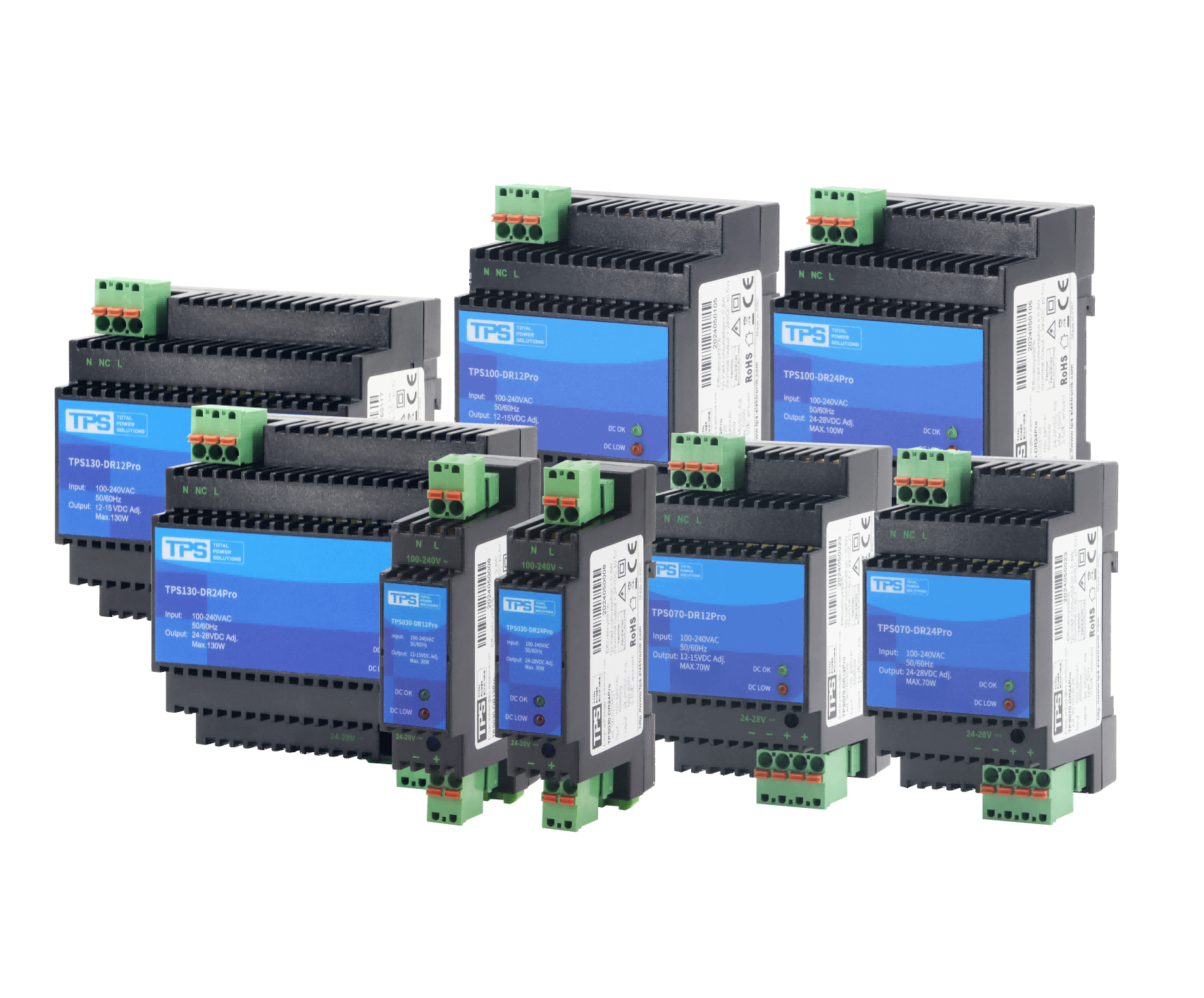
When you're eyeing a new gadget, it's easy to get swept up by flashy marketing. But the specs that truly matter often hide in plain sight. Start by looking at the processor and RAM – these determine how smoothly your device handles multitasking and demanding apps. A higher number on the box doesn't always translate to real-world performance, so check benchmarks from trusted sources.
Battery life specs can be misleading. Manufacturers quote hours under ideal conditions, but your usage will vary. Pay attention to the battery capacity in mAh and the screen technology – OLED panels usually sip less power than LCD. Fast charging standards also differ wildly; make sure your existing chargers and cables will actually deliver the promised speed.
Don't overlook connectivity options. That shiny new laptop might lack an HDMI port or an SD card slot, forcing you into dongle life. Check Wi-Fi and Bluetooth versions, as outdated standards can bottleneck your network. Finally, real-world camera performance rarely matches megapixel counts, so dig into sensor size and aperture before you commit.
Installation Best Practices for Harsh Industrial Settings
When deploying equipment in unforgiving industrial environments—think chemical plants, offshore rigs, or foundries—the difference between years of reliable service and premature failure often comes down to how thoughtfully the installation is handled. Start by scrutinizing the mounting surface. Vibration, thermal expansion, and structural flexing are everyday realities here, so rigid, direct mounts rarely survive long. Instead, incorporate isolation pads or flexible couplings that absorb shock without transferring stress to sensitive components. The goal is to let the surrounding structure move as it will while your equipment stays steady.
Cable and conduit routing deserves far more attention than it usually gets. In high-temperature or corrosive atmospheres, standard jacketing hardens and cracks within months. Opt for metal-clad or PTFE-insulated cables, and always run them with generous bend radii—tight corners trap heat and concentrate mechanical strain. Use sealed, downward-facing entry points into enclosures to prevent moisture ingress, and never daisy-chain ground connections; each piece of equipment should tie back to a single-point ground to avoid stray currents that accelerate corrosion.
Environmental sealing is non-negotiable, but it’s not just about slapping on a gasket. Think in layers: first, a positive-pressure purge system if the atmosphere is combustible, then conformal coating on circuit boards to resist chemical attack, and finally, weatherproof enclosures rated a notch above what the site conditions demand. Pay close attention to temperature swings, too. Installing a heater and thermostat inside the housing keeps condensation from forming when the process cycles from hot to cold. These small, methodical steps cost little during installation but can dramatically extend the life of the asset in places where downtime is measured in dollars per minute.
Real-World Applications Where Reliability is Non-Negotiable
When you board a plane or submit to a surgery, you rarely spare a thought for the invisible systems working behind the scenes—but their absolute dependability is the only thing standing between you and catastrophe. A flight control computer that misreads a single sensor can trigger a cascade of failures; a pacemaker with a software glitch can stop a heart. These are not hypotheticals. In aviation, medical devices, and nuclear power, reliability isn't just a specification—it's a precondition for existence. The tolerance for error is so thin that every component, every line of code, must be verified and tested against scenarios most engineers hope never materialize.
Financial markets present another arena where outages are measured in millions per second. A single hiccup in a trading platform doesn’t just lose money—it shreds confidence, the currency of the entire system. Similarly, the emerging wave of autonomous vehicles and smart grid infrastructure operates in a domain where lapses translate directly into wreckage or blackouts. In these real-world systems, reliability isn’t an added layer; it’s baked into the architecture through ruthless redundancy, graceful degradation, and constant introspection. When failure is not an option, the machinery must be designed to treat every moment as a potential stress test, because the real test never announces itself.
Optimizing Performance: Cooling, Wiring, and Load Management
A well-ventilated rack is more than just a comfort measure—it’s the first line of defense against thermal throttling. By spacing high-draw units apart and ensuring cool air reaches every component, you maintain consistent speeds without overburdening any single fan or heatsink. Simple adjustments, like aligning cable bundles away from airflow paths and using blanking panels to seal unused slots, can drop internal temperatures noticeably.
Cable routing often gets treated as an afterthought, but tangled wires introduce resistance, signal crosstalk, and hot spots that quietly undermine reliability. Dressing cables along designated channels and trimming excess length reduces clutter and makes future swaps far less painful. Combine that with monitored power distribution units that show real-time draw per outlet, and you gain the ability to balance phases and avoid nuisance tripping—especially in older facilities where circuits are already near capacity.
Load management extends beyond simple circuit breakers. Staggered startup sequences prevent inrush current from overwhelming upstream supplies, while dynamic load shedding lets non-critical gear throttle back during peak demand. This layered approach keeps everything humming within safe margins, turning what could be a headache of heat and downtime into a predictable, stable operation.
Future-Proofing Your Power Supply: Trends and Upgrades
As energy demands evolve and technology races forward, your power supply unit deserves a second look—not just for what it handles today, but for the upgrades coming tomorrow. The shift toward higher efficiency ratings, like 80 PLUS Titanium, isn't just about saving a few watts; it's about generating less heat, extending component life, and quietly absorbing the spikes that modern GPUs throw at it. Embracing digital monitoring and modular cabling turns a simple box into a smart, adaptable hub that grows with your setup.
We’re also seeing a quiet revolution in form factors and native connectivity. The ATX 3.0 standard, with its 12VHPWR connector, isn't merely a new plug—it's a signal that power supplies must handle transient loads far beyond their rated wattage without breaking a sweat. Pair that with gallium nitride (GaN) technology shrinking internal components, and you get smaller, cooler units that free up case space and improve airflow. These aren't just incremental tweaks; they're the building blocks of a rig that won't choke when next-gen hardware lands.
For anyone planning a build that lasts, think beyond wattage. Look for units with deep OCP and OPP safeguards, flexible single-rail designs, and firmware that can be updated over USB. A future-proof PSU isn't the one with the biggest number on the box—it's the one that adapts to shifting power requirements, integrates seamlessly with smart home setups, and quietly ensures that when you plug in a component three years from now, you won't be reaching for a calculator.
FAQ
German DIN rail power supplies are known for their meticulous engineering, high reliability, and strict compliance with international standards. They often incorporate advanced thermal management, robust overload protection, and precise voltage regulation, making them a trusted choice for critical industrial applications where failure is not an option.
Start by calculating the total power consumption of all connected devices, including sensors, PLCs, and relays, then add a 20-30% safety margin to handle inrush currents and future expansions. Consider the ambient temperature and ventilation inside the enclosure, as higher temperatures can derate the power supply. For dynamic loads, peak current demands should be factored in rather than just the average.
They usually include short-circuit, overload, and overvoltage protection, often with automatic recovery. Many also feature active power factor correction to improve efficiency and reduce harmonics. Additionally, you’ll find integrated DC-OK signaling, temperature monitoring, and even redundant operation capabilities in premium models.
DIN rail mounting standardizes the installation process—components snap on or off the rail without screws, drastically reducing panel wiring time. German power supplies are designed to perfectly fit these rails, allowing quick replacement or expansion. The system is modular, neat, and maintenance-friendly, which is essential in crowded control cabinets.
Yes, they are built to endure. Many come with conformal coating on PCBs to resist dust, humidity, and corrosive gases. Their enclosures are often metal for better heat dissipation and mechanical rigidity. Rated for extended temperature ranges, from freezing cold to high heat, they are tested for shock and vibration per industrial standards, making them reliable even on factory floors or in mobile machinery.
Efficiency directly impacts operational costs and heat generation. German manufacturers push the boundaries with topologies like zero-voltage switching and synchronous rectification, achieving efficiencies above 95%. Lower heat means less cooling is needed, which prolongs component life and saves energy in densely packed panels—a major advantage in 24/7 operations.
Most accept a wide AC input range (e.g., 85-264 VAC) and often a DC input range too, making them versatile for global deployment. They automatically adapt to the input frequency and voltage without manual switching. This adaptability is crucial for machinery exported worldwide or sites with unstable power grids.
Many German units have LED indicators for input status, output status, and faults. Advanced models offer relay contacts or transistor outputs for remote monitoring, and some can communicate via IO-Link or other protocols to send real-time performance data to a central controller. This proactive diagnostics capability allows technicians to predict failures and reduce downtime.
Conclusion
The reputation of German engineering in DIN rail power supplies isn't just about precision manufacturing—it's a philosophy that blends rigorous testing, component-level attention, and a refusal to cut corners on thermal management or electromagnetic compatibility. When evaluating these units, smart buyers look beyond wattage ratings to real-world hold-up time, transient surge handling, and the derating curves that reveal how a supply truly behaves inside a sealed enclosure at 60°C. Installation practices in harsh environments demand more than just snapping the module onto the rail; proper spacing for convection, using ferrules on finely stranded conductors, and factoring in vibration-proof terminal torque are details that separate a reliable panel from a field-failure nightmare. The mechanical backbone of the supply—its housing material, conformal coating, and internal clearances—can be the difference between flawless operation and downtime in a chemically aggressive or high-humidity setting.
Where these power supplies truly prove their value is in applications like offshore platforms, pharmaceutical packaging lines, and transportation signaling, where a momentary glitch can cascade into safety hazards or six-figure production losses. Optimizing performance goes beyond initial selection; thoughtful wiring to minimize loop inductance, active current sharing among parallel units, and integrating diagnostic feedback through DC-OK relays or digital protocols transforms a simple power converter into a proactive system asset. Future-proofing your installation means looking at trends like GaN-based topologies that shrink footprints, embedded condition monitoring that predicts capacitor aging, and cyber-secure power management interfaces that align with IIoT roadmaps. Ultimately, the guide underscores that a DIN rail power supply from the German tradition isn't merely a component—it's a long-term commitment to uptime, designed with the understanding that in industrial automation, power integrity is the silent foundation of every data point, motion axis, and safety function.
Contact Us
Contact Person: Lily
Email: [email protected]
Tel/WhatsApp: +49 (0) 2161 49526-0
Website: https://tps-elektronik.com/en/