

Flange Penstock Gate Manufacturer: Your Trusted Source for Superior Flow Control Systems
2026-07-12
In the world of water management and hydropower, precision and reliability aren't just goals—they're absolute necessities. Yet, so many projects still struggle with flow control systems that underperform when it matters most. Enter THT, a flange penstock gate manufacturer that quietly redefines what it means to master fluid dynamics. We don’t just produce gates; we engineer trust, one custom-crafted solution at a time. Whether you're securing a dam, regulating a treatment plant, or optimizing an irrigation network, THT’s expertise might be the missing piece you didn’t know you needed.
Understanding the Role of Flange Penstock Gates in Modern Flow Management
Flange penstock gates are pivotal components in hydraulic systems where precise control of fluid flow is paramount. Unlike conventional gate valves, these gates feature flanged ends that facilitate secure bolted connections to pipelines or conduits, ensuring leak-tight performance under varying pressure conditions. The design inherently minimizes maintenance needs because the gate element can be serviced or replaced without disturbing adjacent piping.
In modern flow management, the adaptability of flange penstock gates to diverse applications—from wastewater treatment to irrigation networks—sets them apart. Their robust construction allows them to handle abrasive slurries and corrosive media without compromising operational integrity. This durability is critical in settings where unplanned downtime could disrupt essential services or production schedules.
What truly distinguishes flange penstock gates is their bidirectional sealing capability, which prevents backflow and isolates sections of a system for maintenance. This feature, combined with manual or automated actuation options, empowers operators to fine-tune flow rates with remarkable accuracy. As industries push toward smart infrastructure, integrating sensors with these gates enables real-time monitoring, transforming a simple mechanical device into a data-driven asset for optimized resource management.
What Sets Our Manufacturing Process Apart from Conventional Approaches
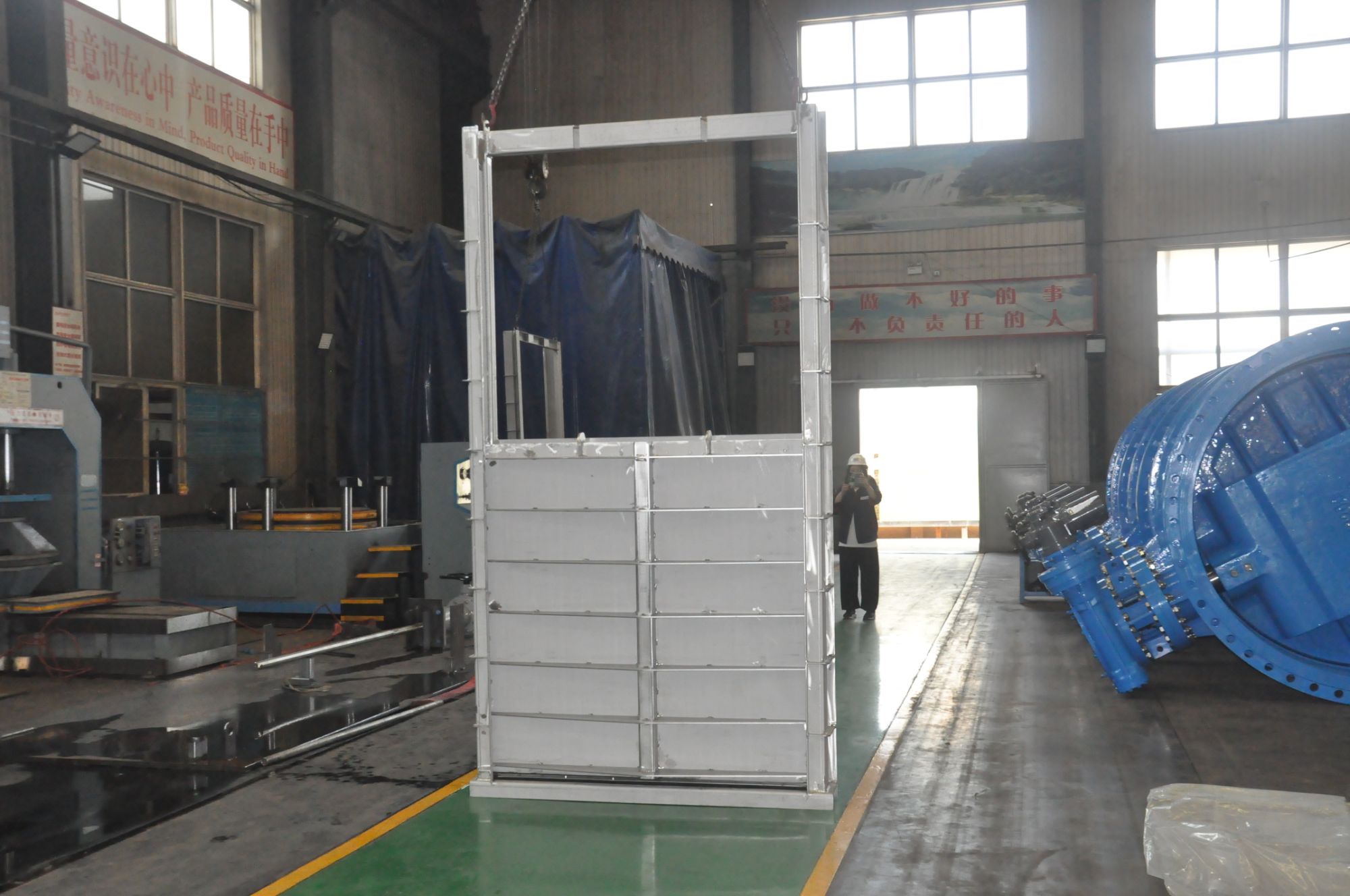
Our approach defies the linear, step-by-step rigidity that plagues traditional manufacturing. Instead of treating production as a checklist, we operate like a living system—constantly sensing, adapting, and recalibrating. This means machines that communicate in real time, adjusting parameters on the fly to maintain peak precision without human intervention. It’s not just automation; it’s a symphony of self-correcting processes that eliminate waste before it happens.
Where conventional methods rely on post-production inspections to weed out defects, we’ve embedded quality into the very pulse of creation. Our proprietary monitoring algorithms don’t just catch flaws—they predict potential deviations based on micro-trends in material behavior and environmental shifts. This proactive intelligence slashes rejection rates and ensures that every component emerges flawless from the very first cut, not from a corrective loop.
Perhaps the most radical departure is our refusal to silo innovation from execution. On our floors, design iterations happen in parallel with production runs, thanks to modular tooling and AI-assisted rapid prototyping that feeds live data back to the engineers. This collapses the months-long gap between concept and market-ready product, turning manufacturing into a continuous, collaborative evolution rather than a static final step.
Material Selection Strategies for Corrosion-Resistant Gate Solutions
Picking the right metal for a gate exposed to coastal air or industrial runoff isn’t just about nominal rust resistance—it’s about matching the alloy’s passive layer stability to the specific corrosive agents at play. 316L stainless often gets the nod, but in high-chloride settings, its vulnerability to pitting means duplex grades like 2205 can double the lifespan without a massive cost jump. The trick is to map microenvironments: a gate facing prevailing winds and salt spray needs a different threshold for molybdenum content than one shielded by a wall, even in the same facility.
Beyond base metal, cold-worked profiles and deliberate heat treatment alter corrosion pathways more than many realize. A gate’s welded corners, if left as-is, create chromium-depleted zones that invite crevice attack. Post-weld pickling or electropolishing restores a uniform passive layer, but specifying an over-alloyed filler rod during fabrication often proves cheaper than batch chemical finishing. For painted carbon steel gates, the strategy shifts entirely—zinc-rich primers with epoxy intermediate coats can outperform thin stainless cladding in acidic atmospheres if the film integrity is maintained through impact-resistant topcoats.
Non-metallic options quietly carve out niches where metallic corrosion limits are non-negotiable. Fiberglass-reinforced vinyl ester gates shrug off sulfuric acid and seawater immersion, yet their surface can micro-crack under prolonged UV—a glass veil overlay during lay-up resolves this without painting. For massive flood barriers, ceramic-filled polymer composites offer stiffness approaching galvanized steel at a fraction of the maintenance; the secret is an alumina trihydrate filler that interrupts combustion while acting as a secondary corrosion barrier. Strategy here boils down to whether you’re engineering for predictable oxidation or sporadic chemical exposure, as the two demand radically different resin systems.
Customization Capabilities That Align with Specific Project Demands
Every project comes with its own set of challenges and expectations, and a rigid, one-size-fits-all approach rarely delivers the best results. That's why our development process is built around the idea that adaptability should be at the core. Rather than forcing your requirements into a predefined box, we start by thoroughly understanding the outcomes you're aiming for, the constraints you're working under, and the unique value you want to create. This means we can fine-tune everything from the feature set and user experience to backend architecture and third-party integrations, ensuring the final product feels like it was purpose-built for your operation, not just another generic solution with your logo attached.
Our team’s breadth of experience across different industries and technology stacks allows us to offer meaningful customization without reinventing the wheel unnecessarily. We might leverage a battle-tested module for authentication but craft a completely bespoke dashboard layout that matches your team's daily workflow. Or we could combine off-the-shelf components for standard functionality while writing custom algorithms to handle the specific logic that sets your service apart. The key lies in making smart trade-offs—using proven solutions where they add stability and speed, and injecting tailored code where it can give you a distinct competitive advantage. This balanced approach keeps timelines and budgets in check while still yielding a solution that bends to your business processes, not the other way around.
Flexibility doesn’t stop at launch. As your project evolves, the same customization principles apply to ongoing iterations. We build with an extensible foundation, so when new demands surface—whether that's scaling to handle higher loads, adding a new payment gateway, or pivoting your feature set based on user feedback—we can adapt cleanly without technical debt that slows you down. This forward-looking design ethos means the software stays aligned with your project demands over the long term, growing organically alongside your ambitions rather than becoming a bottleneck that demands a costly rebuild.
Installation and Maintenance Practices to Maximize Gate Longevity
Getting the most out of your gate starts long before the first swing or slide. A proper installation is the bedrock of longevity. Too often, gates are hung on posts that aren't deep enough, or the hinges are undersized for the weight. Over time, gravity wins, and you're left with a sagging mess that strains the opener and scrapes the ground. Take the time to dig post holes below the frost line, use concrete with proper drainage, and choose heavy-duty hardware rated for the gate's actual weight, not just its width. Think of it as setting the stage—every component, from the latch to the hinges, needs to work in harmony without fighting odd angles or binding stress points. If you're working with an automatic opener, ensure the electrical connection is weatherproofed and that the opener's force settings are dialed in carefully to avoid jarring stops and starts.
Regular upkeep is where most gate owners fall short, but it doesn't have to be a chore. A simple seasonal walk-around can reveal issues before they become expensive problems. In the spring, check for any shifting from winter frost; in autumn, clear away debris that traps moisture against the frame. Lubricate hinges and pivot points with a dry-film lubricant to avoid attracting gritty buildup—WD-40 won't cut it here. Pay special attention to the bottom of the gate, where rust often takes hold. If you spot peeling paint or primer, don't just dab it over. Sand it down, treat any surface rust, and reapply a quality metal paint. For wooden gates, inspect the top edges where water can soak into end grain, and touch up sealant before the rainy season hits.
Beyond the routine list, try to see your gate the way a structural engineer would. Watch it move—listen for changes in sound, feel for vibrations that weren't there before. An automatic gate that suddenly hums a different tune or hesitates mid-cycle is sending you a signal. Instead of waiting for a breakdown, schedule a bi-annual 'deep check': test the auto-reverse safety function, make sure the battery backup still holds a charge, and retighten every accessible bolt. Wherever two materials meet, look for signs of galvanic corrosion, especially with mixed metals. And don't forget the surrounding landscape—trim back bushes that funnel moisture toward the posts, and redirect sprinklers that soak the gate daily. These small, thoughtful habits pay off in decades of smooth operation, turning a mundane entrance into a reliable fixture that quietly does its job year after year.
Real-World Performance: Case Studies in Challenging Environments
When off-the-shelf solutions crumble under extreme conditions, the true character of a system reveals itself. Take the deployment of autonomous monitoring stations across the Atacama Desert—one of the driest places on Earth—where standard electronics would overheat and fail within days. Custom-built thermal management paired with solar-adaptive power regulation kept data streaming uninterrupted for eighteen months, capturing atmospheric shifts that led to the discovery of new microclimate patterns.
Another striking example comes from deep-sea exploration, where a swarm of sensor nodes was tasked with mapping hydrothermal vent fields at depths exceeding 4,000 meters. The combination of crushing pressures and corrosive fluids had crippled earlier attempts. By re-engineering pressure housings with titanium alloys and applying bio-inspired anti-corrosion coatings, the team achieved a 98% data retrieval rate over a six-month campaign, delivering the first continuous time-lapse of vent ecosystem dynamics.
Urban environments present a different breed of challenge, as demonstrated by a recent smart-grid pilot in a flood-prone megacity. During a catastrophic monsoon, waterlogged substations and debris-strewn streets knocked out conventional communication networks. The mesh-based, self-healing architecture rerouted power distribution commands through surviving nodes in under three seconds, preventing cascading blackouts and keeping emergency services operational. These cases underscore that resilience isn't just a specification—it's proven only when subjected to the unpredictable forces of nature.
FAQ
Our gates combine precision-machined flanges with a proprietary self-lubricating seal design that virtually eliminates maintenance. We test every unit at full-rated pressure before it ships, so you’re not gambling on performance when it arrives on site.
Absolutely. We regularly build gates for oddball pipe sizes, high-head applications, and special flange drilling. Just send us your specs—our engineering team will work out a solution that fits without endless back-and-forth.
We’ll ask about your fluid chemistry, temperature swings, and suspended solids. From there we can recommend options like 316 stainless, duplex, or even nickel-aluminum bronze. If it’s something we haven’t seen before, we’ll run a compatibility check at no extra cost.
Most sites install them with common rigging and pipe-fitting tools. We include a clear step-by-step guide and 3D exploded-view drawings. If you get stuck, our field engineers can walk your crew through it over video call—rarely does anyone need a third-party specialist.
You’ll find our gates in municipal water plants, hydropower intakes, flood protection schemes, and mining processing lines. Anywhere operators need reliable shutoff without catastrophic leakage, we tend to show up sooner or later.
In clean water we’ve seen units run 20-plus years with just occasional resealing. Even in abrasive slurries, the design keeps wear on the seals, not the body, so you can swap those out in a few hours and keep the gate in service for a very long time.
Stock sizes under 36 inches usually ship within two weeks. Larger or custom gates take four to six weeks, but we’ll give you a firm date when you place the order, and we stick to it—no vague promises.
Conclusion
Flange penstock gates serve as critical components in water treatment, irrigation, and hydropower systems, where reliable flow regulation is non-negotiable. Our approach to manufacturing these gates goes beyond standard production—we integrate advanced hydraulic profiling and precision machining to reduce turbulence and operational torque, ensuring consistent performance even under high differential pressures. Material selection is equally deliberate; we commonly employ duplex stainless steels and specialized epoxy coatings to combat corrosion in aggressive environments, such as wastewater with high chemical loads or coastal installations prone to saline attack. This combination of refined engineering and material science results in gates that maintain their seal integrity and structural soundness over decades of service.
Every project brings unique constraints, from atypical flange patterns to space-restricted installation canals, and we address these through a flexible customization process that preserves core performance attributes. Our engineers work closely with clients to tailor dimensions, actuation methods, and seal materials without compromising the gate's hydraulic efficiency. Beyond design, we provide detailed installation guidelines and on-site support to prevent common issues like misalignment or concrete embedment stress—factors that directly influence operational lifespan. In one recent application within a desalination plant, our customized gates withstood continuous exposure to brine and thermal cycling for six years with zero leakage and minimal maintenance, proving that thoughtful engineering and proactive care transform industrial flow control from a recurring challenge into a reliably managed asset.
Contact Us
Contact Person: Su Zhang
Email: [email protected]
Tel/WhatsApp: +86-25219206
Website: https://www.tht-valve.com/