

Cylinder Head Factory: The Art and Science of Engine Power
2026-06-28
Deep within the heart of every high-performance engine lies a component where precision engineering meets raw power: the cylinder head. At DDR, we don't just manufacture these critical parts – we sculpt them, blending decades of metallurgical expertise with cutting-edge innovation. In this blog, we pull back the curtain on the cylinder head factory floor, exploring how art and science converge to unleash every ounce of engine potential. Whether you’re a gearhead chasing the perfect tune or an engineer fascinated by the alchemy of airflow and combustion, what happens here will change the way you see engine power.
From Molten Metal to Masterpiece: The Casting Journey
The journey begins with raw metal heated until it surrenders its solid form, glowing with a fierce orange intensity that signals readiness. Every alloy has its own temperament—aluminum flows like liquid silver at a mere 1,200°F, while steel demands nearly twice that heat, stubbornly clinging to its structure until the furnace roars a deeper challenge. This molten pool isn't just a puddle of potential; it's a carefully monitored soup, skimmed of impurities that could later haunt the final shape with weaknesses or blemishes.
Once the liquid metal reaches the perfect fluidity, it's channeled into a mold that holds the negative space of the desired form—a carefully crafted cavity waiting like a secret chamber. This is where ancient sand-casting meets modern precision; the pour must be steady, deliberate, the stream of metal hitting the sprue with a hiss and a swirl, chasing out air before it can trap bubbles in the solidifying body. The real artistry comes in knowing the cooling curve, the way aluminum contracts differently than bronze, how a thick section can pull the cooling skin and tear open a hidden crack. Foundry workers read the temperature with a mix of instruments and instinct, watching the surface freeze from a glassy orange to a smooth, matte finish.
Breaking the mold is a revelation—a rough, scale-covered shape emerges, ugly with gates and risers clinging to its sides, yet somehow already carrying the promise of the final piece. Then the cleanup starts: cutting, grinding, sanding down the evidence of its birth, unveiling the smooth skin beneath. From this loud, fiery, primal beginning, the object moves into finishing hands, where patinas and polishes whisper the last details, turning a crude casting into something that feels inevitable, as if it was always meant to be.
Sculpting Airflow: The Art of Port Design
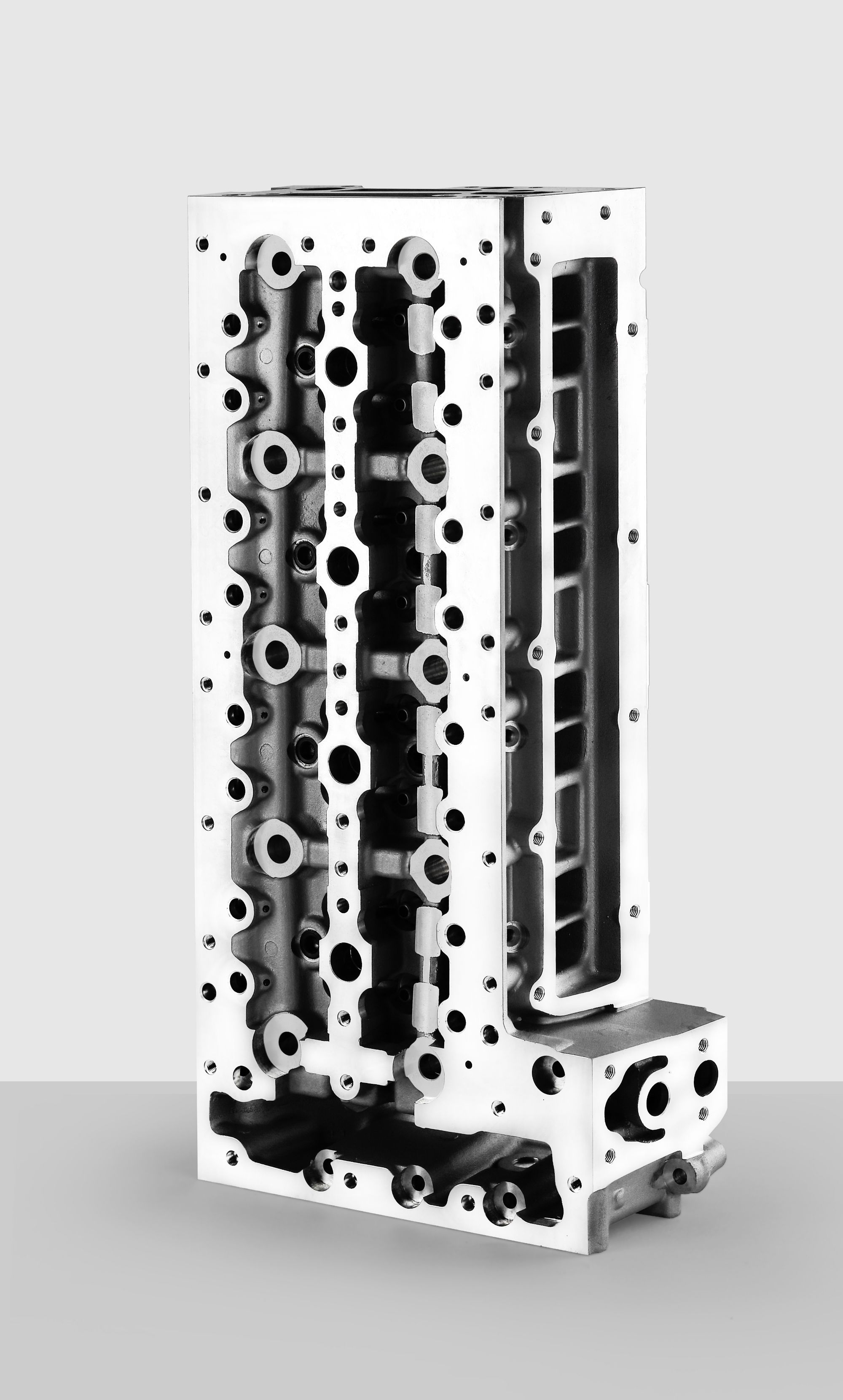
The shape of a port is never arbitrary. Every curve, every taper, every subtle radius is a deliberate choice that dictates how air tumbles, swirls, or rushes into the chamber. It's a language of flow, spoken through metal and cast with purpose. A well-sculpted port doesn't just move air; it orchestrates it, turning chaotic streams into a disciplined, energetic charge that fills every corner of the cylinder.
But the art lies in balancing velocity against volume. Too large a port, and the air grows lazy, losing its momentum just when it's needed most. Too small, and you choke the engine, starving it of breath at high revs. The finest designs walk a razor edge, teasing the boundary layer, exploiting pressure waves, and using the very texture of the wall to keep the mixture alive and tumbling. It's like shaping a riverbed, where the water's speed and direction are yours to command.
Porting becomes sculpture in the hands of someone who understands that airflow is emotional—that it reacts to the gentlest persuasion. A polished finish might reflect light, but it often kills the very turbulence that keeps fuel suspended. Instead, a master leaves behind a deliberate texture, a fingerprint that whispers to the air, guiding it through the valve curtain without separating. The result is an invisible masterpiece, one you feel as a surge of power and hear as a crisp, responsive throttle note.
Thermal Harmony: Managing Heat for Peak Output
Every device, from your phone to a factory robot, hits a wall when heat builds up. It’s not just about adding fans or bigger heatsinks—true performance hinges on how well you read and respond to temperature gradients in real time. Ignore that, and even the best gear stumbles.
Effective heat management often means letting components breathe on their own terms: using phase-change materials that absorb excess energy, or zoning cooling regions so processors can push harder without tripping safeguards. Sometimes the cleverest solution is a pause microsecond, allowing thermal mass to soak up a spike before it becomes a threat.
The payoff shows up in sustained output—fewer clock throttles, less energy wasted as leakage current, and a system that runs predictably under load. In server clusters, this translates directly to longer hardware life and a lower power bill, all because heat was treated as a variable to dance with, not an enemy to crush.
The Surface Secret: Finishes That Free Power
It’s easy to overlook the outer layer of a material, treating it as mere decoration or protection. But sometimes, the right surface finish does far more—it unlocks energy that would otherwise be lost. A subtle texture or a carefully chosen coating can shift how light, heat, or motion interacts with an object, turning a passive face into an active power source. The difference isn’t always visible, yet it can be measured in watts saved or gained.
Think of a solar panel with a nano-etched surface that traps more photons across the day, or a turbine blade coated with a slick finish that reduces drag and boosts output. These aren’t high-concept lab experiments; they’re practical tweaks quietly reshaping efficiency. The secret lies in the microscopic landscape—peaks and valleys smaller than a hair’s breadth, engineered to guide energy rather than resist it. It’s a quiet revolution, one surface at a time.
Precision in Every Micron: Machining for Perfection
In the world of high-stakes manufacturing, where components must operate under extreme conditions, the margin for error vanishes long before it reaches a human hair's breadth. Every micron matters. A deviation smaller than a speck of dust can determine whether a turbine blade withstands relentless heat or a surgical implant integrates seamlessly with bone. It's not simply about cutting metal—it's about coaxing raw materials into shapes so precise that light itself would struggle to find an imperfection. The pursuit of such accuracy demands more than advanced machinery; it requires an obsessive understanding of thermal dynamics, tool wear, and the subtle vibration that can ripple through a workpiece like a seismic wave in miniature.
Achieving perfection at this scale is a quiet battle fought in climate-controlled chambers and measured in millionths of a meter. The tools are invisible to the naked eye—laser interferometers that map surface topography with subatomic clarity, spindles that rotate hundreds of thousands of times per minute without a whisper of runout, and coolant systems that keep everything just shy of absolute thermal expansion. Yet the real magic lies in the convergence of experience and instinct: the machinist who hears a change in pitch and knows to adjust feed rate by a fraction, or the engineer who designs a fixture to counter deflection forces so tiny they are often ignored. Every successful cut is a silent negotiation between rigidity and fragility, where the material itself becomes a partner rather than an obstacle.
But precision isn't merely a technical achievement—it's a philosophy that redefines what's possible. When parts align with mathematical ideals, the assembly ceases to be a collection of compromises and instead becomes a singular, reliable entity. Bearings spin freely with no preload guesswork, optics focus without aberration, and seals hold pressure without microscopic leaks. This level of perfection transforms ordinary mechanisms into miracles of predictability. The real reward isn't just a flawless part; it's the confidence that when it leaves the shop floor, it will perform its duty exactly as intended, cycle after cycle, year after year, in the most demanding corners of industry. That's the quiet pride of machining down to the last micron—not because it's easy, but because it finally closes the gap between what we design and what we can truly make.
Beyond the Blueprint: Testing the Limits of Performance
Blueprints offer a clean, predictable pathway—until reality steps in. The numbers on the page might promise a certain throughput or response time, but actual workloads have a habit of shredding those assumptions. Memory leaks, network congestion, or plain old human oversight rarely appear in the initial design. It’s only when you push a system past its schematic limits that you discover which joints will crack.
Stretching performance isn’t about reckless overclocking. Sometimes it’s a matter of rewriting a query to avoid full table scans, or tweaking a garbage collection strategy to match real usage patterns. Other times, you have to strip away layers of abstraction that looked clever on paper but throttle throughput in practice. These adjustments often surface through sheer experimentation—tearing down partitions, simulating peak-day traffic, or intentionally starving a service of CPU to see how it degrades. The breakthroughs come from questioning every assumption the blueprint made.
In one project, a team discovered that a heavily optimized caching layer added more latency than it saved—a fact hidden until they removed it completely during a late-night test. That kind of lesson can’t be found in a diagram. Performance limits are rarely absolute; they shift with context. The goal isn’t just to validate the architecture, but to break it gracefully and learn from the rubble. That’s where the real blueprint updates come from.
FAQ
It's where cylinder heads are cast, machined, and assembled. These components sit atop the engine block, sealing the combustion chambers and housing the valves, spark plugs, and intake and exhaust ports. Precision here directly influences how efficiently an engine breathes and burns fuel.
The science lies in fluid dynamics, thermodynamics, and metallurgy—optimizing airflow, heat dissipation, and durability. The art comes in shaping the ports and chambers to balance power band characteristics, often through intuition and trial-and-error that simulation can't fully replace.
Modern factories use five-axis CNC machines for port contouring and combustion chamber shaping with micron-level accuracy. Additive manufacturing allows rapid prototyping of complex water jackets, while automated inspection systems check every critical dimension. This blend of automation and craftsmanship wasn't imaginable decades ago.
Aluminum alloys dominate for their light weight and heat transfer, often with copper or nickel inserts in high-stress areas. For extreme applications, billet-machined heads from solid blocks eliminate casting flaws. Some racing heads even use magnesium or carbon fiber composites, though these require exotic joining techniques.
Beyond robotic assembly and coordinate measuring machines, the best factories use engine dynamometers to validate final products. They might flow-test every single port, CT-scan castings for internal porosity, and do endurance runs that simulate thousands of miles of abuse. It's a relentless pursuit of zero defects.
The combustion chamber shape and surface finish affect flame propagation and quench areas, which directly impact unburned hydrocarbon and NOx formation. Modern heads integrate exhaust gas recirculation passages and accommodate direct injection hardware. A well-designed head makes meeting strict regulations far easier without sacrificing power.
It starts in CAD, with CFD simulations guiding port and chamber geometry. Then SLA or sand-printed patterns create rapid-cast prototypes in days instead of months. These get machined, assembled onto test engines, and run on dynos to correlate simulation with reality. Iterations happen fast, sometimes changing the port throat radius by half a millimeter to shift the torque curve.
Heads are married to the block's deck height, bore spacing, head bolt pattern, and valve train layout. Even seemingly small differences—like coolant passage locations or combustion chamber volume—can cause catastrophic failure if mismatched. Custom builds often require bespoke heads with one-off port angles and valve sizes.
Conclusion
Every cylinder head begins its life as a scorching liquid, poured into a meticulously engineered mold that captures the delicate balance of strength and weight. From that first moment of solidification, the casting process sets the stage for everything that follows. Craftsmen and engineers work side by side, guiding the transformation of raw alloy into a form that will eventually channel explosive gases and withstand punishing temperatures. The real magic, however, lies in the invisible architecture of the ports. Shaping airflow isn’t just about dimension; it’s a tactile art, where subtle contours and smooth transitions coax the air-fuel mixture into a controlled dance. Meanwhile, the relentless task of thermal management weaves through every decision—coolant passages are routed with surgical intent, pulling heat away from critical areas to preserve structural integrity and keep detonation at bay.
Once the foundational shape is there, the surface becomes a playground for friction reduction. Specialized textures and coatings—sometimes barely visible—unlock horsepower by minimizing drag and resisting carbon buildup. Then comes the unforgiving realm of machining, where tolerances shrink to single-digit microns. Valve seats are cut with laser-like accuracy, decks are surfaced to near-perfect flatness, and every bolt hole is positioned with an almost obsessive fidelity to the blueprint. But the story doesn’t end on the bench. These heads endure brutal validation: hours of full-throttle dyno sessions, thermal shock cycles, and endurance runs that push components to their breaking points. It’s here that the fusion of artistry and physics truly shines, proving that a cylinder head isn’t just a chunk of metal—it’s a living, breathing contributor to the soul of the engine.
Contact Us
Contact Person: Shelly
Email: [email protected]
Tel/WhatsApp: 8613967667688
Website: https://www.yongyu.com/