

Customized Factory Cooling Fans from a Reliable Manufacturer
2026-06-18
When standard off-the-shelf cooling fans just won’t cut it, tailored solutions become essential for optimizing performance and longevity. At VINDUSFAN, we understand that every industrial setup has unique airflow, space, and environmental requirements. That’s why our factory-customized cooling fans are engineered from the ground up to match your exact specifications—without compromising on reliability or efficiency. In this post, we’ll explore what sets customized cooling fans apart and how partnering with a manufacturer you can trust makes all the difference.
Matching Your Factory’s Exact Airflow Requirements
Every production floor has its own breathing pattern, shaped by the machinery, the layout, and the rhythm of daily operations. Getting the airflow right isn’t just about moving enough cubic feet per minute—it’s about understanding where air needs to go and when. A welding bay, for example, demands targeted extraction that clears fumes at the source without disrupting the surrounding stations. Over by the packaging line, a gentle, consistent flow might be all that’s needed to keep dust from settling on finished goods. The key is mapping out these zones and matching the system’s output to the real, on-the-ground demands of your space.
Off-the-shelf solutions rarely fit without compromise. Factories evolve over time, and so do their ventilation needs. Maybe you’ve added a heat-treating oven that throws off radiant warmth, or reconfigured a cleanroom that now requires positive pressure to keep contaminants out. A system designed around your actual floor plan—taking into account ceiling heights, obstacle placements, and even the direction fork trucks travel—makes all the difference. Custom duct sizing, adjustable diffusers, and variable-speed drives let you dial in exactly what each area needs, avoiding the cold spots, damp corners, or energy waste that come with a one-size-fits-all approach.
The real test comes when the system is running under full load. Swapping fixed-speed fans for intelligent controls that respond to real-time conditions means your facility only uses the energy it truly requires. If a dust collector senses a pressure drop, it can ramp up briefly; overnight, when production quiets down, the system can scale back. This kind of tailored setup doesn’t just hit your airflow targets—it keeps utility costs in check and extends the life of your equipment because nothing is working harder than it needs to. It’s about giving your factory a pair of lungs that expand and contract precisely with the flow of your business.
Why Generic Fans Fall Short in Demanding Environments
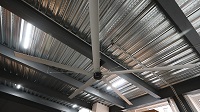
Standard fans are built for everyday use, not the punishing conditions found in factories, warehouses, or outdoor worksites. Their motors often lack the thermal protection needed to survive prolonged operation in high heat, leading to premature burnout. Blades molded from thin, unreinforced plastic can warp or crack when exposed to temperature swings or accidental impacts. Even the bearings, usually simple sleeve types, wear out quickly when dust and debris sneak past rudimentary seals. These aren't design flaws—they're trade-offs made to hit a retail price point that simply can't support rugged performance.
In a demanding setting, airflow matters just as much as durability, but generic fans frequently deliver neither efficiently. Their blade geometry is optimized for silence at low speeds, sacrificing the high-velocity, directed airflow needed to cool down machinery or large spaces. Without a focused airstream, the fan ends up just circulating hot air rather than creating a cooling effect. The motor struggles to maintain RPM under backpressure from filters or ducting, and the whole unit vibrates more, accelerating wear on every component. It’s a cascade of small failures that stops cooling when it’s needed most.
Another overlooked weakness is serviceability. When a generic fan fails, it’s usually cheaper to replace the whole unit than to repair it—if you can even find parts. Bolted-on grilles, sealed housings, and proprietary motor mounts turn simple fixes into frustrating projects. In contrast, a fan designed for hard use will let you swap a capacitor, replace a chord, or clean out a motor without a battle. That kind of practical design keeps downtime measured in minutes instead of days, which is exactly what counts when the environment won’t give you a break.
The Hidden Costs of One-Size-Fits-All Cooling
A universal cooling strategy might seem efficient on paper, but it quietly racks up expenses that rarely show up in initial budgets. Spaces with wildly different thermal loads—like a glass-walled lobby versus a compact server room—end up either over-chilled or struggling with hot spots. This mismatch forces equipment to cycle on and off relentlessly, eating through energy and wearing out components years before their time.
Maintenance becomes a constant headache instead of a scheduled task. Filters clog faster in areas pulling in exhaust, refrigerant leaks spring from stressed lines, and diagnostic visits multiply because a single setpoint can't satisfy everyone. You end up with a patchwork of portable units and fans, each adding to the electric bill and creating tripping hazards that would never cross a planner's mind.
Then there's the productivity drain nobody measures. Staff in overcooled zones dial in space heaters, sabotaging the system further. Meanwhile, the undercooled corners see equipment throttling to protect itself, silently eroding performance. These death-by-a-thousand-cuts losses don't trigger alarms—they just slowly inflate operating costs until someone wonders why the building is so expensive to run.
Our Approach to Building Fans That Actually Last
We focus on genuine connection, not just fleeting attention. Instead of chasing viral moments, we invest time in understanding what truly resonates with people—their values, their daily struggles, and the kind of content that makes them feel seen. This means listening more than we broadcast, and shaping every interaction to feel personal and meaningful.
Consistency is key, but it's not about posting every day just to stay visible. We build trust by showing up when it matters, with a voice that stays true over time. Our community knows what to expect from us—not just in terms of quality, but in how we make them feel. That reliability turns casual followers into loyal advocates who stick around for years, not just campaign seasons.
Finally, we treat our audience as collaborators, not consumers. We invite them into the creative process, celebrate their stories, and adapt our approach based on real conversations. This turns a one-way broadcast into a shared journey, making our fans feel like they're part of something bigger—a lasting movement that grows stronger with every new member who joins.
Real-World Examples of Custom Fan Transformations
When a cooling fan manufacturer in Texas wanted to promote their brand at a major trade show, they didn't just slap a logo on a standard fan. They had us strip down the classic floor fan, rebuild the motor housing in transparent polycarbonate, and integrate an AR marker into the blade guard. Visitors pointing their phones at the fan saw a 3D animation of air molecules swirling, complete with real-time temperature readings. The booth was packed all three days, and the fans themselves were sold on the spot—not as appliances, but as collectibles.
A hotel chain in Dubai asked us to solve a persistent problem: lobby fans that clashed with their luxury aesthetic. Our team developed a custom silk-wrapped blade system that whispers at 800 RPM, paired with a brass and walnut base that mirrors their signature interior accents. We even embedded a scent diffuser that emits a subtle khanjar-inspired fragrance as the air moves. Now, guests mistake the fans for art installations, and the engineering team values the 40% reduction in energy use compared to their previous overhead system.
Not all projects are glamorous—a chicken farm in the Netherlands needed corrosion-resistant fans for their climate-controlled barns. After weeks of testing, we landed on a glass-reinforced epoxy housing with sealed bearings and a blade geometry that moves 20% more air without increasing motor size. The real win? The anti-microbial additive we mixed into the polymer keeps bacteria growth down between cleanings, directly improving flock health and egg yield. Sometimes the best customization solves problems the client didn't know they had.
What to Look for in a Fan Manufacturing Partner
A reliable partner starts with genuine engineering depth. Beyond the glossy catalog, dig into how they handle thermal dynamics, airflow optimization, and noise reduction. The right manufacturer doesn't just stamp out commodity parts; they should be eager to discuss blade geometry, motor efficiency curves, and material fatigue—and show you real test data, not just marketing sheets.
Supply chain transparency is often overlooked but critical. Ask where raw materials are sourced, how they manage inventory buffers, and what contingency plans exist for component shortages. A partner who shares their production schedules and quality control logs openly is one that won't leave you hanging when demand spikes or logistics hit a snag.
Finally, look for cultural alignment, not just capability. Do their engineers ask smart questions about your end-use conditions? Will they challenge a spec if it leads to a better outcome? Shared iteration rhythms and a problem-solving mindset matter more than a perfect initial quote. The best relationships start small, with a trial run that exposes their communication patterns and accountability under real deadlines.
FAQ
We can tailor axial, centrifugal, and blower fans to your needs—adjusting size, speed, airflow, and material to fit your equipment perfectly.
Just share your specs like voltage, dimensions, and airflow requirements. Our team will propose a design and send you a drawing for approval before production.
They're widely used in HVAC systems, industrial machinery, telecom equipment, and even medical devices where reliable thermal management is critical.
Each fan undergoes rigorous testing for vibration, noise, and endurance. We use high-grade bearings and protective coatings to handle harsh environments.
For standard customizations, it's usually 3–4 weeks. Complex projects might take a bit longer, but we always give a clear timeline upfront.
Absolutely. We optimize blade geometry and motor selection to hit your target dBA and can seal fans to IP55 or higher if needed.
Yes, we send pre-production samples for your testing. It lets you check fit and performance, and we can tweak the design if something isn't right.
Our fans meet CE, UL, and RoHS standards. We can also arrange for additional certifications based on your regional or industry requirements.
Conclusion
Factory cooling is never a one-size-fits-all situation—airflow patterns, dust levels, temperature swings, and space constraints vary massively from one plant to the next. Generic off-the-shelf fans may look adequate on paper, but they rarely hold up once installed in demanding industrial settings. They weren’t designed with your specific layout or process heat in mind, so you end up with hot spots, throttled production, or constant maintenance. Worse, the hidden costs pile up fast: frequent replacements, higher energy bills from inefficient blade angles, and unplanned downtime when a fan fails. A fan that isn’t tuned to your exact static pressure and airflow needs simply bleeds money and reliability.
A dependable manufacturer takes a different route. They start by understanding your environment—the corrosive chemicals, the ambient temperatures, the required duty cycle—and engineer a fan that actually lasts. We’ve seen plants transform after switching to custom solutions: a packaging line that eliminated motor burnouts by moving to sealed, high-temp windings, or a lumber mill that cut energy consumption by 30% with aerodynamically optimized impellers. When choosing a partner, look beyond flashy specs. Focus on material traceability, in-house testing rigs that simulate your conditions, and a team that asks detailed questions instead of pushing a catalog. The right manufacturer treats your cooling challenge as a long-term engineering problem, not a quick sale.
Contact Us
Contact Person: Michael Danielsson
Email: [email protected]
Tel/WhatsApp: +1 951 565 7769
Website: https://www.vindusfans.com