

Custom Fit Car Seat Covers Wholesaler Tips for Finding Reliable Bulk Suppliers
2026-11-16
Looking for custom fit car seat covers at wholesale prices that won't compromise your reputation? The search for a reliable bulk supplier often ends in frustration—inconsistent stitching, wrong materials, or worse, shipments that never arrive on time. Smart buyers know the difference between a genuine partner and a middleman marking up costs. At Red Rain, we've seen it all, and the tips below cut through the noise so you can source with confidence. Keep reading to avoid the traps most first-time wholesalers fall into.
Ask for a Tear-Down Sample Before You Trust the Fit
A finished part can look perfect on the outside and still be wrong where it counts. That's why a tear-down sample matters: one sacrificial piece from the actual production run gets cut, sectioned, or disassembled so you can inspect wall thickness, internal clearances, weld penetration, thread engagement, and anything else hidden from view. If your supplier only sends intact samples for approval, you're approving the surface, not the fit.
Ask before you sign off. Request a tear-down sample from the same batch that will ship, not a hand-polished prototype. Specify where you want cuts made or have the part sent to you for sectioning at your own facility. A supplier that pushes back on this request is telling you something about how confident they are in their internal quality.
When you examine the cross-sections, look for voids, porosity, thin spots, misaligned inserts, or gaps that will cause movement later. Fit is more than outer dimensions—it's the stack-up of every hidden feature. Once you've seen the inside of a real production part, you can trust the fit or send it back with exact corrections. That single cut sample saves you from discovering problems on the assembly line.
Check How They Handle Edge Cases Like Heated Seats and Airbags
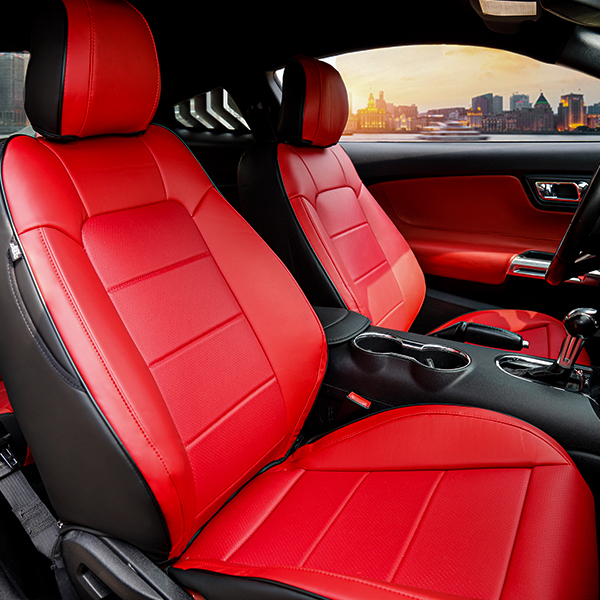
When a seat heater shorts out, most systems just blow a fuse and leave you cold. The better designs monitor current draw and shut down only the affected circuit before any damage spreads. That's the kind of edge case worth testing with a multimeter and a thermal camera, not just a quick switch toggle.
Airbag modules are even more finicky. A weak battery or a loose connector under the seat can set a fault code that disables the entire supplemental restraint system. Skilled shops will check the wiring harness routing and connector pin tension, not just clear the code and hope it stays off.
Also listen for clicks and watch for delayed deployment signals during self-tests. If the passenger occupancy sensor takes too long to recognize an empty seat or a child booster, the airbag might be suppressed when it should fire. These are the edge cases that separate a surface-level inspection from a real safety check.
Negotiate Fabric Shrinkage and Colorfastness Before Bulk Pricing
Fabric shrinkage and colorfastness are not secondary specs to check after agreeing on a price—they change the real cost of every garment you produce. Before locking in bulk pricing, ask the supplier to share current third-party lab reports for the exact fabric construction, not a similar quality from last season. Compare those numbers against your own acceptable tolerance: a 3% shrinkage on a woven cotton might force you to adjust pattern grading, while poor colorfastness to washing or light can trigger returns that eat into your margin. Once you have the data, you can talk price with a clear picture of what the fabric will actually do in the hands of your customer.
If the mill cannot meet your shrinkage or colorfastness targets as-is, that gap has a dollar value. You can demand a discount that reflects the added cutting allowance or the expected rate of complaints, or you can push for a higher-grade finish with the cost built into the unit price but tied to a written guarantee. Another effective move is to make part of the bulk payment contingent on the first production batch passing your own lab checks. Suppliers often relax their pricing when they know you will hold them to measurable standards instead of negotiating on feel alone.
Use a Small Trial Order to Test Their True Lead Times
Placing a full production order right after sampling rarely reveals what your supplier is actually capable of when the pressure is on. A modest trial run, even just 10% of your planned volume, exposes the gap between quoted lead times and what happens when raw materials run late, a key operator calls in sick, or the factory juggles three bigger clients ahead of you. Watch how they communicate delays: a reliable partner flags problems early with revised dates, while a risky one goes silent until the ship date has already slipped.
The trial order should mirror the real thing in complexity, not just quantity. Include your trickiest color, the custom packaging, and the tight tolerance component—those are the variables that break a timeline. If they deliver a simple version on time but fumble the detailed one, that’s your answer. And don’t let them offload your small order to a subcontractor without telling you; ask for daily progress photos or a quick video call from the actual production floor, since a factory that can’t handle a small order transparently won’t handle a large one any better.
Use the data from this run to set contractual penalties for late delivery on the main order. If the trial took 23 days instead of the promised 15, negotiate a realistic 20-day lead time with a discount for every additional day of delay, or walk away. A supplier who treats your small test as a nuisance rather than an audition has already shown you how your bigger order will be prioritized when it really matters.
Look for Suppliers Who Ask About Your Vehicle Models, Not Just Quantities
A supplier who jumps straight to "how many units do you need?" often just wants to move boxes. The ones worth your time will ask what models you actually work with—specific years, trims, even the common issues you see in your area. That kind of question tells you they understand that a brake caliper for a 2014 Civic isn't the same as one for a 2018 Accord.
When a supplier knows your vehicle lineup, they can flag compatibility problems before you order. They might point out that a certain alternator has a higher failure rate on one model or suggest a bushing that holds up better on rough roads. That's the difference between a vendor and a parts partner.
You don't need a supplier who can recite every catalog from memory. But you do want one who asks enough to steer you away from returns and lost customers. If they never mention vehicle models and only talk quantities, that's usually a sign they won't have your back when a fitment issue comes up.
Build a Shortlist Based on How They Solve Past Complaints
Dig into complaint histories for patterns, not just isolated incidents. Look for brands that acknowledge the root cause, offer a concrete fix, and follow up to confirm the issue stayed resolved. A company that turns a shipping delay into a proactive discount plus a personal apology note shows a repeatable problem-solving muscle, not a one-off save.
Compare how candidates handle the same type of complaint across different channels. One might bury a negative review with a generic “we’re sorry” while another posts a step-by-step correction and invites the customer back. The second approach reveals a system for triage and ownership, which matters more than a perfect score.
Use a simple scoring sheet: speed of first response, specificity of the remedy, and evidence of long-term change. Skip brands that only react when the complaint goes public. The shortlist should favor teams that treat every complaint as a process audit, not a PR task.
FAQ
Ask for their pattern library and see if they can match the exact year, make, and model, including trim variations like power seats or side airbags. A supplier that asks for your VIN or detailed seat photos before quoting is usually more reliable than one that says “universal fit” will work.
Request a material sample pack with swatches of leatherette, neoprene, and fabric options. Bend and scratch each swatch, pour a little water on it, and check the stitching on the sample cover. Also ask for a video of a cover being installed on a seat with the same contours you plan to sell.
Order a small mixed batch covering at least three different vehicle models, including one with complex seat shapes like a sports seat or a truck bench. Inspect every cover for seam alignment, airbag tear-away sections, and fit around headrests and armrests. This reveals consistency better than a single sample.
Agree on a production timeline in writing before paying a deposit. Ask the supplier to send weekly photo updates from the cutting and sewing floor. Build in a buffer of at least 15 days for pattern verification and shipping, and confirm whether they produce in-house or subcontract to smaller workshops.
Watch for extra charges on custom embroidery, non-standard thread colors, packaging with your logo, and split shipments. Some suppliers quote a low unit price but then add fees for pattern digitization or airbag-compatible stitching. Always get a line-item breakdown of the final invoice.
Ask how they handle side airbag deployment seams and whether they have test reports for tear strength. A dependable supplier will mention specific stitch types, like a breakaway seam, and can show you a close-up photo of that area on a finished cover. If they hesitate or call it “optional,” look elsewhere.
Stop accepting that batch and document every defect with photos and measurements. Send a formal complaint with a clear remediation request: replacement, discount on the next order, or refund for unusable units. Reliable suppliers will offer to rework or replace quickly, while weak ones will ask you to “just sell them as seconds.”
Often the specialist is safer for custom fit accuracy. A supplier that focuses on, say, Toyota trucks or BMW sedans is more likely to have refined patterns and consistent fit than a generalist trying to cover every vehicle on the road. But if your market needs broad coverage, pick a generalist with a proven pattern library and strong sample policy.
Conclusion
Finding a dependable bulk supplier for custom-fit seat covers starts with samples and technical details. Ask for a tear-down sample before you trust the fit—inspect stitching, foam backing, and attachment points rather than relying on marketing photos. Good suppliers will also discuss edge cases like heated seats and airbag seams, explaining how their patterns avoid blocking deployment or damaging heating elements. Fabric shrinkage and colorfastness should be negotiated before bulk pricing is locked in; request test data for repeated washing and UV exposure. A supplier who brings these points up on their own is usually more credible than one who only quotes a low per-unit price.
Before committing to a large order, use a small trial run to measure true lead times and packing quality. Some wholesalers promise fast turnaround but slow down once the deposit clears. Look for suppliers who ask about your vehicle models, trim levels, and seat configurations, not just quantities—this signals that they understand fit variations across years and regions. Finally, build your shortlist by asking how they handled past complaints: did they replace defective batches quickly, or blame the buyer? A clear, documented resolution process matters more than a polished catalog. Combining these checks helps you avoid suppliers who look strong on a quote but fall apart under real production pressure.
Contact Us
Contact Person: Ms. Zhu
Email: [email protected]
Tel/WhatsApp: 86-15906860931
Website: https://www.redrainseatcovers.com