
China Sewer Pipe Cleaning Machine Sourcing Guide for International Buyers
2026-11-16
Ask any buyer who’s sourced sewer pipe cleaning machines from China, and you’ll likely hear about the same worry: landing a cheap unit that fails on the first tough blockage. This guide is designed to help you avoid that. Instead of vague promises, we focus on measurable factors—pump durability, pressure consistency, spares availability, and after-sales response—so you can shortlist suppliers with real accountability. Among the names worth evaluating, AMJET stands out for balancing performance with buyer support. Dive in before you send your next inquiry.
What Actually Breaks First on Imported Sewer Jetters
On most imported sewer jetters, the unloader valve tends to be the earliest casualty. It cycles constantly to regulate pressure, and the internal springs and O-rings are often built to looser tolerances than those on pricier domestic machines. A bit of grit or a hard-water deposit can score the seat, causing pressure spikes or a chattering pump that eventually takes out the seals.
Not far behind is the high-pressure hose itself. Imported units sometimes ship with a thermoplastic hose that kinks easily and wears through where it rubs against the reel or the edge of a cleanout. Once the outer jacket frays, water finds the reinforcement layer, and a bubble forms that bursts mid-job—usually at the worst possible moment.
If the pump is direct-driven and not allowed to cool between long runs, the ceramic plungers or packing can fail early as well. Heat buildup softens the seals and leads to internal bypassing, so you lose pressure without an obvious external leak. That’s why many complaints about “weak” imported jetters really trace back to a damaged pump seal or a worn unloader rather than the engine or motor.
Reading Between the Lines of Chinese Spec Sheets
Chinese spec sheets often read like a carefully worded invitation to look closer. The headline numbers—battery capacity, motor wattage, screen resolution—rarely tell the whole story. Manufacturers tend to emphasize peak figures while tucking real-world performance into footnotes or vague qualifiers. A closer read reveals patterns: a 5000 mAh cell might deliver only 4400 mAh under sustained load, and a 120 W charger may hold that speed for mere minutes before throttling.
Experienced buyers learn to decode the silent signals. The choice of adjectives matters. Words like "up to," "maximum," and "typical" are not casual; they mark the gap between laboratory ideals and daily use. Materials get similar treatment—"aerospace-grade aluminum" could simply mean an alloy that meets a broad industry standard. Even certifications deserve skepticism: safety marks from obscure labs cost less than the internationally recognized ones, and some sheets quietly omit the difference.
The real intelligence comes from cross-referencing what is not said. A missing ingress protection rating, a vague operating temperature range, or an unlisted eMMC version among storage specs hints at cost-cutting choices. By questioning every superlative and tracing each footnote, a reader can reconstruct the product as it will actually perform—not as the brochure dreams it.
Matching Water Pressure to Pipe Diameter Without Guesswork
Most people assume a bigger pipe always means better flow, but that's only half the story. If the water pressure stays constant, increasing the diameter actually reduces velocity, which can leave sediment sitting in the line instead of pushing it through. The real task is not chasing the largest size available—it's identifying the point where pressure and diameter work together without forcing you to guess.
A practical approach starts with measuring the static pressure at the source, then factoring in the total length of the run, the number of fittings, and the elevation change. Each of those elements eats away at the available pressure, and once you know how much is left, you can consult a friction loss chart instead of relying on habit. For example, a half-inch line might carry 5 gallons per minute easily over 40 feet, but stretch that same pipe to 150 feet and the drop becomes obvious. At that point, moving up to three-quarter inch isn't overkill—it's the only way to keep the flow usable at the far end.
The goal is to land in a range where the water moves fast enough to prevent buildup but slow enough to avoid hammer and noise, typically between 4 and 8 feet per second for residential plumbing. If you test the system after installation and find the pressure at the fixture is below what the manufacturer recommends, you've either underestimated the friction losses or ignored a hidden restriction. Rather than guessing again, work backward from the required fixture pressure to calculate the minimum diameter. That single habit replaces repeated trial runs with a number you can actually defend.
Freight, Customs, and the Costs Nobody Quotes Upfront
When you see a low price on a product from overseas, it rarely includes what it actually takes to get that item into your hands. Freight charges can swing wildly depending on fuel, seasonal demand, or even the chosen shipping lane. Then there are customs duties and brokerage fees, which are rarely mentioned until the package is already at the border. Many buyers don't realize that a “great deal” can quietly become a 30% or 40% higher total after all the add-ons.
Beyond the obvious line items, there are less visible costs. Warehousing fees if customs holds your shipment for inspection, demurrage if a container sits at the port too long, and even administrative charges from the freight forwarder for handling paperwork. These are not hidden in a sinister way—they are simply not part of the initial quote because they depend on variables that change after the order is placed.
If you're pricing out an import for the first time, ask for a door-to-door estimate that includes all known fees. Better yet, request a breakdown of what is not included. Experienced importers build a buffer of 15% to 25% over the quoted freight and customs estimate just to cover surprises. That buffer is often what separates a profitable shipment from a costly lesson.
Keeping a Chinese Machine Running After the Sale
Buying a Chinese machine often comes with a honeymoon period: the price is right, the specs look impressive, and the delivery happens faster than you expected. But the real test begins once the invoice is closed. Spare parts availability, local technical support, and the willingness of the manufacturer to answer questions six months down the line all determine whether that bargain turns into a workhorse or a paperweight. Many importers learn this the hard way when a small component fails and the only response is a polite email suggesting a full replacement at your own shipping cost.
The difference between a smooth post-sale experience and a frustrating one usually comes down to how the supply chain was set up from day one. Some vendors stock critical wear parts in regional warehouses, offer remote diagnostics through WeChat or WhatsApp, and have trained technicians who can walk you through repairs without a translator. Others treat the sale as a one-time event. Before signing anything, ask for a concrete after-sales plan: response times, warranty terms that actually cover labor, and a list of authorized service partners in your country.
In practice, the most reliable Chinese suppliers are often the ones that already export to markets with strict consumer-protection laws, because they have learned to document parts, maintain revision control, and support machines that are five or ten years old. A quick way to gauge their commitment is to request a copy of the service manual and a wiring diagram before purchase. If those arrive without delay, the odds of keeping that machine running after the sale go up considerably.
How to Ask Suppliers the Right Questions Before You Commit
Most buyers rush into asking about price and lead time, but that often buries the real risks. Start by mapping out what “commitment” actually means for your project, then shape questions around those specific pressure points. For example, if you’re sourcing a custom component, ask about the supplier’s process for handling design changes after the initial sample—not just their current capacity. This shifts the conversation from sales talk to operational honesty.
Pay attention to how a supplier answers, not just what they say. Vague phrases like “we can handle that” or “no problem” without a concrete method are red flags. Push for specifics: “Can you walk me through your QC steps for this material?” or “What was the last order you shipped to a client in my region, and how did it go?” A confident supplier will welcome these questions; a shaky one will dodge them.
Finally, don't treat the Q&A as a checklist to finish—treat it as a test of alignment. Ask about their worst-case scenarios: “What happens if raw material prices spike mid-order?” or “How do you manage a sub-supplier failure?” Their willingness to discuss failure openly tells you more about long-term reliability than any glossy brochure ever will.
FAQ
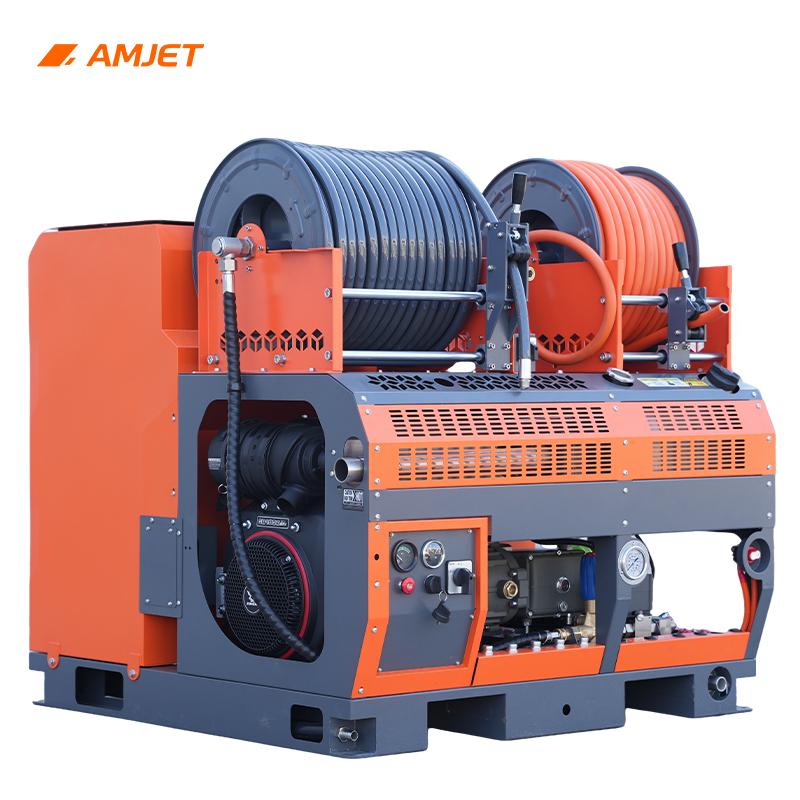
You'll typically find three main categories: high-pressure water jetters that blast debris with focused streams, mechanical rodding machines using rotating steel cables, and combination units that pair vacuum extraction with high-pressure washing. Many factories also offer truck-mounted versions for municipal work and compact trailer or skid-mounted designs for smaller contractors. The trick is matching the machine's pressure and flow ratings to the pipe diameters and blockages you actually deal with.
Ask for video walkthroughs of their production floor, not just glossy brochures. Request references from buyers in your region who have imported similar equipment. If possible, hire a third-party inspection service to check welding quality, pump performance, and component sourcing before shipment. Pay attention to how quickly they answer technical questions—suppliers who dodge specifics about pump brands or hydraulic components often buy subassemblies from unknown shops.
For the machine itself, CE marking is common for European-bound units, while UL or CSA compliance matters for North America. For the high-pressure pump, look for a reputable brand like Interpump, Udor, or Comet rather than an unbranded copy. Also confirm the engine meets emission standards in your market, such as EPA Tier 4 or EU Stage V if you're importing diesel-powered units. Don't accept a CE certificate at face value; verify it through the issuing body’s database.
These machines are heavy and often shipped as full container loads or flat racks. Get quotes from multiple freight forwarders and ask about port-to-door versus door-to-door service. If you're ordering several units, consider partial knockdown packaging to reduce volume. Lead times typically run 30 to 45 days for standard models, but custom trailer builds or special pump configurations can stretch to 60 days or more, so build buffer into your project schedule.
High-pressure jetters use water flow to cut through grease, sludge, and soft blockages, while rodding machines rely on rotating steel cables with cutting heads to break up hard obstructions like tree roots or mineral scale. Jetters are gentler on older pipes and leave a cleaner interior surface, but they need a reliable water source and can be less effective on solid, compacted debris. Rodding machines are often cheaper upfront and handle tough blockages well, but they can damage fragile pipes and leave residue behind. Many contractors end up owning both for different job types.
Yes, most Chinese manufacturers offer substantial customization. You can specify 380V/50Hz or 480V/60Hz electric motors, gasoline or diesel engines from brands like Honda, Kohler, or Kubota, and mounting on a two-axle trailer, truck chassis, or stationary skid. Be precise in your purchase order about hose lengths, nozzle kits, and control panel layout. The more detailed your spec sheet, the fewer surprises when the machine arrives.
A 30% deposit with the balance paid before shipment is standard, but for a first transaction consider using a letter of credit through your bank to reduce risk. Avoid paying the full amount upfront to an unfamiliar supplier. Alibaba Trade Assurance or similar escrow services can add a layer of protection for smaller orders. Also agree in writing on warranty coverage—most reputable factories offer 12 to 18 months on the pump and chassis, with spare parts shipped by courier.
Ask the supplier for a list of which spare parts they keep in stock and typical dispatch times. A good sign is if they provide an exploded parts diagram and a maintenance video in English. Check whether they have a service partner or distributor in your country, or at least a designated English-speaking technical contact available by WhatsApp or WeChat. If they cannot clearly explain how a failed pump would be handled under warranty, look elsewhere.
Conclusion
Most failures on imported sewer jetters don't start in the pump—they show up first at the seals, unloader valve, or the cheap quick-connect fittings that corrode after a few jobs. Before believing any spec sheet from a Chinese supplier, ask what testing standard backs the listed pressure and flow. A machine rated 4000 PSI at 4 GPM might only hold that for thirty seconds, not a full shift. Match pressure to the actual inside diameter of the pipes you clean, not the pipe schedule. A 2-inch drain needs less pressure but more flow than a 6-inch main. If you guess wrong, you either waste fuel or risk blowing apart old joints.
Freight quotes rarely include destination port charges, customs inspection fees, or the cost of a customs bond, and those can add 20 percent or more before the machine reaches your shop. Once it arrives, keeping a Chinese unit running depends on getting spare pumps, seals, and nozzles from a supplier who actually stocks them—not someone who disappears after the wire transfer. Before committing, ask for a video of the exact machine running a timed pressure test, the brand of the pump and engine, and a written list of wear parts with part numbers. If they hesitate on any of those, walk away.
Contact Us
Contact Person: Mike
Email: [email protected]
Tel/WhatsApp: +86 19545555505
Website: https://www.amjeting.com/