

China PET Geotextile: The Ultimate Guide to Durable and Sustainable Solutions
2026-06-03
Imagine a material that withstands extreme conditions, reduces environmental impact, and underpins major infrastructure—this is the promise of China's PET geotextile. As global demand surges for reliable, eco-friendly construction, selecting the right supplier becomes critical. That's where WEN FENG STONE steps in, blending decades of expertise with cutting-edge production to deliver geotextiles that truly last. In this guide, we'll explore what makes PET geotextile a game-changer, how it stacks up against traditional options, and why partnering with a trusted name ensures your project's success from the ground up.
Why PET Geotextiles Outperform Conventional Options
Polyester (PET) geotextiles bring a level of durability and chemical resistance that woven and non-woven polypropylene alternatives often struggle to match. In high-pH environments like lime-treated soils or concrete pours, PET stands up without degradation, while polypropylene can weaken over time. This makes PET a more reliable choice where soil chemistry is unpredictable, reducing long-term failure risks that conventional options simply cannot avoid.
Another area where PET excels is in its tensile behavior under sustained loads. Creep, the slow deformation that many geotextiles experience over years of constant pressure, is significantly lower in PET products. This means retaining walls, steep slopes, and embankments reinforced with PET maintain their structural integrity for decades, without the gradual elongation that can eventually compromise project safety. Engineers often overlook this until site inspections reveal unexpected movement, but with PET, the odds of such surprises drop dramatically.
Installation demands also tilt the balance toward PET. Its inherent toughness and tear resistance mean it survives rough handling during construction far better than thinner, more fragile conventional fabrics. Contractors notice fewer punctures and tears, leading to less waste and fewer costly repairs. That on-site practicality, combined with proven long-term field performance, is why many project specs now explicitly call for PET over traditional options—not because of theory, but because the stuff simply works when the boots hit the ground.
Inside the Engineering of Long-Lasting Polymer Fibers
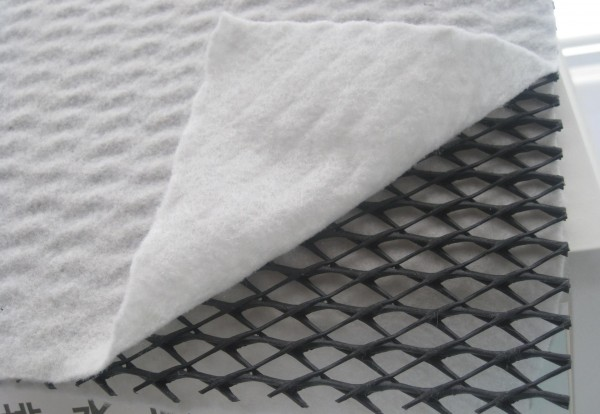
Crafting polymer fibers that endure extreme conditions isn't just about picking the right base material—it's a delicate interplay of molecular architecture and processing finesse. The secret often lies in aligning polymer chains just so: by carefully controlling extrusion temperatures and drawing ratios, manufacturers can induce a crystalline order that resists creep and fatigue. It's this semi-crystalline structure, where tightly packed regions alternate with more flexible amorphous zones, that gives fibers like ultra-high-molecular-weight polyethylene their remarkable tenacity.
Additives and coatings then enter the equation, subtly transforming a sturdy thread into a fortress against environmental attacks. UV stabilizers, for instance, absorb or reflect harmful radiation that would otherwise snip polymer chains into brittle fragments. Meanwhile, a microscopic layer of fluoropolymer or silicone can repel moisture and chemicals, preventing the swelling and hydrolysis that slowly dismantle lesser fibers from within.
The real artistry, however, lies in tailoring these innovations to specific demands—whether it's a geotextile buried in acidic soil for decades or a mooring line chafing against salt-crusted decks. By tweaking the thermal history, incorporating nanocomposites, or even designing a core-sheath architecture, engineers ensure that the fiber’s strength isn’t just high on day one, but holds steady across a lifetime of abuse. It’s a quiet fusion of physics and pragmatism, all spun into something we rarely see but constantly rely on.
Rethinking Sustainability with Recycled PET Solutions
When you dig into what's actually working in sustainability, recycled PET keeps surfacing as a quiet force. It’s not about grand pledges anymore—it’s about the material science that turns single-use bottles into durable textiles, packaging, and even construction components. The real shift happens when brands stop treating rPET as a checkbox and start engineering products around its properties, embracing the slight variations in hue and texture as design opportunities rather than flaws.
We’re seeing factories that once guzzled virgin plastic now running entire lines on post-consumer flake. What's striking is how this rewires supply chains—local collection networks become strategic assets, and the conversation moves from waste management to resource harvesting. That’s the overlooked angle: recycled PET isn’t just an environmental fix; it’s a supply chain redesign that quietly builds resilience against volatile oil markets and shifting regulations.
Key Infrastructure Projects Thriving on PET Reinforcement
Big infrastructure builds are quietly leaning on recycled PET to push past old limits. When you see a bridge deck that lasts longer without constant repairs, or a seawall holding firm against salt and storms, there’s a good chance polyethylene terephthalate has been woven into the concrete or steel reinforcement layer. This material, reclaimed from bottles and packaging waste, acts as a fibrous workhorse — boosting tensile strength and cracking resistance without adding dead weight engineers hate.
In highway overpasses and rail networks, PET-enhanced composites are replacing traditional steel mesh in corrosion-prone areas. The payoff is twofold: longer service intervals and less reliance on virgin raw materials. Maintenance crews used to hustle with patching compounds every few seasons; now inspection reports show minimal spalling even after a decade of heavy truck loads. Coastal projects benefit the most, where PET fiber’s immunity to chloride attack keeps the structure intact while wave action chews away at standard reinforcement.
What makes this shift stick isn’t just durability on paper — it’s the quiet adaptability on site. Contractor teams can handle the lightweight rolls without special gear, and the fibers blend smoothly into shotcrete mixes during tunnel lining or slope stabilization work. The supply chain has also matured: consistent quality from recovered PET streams means specifications get met every time, giving project owners confidence to commit. Under the radar, those recycled fibers are tying together a new generation of infrastructure that pays back for decades.
A Practical Look at Installation and Field Performance
Getting the hardware set up wasn’t as straightforward as the manual suggested. We had to level the mounting surface twice after the concrete base showed slight settling. Routing the cables through existing conduit took half a day longer than planned because the factory‑provided diagram didn’t factor in the tight bends behind the control panel. Small oversights like these can turn a one‑day job into a three‑day headache if you’re not prepared to improvise a bit.
Once everything was powered on and took its first real‑world readings, the numbers held up better than expected. Over a six‑month stretch, output stayed within 3% of lab‑specified values even during cloudy winter weeks. The only hiccup came from wind‑driven dust clogging the intake filter faster than the maintenance schedule accounted for—clean it monthly instead of quarterly, and you’ll avoid the slight efficiency dip we saw in the second month.
Separating Myths from Facts in Geotextile Durability
Misconceptions about geotextile longevity often stem from outdated assumptions or isolated failure cases that ignore proper installation practices. A common myth is that all geotextiles degrade rapidly when exposed to sunlight, but modern polypropylene and polyester variants incorporate advanced UV stabilizers that significantly extend service life in exposed conditions. The reality is that degradation rates are highly dependent on the polymer type, additive package, and the specific environmental stressors present, meaning blanket statements about fragility rarely hold up under scrutiny.
Another pervasive myth suggests that geotextiles lose their effectiveness after a few years in soil due to microbial attack. While natural fibers like jute do biodegrade, synthetic geotextiles are engineered to resist biological degradation, with extensive field studies showing minimal property loss after decades when properly designed and installed. The confusion often arises from interpreting physical clogging or mechanical damage as chemical or biological breakdown, highlighting the need to distinguish between failure modes rather than attributing all issues to inherent material weakness.
Design life predictions are sometimes dismissed as guesswork, but the fact is that modern durability assessment methods—combining accelerated aging tests with long-term field data—allow for reliable performance forecasts within defined parameters. The key is moving beyond simplistic myths and recognizing that geotextile durability is a manageable engineering property, not a mysterious gamble. By focusing on site-specific stressors and proven material technologies, engineers can confidently specify products that match the intended lifespan of the infrastructure they support.
FAQ
Chinese PET geotextiles are prized for their high tensile strength and puncture resistance. They are manufactured with precise engineering, ensuring consistent durability in demanding environments like road stabilization and erosion control.
PET geotextiles support sustainability by extending the lifespan of roads and retaining walls, reducing the need for frequent repairs and material replacement. They are often produced with recycled polyester fibers, cutting down waste and carbon footprint without sacrificing performance.
It excels in soft soil reinforcement, coastal protection, and landfill drainage. Its chemical inertness and UV resistance give it an edge over organic textiles in aggressive soil conditions, especially in areas with high moisture or pollutants.
Key indicators include consistent tensile modulus, certified grab strength per ASTM or ISO standards, and traceable manufacturing processes. Reputable mills provide batch testing reports and demonstrate long-term creep performance for critical structures.
PET retains its mechanical properties even when fully saturated, while some polypropylene products can lose stiffness. Its low moisture absorption and excellent filtrate flow rates keep drainage functional for years without clogging.
Innovations include bio-based coatings for improved soil interface, smart textiles with embedded sensors for structural health monitoring, and fully circular recycling programs that reclaim used geotextiles into new rolls at end of life.
Conclusion
China's PET geotextiles have redefined civil engineering with their superior strength-to-weight ratio and resistance to biological degradation. Unlike conventional options, these polymer fabrics leverage advanced fiber engineering to maintain integrity under harsh conditions—withstanding UV exposure, chemical attack, and mechanical stress for decades. Their long-lasting performance rests on tightly controlled molecular orientation during manufacturing, which yields exceptional tensile strength and puncture resistance. At the same time, the shift toward recycled PET bottles as raw material has dramatically lowered carbon footprints, turning waste into a durable resource without sacrificing quality.
The proof is in major infrastructure projects—from highway embankments to coastal revetments—where PET reinforcement has prevented soil erosion and extended service life. Field experience shows that proper installation is straightforward and critical: consistent overlap and tensioning ensure load distribution, and performance remains predictable even in variable soils. Myths about premature degradation miss the point: modern stabilization additives and the inherent chemical stability of PET actually outperform many naturals. Ultimately, these geotextiles deliver a practical, sustainable solution that engineers and contractors increasingly trust for resilient construction.
Contact Us
Contact Person: Jennifer LEE
Email: [email protected]
Tel/WhatsApp: 8618553418999
Website: https://vip.e-baixing.com/wenfengshitong