

China Magnetic Levitation Blower: The Future of High-Efficiency Air Supply
2026-08-12
In an era where energy efficiency is no longer a luxury but a necessity, the magnetic levitation blower is rewriting the rules of industrial air supply. Imagine a machine that floats its shaft on a cushion of magnetism—no bearings, no friction, no wasted energy. This is precisely what China’s latest innovation delivers: a leap in efficiency and reliability that traditional blowers can only dream of. At the heart of this transformation is Seize Air, a brand driving the shift toward smarter, greener air systems. Whether you’re managing a wastewater plant or a high-tech manufacturing line, the promise is the same: quieter operation, lower bills, and a smaller carbon footprint. Curious how this frictionless future works? Let’s dive into the technology that’s making compressed air more intelligent than ever.
Revolutionizing Air Supply with Magnetic Levitation Technology
Traditional fans and blowers lose a surprising amount of energy to friction and heat, their spinning parts grinding down over time. Magnetic levitation flips that script entirely. By suspending the rotor in a controlled magnetic field, physical contact vanishes—no bearings, no wear, just a frictionless spin that sips power and stays whisper-quiet even under load.
The impact on air delivery is immediate and tangible. Without mechanical drag, a maglev compressor can sustain precise pressure and flow with far less electrical input. It also eliminates the fine particulates that bearing wear normally sheds into the airstream, making it a natural fit for medical ventilators, cleanrooms, or any setting where purity matters as much as performance.
What really sets this approach apart is the freedom it gives designers. A levitating impeller isn't pinned to a fixed axis, so compact, high-speed layouts become practical—units that pack industrial-grade output into a fraction of the usual footprint. As the technology matures, expect air supply modules that self-optimize in real time, adjusting not just speed but the very stiffness of their magnetic cushion to match changing demand.
Why China’s Maglev Blowers Are Leading the Energy Efficiency Race
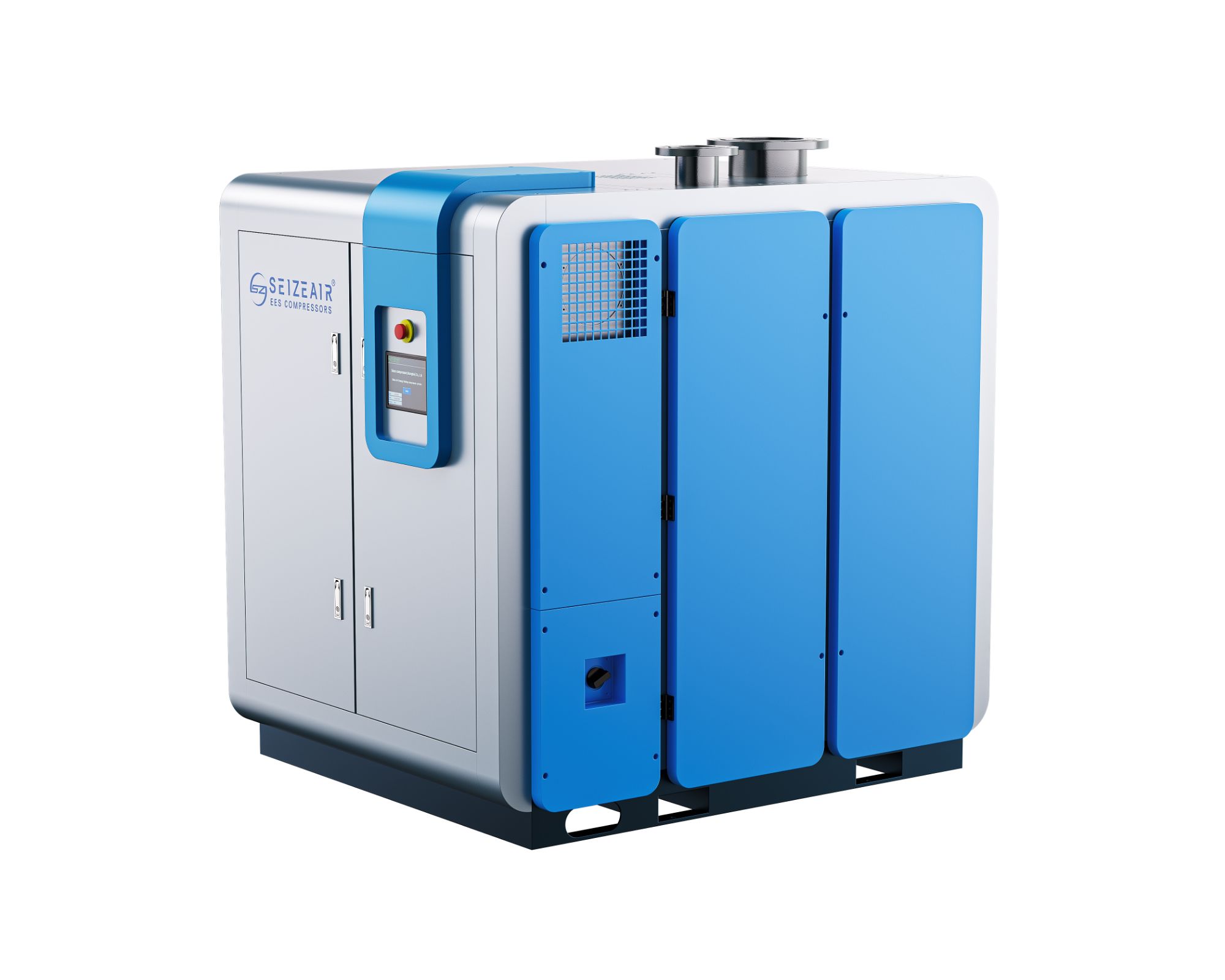
The secret behind China's dominance in maglev blower technology lies in the complete elimination of physical contact between the rotor and stator. By leveraging magnetic levitation, these blowers avoid the friction, wear, and energy losses inherent in traditional bearing systems. This not only slashes power consumption by up to 30% compared to conventional blowers but also dramatically reduces maintenance needs and extends operational lifespan. The core innovation isn't just about floating a shaft—it's about reimagining industrial airflow with a near-lossless design.
What truly sets these systems apart is the integration of ultra-high-speed permanent magnet motors and smart control algorithms. The motor spins at tens of thousands of RPM with minimal heat generation, while real-time monitoring adjusts rotor positioning thousands of times per second. This precision ensures optimal efficiency across varying load conditions without the drop-offs typical in older technologies. The result is a machine that thrives in wastewater treatment, pneumatic conveying, and other demanding sectors where energy costs often dictate profitability.
Another often-overlooked factor is the manufacturing ecosystem that has fueled rapid iteration. Chinese firms have merged domestic rare-earth magnet supply chains with advanced power electronics expertise, driving down costs while pushing performance benchmarks higher. This combination—accessible materials, proprietary control software, and large-scale production—has created a feedback loop where real-world data refines designs faster than competitors relying on outsourced components. It's not just a product advantage; it's a systemic edge that keeps widening the efficiency gap.
Inside the Engineering Marvel: How Magnetic Levitation Eliminates Friction
At the core of maglev systems lies a beautifully simple idea: use magnetic fields to lift a train off its track, breaking the centuries-old chain of wheel-on-rail contact. By turning powerful electromagnets on and off in precise sequences, the train hovers a few centimeters above the guideway. This invisible tether replaces physical contact with a dynamic cushion of repulsion and attraction, effectively erasing the main source of friction that has always limited how fast and efficiently ground transport can go.
Without wheels grinding against steel, the resistance that normally bleeds away speed and requires constant energy to overcome simply disappears. The only forces left to manage are aerodynamic drag—an unavoidable companion at high speeds—and the internal magnetic interactions that keep the vehicle stable. It’s a shift from overcoming massive kinetic friction to fine-tuning electromagnetic forces, allowing maglev trains to slice through the air with an almost eerie smoothness, hitting speeds well beyond 300 mph without the violent vibrations you’d expect.
What’s truly elegant is how the very mechanism that lifts the train also propels and brakes it. The same magnetic fields that float the carriage are harnessed by linear motors embedded in the track, creating a silent push-and-pull that accelerates with startling ease. This integration means fewer moving parts, less maintenance, and an operational quietness that turns the ride into a futuristic glide. Friction, the old enemy of speed and durability, is not just reduced here—it’s designed out of the equation from the ground up.
From Noise Pollution to Silent Operation: The Acoustic Benefits
The shift from traditional combustion engines to electric powertrains represents a fundamental rethinking of what mobility sounds like. Where once the roar of an engine and the rumble of an exhaust defined the driving experience, we now enter an era where the dominant noise comes from wind and tires, not the machine itself. This inversion of the acoustic landscape isn't just about comfort; it fundamentally alters the relationship between driver, vehicle, and environment. The absence of mechanical clamor creates a sense of detachment that can feel unsettling at first, but gradually gives way to a new kind of driving pleasure—one built on serene focus rather than brute auditory feedback.
Inside the cabin, the contrast becomes even more striking. Engineers have long battled engine noise with sound-deadening materials and active cancellation, but with electric vehicles, they start from a near-silent baseline. The challenge shifts from suppression to preservation, carefully curating which sounds enter the interior. Tire noise, wind rush, and the subtle whir of electric motors are managed with surgical precision, creating an acoustic environment that feels more like a private study than an automotive cockpit. This quietude lowers cognitive load on long journeys, reduces listener fatigue, and allows conversations or music to unfold with startling clarity. It's not merely the absence of noise—it's the presence of intentional calm.
The broader implications extend well beyond individual comfort. Cities choked by traffic noise are beginning to envision streets transformed by fleets of near-silent electric vehicles. Imagine urban neighborhoods where the background hum of idling engines is replaced by the faint rustle of tires on pavement and the distant chirp of birds. This isn't utopian fantasy; it's the logical outcome of acoustic design that treats sound as a resource to be optimized, not an unavoidable byproduct. The transition from noise pollution to silent operation isn't just a technical achievement—it's a cultural recalibration of how we coexist with our machines and each other.
Smart Air Management: IoT-Enabled Blowers for Industry 4.0
Industrial air handling has stepped beyond simple on/off cycles. Modern blowers equipped with networked sensors constantly read pressure, temperature, and vibration, adjusting their speed in real time to match production demands. This isn't just automation — it's a living system that breathes with the factory floor, slashing energy waste and predicting wear before it halts a line.
The shift toward responsive, data-driven ventilation redefines how we think about operational overhead. Instead of scheduled maintenance or reactive repairs, connected blowers feed performance streams into central dashboards that spot inefficiencies human eyes would miss. A slight uptick in motor current or a subtle bearing frequency shift triggers a work order, not an emergency. The result is quieter, cooler, and far leaner production environments.
Beyond the balance sheet, these intelligent blowers carve a path to sustainability goals without sacrificing output. By marrying edge computing with adaptive airflow, factories trim carbon footprints while keeping indoor conditions precise for sensitive processes. It’s a quiet revolution — one where air itself becomes a managed asset, fine-tuned by algorithms that understand both worker comfort and machine appetite.
The Green Edge: Cutting Carbon Footprints with Next-Gen Blowers
Next-generation blowers are rewriting the rules of industrial efficiency. By leveraging advanced aerodynamics and precision-engineered impellers, these machines deliver the same—or even higher—airflow using significantly less power. The immediate impact is a direct reduction in energy consumption, which in most facilities accounts for the bulk of carbon emissions. It’s not just about swapping in a slightly better motor; it’s a fundamental redesign that turns a major operational cost into a strategic climate advantage.
What often gets overlooked is the smart integration behind these blowers. Built-in sensors and adaptive speed controls allow them to dial output up or down in real time based on actual demand, eliminating the waste that plagues fixed-speed systems. This responsiveness means they no longer run at full tilt when it isn’t necessary—slashing both electricity use and wear-related downtime. The result is a longer service life and a quieter, cleaner operation that aligns perfectly with tightening emissions regulations without disrupting production.
From wastewater treatment to pneumatic conveying, the shift is gaining momentum. Plant managers are finding that these blowers pay for themselves faster than expected, not through carbon credits or abstract green branding, but through hard savings on utility bills. When you pair that with a shrinking environmental footprint, it’s no surprise that the technology is becoming a cornerstone of serious sustainability roadmaps. The green edge is measurable, and it’s pushing industries toward a future where efficiency and responsibility are the same thing.
FAQ
It's an advanced air supply device that uses magnetic bearings to suspend the rotor, eliminating physical contact and friction. This allows the blower to operate with ultra-high speed and precision.
By removing mechanical friction, it wastes far less energy as heat. Combined with a high-speed permanent magnet motor and smart controls, it can cut energy use by 30% or more compared to traditional blowers.
Chinese manufacturers have invested heavily in R&D and scaled up production, driving down costs while improving reliability. Government support for green technology and a huge domestic market also pushed rapid innovation.
Wastewater treatment plants, cement factories, and power generation are big adopters. Any operation needing constant high-volume air flow with variable demand sees major gains.
With no contact between moving parts, there's hardly any wear and tear. You can skip regular bearing lubrication and part replacements, and the blower often runs maintenance-free for years.
They deliver a rare combination of high efficiency, low noise, and minimal lifecycle costs. As industries face pressure to decarbonize, these blowers offer a practical, ready-now solution.
Definitely. Lower energy consumption means fewer indirect carbon emissions. They also eliminate the need for oil lubrication, preventing potential oil contamination in sensitive processes.
Traditional blowers rely on gears or belts that wear out and slip, losing efficiency over time. Maglev versions maintain peak performance constantly and can adjust speed in real time to match demand, which conventional machines can't do well.
Conclusion
China’s magnetic levitation blowers are reshaping industrial air supply by fusing advanced magnetic bearing technology with high-speed motor engineering to completely eliminate mechanical friction. This breakthrough not only slashes energy use but also delivers a step-change in reliability, with rotors floating in a contact-free state that removes wear-and-tear and dramatically extends service life. Thanks to intense domestic R&D and scaled production, China now leads the global push for ultra-efficient air systems, offering models that routinely outperform conventional blowers in specific power consumption. Inside these machines, active magnetic bearings and precision digital controllers maintain micron-level clearances, turning what was once a heavy-maintenance nightmare into a near-silent, oil-free process that stays cool under continuous operation.
Beyond pure efficiency, these blowers redefine workplace and environmental standards. The elimination of gear-driven noise and vibration cuts sound levels to library-like quiet, radically improving worker comfort and regulatory compliance. Embedded IoT capabilities turn every blower into a smart node within Industry 4.0 frameworks, enabling remote performance monitoring, predictive alerts, and automated airflow adjustments that match real-time demand. This intelligent control further reduces wasted energy and coincides with a steep drop in carbon emissions, aligning with global net-zero ambitions. By merging silent operation, connectivity, and a drastically lower carbon footprint, China’s maglev blowers set a new blueprint for sustainable air supply—one where cost savings, digital intelligence, and ecological responsibility converge without compromise.
Contact Us
Contact Person: Mia
Email: [email protected]
Tel/WhatsApp: +86 19821985894
Website: https://www.seize-air.com