
China Abrasive Materials and How They Improve Surface Finishing
2026-09-24
Ask any finishing engineer what separates a good surface from a great one, and you'll rarely hear about luck. The real difference often comes down to the abrasive materials behind the process—and China has quietly become the powerhouse shaping that conversation. From precision grinding wheels to advanced coated abrasives, Chinese manufacturers are redefining how industries achieve smoother, more consistent finishes. At the forefront, SHENZHEN SUN ABRASIVES brings a practical, no-nonsense approach to abrasive technology. In this post, we'll break down what makes China's abrasive materials stand out and how they can elevate your surface finishing results.
Why Chinese Abrasive Materials Are Reshaping Surface Finishing Standards
For decades, surface finishing specifications leaned heavily on a short list of traditional abrasives from established manufacturing hubs. That picture has changed radically as Chinese producers have moved beyond commodity grit into engineered grains, ceramic blends, and precision-graded micro-abrasives. The shift isn't just about volume; it's about tackling stubborn process bottlenecks such as inconsistent particle shape, premature loading, and uneven stock removal. By investing in advanced bauxite processing, controlled crystallization, and tighter mesh distribution, Chinese suppliers now offer abrasives that hold their cutting edges longer and produce more repeatable surface profiles, which is why many OEMs have quietly rewritten internal standards around these materials rather than treating them as drop-in substitutes.
A telling example sits in the automotive and aerospace tier supply chains, where surface roughness values once thought attainable only with premium European or Japanese media are now matched at a fraction of the cost. Chinese manufacturers have refined sol-gel alumina and seeded-gel technologies to the point where friability and self-sharpening behavior can be tuned for specific alloys, from soft aluminum to hardened tool steels. This level of customization, combined with rapid lead times and technical support that speaks the language of process engineers, has pushed surface finishing benchmarks toward tighter Ra and Rz readings. The ripple effect is visible in everything from turbine blade blending to medical implant polishing, where old “good enough” thresholds are being replaced by empirically validated Chinese abrasive performance data.
What makes this reshaping durable rather than a temporary price-driven blip is the feedback loop between Chinese abrasive producers and high-volume finishers. Instead of merely copying existing grain chemistries, many suppliers now co-develop products with customers, tweaking bond systems, grit morphology, and coating technologies based on real production line feedback. That collaboration has led to abrasives that reduce dressing intervals, cut energy consumption per part, and lower overall consumable spend without sacrificing finish quality. As a result, surface finishing standards are no longer set solely by legacy material brands; they are being co-authored by the practical performance of Chinese abrasives in demanding industrial environments.
The Hidden Role of Alumina and Silicon Carbide in Mirror Finishes
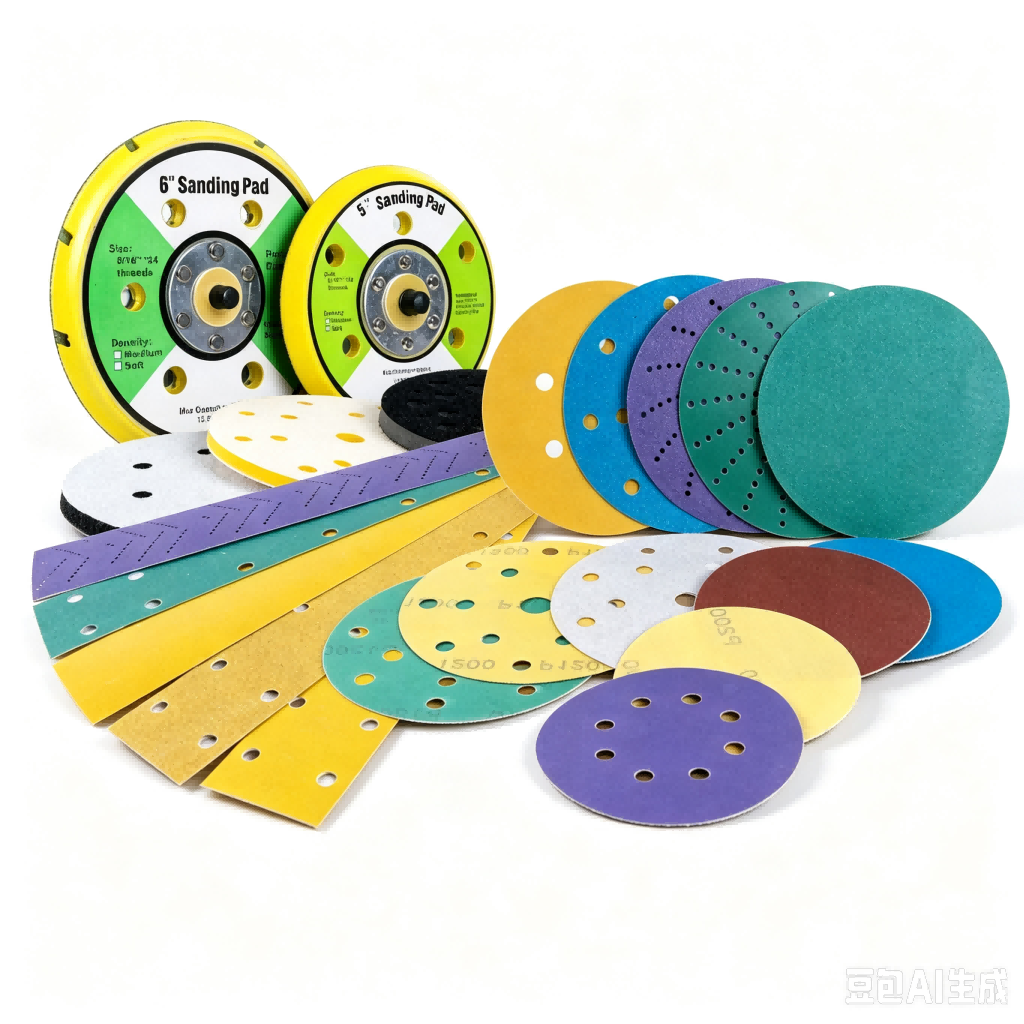
Mirror finishes don't emerge from a single polishing step; they rely on the quiet interplay of abrasive architecture. Alumina and silicon carbide each bring a distinct cutting signature—alumina fractures into finer, rounded particles under pressure, while silicon carbide splinters into sharp, fast-cutting shards. That difference shapes how scratches evolve across the surface, and the final gloss depends on which one dominates the last pass.
In practice, alumina tends to produce a deeper, almost liquid reflectivity because its micro-fracturing continuously renews a fine cutting edge without gouging. Silicon carbide, by contrast, excels at rapid stock removal and flattening, but left unchecked it can leave a faint haze that fights the mirror. Many finishers use silicon carbide for the heavy lifting, then switch to alumina for the critical refinement, letting the two abrasives compensate for each other's weaknesses.
The substrate also matters more than most realize. On softer metals, alumina's gentler breakdown prevents embedding and discoloration, while on hard ceramics silicon carbide's aggressive edge may be necessary to even reach a polishable state. Understanding this hidden division of labor is what separates a bright surface from a true optical mirror.
Grit, Bond, and Pressure: Fine-Tuning Surface Roughness
Surface roughness isn't just a number on a spec sheet—it's a fingerprint left by every abrasive grain that scratches across the workpiece. Grit size sets the baseline: coarser particles dig deeper and leave wider furrows, while finer ones whisper over peaks and valleys. But grit alone tells only half the story. The real magic happens when you start playing with the bond that holds those grains in place. A harder bond keeps particles cutting longer before they fracture, which can either polish or gouge depending on how much pressure you feed into the system.
Pressure, in fact, is the wildcard that most operators underestimate. Too light, and the grit skips over the surface without biting—roughness barely changes no matter how long you run. Too heavy, and you're not just cutting; you're smearing material, clogging pores, and generating heat that softens the bond and releases fresh grit prematurely. The sweet spot sits where each grain just starts to self-sharpen, shedding microscopic fragments that create a consistent, almost rhythmic scratch pattern. That's where roughness becomes predictable instead of chaotic.
To fine-tune the trio, start by mapping roughness against pressure for a fixed grit-bond combination. You'll often find a nonlinear response: a small pressure bump might drop Ra by 30%, then the next bump introduces vibration and deep scoring. Swap bonds before changing grit—switching from a vitrified to a resin bond can completely alter chip clearance and grain retention, giving you a fresh pressure window. The goal isn't to chase the lowest number, but to lock in a process where grit, bond, and pressure all sing the same note, leaving a surface that feels as good as it measures.
From Rust Removal to High-Gloss Polishing: Real Application Breakdowns
The jump from rust removal to a mirror polish isn't just swapping discs; it's about controlling the surface profile at every stage. On a rusted steel door, a twisted wire wheel knocks off flaking scale fast, but it leaves a scratched, uneven base. Switching straight to a fine polishing pad here only highlights the gouges. Instead, the work goes: wire wheel, then 40-grit flap disc to level pitting, then 80-grit and 120-grit resin fiber discs with overlapping passes.
Each abrasive step needs a clean surface underneath it. Metal dust and rust particles from the previous grit embed into the next finer disc, so a quick wipe with a degreaser or compressed air between changes prevents deep random scratches. This is where most failed polish jobs start—not the polishing compound, but the leftover coarse grit hiding in the pores.
Only after the surface feels smooth to a fingernail with no visible scratch pattern does the high-gloss stage make sense. A felt wheel with a cutting compound on a variable-speed polisher brings up the first reflection, followed by a softer foam pad and a finishing glaze to remove haze. Keeping the rpm moderate and moving the pad in long, even strokes avoids heat buildup that can blue the metal or burn the compound. The final check isn't a spec sheet—it's how the reflection holds across the entire panel under a single light source.
How Modern Chinese Plants Are Cutting Waste Without Sacrificing Cut Rate
Many Chinese plants are now fitting their cutting machines with vision sensors that spot tiny surface flaws or grain shifts within milliseconds. The system automatically nudges the tool path around defective zones instead of discarding an entire sheet, and it does this while the line is still running at full speed. Not long ago, this kind of adjustment meant stopping the machine and calling over a technician. Now the waste rate drops and the cut rate ticks up a little, because there is no pause in the cycle.
Another shift comes from improved nesting software. Instead of relying on old standard layouts, engineers now let algorithms try thousands of arrangements in seconds to find the one that leaves the least scrap. These layouts go straight to the cutter, and the operator just loads the raw stock. Because the algorithm prioritizes continuous tool motion, the cutting head travels more smoothly with almost no dead strokes. The overall cycle time does not suffer; it often improves because there are fewer pauses for material changes.
Some plants are also putting the effort into maintenance. They mount vibration and temperature probes on spindles and drives, catching signs of bearing wear or belt looseness weeks ahead. The part gets swapped after the shift, not during a run. That prevents a sudden stoppage from ruining a half-cut piece and keeps the machine from drifting out of tolerance due to chatter. The cut rate stays steady, but rework and scrap drop sharply.
A Practical Checklist for Selecting Abrasives That Won’t Disappoint
Start with the material you're working on before you even glance at a grit number. Soft metals like aluminum load up standard abrasives quickly, so you'll want an open-coat product or one designed to resist clogging. Hardened steel demands ceramic or zirconia grains that fracture consistently under heat, while wood rarely needs more than aluminum oxide. If you skip this first step, every other choice becomes guesswork.
Then check the backing and bond against how you actually work. A paper backing is fine for hand sanding small areas, but power tools and edge work tear it apart. Cloth or polyester backings hold up on belts and discs. Also pay attention to the bond: resin bonds flex well for contoured surfaces, while glue bonds are cheaper but break down faster with heat. Buy a mixed pack if you're unsure, and run a quick test on scrap material before sanding the final piece.
Finally, avoid the trap of assuming a higher price always means better performance. Look for consistent grit distribution and read feedback from people who do similar work, not just star ratings. Store abrasives in a dry place—humidity degrades the bonding over time—and don't stockpile more than you'll use in six months. A short checklist beats a long spec sheet every time.
FAQ
Chinese abrasive materials have become more effective due to dedicated investments in refining particle size distribution and chemical purity. For example, brown fused alumina produced in Henan province often undergoes additional magnetic separation to remove iron impurities, which results in cleaner cutting edges and fewer surface scratches during finishing. This focus on controlled impurities, combined with large-scale production that keeps prices stable, gives workshops a reliable way to achieve uniform surface roughness across large batches of workpieces.
Silicon carbide from Chinese producers is highly valued for its sharp, angular grain shape and high hardness, which allows it to cut through hard metals like tungsten carbide and technical ceramics without glazing over. Many manufacturers offer both black and green silicon carbide, with the green grade being purer and more friable, so it breaks down predictably under pressure to expose fresh cutting edges. This behavior is especially useful in lapping and fine grinding where consistent material removal is more important than aggressive stock removal.
For mirror finishes on stainless steel, finer grades of white fused alumina and calcined alumina from Chinese suppliers are common choices. These materials have high purity and a blocky crystal structure that polishes rather than gouges the surface. Some finishing shops use a sequence starting with 400-grit white fused alumina, then move to 1000-grit calcined alumina paste, and finish with a soft cloth buffing compound based on sub-micron alumina. This layered approach produces a reflective surface while minimizing heat-induced discoloration on the steel.
The lower price point of many Chinese abrasives allows smaller workshops to use higher-quality grain types than they could otherwise afford. Instead of settling for basic black silicon carbide, a job shop can source premium green silicon carbide or white fused alumina from Chinese suppliers at a manageable cost. This shifts the economics so that fine surface finishing becomes feasible for short-run custom parts, not just high-volume production, because the consumable cost per part stays low without sacrificing cutting performance.
Fused alumina, particularly brown and white variants, forms the backbone of Chinese abrasive manufacturing. Brown fused alumina offers toughness and is used in heavy-duty grinding wheels and sandblasting media, while white fused alumina is preferred when heat-sensitive alloys need a cooler cut and smoother finish. Because Chinese producers control the full smelting and crushing process, they can customize alumina friability to match specific bond systems in grinding wheels, which helps reduce wheel loading and extends the time between dressing cycles.
Chinese abrasive producers have adopted better air classification and precision screening technologies that narrow the grain size distribution significantly. Instead of relying on older sedimentation methods that produce wide ranges of particles, many factories now use multi-stage cyclones and laser diffraction analysis to ensure each grit size contains fewer oversized grains that could leave deep scratches. This tighter control means users can expect more predictable surface finishes and less rework when switching between batches of the same nominal grit.
Diamond and cubic boron nitride abrasives from China are increasingly used for ultra-precision finishing of carbide tools, optical glass, and hardened steel. The best-performing products feature synthetic diamond or CBN with closely controlled crystal strength and metal or resin bond systems tailored for specific tasks. However, buyers should verify the abrasive concentration and bond hardness claims through sample testing, because lower-cost products sometimes skimp on diamond content or use recycled grit with inconsistent fracture properties, which can lead to unpredictable surface quality on critical components.
Environmental regulations in China have pushed many abrasive plants to upgrade their smelting and crushing operations, which has had a side benefit of improving product quality. Older, more polluting facilities were closed or forced to invest in dust collection, wastewater treatment, and cleaner energy sources. While this initially caused supply fluctuations and higher prices for some abrasives, the surviving manufacturers tend to run more stable production processes with better quality control, so buyers now encounter fewer batches with inconsistent hardness or foreign particle contamination.
Conclusion
Chinese abrasive materials have moved far beyond cheap consumables, and that shift is quietly rewriting what surface finishing can achieve. The combination of tightly controlled alumina and silicon carbide feeds directly into mirror finishes that once demanded costly multi-step systems. Plant engineers now treat grit distribution, bond type, and applied pressure as a single adjustable triangle rather than separate variables. A slightly softer bond lets fresh grains fracture at the right moment, keeping cut rate steady while reducing deep scratches. That fine-tuning is why a single Chinese abrasive line can handle everything from aggressive rust removal on welded frames to high-gloss polishing on stainless trim without changing the underlying grain chemistry.
Real application breakdowns show the same principle at work. Heavy oxide scale yields to a coarse silicon carbide grit under firm pressure, then a switch to finer alumina with a resin bond pulls the surface toward a reflective finish. Modern plants in Shandong and Henan have cut waste by recycling cooling water and sieving spent grains back into lower-grit products, all while maintaining cut rate on primary lines. The practical checklist for buyers comes down to matching grit shape to the substrate, verifying bond hardness under actual working temperature, and asking for batch-to-batch particle size data. When those details line up, the improvement in surface roughness is measurable and repeatable.
Contact Us
Contact Person: Amanda Wang
Email: [email protected]
Tel/WhatsApp: +86-13602569854
Website: https://www.sunabrasives.com.cn