

Chamber Filter Press for Concrete Batching Plant Sludge: Choosing the Right Company
2026-08-02
Managing sludge from concrete batching plants is a persistent challenge, but the right chamber filter press transforms waste into an opportunity. As environmental regulations tighten and sustainability becomes a priority, selecting the right equipment—and the right partner—can make all the difference. Enter Sinou, a name synonymous with reliability and innovation in liquid-solid separation. In this article, we explore what sets a high-performance filter press apart and why your choice of manufacturer matters more than you think. Whether you're upgrading an existing system or starting fresh, the insights ahead could save you time, money, and headaches—so let's dive in.
Why Concrete Sludge Isn’t Just Waste — It’s a Missed Opportunity
Every day, construction sites and precast plants wash out trucks and equipment, leaving behind a gray, semi-solid slurry that most see as a disposal headache. This sludge, rich in cement, aggregates, and water, typically ends up in settling ponds or landfills. But treating it purely as waste overlooks its latent value. When processed correctly, concrete sludge can be separated into reusable components—recycled water for batching, reclaimed aggregates for sub-base or new concrete, and even recovered cementitious fines that can partially replace virgin binders. The technology exists; it’s the mindset that lags.
The economics are shifting. Disposal fees, tightening environmental regulations, and rising raw material costs are turning this “waste” into a resource. Forward-thinking operators are investing in sludge dewatering and recycling systems that slash hauling expenses and cut water consumption by up to 90%. Beyond the direct savings, there’s a quieter gain: reducing the quarrying of natural resources and lowering the embodied carbon of projects. For an industry under pressure to decarbonize, ignoring concrete sludge means leaving money and sustainability gains on the table.
Missed opportunity runs deeper than economics. Each ton of sludge contains roughly the same chemical building blocks as the concrete it came from. Researchers are now trialing its use in manufactured soils, carbon-cured blocks, and even as a raw feed for new cement production. These aren’t distant experiments—pilot projects in Europe and North America are already demonstrating feasibility. Embracing sludge recovery transforms a linear “use and discard” model into a circular loop, challenging the notion that construction must be inherently wasteful. The next time a washout bucket tips into a pit, it might not be the end of the line—it could be the start of something smarter.
How Chamber Filter Presses Turn Sludge into Reusable Water and Solid Cakes
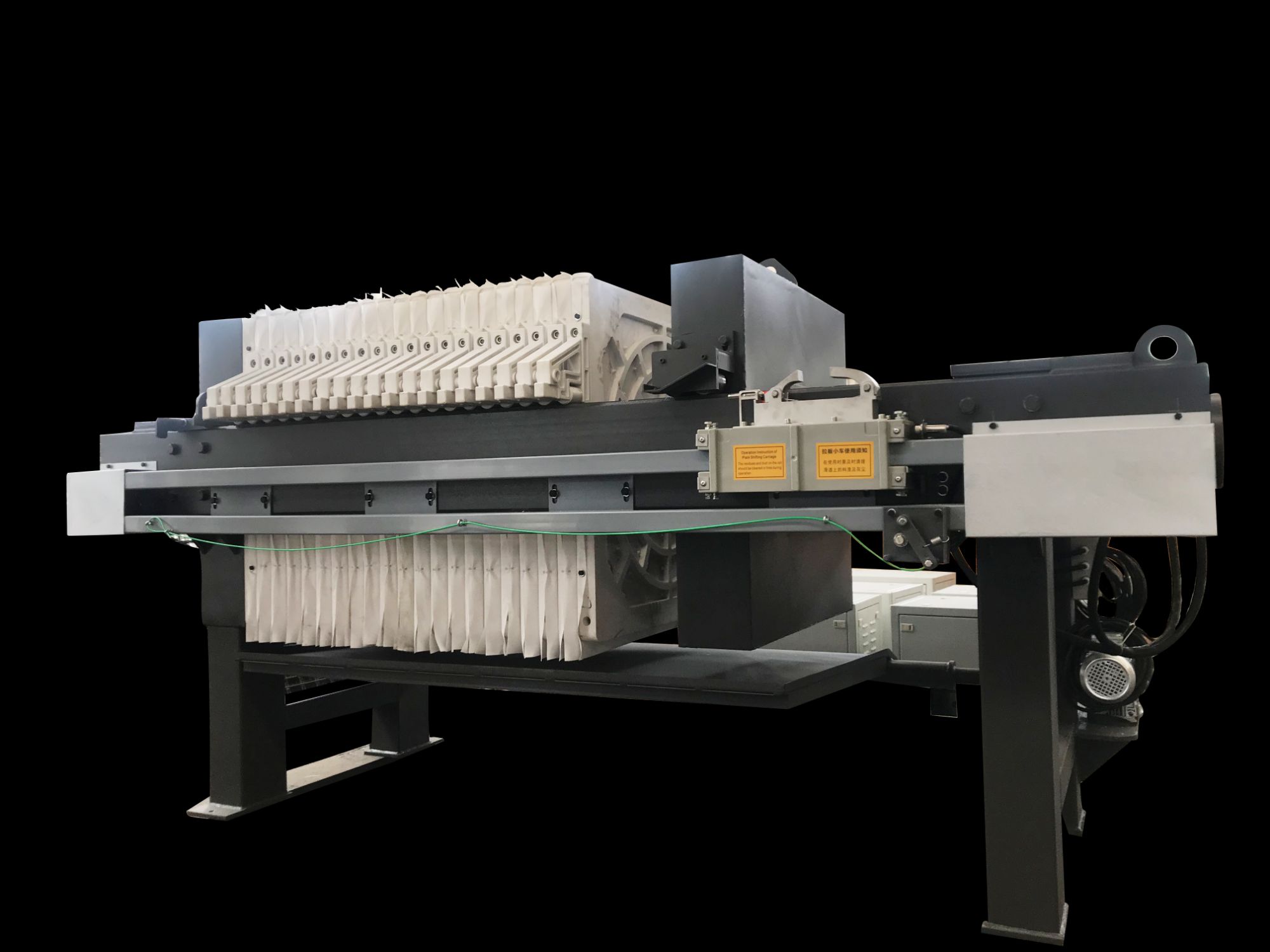
The process begins as sludge is fed into a series of recessed chambers lined with filter cloths. Under high pressure, the liquid component is forced through the fabric while solids accumulate on the cloth surface. This stage relies on gradual buildup rather than sudden force, allowing the cake to form evenly across each plate. Over time, the trapped particles compress into a dense, semi-dry mass, leaving behind clear filtrate that can often be reused within the same facility.
What sets this method apart is its ability to handle slurries with varying consistencies without constant adjustment. The alternating plate design creates multiple independent filtration zones, so if one section clogs prematurely, the rest keep working unaffected. Once the chambers are full, a brief air blowdown pushes out residual moisture, delivering cakes that are typically 30-50% drier than those from older belt or drum systems. Operators can then open the press and release the solid sheets with minimal scraping.
The recovered water isn’t just turbid runoff—it often meets clarity standards suitable for cooling towers, washdown stations, or even pretreatment for other processes. Meanwhile, the dewatered solids are easier to transport and cheaper to dispose of, since weight and volume reductions can reach over 70%. In some applications, the cakes are processed further into compost or construction fill, closing the loop on what was once considered purely waste.
Key Features That Separate a Reliable Press from a Headache Waiting to Happen
When you're standing in front of a machine that's supposed to make your job easier, the last thing you need is a flimsy frame that wobbles with every stroke. A rock-solid build isn't just about weight—it's about the engineering behind it. Look for cast iron or heavy-gauge steel construction that absorbs vibration, because the less the machine moves, the cleaner your results. If you can feel the press flex under pressure, imagine what that's doing to your work over time.
Precision isn't a luxury when every project demands repeatability. A truly reliable press gives you consistent depth control and alignment that holds true after hundreds of cycles. Check the ram's fit in its guide: there should be no slop, no play that forces you to compensate. Presses with a well-designed rack-and-pinion system or a finely threaded spindle let you dial in your settings with confidence, so part after part comes out exactly as intended.
Then there's the stuff you don't see until it's too late—bushings that wear prematurely, springs that lose tension, or handles that were never comfortable to begin with. A solid press pays attention to the details: bearings at pivot points instead of bare metal, ergonomic levers that don't fatigue your hands, and protection against corrosion. These small choices separate a tool you forget you're using from one that constantly reminds you it's there.
The Hidden Costs of Choosing the Wrong Supplier for Your Batching Plant
Settling for an unreliable equipment provider often means dealing with frequent breakdowns and inconsistent output. Every hour of downtime chips away at your project timeline and drains your budget through emergency repairs and idle labor. The real expense isn't just in the parts you replace—it's in the contracts you lose when deadlines slip and trust erodes.
Beyond the immediate mechanical failures, poor supplier support forces your team into a reactive scramble for incompatible components and makeshift fixes. This patchwork approach gradually degrades your entire production system, leading to inaccurate mixes and wasted raw materials that quietly inflate your per-batch cost. Over time, these small inefficiencies compound into a serious competitive disadvantage.
There's also the invisible burden of administrative chaos—delayed documentation, missing certifications, and murky warranties that leave you exposed during inspections or audits. The wrong supplier doesn't just supply equipment; they supply constant distractions that pull your focus away from growth and quality control, anchoring your operation to preventable problems.
Real-World Performance: What Plant Managers Say About Their Filter Press Investment
When we first considered upgrading our dewatering line, the numbers on paper looked good, but I'll admit I was skeptical. We were running an older belt press that demanded constant babysitting and still left the cake too wet for landfill acceptance. The new filter press changed the game entirely. Within the first month, our dry solids content jumped by nearly 30 percent, and we weren’t flirting with compliance limits anymore. What really surprised me was how it handled our variable sludge loads—thick, thin, it didn’t seem to care. The consistency alone has saved us a bundle on polymer and hauling.
Another plant manager I spoke with at a regional conference told me his team nearly halved their maintenance hours after switching to a high-pressure membrane filter press. He laughed about how his maintenance crew initially felt lost without the weekly belt replacements and bearing greasing routine. Beyond the obvious savings, he pointed out something we often overlook: much less mess around the building. A sealed, fully automated process meant fewer slip hazards, cleaner air, and a noticeable boost in crew morale. That’s the kind of real-world benefit you can’t put in a quotes sheet.
I also hear from food processing plants where the investment paid for itself faster than anyone expected. One dairy plant manager said their old rotary drum vacuum filter was costing them in product loss during cleanup cycles. Since installing a fully washable plate stack with recessed chambers, they recovered enough product from the filtrate to offset a significant chunk of the filter press cost within a year. For them, it wasn’t just about waste treatment—it became a recovery tool. Sure, every plant is different, but when you hear story after story from boots-on-the-ground people who’ve actually run these machines, you stop thinking of it as just another capital expense and start seeing it as a long-term operational upgrade.
Future-Proofing Your Sludge Handling: Automation and Compliance Trends
Let’s be honest—sludge handling has never been the most glamorous part of wastewater treatment. But with tightening budgets and a shrinking skilled workforce, operators are quietly turning to automation to bridge the gap. Real-time sensors now track solids concentration and flow rates around the clock, feeding data directly into plant-wide control systems. This shift isn’t just about cutting overtime; it’s enabling a move from reactive maintenance to predictive analytics, where pumps and presses can be serviced before a breakdown disrupts the entire process.
Meanwhile, the regulatory landscape keeps sharpening its teeth. New discharge limits for nutrients and emerging contaminants mean old manual logs aren’t going to cut it anymore. Smart data historians and cloud-based reporting tools are becoming the norm, automatically compiling compliance records and flagging anomalies before inspectors even ask. Investing in these technologies now doesn’t just keep you out of the fine pile—it creates a flexible foundation that can adapt to tomorrow’s rules without a costly retrofit.
FAQ
Focus on their engineering depth with abrasive, high-solids slurries like those from concrete plants. Ask about plate material—polypropylene with reinforced ribs holds up better against the silica grit. The control system should allow adjustable cycle times; concrete sludge often needs longer press cycles to reach dryness. Also, check if they offer pilot testing with your actual slurry—this reveals real throughput and cake moisture, not just brochure numbers.
Concrete sludge is highly abrasive from sand and aggregate fines. Standard plates can wear out prematurely, leading to leaks and costly replacements. Quality manufacturers use thickened, glass-reinforced polypropylene or even rubber-coated plates designed to shrug off that abrasive wear. It’s not just about longevity—plate surface finish affects how cleanly the cake releases, cutting down on operator scraping time.
Look for case studies or references from concrete producers, not just generic wastewater jobs. A supplier who knows this space will talk about handling high solids loading (often 5-15% by weight), dealing with cementitious fines that can blind cloths, and integrating with flocculant dosing if needed. They’ll also have a clear stance on pump pairing—positive displacement pumps often work better than centrifugal for thicker sludges.
Automation makes a real difference in a dusty, fast-paced environment. A well-automated press with a programmable logic controller can self-optimize cycle steps, reducing manual intervention. Even better, remote monitoring capabilities let the supplier’s techs spot issues early. But don’t pay for features you won’t use—a mid-range setup with automatic plate shifting and wash system often hits the sweet spot for most plants.
Ask straight: What wears first, and how soon? For concrete service, it’s typically the cloths and membrane hoses. A transparent supplier will give you a realistic lifecycle estimate based on your solids load, not an optimistic number. Also confirm if they stock critical spares locally—a two-week lead time for a simple hose can shut down your recycling loop. Finally, inquire if they offer maintenance training for your crew.
Go beyond the equipment quote. Factor in cloth replacement frequency (concrete sludge wears them faster), energy used per dry ton of cake, and the labor needed for cleaning and cloth changes. A press that costs 15% more upfront but yields drier cake can pay back quickly through lower hauling costs. Ask the company for a side-by-side comparison of these operating expenses based on their field data.
Conclusion
Choosing the right chamber filter press supplier for a concrete batching plant is not merely about equipment purchase—it’s a strategic decision that transforms sludge from a disposal headache into a stream of reusable water and dry solids. Many plant managers initially underestimate the potential locked in the gray slurry they wash out daily. A well-designed filter press captures that sediment, squeezing out clean process water for recycling and producing stackable filter cakes that can be repurposed or easily handled. The trick is in the details: plate design, cloth quality, hydraulic closure reliability, and the ability to handle variable sludge consistencies without constant operator intervention. Companies that truly understand batching plant operations won’t just sell you a machine; they’ll size the press to your slump and washout volumes, ensuring cycles remain efficient and that the press doesn’t become another piece of idle yard equipment.
Beyond the equipment itself, the real value lies in avoiding hidden costs: premature plate cracking, leaking hydraulics, or cloth blinding that kills throughput. A supplier with deep application knowledge will recommend features like automated drip trays, core blow systems, and PLC controls that adjust cycle times based on slurry density—details that steadily pay back the investment. Plant managers who’ve switched to a reliable partner often report not only reduced water bills and sludge hauling fees but also fewer production interruptions. Looking ahead, the best partners are also helping plants meet tightening environmental regulations by integrating remote monitoring and semi-automated cake discharge, future-proofing the operation. In the end, selecting the right company means you get a sludge handling system that quietly does its job year after year, turning what was once a liability into a measurable operational advantage.
Contact Us
Contact Person: HaiYan
Email: [email protected]
Tel/WhatsApp: +86 18957325588
Website: https://www.senyoubeton.com/