

Car Ozone Generator Supplier: What to Look for Before You Commit
2026-10-15
Maybe it's the lingering smoke smell or a stubborn pet odor—either way, you're in the market for a car ozone generator. But not every supplier is worth your money. Some cut corners on ozone output or safety features, and you won't find out until it's too late. Before you commit, here's what actually separates a reliable supplier from a risky one—and why LUFUTATECH keeps showing up in serious comparisons.
Ask for the Ozone Output Curve, Not Just a Peak Number
Most vendors hand you a single ozone output number, often captured under the kind of perfect lab conditions your setup will never see. That peak figure doesn't tell you how the generator behaves when the feed gas gets warm, the humidity climbs, or the flow rate shifts even slightly.
An output curve maps ozone production against a variable that actually matters in your process—usually gas flow rate, sometimes power input or oxygen concentration. Looking at the curve lets you spot the operating range where the unit stays efficient, and where it falls off a cliff. You can then decide if the machine fits your specific airflow and purity requirements, rather than hoping the headline number translates to your environment.
Suppliers who refuse to share a curve, or who only quote one isolated data point, are often hiding the fact that their generator's performance collapses outside a narrow window. A real curve exposes stability and range, so you can plan for the conditions you'll actually run, not just the conditions on a spec sheet.
Look for Thermal Shutdown and Overload Protection as Standard
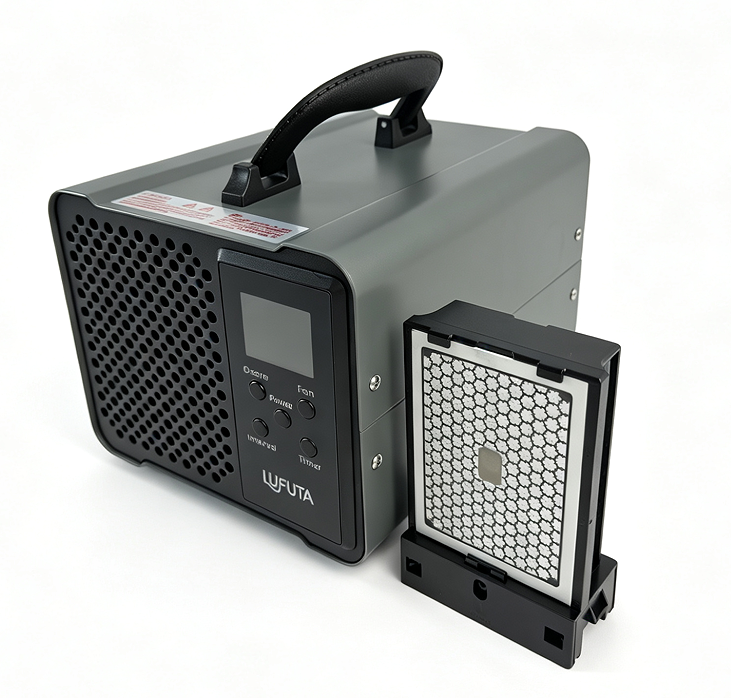
Many power supply and motor driver datasheets bury thermal protection in a footnote, but seasoned engineers know it belongs in the headline specs. When a converter overheats, silicon degrades fast, and a cheap unit without shutdown simply cooks itself until something fails — often taking downstream components with it. Standard thermal shutdown acts as a silent guardian: it cuts output before junction temperatures hit destructive levels, then restarts automatically once things cool. That cycle may be invisible in normal operation, but it's the difference between a product that lasts a decade and one that dies in the first heat wave.
Overload protection gets similar treatment. A supply rated for 5 A might handle a brief 7 A surge without drama, but sustained overloads push magnetics into saturation and stress electrolytic capacitors until they bulge or vent. Built-in current limiting with hiccup-mode retry prevents this by reducing output or shutting down until the fault clears. Without it, every accidental short becomes a game of Russian roulette with your load. The real value isn't just protecting the power stage — it's protecting whatever you've connected downstream.
When comparing products, flip past the marketing bullet points and check the protection section. Does it specify a thermal shutdown threshold? Does overload protection auto-recover or latch off? These details separate industrial-grade designs from hobbyist boards. Buying a module without them might save a few dollars today, but field failures, warranty returns, and angry customers cost far more than the initial saving.
Match the Warranty Length to the Expected Lifespan
A warranty isn't just a piece of paper; it's a statement about how long the manufacturer believes the product will hold up. If you see a one-year warranty on a refrigerator that typically lasts a decade, something doesn't add up. It might be a sign of cost-cutting or hidden weak points.
On the flip side, a lifetime warranty on a pair of budget earbuds sounds impressive, but it's often a marketing trick. The company knows most people won't bother claiming it, and the product itself may not survive past a couple of years. Matching the warranty to the expected lifespan means being honest about durability.
Smart buyers compare the warranty length with real-world reviews and average usage cycles. A power tool used daily on a job site has a different expected lifespan than one kept in a home garage. When the warranty period roughly mirrors that realistic lifespan, you're more likely dealing with a manufacturer that stands behind its build quality.
Demand Proof of Independent Lab Testing for Ozone Concentration
Many ozone equipment sellers make impressive claims about output levels, but without third-party verification those numbers mean very little. A reputable brand should be able to provide test reports from an independent laboratory that measured actual ozone concentration under controlled conditions. Ask for documentation that shows the equipment was tested at a specific flow rate and oxygen purity, because those variables dramatically affect the final concentration. If a company hesitates or offers only in-house results, treat that as a red flag. True performance data should come from a lab with no stake in the sale.
Pay attention to the details in the test report. Was the ozone concentration measured in grams per hour or in percent by weight? Did the lab use a standardized method such as ultraviolet absorption or iodometric titration? A clean report will list the test conditions, the equipment used, and the margin of error. Avoid vendors who publish only a single impressive number without context. The more transparent the lab documentation, the easier it is to compare one unit against another and predict how it will perform in your own setup.
Finally, consider requesting a recent test rather than a report from years ago. Manufacturing tolerances and component quality can shift over time, and a unit built today may not match the one tested originally. Independent lab verification should be an ongoing practice, not a one-time marketing tool. When you ask for proof and receive a clear, dated report from a recognized facility, you gain confidence that the ozone output will meet your needs without guesswork or inflated expectations.
Compare Replacement Parts Availability, Not Just Unit Price
A low sticker price often hides a more expensive problem if the parts you need are hard to find. Equipment that sits idle while you search for a specific bearing or control board drains labor hours and pushes deadlines further out. Before committing to a purchase, it pays to check how quickly replacement components can actually reach your workshop or job site.
Some manufacturers keep well-stocked local distribution centers and common part inventories, while others rely on overseas shipping that can stretch into weeks. Two machines may look nearly identical in a spec sheet, but the one with faster parts access is often far cheaper to own over time. Ask about typical lead times, regional warehousing, and whether independent suppliers carry the components you are most likely to replace.
Dig Into the Supplier’s Decibel Ratings and Installation Support
When you're comparing suppliers, the decibel rating on paper rarely tells the whole story. Ask for actual test data from their own installations, not just the spec sheet from the fan manufacturer. A supplier who has field measurements from similar projects—or better yet, can arrange a site visit to hear a running unit—is worth far more than one who quotes a single number and moves on. Pay attention to how they talk about low-noise options: do they mention inlet silencers, vibration isolators, or duct layout adjustments, or do they just say "it's quiet"?
Installation support matters just as much as the equipment itself. Some suppliers drop off the unit and disappear; others walk you through alignment, provide torque specs for mounting bolts, and have a tech on call for the first startup. Ask whether they offer commissioning assistance or troubleshooting guides written for your specific model. A decent supplier won't hesitate to explain what happens if the unit runs louder than expected after installation—do they send someone out, or do you chase them for weeks?
The two factors feed into each other. A supplier with solid installation support will often catch noise issues before they become complaints, simply because they understand how the equipment behaves in the real world. Digging into both areas upfront saves you from a loud, shaky unit that nobody wants to take responsibility for.
FAQ
Ask for factory details, production line photos or video, and the specific certifications held by the manufacturing site. A genuine manufacturer can usually share real-time floor data, raw material sourcing, and in-house testing records without hesitation.
Look for CE, RoHS, FCC, and ISO 9001 for the factory. If you sell in automotive aftermarket channels, also confirm EMC compliance and any relevant SGS material reports. Certifications should be current and match the supplier's legal entity name.
Most passenger vehicles need between 50 mg/h and 200 mg/h, while larger vehicles may require up to 500 mg/h. A good supplier should offer adjustable output or modular designs, not a single fixed rate that can damage interiors.
Request the material spec—ceramic, quartz, or stainless steel—and the expected lifespan in hours. Ceramic plates are common but vary widely in quality. Ask for third-party test data on output stability after 500 and 1,000 hours of use.
Critical. Ozone only works if it circulates. Ask for noise ratings in decibels, fan bearing type, and whether the airflow path keeps moisture away from the high-voltage board. A poor design leads to early failure and uneven treatment.
Look for a clear warranty period, usually 12 months minimum, plus replacement part availability for at least two years. Ask how they handle defect batches—do they offer credit, repair, or replacement? Response time to technical issues should be stated in writing.
Yes, but confirmation matters. Request a sample with your logo, check minimum order quantities for custom packaging, and verify whether they hold any trademark authorization process. Also ask about instruction manual customization and language options.
Order at least two production samples, not pre-made prototypes. Run them continuously for 48-72 hours in a vehicle. Check for ozone smell after shutdown, casing heat, and any electrical noise. Compare the sample's internal layout with the quoted specification sheet.
Conclusion
A single peak ozone output figure tells you almost nothing about how a car ozone generator will actually behave in your vehicle. Ask the supplier for a full output curve that shows concentration across different fan speeds and cabin volumes, because a unit that spikes high for thirty seconds can leave you with uneven treatment or lingering odors. Equally important is thermal shutdown and overload protection—without these built in, the generator becomes a fire risk when it runs long enough to matter. Have the supplier produce independent lab test results for ozone concentration, not just a branded spec sheet. If they hesitate, treat that as your answer.
Warranty length should line up with the expected lifespan of the ionizer or ozone plate, so compare the fine print rather than the headline years. Replacement parts matter more than the initial price: a cheap unit with no available ozone plates or filters becomes disposable after one season. Finally, pay attention to decibel ratings if the generator will run while someone is in the car, and ask about installation support—mounting brackets, wiring harnesses, and clear instructions save hours of guesswork. Suppliers who stock parts, document noise levels, and answer installation questions before you buy are the ones worth committing to.
Contact Us
Contact Person: Paul Luo
Email: [email protected]
Tel/WhatsApp: 0086-19966314501
Website: https://www.lufutatech.com