

Bulk Laser Engraving Laminate Solutions for High-Volume Precision and Efficiency
2026-06-10
When scaling up production, even the smallest inefficiency in engraving laminates can snowball into costly delays. LYSHIRE’s bulk laser engraving laminate solutions are built for those who refuse to compromise between speed and precision. By harnessing advanced laser technology tailored for high-volume runs, we turn complex designs into flawless, repeatable output—without sacrificing the crisp detail your projects demand. In this post, we’ll unpack how the right tooling transforms your workflow from a bottleneck into a competitive edge.
Scaling Laser Engraving for Tight-Tolerance Laminate Runs
Scaling laser engraving for tight-tolerance laminate runs demands a careful blend of precision engineering and process control. Unlike conventional etching methods, lasers offer non-contact material removal that preserves laminate integrity, but keeping tolerances within microns across thousands of units requires meticulous calibration. Every beam parameter—power, speed, frequency—must be dialed in to match the resin system and glass weave of the substrate, ensuring clean edges without heat-affected zones that could compromise layer bonding.
Throughput without drift hinges on intelligent automation and real-time monitoring. Multi-axis stages paired with vision alignment systems compensate for minor sheet-to-sheet variations, while closed-loop feedback adjusts focal length as lens temperature shifts during extended runs. Barcode-tracked recipes eliminate operator error, and nested patterns maximize material yield without violating keep-out zones—critical when dealing with costly high-frequency laminates.
Consistency at scale also depends on upstream material handling. Climate-controlled storage and just-in-time staging prevent moisture absorption that can skew ablation thresholds. Post-process inspection via inline profilometry catches deviations early, feeding data back to the engraver for adaptive corrections. This tight integration of environment, machine, and metrology transforms laser engraving from a prototyping novelty into a reliable production workhorse for RF and aerospace laminates.
Material-Aware Processing for Uniform Depth and Appearance
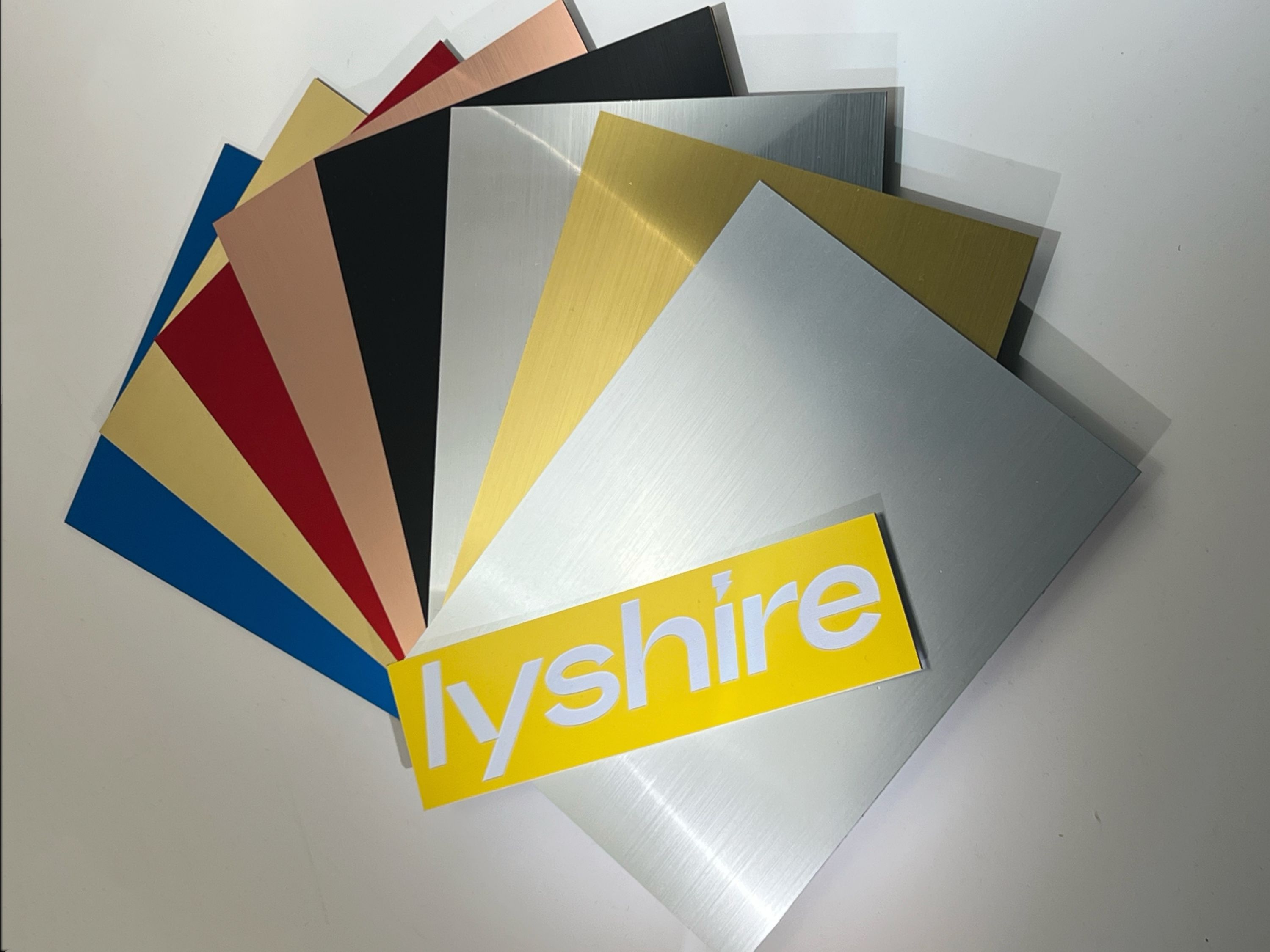
Traditional surface treatment methods often apply a one-size-fits-all approach, ignoring the inherent variations in material composition and structure. By integrating real-time material sensing, the system can adjust processing parameters on the fly—altering feed rates, pressure, or energy input as it encounters changes in density or grain orientation. This dynamic adaptation eliminates inconsistencies that arise from batch-to-batch material differences, ensuring that the final surface meets precise depth and appearance specifications without manual intervention.
The core of this approach lies in closed-loop feedback where optical or acoustic sensors map the material surface before and during processing. Data on micro-hardness, porosity, and reflectivity are fed into a control algorithm that predicts how the material will respond to subsequent passes. The result is a uniform finish even on hybrid or recycled materials that would typically exhibit uneven wear or discoloration. Process stability is significantly improved, reducing the need for post-processing corrections.
Beyond consistency, material-aware processing unlocks the ability to work with a wider range of substrates without sacrificing quality. It allows manufacturers to use cost-effective raw materials while still achieving high-end aesthetics and functional performance. The technology seamlessly blends industrial precision with adaptive intelligence, making it ideal for applications where visual and tactile uniformity are critical, such as consumer electronics or automotive interiors.
Adaptive Fixturing to Eliminate Waste in Large Batches
In high-volume manufacturing, the cost of dedicated tooling adds up quickly. Adaptive fixturing tackles this by using flexible, reconfigurable workholding that adjusts to multiple part geometries without swapping out entire setups. Instead of building a unique fixture for each variant, a single adaptive system can handle a range of shapes and sizes, slashing the lead time and material spent on hard tooling. For large batches, this means fewer jig changeovers and less downtime, keeping production flow steady and reducing the hidden waste of underutilized equipment.
Waste from misaligned parts is a common headache in large runs. Adaptive fixtures self-adjust to maintain precise clamping and positioning, even as tooling wears or raw material varies slightly. This consistency cuts down on scrap and rework, directly improving yield. By eliminating the trial-and-error adjustments that often plague traditional fixture changeouts, operators spend less time on setup and more time on value-added tasks. The result is a leaner process where both material and labor costs dip without sacrificing quality.
Beyond waste reduction, adaptive fixturing enables mixed-model production within the same line. When a batch switches from one part number to another, the fixture can reconfigure itself in seconds, not hours. This agility supports smaller lot sizes within large batches, preventing overproduction and allowing manufacturers to respond faster to demand shifts. In practice, it means you can run 10,000 units of part A and then immediately switch to part B without building new fixtures, making the whole operation more resilient and cost-effective.
Workflow Automation That Cuts Cycle Time Without Sacrificing Detail
Most automation solutions force a trade-off: you either speed things up and lose the nuances that matter, or you preserve every granular step and watch timelines stretch. The key is designing workflows that distinguish between repetitive, low-value tasks and the decision points where human insight is essential. By mapping out the entire process first—identifying bottlenecks, approval chains, and data handoffs—you can pinpoint exactly where automation will have the greatest impact without bulldozing the details that define quality.
Modern workflow engines let you embed conditional logic, dynamic branching, and real-time validation directly into the sequence. Instead of a rigid, one-size-fits-all pipeline, you get a system that adapts to the content of each case. For example, a document review flow can auto-route simple submissions for fast-track approval while flagging edge cases for a specialist, attaching all relevant metadata and history along the way. That means nothing gets lost, and no one wastes time on rote tasks.
The result is a cycle that feels dramatically faster but doesn't cut corners. Teams report finishing complex initiatives in half the time, yet audit trails remain intact, customer-facing outputs stay polished, and compliance checks are baked in—not bypassed. When automation is built around preserving context rather than just accelerating throughput, the details take care of themselves.
Keeping Cost Predictable When Engraving Thousands of Panels
Engraving large volumes of panels can quickly become a budgetary wildcard if you're not careful with how you structure the workflow. The real trick isn't just finding the cheapest per-unit price—it's locking in consistency across material batches, machine time, and finishing steps so that the cost you quote at the start is the cost you pay at the end, even when you're ordering thousands of identical pieces.
One often-overlooked lever is how you handle setup and tooling. For instance, grouping panels with similar designs or materials can dramatically reduce changeover time, and modern nesting software can optimize layouts to minimize wasted material. When you plan for these efficiencies upfront, you stop absorbing hidden fees that erode your margin as the run scales up.
Another key is building a buffer for variables like tool wear or subtle substrate variations without padding the quote so much that you lose the job. Experienced shops track historical data on things like laser tube longevity or bit replacement rates per thousand panels, which lets them bake in realistic allowances rather than guesswork. This kind of transparency not only keeps your own costs predictable but also builds trust with clients who are tired of surprise invoices.
Quality Assurance Built for Industrial Volumes, Not Just Samples
It's easy to make a handful of perfect units when you can cherry-pick the best from a small batch. But quality in high-volume production demands something far more rigorous—a system that doesn't just sample-check but embeds consistency into every step. That means monitoring processes in real time, not just inspecting finished goods. When you're producing thousands or millions of parts, you can't afford to treat quality as a final gate; it has to be woven into the entire manufacturing flow.
We've built our quality infrastructure around the reality of continuous production. Instead of relying on occasional lab tests, we use inline sensors and automated vision systems that check critical dimensions and surface finishes at the speed of your line. Statistical process control isn't a paper exercise here—it's a live feedback loop that adjusts parameters before drift becomes a defect. The result is not just a batch that passes, but a process that stays predictable, run after run.
This shift from sample-based assurance to true industrial-grade quality changes the economics of manufacturing. When root causes are caught early, downstream rework and scrap plummet. Your supply chain gains stability, and your customers stop qualifying your product and start trusting it. In high volumes, that trust isn't just a nice-to-have—it's what keeps lines running and contracts renewed.
FAQ
Bulk laser engraving streamlines production by handling large batches with consistent speed and accuracy. Since the laser never physically touches the laminate, tool wear is eliminated, making it perfect for long runs where uniformity and low maintenance are crucial.
The laser beam is finely focused to a tiny point, allowing intricate designs and sharp edges without damaging the surrounding material. Advanced motion systems and real-time adjustments keep the engraving depth consistent, even on thin or textured laminates.
It bypasses the need for physical tool changes, multiple finishing steps, or extensive cleanup. The non-contact process also reduces material waste and can integrate seamlessly into automated production lines, significantly cutting cycle times.
Almost all industrial laminates work well, including phenolic, melamine, epoxy-glass, and decorative high-pressure laminates. The laser can mark, etch, or cut through surface layers without compromising structural integrity.
They rely on calibrated laser power, precise raster patterns, and environmental controls. Many systems include vision alignment and automated focusing, so every piece matches the master file regardless of batch size.
Absolutely. It's common to engrave serial numbers, barcodes, and logos with permanent, high-contrast results. At the same time, the same setup can produce intricate artistic patterns or textured finishes for consumer-facing products.
Modern laser software imports common design files, nests parts efficiently, and controls laser parameters per material. It can also communicate with factory databases to fetch variable data like serial numbers, enabling true just-in-time customization without slowdowns.
Conclusion
When handling high-volume laser engraving of laminates, precision and consistency become top challenges. It’s not just about holding tight tolerances across thousands of panels, but also managing variability from different material properties. Our approach combines scalable engraving technology with material-aware processing, ensuring uniform depth and appearance across every piece—regardless of laminate texture or composition. By dynamically adjusting laser parameters, the system adapts to material differences in real time, preventing subtle inconsistencies. Meanwhile, adaptive fixturing eliminates waste in large batches, accommodating panels with warping or dimensional variation while maintaining secure positioning. This leads to dramatically lower scrap rates in high-volume runs.
Beyond the process itself, workflow automation plays a key role in reducing cycle times without compromising detail. From batch handling to job queue management, each step is optimized for consistent throughput. Cost predictability also becomes straightforward, as the engraving of thousands of panels is no longer subject to surprise downtime or rework. Finally, quality assurance isn’t limited to spot-checking samples—it’s embedded across the entire production flow, providing end-to-end verification at industrial volumes. This ensures that even at scale, every finished piece meets exacting standards of precision and visual consistency.
Contact Us
Contact Person: Tina Hou
Email: [email protected]
Tel/WhatsApp: +86 17816238685
Website: https://www.lyshire.com