

Best Polyester Geogrid Options for Stronger Soil Reinforcement
2026-05-25
When it comes to soil reinforcement, not all geogrids are created equal. The right polyester geogrid can transform unstable ground into a foundation you can rely on—whether you're building roads, retaining walls, or stabilizing slopes. But with so many options on the market, how do you choose the one that truly delivers strength and longevity? In this guide, we'll explore the top polyester geogrid types that combine high tensile resistance with long-term durability, and share insights from trusted suppliers like WEN FENG STONE, known for providing quality geosynthetic solutions. Keep reading to discover which geogrid option can make your next project safer, stronger, and more cost-effective.
Why Polyester Geogrids Deliver Superior Soil Reinforcement
Polyester geogrids stand out in soil reinforcement because their molecular structure inherently resists creep under sustained loads, a critical failing of many other polymers. The long-chain polyester fibers offer high tensile modulus with minimal elongation, ensuring that the reinforced soil structure maintains its designed geometry over decades. This dimensional stability is further enhanced by a protective coating that shields the yarns from installation damage and chemical degradation in aggressive soil environments.
The interaction between polyester geogrids and granular fill creates a mechanical interlock that outperforms simple friction-based systems. As aggregate particles strike through the apertures, a positive interlock develops, effectively confining the soil and distributing applied loads across a wider footprint. This composite behavior increases the bearing capacity of weak subgrades and reduces differential settlement, which is why these geogrids routinely allow thinner pavement sections without sacrificing performance.
Field monitoring consistently shows that polyester geogrid-reinforced slopes and walls experience slower stress relaxation than those built with alternative materials. The high junction strength of woven and welded polyester geogrids resists rib separation even under dynamic loading from traffic or seismic events, providing a redundant and ductile response. This toughness, combined with low installation stretch, makes them a go-to solution for demanding applications such as embankments over soft clays and mechanically stabilized earth bridge abutments.
Uncovering the Versatility of Polyester Geogrids in Challenging Terrains
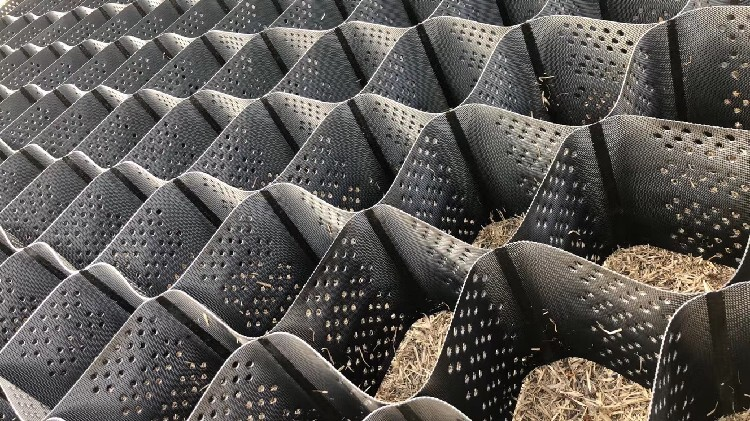
When roads need to climb steep slopes or hold firm across sinking marshlands, polyester geogrids step up in ways that often go unnoticed beneath the asphalt. Their high tensile strength, combined with a low creep tendency, allows them to lock soil particles into a stable composite, distributing loads far more efficiently than traditional fill methods. On a recent project through a landslide-prone mountain pass, crews found that integrating these grids into the base layers cut excavation depth by nearly a third, saving time without sacrificing long-term durability.
The real magic, however, happens in wet and chemically aggressive soils where metal reinforcement would swiftly corrode. Polyester’s inherent resistance to biological degradation and common soil acids means the grid remains functional decades after installation, quietly preventing differential settlement. One coastal highway expansion relied on this very trait: tidal groundwater saturated with salts and organic matter had defeated earlier reinforcement attempts, but the polyester grid’s molecular structure held firm, maintaining the embankment’s cross-section season after stormy season.
Perhaps most impressive is how adaptable the installation process becomes when terrain throws a curveball. Unlike rigid solutions that demand perfect grading, these geogrids can be rolled out over irregular subgrades, conforming to dips and hollows without losing effectiveness. That flexibility proved critical in a recent mining access road built over permafrost, where minimal ground disturbance was essential. Crews simply unrolled the grid, backfilled with locally sourced granular material, and compacted—no heavy machinery reworked the frozen ground, yet the structure now handles daily heavy hauls with barely a crack in the surface.
Selecting the Ideal Polyester Geogrid: Factors Beyond Tensile Strength
Tensile strength often dominates the specification conversation, but it rarely tells the full story. A polyester geogrid might boast impressive lab numbers yet falter under sustained load if its creep behavior is ignored. Over decades, even modest loads can stretch the polymer chains beyond acceptable limits, leading to gradual deformation that compromises the entire reinforced structure. Designers who fixate solely on ultimate strength risk overlooking this slow, silent failure mode.
Chemical and environmental resilience is another domain where polyester proves its worth, but only if the right formulation is chosen. High-quality PET variants resist hydrolysis, acids, and alkalis far better than generic grades, especially in saturated soils or landfill applications. Ultraviolet exposure during construction can also prematurely degrade the surface of unprotected grids, making UV-stabilized coatings a practical necessity rather than an optional add-on.
Installation damage and junction efficiency further separate a dependable geogrid from an underperforming one. Site conditions are rarely gentle—angular fill, heavy compaction equipment, and rough handling can tear or weaken ribs before the grid ever sees service loads. A design that emphasizes robust junction strength and damage-tolerant geometry will maintain integrity where a purely high-tensile product might suffer hidden nicks and stress risers, quietly undermining long-term performance.
Innovations Driving Polyester Geogrid Performance for Lasting Stability
Polyester geogrids have become a cornerstone in modern civil engineering, offering reliable reinforcement for soil structures under demanding conditions. Recent advances are pushing their capabilities further, directly addressing the need for lasting stability in applications ranging from retaining walls to road foundations. These innovations are not just incremental tweaks but substantial leaps that enhance long-term performance without adding complexity to installation.
One key area of progress lies in raw material refinement and manufacturing precision. High-tenacity polyester yarns, now engineered with tighter molecular alignment, deliver significantly lower creep rates while maintaining flexibility. Combined with advanced coating systems—often polymer-based blends that resist chemical degradation and UV exposure—the grids achieve a level of durability that was hard to match just a decade ago. The junction design has also evolved: thermally welded or integrally formed nodes create stronger, more uniform load-transfer points, reducing weak spots that historically led to premature failure.
Another leap forward is the integration of smart design features that adapt to site-specific challenges. For example, optimized aperture geometries improve interlock with surrounding aggregate, minimizing lateral movement even under heavy cyclic loads. These adaptations not only bolster immediate performance but also extend the functional life of infrastructure, drastically cutting down on maintenance interventions. As a result, engineers now have access to polyester geogrid systems that deliver dependable stabilization for decades, even in problematic soils or extreme environments.
From Theory to Practice: Polyester Geogrid Successes in the Field
Stepping back from the design software, it’s easy to admire the neat load-distribution curves and interlock coefficients that polyester geogrids promise. But out in the field, where subgrades are wetter than expected and aggregate sizes refuse to conform to idealized specs, those numbers can feel distant. What repeatedly turns theory into visible success is the sheer adaptability of the material—its ability to maintain stiffness under sustained load without creeping, marrying the calculated safety factors with raw, unpredictable job site conditions. When the first truckload of fill rumbles across a reinforced embankment and everything holds, that’s when the textbook becomes trust.
One contractor working on a widening project through soft river silt discovered this firsthand. Conventional approaches demanded massive over-excavation and time-consuming dewatering, but the spec’s polyester geogrid—combined with a carefully layered lift plan—allowed them to start building almost immediately. Monitoring over the next eighteen months told the real story: settlements were not only within tolerance but significantly below projections. The grid’s low-strain reinforcement didn’t just prop up the embankment temporarily; it actively resisted the long-term deformation that often haunts such sites. Crews noted that the installation rhythm quickly became just another part of the earthwork routine, a testament to how far practical engineering has come from the days of clunky, high-elongation alternatives.
Perhaps the quietest successes are in retaining walls tucked into residential developments, where polyester geogrids silently do their work behind attractive facing blocks. Here, the advance from cautious sizing formulas to confident, slender structures relies on decades of instrumented case histories. Landscape architects and engineers alike point to walls that have weathered seasons of heavy rain and freeze-thaw cycles without a hint of bulging—proof that the practical performance of polyester aligns smoothly with the performance predicted by sound design. It’s a steady accumulation of these small victories that keeps pushing the technology forward, transforming a laboratory concept into an unassuming but essential field tool.
Polyester Geogrids Versus Alternatives: A Head-to-Head on Durability
When comparing polyester geogrids to other reinforcement materials like polypropylene or fiberglass, durability often tips the scales in favor of polyester. Polyester’s high modulus and low creep mean it maintains its structural integrity under sustained loads, resisting deformation over decades. This is crucial in applications such as retaining walls or road bases, where long-term stability is non-negotiable. In contrast, some alternatives may stretch or degrade when exposed to the same pressures, leading to costly maintenance down the line.
Chemical and environmental resistance further set polyester geogrids apart. They handle aggressive soils, alkaline conditions, and even moderate acidic environments with ease, unlike steel grids that corrode or polymer grids that can become brittle with UV exposure. While coatings and additives can enhance the performance of competing materials, polyester’s inherent durability often reduces the need for extra layers of protection, streamlining installation and cutting long-term risks.
Real-world performance data consistently shows polyester geogrids outlasting many alternatives in demanding infrastructure projects. From reinforced slopes to heavy-haul pavements, their ability to distribute stress without significant loss of strength makes them a go-to choice for engineers focused on lifecycle costs. It’s not just about surviving the first few years—polyester’s edge lies in how gracefully it ages, holding up when other materials might have already failed.
FAQ
Polyester geogrid stands out due to its high tensile strength combined with low elongation properties, which means it can handle heavy loads without stretching excessively. Unlike some alternatives, it also offers excellent resistance to biological degradation and chemical attack commonly found in soils, ensuring long-term stability. Its flexibility makes installation around curves and corners easier without sacrificing structural integrity, making it a reliable option for projects ranging from retaining walls to road bases.
The primary mechanism is interlock and confinement. When soil is compacted over the geogrid, the aggregate particles lock into the grid's apertures, effectively creating a mechanically stabilized layer. This prevents lateral movement of the soil particles, distributes loads over a wider area, and reduces the stress on the subgrade. Essentially, the geogrid acts like a tensioned membrane that holds everything together, allowing the soil to bear heavier loads without deforming.
Broadly, there are two categories: woven polyester geogrids and warp-knitted polyester geogrids. Woven types are manufactured by weaving high-tenacity yarns and then applying a protective coating, making them ideal for soil stabilization in road construction and foundation reinforcement. Warp-knitted grids have a higher degree of flexibility and are often used in steeper slope reinforcement or landfill capping due to their ability to conform to uneven surfaces. Some products also come as composite geogrids bonded with a non-woven geotextile for combined separation and reinforcement.
Focus on the tensile strength at 2% and 5% strain, not just ultimate strength, because soil movement usually occurs at low deformations. You'll also want a high junction efficiency—this tells you how well the intersecting yarns stay connected under load. Look for the aperture size; it should be optimized for the aggregate size you're using to maximize interlock. Don't overlook the coating's durability; a UV-stabilized PVC or bitumen coating will protect the yarns during installation and from long-term soil acidity.
One frequent error is failing to properly tension the geogrid before placing the fill—if it's loose or wrinkled, it won't engage until significant deformation occurs. Another is using the wrong aggregate size; if the stones are too small, they won't interlock, and if too large, they can damage the grid during compaction. Overlapping joints incorrectly is also a pitfall; always follow the manufacturer's overlap recommendations, usually around 300–600 mm, and orient the overlap direction away from the slope face in wall applications. Lastly, driving heavy equipment directly on the exposed grid can cause punctures, so always maintain a minimum fill cover before trafficking.
Polyester itself is stable within typical soil temperature ranges, but the protective coating is key. High temperatures can soften some coatings, reducing junction strength temporarily, while extreme cold may make certain coatings brittle if not properly formulated. UV radiation is the biggest concern during storage and construction; prolonged exposure can degrade the yarns' strength. Once buried, however, a quality polyester geogrid is resistant to hydrolysis and microbial attack, so it performs consistently even in wet or chemically aggressive soils for decades.
Yes, several manufacturers now offer geogrids made with recycled polyester yarns, often sourced from post-consumer PET bottles. These products can match the technical specifications of virgin polyester grids while reducing the carbon footprint. The key is to verify that the recycled content does not compromise the long-term durability—look for certifications like GRS (Global Recycled Standard) and ensure the product has undergone the same rigorous testing as virgin options. Some companies also use eco-friendly coatings, such as low-VOC bitumen emulsions, to further enhance sustainability.
We're seeing a push towards 'smart' geogrids with embedded fiber optic sensors that can monitor strain and temperature in real-time, allowing for preventive maintenance of critical infrastructure. There's also a trend for hybrid grids that combine polyester with other materials like glass fiber to achieve an even wider range of stiffness characteristics. On the sustainability side, bio-based coatings are being developed to replace petroleum-based ones, and design software is getting better at integrating geogrid properties directly into BIM workflows, leading to more optimized, material-efficient designs.
Conclusion
When reinforcing soil, polyester geogrids consistently outperform other solutions because of their unique combination of strength and flexibility. Their low creep behavior under sustained loads means they maintain structural integrity over decades, while the polymer’s inherent resistance to chemical and biological degradation ensures reliable performance in aggressive soils. This makes them a top choice for projects ranging from retaining walls to embankments built on soft ground. Beyond basic reinforcement, polyester geogrids truly shine in challenging terrains—steep slopes, swampy areas, or earthquake-prone zones—where their high tensile modulus and ability to conform to irregular surfaces prevent localized failures. Selecting the right geogrid, however, goes far beyond just comparing tensile strengths. Engineers must evaluate junction efficiency, installation survivability, and long-term interaction with specific soil types to maximize effectiveness and cost-efficiency.
Recent innovations are pushing polyester geogrid performance even further. New coating technologies enhance UV stability and reduce installation damage, while optimized geometric patterns improve interlock with aggregate, boosting load transfer. Field applications provide compelling proof: projects across highway embankments, mining haul roads, and coastal defenses have demonstrated how these grids arrest settlement and extend service life even under extreme weather. When stacked against alternatives like polypropylene or steel, polyester geogrids offer superior durability, especially in moist or chemically active environments where metal corrodes and some polymers lose strength over time. The result is a reinforcement solution that not only solves immediate engineering challenges but also delivers lasting stability with minimal maintenance, making it the smarter long-term investment for critical soil structures.
Contact Us
Contact Person: Jennifer LEE
Email: [email protected]
Tel/WhatsApp: 8618553418999
Website: https://vip.e-baixing.com/wenfengshitong