

Best Forged Steel Gate Valve Options for High-Pressure and High-Temperature Service
2026-11-16
You've probably seen gate valves fail when steam lines hit 600°F or pressure spikes past Class 1500. The flanges hold, but the wedge warps, the seat leaks, and maintenance crews pay the price. That's why the best forged steel gate valves for high-pressure, high-temperature service aren't just cast from any billet—they're engineered around real process conditions. Below, we'll look at the key features and compare top options, including the forged steel lineup from CRXV, which has been quietly winning over piping engineers in demanding applications.
Forged vs. Cast: Why Grain Flow Matters in High-Pressure Valve Bodies
Pressure-containing components live or die by how their internal structure handles stress. In a cast valve body, solidification happens slowly and isotropically—metal crystals grow inward from the mold walls until they meet, creating a random, often coarse grain pattern with potential porosity at the center. That randomness doesn't matter much under moderate loads, but in high-pressure service, any discontinuity can become a crack initiation point.
Forging changes the picture entirely. By working the metal above its recrystallization temperature, the original ingot structure is broken down and realigned. The resulting grain flow follows the contour of the part—especially through the neck and flange transitions where stress concentrates. This directional grain orientation means the material resists fatigue and burst pressure far better along the critical load path, even with the same nominal alloy.
The practical difference shows up in wall thickness and service life. A forged high-pressure valve body can often be designed with thinner sections than a cast equivalent because the aligned grains carry stress more efficiently. Over years of thermal cycling and pressure spikes, that translates into fewer inspections, less downtime, and a lower probability of catastrophic failure from hidden internal defects that radiography might miss in a casting.
Pressure Seal Bonnets: The Go-To Choice for High-Temperature Steam Service
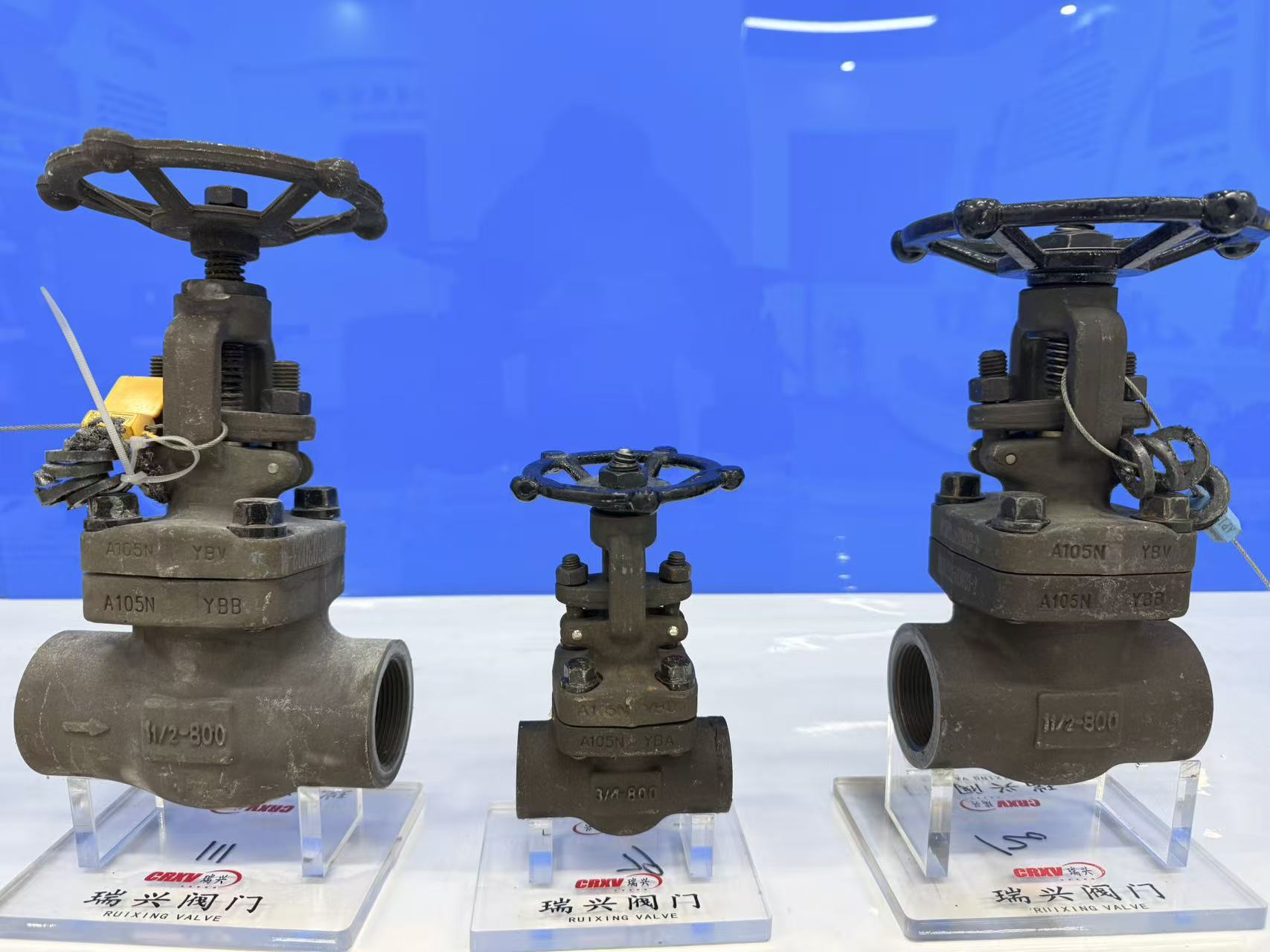
When steam temperatures climb past 1000°F and pressures push into supercritical territory, conventional bolted bonnet joints start to show their limits. Gasket relaxation, bolt creep, and thermal cycling can open leak paths exactly where you can least afford them. Pressure seal bonnets take a different approach: they rely on the system's own pressure to energize the seal. A wedge-shaped gasket sits between the body and bonnet, and as internal pressure builds, it drives the gasket deeper into the tapered cavity, tightening the joint without any external clamping force.
This self-energizing behavior is why pressure seal designs dominate high-temperature steam service in power plants and refineries. Unlike a bolted flange that needs periodic retorquing, a pressure seal joint actually gets more reliable under load. There are no exposed bolts to inspect, no gasket to replace after a few thermal cycles, and the compact profile reduces overall valve weight and footprint. For maintenance teams, that means fewer leak repairs and shorter outage windows, not a small consideration when every hour of downtime costs real money.
Material selection and machining precision still matter, though. The bonnet and body must be forged from alloys that resist creep and oxidation at operating temperature, and the sealing surfaces need a surface finish fine enough to let the gasket slide into place without galling. When those details are handled correctly, a pressure seal bonnet can outlast the valve trim itself, making it the quiet workhorse of high-energy steam systems rather than a frequent headache.
Material Selection: From Carbon Steel to Stainless and Alloy Grades
Choosing the right steel starts with understanding how carbon content shapes performance. Plain carbon steels are affordable and easy to machine, but they struggle in corrosive or high-temperature environments. Once you push past basic structural needs, the conversation shifts to stainless grades, where chromium forms a passive oxide layer that resists rust. Yet not all stainless is equal—austenitic types like 304 and 316 offer excellent formability and weldability, while ferritic and martensitic grades trade some corrosion resistance for higher strength or hardness.
For demanding applications, alloy steels step in with deliberate additions of nickel, molybdenum, titanium, or vanadium. These elements fine-tune properties: molybdenum boosts pitting resistance in chloride-rich settings, vanadium refines grain structure for wear resistance, and nickel improves toughness at cryogenic temperatures. The real skill lies in matching the alloying package to the failure mode you are trying to prevent—whether it is stress corrosion cracking, creep, or impact fatigue.
Cost always lurks in the background. A super duplex stainless might solve a corrosion puzzle but overkill for a dry indoor bracket. Many engineers start with a carbon steel baseline, then escalate only where the environment or load demands it. That staged approach keeps budgets sane while ensuring the final material choice is neither under- nor over-engineered.
API 602 and ASME B16.34: Navigating Standards for Critical Applications
Choosing between API 602 and ASME B16.34 often feels like deciding between a tailored suit and an off-the-rack jacket. API 602 speaks directly to compact forged steel valves—gate, globe, and check types—where tight spaces and high-cycle refinery or chemical plant duties demand more than generic pressure ratings. Its scope drills into details like minimum wall thickness for small bore sizes, extended body requirements for insulation, and rigorous testing for fugitive emissions. If your piping spec calls out nominal sizes below two inches and you need valves that won't leak after a few thousand cycles, API 602 is the document that sets those expectations.
ASME B16.34, by contrast, functions as the broad backbone for flanged, threaded, and welding end valves across a much wider size and pressure range. It establishes the pressure-temperature rating system that ties material group to class rating, giving engineers a reference for everything from a 150-pound steam line to a 2500-pound high-pressure gas header. However, that breadth comes with a trade-off: it doesn't force the same level of dimensional scrutiny or special testing on small forged valves that API 602 does. Many projects end up citing both standards—B16.34 for the overall shell design and pressure boundaries, API 602 for the specific requirements that keep compact valves reliable in critical service.
A practical way to navigate the overlap is to look at the failure mode you fear most. If the concern is gross overpressure or wrong material selection, B16.34 gives you the temperature-adjusted working pressures and material groupings. If the concern is stem leakage, seat wear, or inadequate wall thickness in a valve that gets operated frequently in a congested rack, API 602 closes those gaps. Instead of treating one standard as superior, treat them as two layers of a single specification: start with B16.34 for the envelope, then layer API 602 on top for the small-bore forged valve details that keep operations from grinding to a halt.
Sizing Up: Understanding Pressure Classes from 800 to 4500
The jump from an 800 class fitting to a 4500 class fitting is not just a number change; it reflects a fundamentally different wall thickness, material grain flow, and sealing surface finish. Many assume the digits correspond directly to a fixed psi limit, but the actual allowable pressure shifts with temperature and flange geometry. For instance, an 800 class carbon steel valve might hold roughly 2,000 psi at ambient conditions, while a 4500 class unit can push well past 10,000 psi cold working pressure—yet both carry a simple numeric label that tells only part of the story.
Field experience shows that misreading these classes often happens when someone sees a 1500 class component and assumes it is about double an 800 class part. The reality is that pressure ratings follow stepped curves, not linear ratios. A 1500 class forged body may be close to an 800 class in external dimensions for smaller sizes, but the internal bore and end connection depth differ enough to prevent interchangeability. Always check the pressure-temperature table for the specific material group before swapping parts between a 2500 class manifold and a 4500 class tree cap.
Another overlooked factor is how 800 to 4500 class hardware behaves under thermal cycling and vibration. Higher classes use thicker sections that resist fatigue cracking, but they also add weight and can transfer more stress to connected piping if supports are not adjusted. Instead of defaulting to the highest class for "safety," size the connection based on the maximum expected shut-in pressure plus a reasonable surge allowance. Then verify that the mating flanges, studs, and gaskets all share the same class rating—mixing a 4500 class valve with 2500 class companion flanges is a common cause of leaks and costly shutdowns.
Seat and Trim Options: Hardfacing and Stellite for Extended Service Life
When valves face punishing conditions—high temperatures, abrasive slurries, or repeated cycling—the seat and trim surfaces often dictate how long the equipment stays in service. Hardfacing applies a wear-resistant alloy layer to these critical sealing areas, while Stellite, a cobalt-chromium family of alloys, offers a proven route to extended life. Instead of replacing entire valve internals after every campaign, operators can specify hardfaced seats and trims that shrug off erosion, galling, and thermal fatigue. The right choice depends on the specific failure mode: Stellite 6 remains a workhorse for general-purpose high-temperature sealing, whereas Stellite 21 or 25 brings better corrosion resistance where chemical attack joins mechanical wear.
Field experience shows that a well-matched hardfacing deposit can double or even triple the interval between overhauls. The key is not simply adding material, but controlling the dilution between the base metal and the overlay. Too much iron pickup from a stainless body weakens the Stellite's inherent toughness; too little fusion risks spalling under thermal shock. Reputable valve shops often qualify their welding procedures on test coupons, checking hardness profiles and microstructure before applying the same parameters to production seats. This attention to process consistency separates a generic hardfacing job from one that delivers predictable service life in steam, catalyst fines, or high-pressure drop applications.
For end users, the specification should go beyond 'Stellite trim' to include the exact alloy grade, deposit thickness, and post-weld heat treatment if required. A thicker overlay is not always better—excessive buildup can introduce residual stresses that lead to cracking during cool-down. Similarly, choosing solid Stellite seats versus a welded overlay involves trade-offs in cost, repairability, and lead time. By working with vendors who can document their hardfacing history and offer metallurgical support, plant engineers gain a trim package that holds its geometry under stress, reduces leakage, and ultimately keeps the valve out of the scrap bin for years longer than an unprotected design.
FAQ
Forging aligns the grain structure and eliminates many internal voids or porosity issues that can plague cast bodies. That translates into a denser material, higher mechanical strength, and more consistent performance when the valve faces repeated thermal cycling and pressures well above Class 600.
Start with the maximum operating pressure and temperature, then check the pressure-temperature ratings for the specific material group. For superheated steam, you often need Class 800 or higher, but the final choice should account for allowable stress at the peak temperature rather than relying on the nominal pressure class alone.
Pressure seal bonnets are usually preferred above roughly Class 600 because the internal pressure helps energize the seal, so the joint gets tighter as pressure rises. Bolted bonnets work fine at lower classes, but they can become a maintenance headache and a leak point under severe thermal cycling.
Look for trim combinations that pair a hard-facing like Stellite or cobalt-based alloy on the seat and wedge with a 13% chrome or stainless steel stem. For temperatures above 1000°F, consider full Stellite trim to resist galling, erosion, and loss of hardness over time.
A flexible wedge is often safer in high-temperature service because it can accommodate thermal expansion and minor body distortion without jamming. Solid wedges are simpler and sturdier, but they are more prone to sticking if the valve is closed hot and then cooled.
Ask for material test reports with full traceability, positive material identification, and pressure testing per API 598 or equivalent. For high-temperature use, also request non-destructive examination of critical welds and, where applicable, fire-safe certification to confirm the valve can maintain a seal during and after a fire.
Not always. The limiting factor is the material's elevated temperature strength, not just the shell rating. You need to verify the actual pressure-temperature curve for the body material and trim, because a valve rated for 1975 psi at 100°F may be derated significantly at 1000°F.
People often ignore proper warm-up procedures and over-tighten the packing after a thermal cycle. Both can cause stem binding or leakage. It is also common to see the valve used for throttling, which erodes the seat and wedge prematurely and should be avoided unless the valve is specifically designed for that duty.
Conclusion
Forged steel gate valves dominate high-pressure, high-temperature service because the forging process aligns grain flow with the body contours, eliminating the porosity and weak spots often found in castings. This directional strength matters most when cycling between ambient and operating temperatures. In steam plants, pressure seal bonnets have become the standard for Class 600 and above, as the internal pressure energizes the seal rather than relying on a gasket that can relax over time. Material choice follows the service envelope: carbon steel handles moderate temperatures, while stainless and alloy grades like F11, F22, and F91 step in for creep resistance and oxidation limits. A valve built to API 602 and ASME B16.34 gives you a predictable design margin, but the real difference shows up in the trim.
Pressure classes from 800 to 4500 are not just larger numbers; they dictate wall thickness, bolt loading, and the entire pressure boundary philosophy. For extended life in throttling or frequent cycling, hardfacing on seats and wedges prevents galling and wire drawing. Stellite overlays—whether on the seat ring, disc, or backseat—hold up against high-velocity steam and abrasive particles far better than untreated surfaces. The best forged steel gate valve option isn't a single model; it's a combination of a forged body with controlled grain flow, a pressure seal bonnet where service demands it, the right alloy for temperature and corrosion, and a trim package matched to the actual operating cycle. Skipping any one of these shortens the interval between overhauls.
Contact Us
Contact Person: TIM
Email: [email protected]
Tel/WhatsApp: 8615857807381
Website: https://www.crxv.com/en/