

Best 20-Inch Cutter Suction Dredger Manufacturer: How to Choose the Right Partner for Your Project
2026-05-15
Selecting a reliable 20-inch cutter suction dredger manufacturer is no small feat—your project’s efficiency, budget, and timeline hang in the balance. You need a partner who combines robust engineering with proven field performance, not just a supplier with empty promises. That’s where YaKai Dredger comes into focus. With decades of hands-on expertise and a fleet of advanced dredgers operating worldwide, YaKai has quietly become the go-to choice for contractors who refuse to compromise. But what really sets a top-tier manufacturer apart? In this guide, we cut through the noise to show you exactly how to evaluate your options, spot red flags, and secure a dredger that will power your project from start to finish.
Why a 20-Inch Cutter Suction Dredger Could Transform Your Dredging Efficiency
Switching to a 20-inch cutter suction dredger brings a noticeable leap in output without overhauling your entire operation. The larger cutter head bites through compacted sediment more aggressively, while the expanded suction pipe pulls in slurry at a faster clip. This means you can clear a designated channel or mining trench in fewer passes, cutting project timelines significantly. Operators often find that the upfront adjustment period is minimal because the controls and workflow remain familiar—just scaled up. The real advantage lies in how the increased diameter reduces the frequency of clogs when dealing with mixed materials like clay, gravel, and loose rock. Instead of constant stoppages to clear blockages, teams maintain a steady rhythm, which translates directly into higher daily volumes.
Another overlooked benefit is fuel consumption relative to output. A smaller dredger might run all day to hit a target, burning fuel at a high rate per cubic meter moved. With the 20-inch model, the energy spent per unit of material often drops because the pump and cutter combination operates closer to its optimal range. It's not just about brute force—the hydraulics are typically engineered to match the scale, so you get a machine that works smarter, not just harder. Plus, maintenance intervals can stretch further when components are built for sustained heavy loads, giving your crew more time on the water and less in the repair bay. Over a year of continuous operation, these differences add up to a surprisingly leaner cost structure.
Finally, the versatility of a mid-sized dredger like this opens doors to jobs you'd normally pass on. It's powerful enough to handle harbor deepening and river reclamation, yet compact enough to navigate tighter inland waterways where larger vessels simply can't go. The 20-inch cutter suction dredger hits a sweet spot—it delivers serious excavation capability while remaining road-transportable in many cases, avoiding the logistical nightmares of disassembly and specialized hauling. This flexibility often means you can bid on a wider range of contracts and complete them with the same core equipment, making your fleet far more adaptable to shifting market demands.
Key Engineering Features That Separate Top Manufacturers
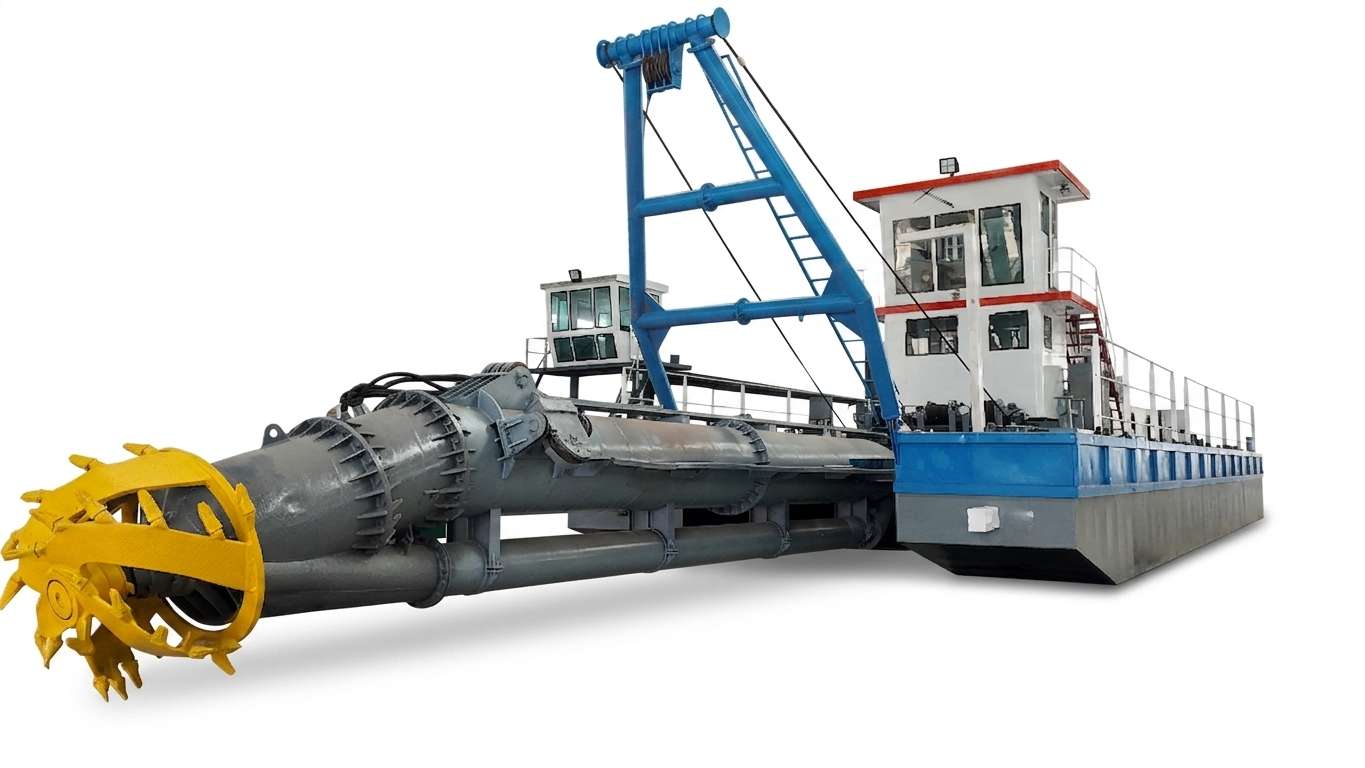
The engineering prowess of top-tier manufacturers is often defined by an obsessive commitment to precision machining and tolerance control. Rather than simply meeting industry standards, these companies push boundaries with in-house developed processes that minimize variance to micron levels. This is not just about expensive equipment; it's a cultural dedication where every component is scrutinized under the lens of long-term reliability, resulting in products that perform consistently even under extreme stress.
Another key differentiator lies in how elite manufacturers integrate material science into the earliest design phases. They've moved beyond off-the-shelf alloys, often co-developing proprietary composites or surface treatments with suppliers to solve specific engineering challenges. Whether it's a lighter yet stronger frame or a corrosion-resistant coating that doubles the lifecycle, these material innovations are closely guarded and rarely disclosed in marketing slicks—they are felt only in the field, where failures become remarkably rare.
Decoding Manufacturer Experience: What 20 Years in the Field Actually Means
Two decades in manufacturing isn’t just a number on a company timeline. It’s a lived accumulation of problem-solving muscle, the kind you can’t shortcut with a fresh certification or a new machine. When a factory has been pushing parts out the door for twenty years, they’ve cycled through enough material quirks, design revisions, and supply chain wobbles to know what’s going to fail before it does. That intuition shows up in the small stuff: a slightly modified tool path that saves a client two weeks of lead time, or a material suggestion that cuts cost without anyone having to ask.
Longevity also reshapes how a manufacturer listens. Early on, it’s easy to chase every spec to the letter and miss the bigger picture. After twenty years, you learn to read between the lines of a drawing—spotting where a tolerance is tighter than it needs to be, or where a weld detail is going to cause distortion downstream. This isn’t about cutting corners; it’s about having enough scar tissue to know which battles are worth fighting and when to push back with a better approach, often developed on a similar job a decade ago.
Perhaps most telling is how experience changes the rhythm of a production floor. Seasoned teams don’t just react; they anticipate. Maintenance doesn’t wait for a breakdown, and quality checks are woven into the process rather than tacked on at the end. That quiet consistency—where everyone from the machine operator to the shipping lead understands how one decision ripples out—is the real dividend of twenty years in the field. It’s not loud, but it shows up in every delivery that lands on time and every part that fits first try.
Customization and Support: How to Spot a Partner Who Truly Listens
A genuine listening partner doesn't just take your requirements and disappear. They probe, challenge, and refine—asking the kind of questions that reveal you've never fully articulated what you need until they framed it. It's in the way they circle back with clarifications that feel less like checklist items and more like a shared effort to uncover the real problem beneath the surface request.
Watch how they respond when you change direction. A partner who listens doesn't get flustered or defensive; they adapt with curiosity, eager to understand the shift rather than simply accommodate it. Their support feels continuous, not transactional—suggesting tweaks you didn't know were possible, remembering a side comment you made three calls ago and weaving it into the solution. That kind of attention turns customization from a buzzword into a practice.
The litmus test is when things get messy. A listening partner leans in when timelines slip or scopes creep, not to assign blame, but to figure out how to steer back together. They're the ones who send you drafts with notes like “I tried an angle based on what you said about your team's frustrations” rather than just delivering exactly what you asked for. That's the difference between being heard and being understood—and it shows up in work that feels tailored, not just delivered.
Global Deployments and Real-World Performance Data Worth Scrutinizing
It’s easy to get swept up in vendor benchmarks and lab results that paint a pristine picture, but the story on the ground is often messier—and more instructive. Across regions, teams are wrestling with unpredictable latency spikes, hardware quirks, and integration surprises that never surfaced in pre-deployment testing. In one European financial hub, a high-frequency trading system that looked flawless in simulation began showing intermittent tail-latency jumps under real market loads, simply because the co-located data center had cooling fluctuations that affected clock synchronization. Such episodes don’t make the glossy case studies, yet they expose the gaps between projected throughput and what users actually experience.
Beyond infrastructure oddities, performance translates differently depending on user geography and device fragmentation. A media streaming service discovered that its “blazing fast” app startup times in North America were nearly three seconds slower on mid-tier devices common in Southeast Asian markets, not due to network alone, but because dynamic content pre-fetching was optimized for high-RAM devices. Likewise, extensive monitoring shows that even globally distributed CDNs can’t fully compensate for poorly designed API contracts—one e-commerce platform saw checkout abandonment spike in Brazil after a minor backend change introduced a waterfall of blocking requests that only manifested on slower mobile connections. The data made clear that synthetic testing from a handful of data center locations simply can’t replicate the messy reality of diverse connectivity profiles.
Scrutinizing this kind of real-world performance data often leads to uncomfortable but necessary architectural conversations. Teams that instrument their applications to capture detailed user-centric metrics—like interaction-to-next-paint, backend processing splits, and client-side cache hit ratios—start noticing patterns that synthetic monitors miss. A payment gateway provider, after digging into session-level traces, found that a supposedly negligible database failover was adding 700ms to token refresh calls during peak hours, causing subtle revenue loss that quarterly benchmarks hadn’t flagged. The lesson repeats across industries: carefully curated performance dashboards can conceal degradation that only emerges in the wild, and the only way to build truly resilient systems is to distrust aggregated averages and instead obsess over the tail of the real-user distribution.
The Hidden Costs You Must Uncover Before Signing a Contract
Beneath the surface of every polished contract lie expenses that don't make it into the bolded numbers. Maintenance clauses can quietly shift repair liability onto you, turning a fixed asset into a cash drain. Service agreements often auto-renew with escalating fees, buried in appendices that few read until it's too late. Even something as mundane as a late payment penalty might compound in ways that punish minor delays disproportionately, lining the other party's pockets while you scramble to stay afloat.
Then there are the softer costs that erode value without a line item: your time spent chasing compliance, the legal fees to enforce vague performance standards, or the productivity lost when cheap materials demand constant replacement. Insurance requirements might force you into pricier policies, and vaguely defined scope changes can morph into expensive change orders post-signature. These aren't loopholes—they're design features, waiting to be triggered once your negotiation leverage vanishes. Uncovering every conditional, every reference to external documents, and every cost that activates down the road is your last real chance to avoid becoming someone else's passive revenue stream.
FAQ
A top-tier manufacturer combines decades of engineering expertise, in-house R&D, and a proven track record in delivering durable dredgers. They offer customizable designs, advanced automation, and strong after-sales support to ensure peak performance in various soil conditions.
A 20-inch dredger strikes a balance between power and maneuverability. It handles medium-to-large projects like river deepening or port maintenance efficiently, offering higher output than smaller units while remaining easier to transport and operate than massive 30-inch vessels.
Focus on wear-resistant materials like high-chrome alloy pumps, replaceable cutter teeth, and reinforced hull plating. Also, prioritize dredgers with efficient cooling systems and real-time wear monitoring to extend service life in abrasive sand or rock conditions.
Strong after-sales support minimizes downtime through rapid spare parts supply, on-site technical assistance, and operator training. A manufacturer with a global service network and local agent partnerships can respond faster to emergencies, keeping your project on schedule.
Inspect weld integrity, material certifications, and factory testing protocols. Reputable manufacturers allow third-party inspections, provide sea-trial records, and showcase past client references. Visit active dredging sites to see similar models in operation and gauge long-term reliability.
Automation enhances precision and efficiency through GPS-based positioning, automatic cutter depth control, and remote monitoring. This reduces human error, lowers fuel consumption, and enables 24/7 operation with smaller crews, which is vital for large-scale or time-sensitive projects.
Conclusion
A 20-inch cutter suction dredger occupies a strategic middle ground—large enough to deliver serious production rates for harbor deepening, land reclamation, or mining projects, yet still nimble enough to work in tighter waterways. The right machine transforms efficiency by pairing high-capacity pumps with advanced cutter heads that chew through compacted sand or clay without constant clogging. But hardware alone rarely separates the best manufacturers from the rest. Look deeper at how they engineer the whole system: optimized ladder geometry, abrasion-resistant wear packages, and automation that lets a smaller crew sustain peak output over long shifts. Experience in the field sharpens those engineering choices—a maker with two decades of real-world learning has faced countless soil surprises, adapted spud carriage designs for tidal swings, and refined hull forms for seagoing transport. That accumulated know-how shows up not just in a spec sheet, but in a vessel that starts up faster, breaks down less, and consistently meets its rated output even when conditions get difficult. Equally telling is how a manufacturer handles customization. A partner that truly listens won’t push a stock design on you—they’ll spend time understanding your specific discharge distances, the abrasive nature of your sediment, or any constraints at the worksite, then propose a configuration that fits like a tailored tool, not an off-the-rack purchase.
Before signing any contract, demand proof that goes beyond polished presentations. Scrutinize global deployment records with an almost forensic eye: request performance logs from projects similar to yours, paying attention to actual fuel burn per cubic meter, swath widths achieved, and the realistic wear life of cutters and liners in comparable soil types. Those numbers reveal whether the manufacturer’s claims hold true under sustained commercial pressure. Just as important is uncovering the hidden costs that lurk beyond the purchase price. Map out the availability and lead times for critical spares, especially if your project is in a remote region. Ask pointed questions about service response: Will you get a field engineer within days, or will downtime stretch into weeks? Factor in crew training, the complexity of maintenance routines, and whether the dredger’s instrumentation truly supports predictive upkeep. A manufacturer that offers a slightly higher initial bid but delivers a full lifecycle support package—rapid spare part delivery, remote diagnostics, and a local support network—often ends up costing far less over a five-year ownership. The partner you choose ultimately shapes your project’s timeline and budget far more than any single component on the vessel. Prioritize those who pair robust engineering with transparent data and a genuine commitment to keeping you operational, not just making a sale.
Contact Us
Contact Person: Nancy
Email: [email protected]
Tel/WhatsApp: (+86) 13869631558
Website: https://www.yakaidredger.com/