

Angle Steel Towers: China's Top Manufacturers and Their Innovations
2026-06-03
From telecommunication networks to power grids, angle steel towers are silent giants that keep the world connected. China's role in perfecting these structures has been nothing short of transformative, with a cluster of manufacturers leading through relentless innovation. At the forefront, Anbang has carved a distinct reputation by blending precision engineering with forward-thinking design. This piece dives into the Chinese companies redefining angle steel tower manufacturing and the novel technologies they're bringing to the global stage.
Breaking Boundaries: How China’s Angle Steel Tower Makers Redefine Global Standards
In the world of power transmission, angle steel towers stand as silent giants, and China’s manufacturers are rewriting the rules of their design and construction. By fusing meticulous engineering with large-scale precision manufacturing, they are pushing beyond traditional limits, delivering structures that endure extreme climates while slashing installation time and costs. This isn’t just about meeting international codes—it’s about setting new ones, with innovations that ripple across continents.
On the factory floor, advanced welding techniques and automated hot-dip galvanizing lines ensure every joint resists corrosion for decades, while smart quality control systems catch defects invisible to the human eye. These makers have turned a commodity product into a tailored solution: towers that can flex under arctic winds, withstand desert sandstorms, or blend into sensitive landscapes. Their approach cuts across the old trade-off between strength and material efficiency, often using less steel without compromising safety.
Beyond the hardware, Chinese angle steel tower companies are shaping global project lifecycles. They offer accelerated delivery from massive manufacturing bases, on-site advisory teams that bridge cultural and regulatory gaps, and a growing commitment to circular economy principles—reclaiming zinc and steel from decommissioned towers. This holistic model is quietly displacing long-held assumptions about where and how transmission infrastructure gets built, proving that breaking boundaries is as much about vision as it is about engineering.
From Rust to Resilience: The Evolution of Corrosion-Resistant Steel in Chinese Towers
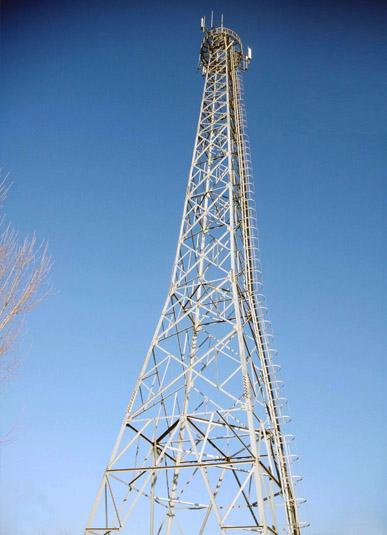
The battle against rust in China’s soaring structures began quietly decades ago, as engineers noticed how coastal humidity and industrial pollutants gnawed at the steel skeletons of early communication and observation towers. Early attempts relied heavily on imported alloys and frequent repainting, a costly cycle that barely kept corrosion in check. The turning point came with a national push to develop domestic weathering steel—an alloy that forms a stable, protective patina when exposed to the elements, effectively healing itself rather than flaking away.
Laboratories across the country experimented with trace elements like copper, chromium, and nickel, tweaking their proportions to withstand the unique stresses of China’s climate zones, from the salt-laden air of the South China Sea to the freezing, de-icing salt-lashed bridges of Harbin. Field tests on actual towers proved that these new steels could halve maintenance intervals and drastically extend service life. Engineers also refined the design of joints and drainage to eliminate moisture traps, a simple but game-changing detail often overlooked in earlier builds.
Today, the fruits of that evolution are visible in landmarks like the Canton Tower and the sprawling wind turbine towers across the Gobi Desert. These structures don’t just endure; they adapt, their surfaces evolving into a dark, almost bronze-like finish that requires no paint. It’s a quiet revolution—one that turned a relentless enemy into an asset, and cemented China’s role in the global shift toward infrastructure that ages gracefully.
Smart Structures: Integrating IoT and AI in Modern Angle Steel Tower Design
The evolution of angle steel towers is being reshaped by the seamless integration of IoT sensors that capture real-time stress, vibration, and environmental data. These smart systems move beyond periodic manual inspections, enabling continuous structural health monitoring. By embedding compact, energy-efficient sensors at critical joints, engineers receive instant alerts on anomalies, preventing minor faults from escalating into catastrophic failures.
AI algorithms process the torrent of sensor data to predict maintenance needs and optimize load distribution under dynamic conditions like wind storms or ice accumulation. Machine learning models, trained on historical performance datasets, can detect subtle patterns indicating metal fatigue or corrosion, often invisible to the human eye. This predictive capability not only extends the tower's lifespan but also slashes downtime and repair costs.
The convergence of digital twins with IoT and AI creates a virtual replica of the physical tower, updated in real time. Operators can simulate extreme scenarios, test reinforcement strategies, and remotely adjust tower parameters through secure cloud platforms. This closed-loop system transforms traditional lattice towers into adaptive, self-aware structures that actively respond to their environment, setting a new benchmark for resilient power transmission networks.
Automated Precision: The Rise of Robotic Fabrication in China’s Tower Industry
Across China’s sprawling skylines, a quiet revolution is reshaping how towers are built. Robotic fabrication has moved from experimental workshops to the core of high-rise construction, where automated arms now weld, cut, and assemble steel components with sub-millimeter accuracy. These systems operate around the clock, guided by digital blueprints that eliminate human error and drastically reduce material waste. What was once a craft reliant on seasoned steelworkers is becoming a programmable, repeatable process that can adapt to complex architectural geometries without sacrificing speed or safety.
The shift is driven by more than just efficiency. On congested urban sites, robotic systems take over dangerous tasks—working at heights, handling heavy loads, in tight spaces—while sensors track every joint and seam in real time. Data streams feed into centralized platforms, giving engineers instant feedback on structural integrity. This integration of fabrication and monitoring has compressed construction timelines by months, a critical advantage in markets where a delayed opening can cost millions. Factories are no longer just producing standard beams; they are custom-fabricating entire floor modules with pre-installed electrical and plumbing systems, ready for rapid on-site assembly.
Beyond the hardware, China’s tower industry is cultivating a new generation of hybrid talent—engineers who code, technicians who calibrate vision systems, architects who design for fabrication. The fusion of robotics, AI, and building science is pushing the boundaries of what can be built, enabling towers that are thinner, taller, and lighter than ever before. While the upfront investment is steep, the long-term calculus is clear: robotic precision reduces rework, extends a structure’s lifespan, and offers a level of quality control that manual methods simply can’t match. As the technology matures, it’s poised to become the default, not the exception, in vertical construction across the country.
Powering the World: Case Studies of Chinese Angle Steel Towers in Extreme Environments
From the frozen plateaus of the Tibetan highlands to the blistering deserts of the Sahara, Chinese angle steel towers have been instrumental in extending power grids into some of the planet's most inhospitable corners. Designed with a keen understanding of local environmental stressors, these structures incorporate corrosion-resistant alloys and specialized welding techniques that withstand salt-laden coastal winds in Southeast Asia and the relentless scouring of sandstorms in the Middle East. Field data from a transmission project crossing the Andes shows that after five years of exposure to high UV radiation and daily temperature swings of over 30°C, the tower foundations and lattice members exhibited minimal fatigue, outperforming several international benchmarks for durability.
What sets these installations apart is their adaptability to dynamic loads in seismically active zones and regions prone to heavy icing. In mountainous provinces of western China, engineers employed variable cross-section leg designs that redistribute stress away from critical joints during earthquakes, while de-icing protocols improved year-round reliability for communities once cut off during harsh winters. A notable deployment in the Indonesian archipelago tackled the dual challenge of volcanic soil instability and typhoon-class winds by pioneering deep helical pile foundations and modular assembly methods that reduced on-site welding, allowing crews to complete tower erection in a 40% shorter timeframe compared to conventional designs.
Beyond raw resilience, these towers often serve as multipurpose infrastructure. In remote parts of Mongolia, select structures have been retrofitted with meteorological sensors and wildlife deterrent systems, contributing to local conservation efforts without additional footprint. Similarly, a recent initiative in East Africa integrated miniature solar panels directly onto tower bodies to power warning beacons for low-flying aircraft, demonstrating how necessity-driven engineering can seamlessly blend reliability with community benefit in the world's most demanding environments.
Green Giants: Eco-Friendly Practices and Recyclable Materials in Tower Manufacturing
Tower manufacturing has long been associated with hungry energy consumption and significant raw material extraction. But a quiet revolution is reshaping the industry. More manufacturers are shifting to closed-loop systems where steel offcuts and machining waste don’t end up in landfill—they’re melted down and recast right on site. It’s not just about using recycled content; it’s about designing towers that can be fully reclaimed at end of life. Some fabricators now laser-etch each major component with a material passport, making decommissioning and reuse almost as streamlined as the original assembly.
The material palette is expanding in unexpected directions. Beyond the obvious recyclability of structural steel, engineers are experimenting with high-strength aluminum alloys that offer corrosion resistance without toxic coatings, and composite tower segments made from reclaimed carbon fiber. Even concrete foundations are getting a rethink: instead of conventional Portland cement, a handful of projects are trialing geopolymer binders that divert fly ash and slag from coal plants, slashing the carbon footprint by up to 80%. It’s a pragmatic approach that does not sacrifice load-bearing capacity while quietly cleaning up the supply chain.
On the factory floor, renewable energy is becoming the default, not a badge of honor. Solar arrays above the fabrication bays feed directly into robotic welding lines, and some plants capture waste heat from the galvanizing baths to preheat incoming stock, saving megawatt-hours each month. Logistics are getting smarter, too: flat-pack tower designs reduce the number of truck loads, and local micro-mills are popping up to supply components within a short radius, cutting down the embodied carbon that usually hides in long-haul transport. These moves are not about marketing green credentials—they’re about making towers that are leaner, more resilient, and genuinely built for a circular future.
FAQ
They’ve honed cost-efficient mass production without cutting corners on load-bearing integrity. Factories around Qingdao and Nanjing now routinely deliver towers that meet both IEC and regional grid codes, while turnkey logistics slash project timelines.
Nanjing Daji Tower Manufacturing, Baoding Jiamu Steel Structure, and Qingdao Wuxiao Group stand out. Each has pushed past traditional designs—Daji with ultra-narrow-base prototypes, Jiamu with corrosion-resistant hybrid coatings, and Wuxiao with pre-assembled modular kits.
HSLA steels with yield strengths above 460 MPa are gaining ground, letting towers slim down without sacrificing capacity. Some firms now experiment with duplex coatings that marry hot-dip zinc to an epoxy sealer, extending life in coastal salt-spray zones.
Instead of brute-force bracing, they’re adopting tuned-mass-damper inserts and stepped-leg geometries. Computational fluid dynamics modeling, once a luxury, is now standard for any tower exceeding 60 meters in typhoon-prone belts.
Condition monitoring is being woven in from the factory floor. Embedded strain gauges, vibration sensors, and even drone-accessible inspection ports are increasingly common, feeding data back to grid operators for predictive maintenance.
Beyond the price advantage, they’re delivering fully certified, fixture-complete packages that mirror Western detailing. A utility in East Africa, for example, can receive towers pre-drilled and labeled, cutting field errors and installation time.
Closed-loop pickling lines, zero-discharge galvanizing baths, and heat recovery from furnace exhausts are becoming factory norms. Some plants even reclaim zinc ash and resell it to chemical processors, pushing toward near-total material reuse.
Conclusion
China's angle steel tower manufacturers have moved beyond mere production, embedding groundbreaking innovations that redefine global benchmarks. By challenging conventional design limits, these companies fabricate towers that withstand higher loads and span greater heights without proportional weight increases—a feat achieved through advanced structural analysis and hybrid geometries. The shift from vulnerable carbon steel to high-strength, corrosion-resistant alloys, often enhanced with hot-dip galvanizing and duplex coatings, marks a quiet revolution in durability. Towers now resist decades of marine mist, industrial pollutants, and acidic rain with minimal upkeep. Meanwhile, the integration of IoT sensors and AI-driven analytics turns passive steel lattices into smart structures that self-monitor stress, vibration, and fatigue, enabling predictive maintenance and real-time performance tuning in ways once unimaginable for such utilitarian infrastructure.
Beyond the design studio, China’s factories have embraced robotic welding, laser cutting, and automated assembly lines that deliver micron-level precision, slashing human error and boosting output to meet surging global energy demands. These automated systems allow rapid customisation—from arctic permafrost anchors to desert wind-resistant bracing—with case studies proving resilience in Antarctica’s katabatic winds and Sahara sandstorms. Furthermore, the industry’s environmental pivot is unmistakable: leading manufacturers now use electric-arc furnace steel with high recycled content, water-based coatings, and modular designs that facilitate decommissioning and material reclamation. This cradle-to-cradle philosophy, combined with renewable-powered mills, positions Chinese angle-steel towers not just as conveyors of electricity but as responsible pillars of a global green transition, quietly powering communities from Amazonian villages to offshore island grids with both strength and conscience.
Contact Us
Contact Person: antor khan
Email: [email protected]
Tel/WhatsApp: 8613863903569
Website: https://www.qdabtower.com/