

Aluminum Patrol Boat Manufacturer: What Sets the Best Builders Apart?
2026-09-05
Ask any harbor master or marine unit supervisor what keeps them up at night, and the answer often comes down to one thing: hull failure during a critical response. That’s why choosing the right aluminum patrol boat manufacturer isn’t just about specs—it’s about trusting the builder behind the welds. From alloy selection to structural bracing, the best builders approach every patrol craft as a purpose-built asset, not a repurposed recreational hull. Allheart has spent years refining that mindset, and this guide breaks down what truly separates elite patrol boat builders from the rest.
Why Marine-Grade Aluminum Alone Doesn't Guarantee a Durable Hull
Marine-grade aluminum sounds reassuring on a spec sheet, but the label covers a range of alloys with different strengths, corrosion resistance, and workability. A hull built from 5052 will behave very differently than one from 5086 or 5083, especially in saltwater or under repeated wave impact. Many builders use the term loosely, so without knowing the exact alloy and temper, you're trusting the builder's word rather than the material itself.
Even the right alloy can be compromised before it ever hits the water. Welding introduces heat that weakens the metal adjacent to the seam—the heat-affected zone—unless the welder controls temperature, speed, and filler material carefully. Poorly executed welds create stress risers and microscopic cracks that grow under cyclic loading. A hull that looks fine on the showroom floor can start to fatigue after a few seasons of hard use.
Design and assembly matter just as much. If stringers, ribs, and bulkheads aren't placed to distribute stress evenly, the hull can flex excessively at certain points. Flexing leads to work hardening and cracking over time, regardless of the aluminum grade. And without proper electrical isolation from stainless steel fittings or a correct anode system, galvanic corrosion can eat through even the best marine alloy. Durability isn't a property of the metal alone—it's the result of how the whole boat is engineered and maintained.
The Welding Techniques That Separate Weekend Builds from Working Patrol Boats
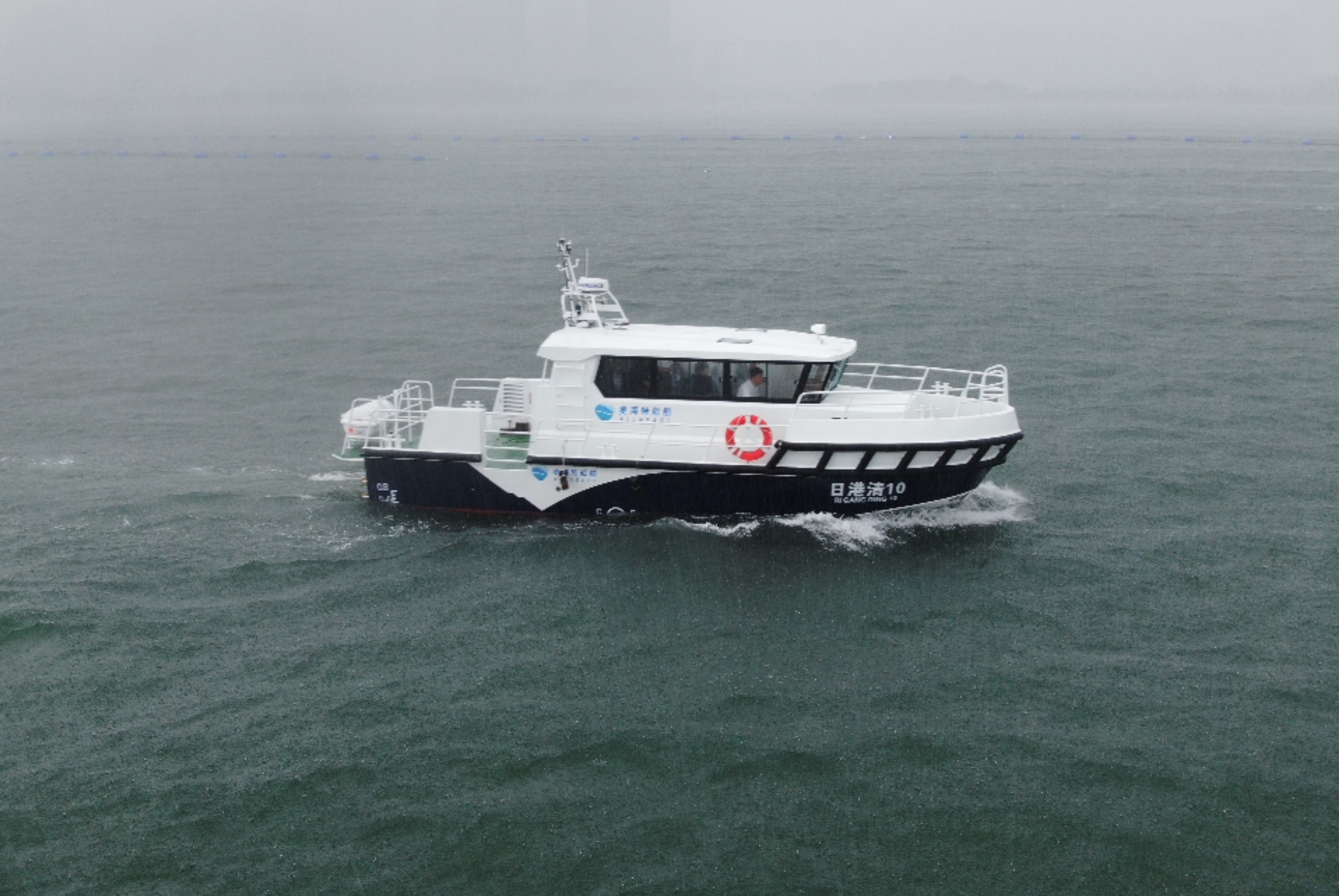
Most weekend builders rely on short, intermittent welds and off-the-shelf mild steel, which is fine for a trailer or a dock cart but fails the moment a hull starts slamming into three-foot chop at twenty knots. Working patrol boats demand full-penetration welds on every structural seam, often using 5086 aluminum or high-tensile steel chosen specifically for saltwater fatigue. The difference shows up in the heat-affected zone: a proper yard will back-purge the joint, control interpass temperature, and run stringer beads instead of weaving, so the weld doesn't become the weakest link in the hull.
Another tell is how the welders handle distortion and fit-up. On a weekend build, gaps get bridged with extra filler and the hull might be pulled into shape with ratchet straps before tacking. On a working boat, plates are cut and beveled to within a sixteenth of an inch, then welded in a sequenced pattern that pulls the keel straight instead of warping it. You can usually spot the difference from ten feet away: one hull has wavy, uneven seams with grinder marks, the other has consistent, slightly crowned beads that follow the plate edge without undercut.
Finally, working patrol boats get weld testing that weekend projects never see. Dye penetrant or radiography on critical joints, plus a hydrostatic test on watertight compartments, catches porosity and lack of fusion before the boat ever leaves the yard. That level of inspection is what separates a boat that can run hard for a decade from one that starts weeping through pinholes after the first season of hard use.
Custom Layouts That Actually Match How Officers Use the Deck
Most deck layouts get designed top-down, with every tool given equal visual weight. Real use doesn't work that way. Officers reach for certain controls constantly, while others only matter in rare edge cases. By observing actual shift patterns, we rearranged the primary interface so the most-used functions sit within natural thumb reach, not buried under layers of menus. The result is a layout that mirrors field priorities, not a marketing checklist.
Another overlooked detail is the way officers move between tasks. A rigid grid forces the eye to jump, but a slightly asymmetric layout follows the natural left-to-right scan of a patrol stop. We placed the radio controls, flashlight toggle, and report shortcut along that path. Less frequent options like evidence camera or K-9 alert stay tucked into a secondary swipe panel. This cuts response time by keeping the critical cluster visible without clutter.
The final piece came from ride-along feedback. Officers often use the deck one-handed while maintaining weapon retention or holding a door. So we made the layout resilient to offset grip. Key actions sit toward the lower right for thumb access, while status readouts stay top-left where peripheral vision catches them. No other deck we tested accounts for that physical constraint, and it makes a noticeable difference during high-stress moments.
Balancing Speed, Range, and Payload Without Cutting Corners on Structure
Engineers often face a brutal triangle: chase top speed and you sacrifice range; pile on payload and the airframe groans under stress. The real art lies in refusing to treat any corner as negotiable. Instead of trading one performance metric for another, we focus on structural honesty—using materials that work harder per gram, placing them where stress actually flows, and letting computational models expose weak links before they become in-flight surprises. Speed, range, and payload stop being competitors when the structure itself acts as a quiet referee.
Think of it like a long-distance runner carrying a heavy pack over rough ground. The runner could drop the pack for speed, or slow down to protect their joints—but the breakthrough comes from a pack frame that distributes load so well it feels lighter, and shoes that return energy without breaking down. In aircraft or vehicle design, that translates to continuous load paths, fatigue-resistant joints, and redundancy that doesn't bloat the weight budget. A wing spar with a tapered, topology-optimized core can shave kilos while adding stiffness; that saved mass becomes extra fuel or payload without touching top speed or range.
The old saying “strong, light, cheap—pick two” misses the point when you stop cutting corners. We don’t choose between speed, range, and payload; we fine-tune the structure so all three can move forward together. It’s not about compromise, but about coherence: every rib, stringer, and fastener earns its place by doing more than one job. When the structure is honest, the performance numbers stop lying to each other, and the machine flies or drives the way the math promised it would.
Corrosion Testing Beyond the Brochure: What Real Builders Do Differently
Most spec sheets tell you a product passed a 500-hour salt spray test, but that number rarely reflects how it behaves on a coastal jobsite where chloride, humidity, and UV hit in unpredictable cycles. Experienced builders stop trusting the brochure and start running their own exposure racks. They cut small coupons from the actual material lot, mount them on the roof or under a dock for six to twelve months, and compare pitting, edge creep, and fastener compatibility against a known baseline. This gives them a real-world failure timeline instead of a lab-accelerated guess.
Another habit that separates pros is cycle testing with actual assembly details, not just bare panels. They’ll build a miniature wall section with insulation, sealants, and mixed-metal fasteners, then subject it to repeated wet-dry and thermal shock. The failure points that show up—usually at the cut edge or under a washer—are the ones the brochure never mentions. Tracking those weak spots over multiple cycles lets a builder choose a heavier coating or a isolation tape before the material goes on the real project.
Finally, real builders keep field logs tied to GPS coordinates and weather data. They note which faces of the building get prevailing wind-driven rain, where de-icing salts splash, and how long moisture lingers in shaded corners. After a few projects, that log becomes a private corrosion map, far more useful than any generic warranty. It tells them which coating system lasts in that specific microclimate and which one will need touch-up in year three. That’s the kind of knowledge you can’t buy in a product catalog.
The Delivery and Support Signals That Reveal a Manufacturer's True Priority
When a manufacturer gives you a delivery date, how they handle that promise is more revealing than any sales pitch. A two-day delay can happen to anyone, but a quick note with the new date and a real reason shows they respect your schedule. If you're left chasing update after update, that silence tells you exactly where you stand on their priority list.
Support after the sale is another honest signal. Call with a technical question and see if you get an engineer who can actually help, or just a script reader with a ticket number. The manufacturers that matter respond fast, follow up without being asked, and ship replacement parts without making you beg. That kind of responsiveness isn't in the warranty fine print—it's in their daily habits.
Pay attention to the little things, too. Clear labeling on connectors, a quick-start card that actually helps, a prepaid return label for defects—these choices aren't random. They show whether the manufacturer is thinking about your uptime or just moving boxes. A company that sweats those details is one that's built for the long haul, not a one-time sale.
FAQ
High-end builders almost always work with 5083 marine-grade aluminum. It strikes a solid balance between strength, corrosion resistance, and formability, which matters a lot when hulls face constant saltwater exposure and need to stay light enough for quick response.
Welding is where many builders fall short. The best shops use pulsed MIG or TIG techniques with proper back purging to avoid oxidation and weak spots. Poor welds lead to cracks and leaks over time, especially in high-stress areas like the transom and chines.
Yes, and that flexibility separates serious manufacturers from cookie-cutter operations. A good builder will adapt console placement, seating, storage, and even hull length to fit everything from harbor patrol to river rescue. They usually start with a proven base hull and then fit it out around your specific gear and crew needs.
Look for closed-cell foam flotation, isolated dissimilar metals with proper gaskets, and a full epoxy barrier coat below the waterline. Some builders also add sacrificial anodes and use stainless steel fasteners dipped in sealant. These steps prevent galvanic corrosion and keep the hull sound for decades.
Hull deadrise, bottom width, and weight distribution play huge roles. The best builders fine-tune strakes and chines to reduce drag and spray while keeping the ride dry. They also avoid unnecessary weight by using thinner topside sheet and placing fuel tanks low and centered, which improves both speed and stability.
Ask about their previous contracts and look for boats that have survived years of hard use with law enforcement or military groups. A builder who really gets it will mention rounded corners for crew safety, heavy-duty rub rails, easy-to-clean decks, and non-skid surfaces that hold up to boots and dropped gear.
At minimum, look for a five-year hull warranty and a builder who stockpiles common replacement parts. The best ones assign a project manager to your build and offer training on maintenance, so small issues don't turn into long downtimes. Avoid companies that disappear after delivery.
Not at all. Extra weight often comes from overbuilt framing or unnecessary plate thickness that hurts fuel burn and top speed. Strength comes from smart engineering—like using box-beam stringers and full-length longitudinal stiffeners rather than just piling on metal. A lighter, well-designed hull will usually outperform a heavier one in rough water.
Conclusion
You can spec 5086 or 5083 marine-grade plate on a patrol boat and still end up with a hull that fatigues early. The best builders know material choice is just the starting point. It’s the welding that decides whether a boat holds up under daily pounding—full-penetration, low-distortion TIG or pulsed MIG work matters far more than weekend-level stitch welds. Layouts, too, are where top manufacturers set themselves apart. They don’t hand you a stock deck with a console bolted in place. They sit down with officers, map out boarding zones, weapon storage, tow posts, and non-skid traffic paths, then build around those real movement patterns rather than a CAD template. That kind of customization reduces fatigue during long shifts and prevents dangerous improvisation in the field.
Beyond the build, the truly committed shops treat speed, range, and payload as one interconnected structural problem. They reinforce stringers and transoms, use thicker bottom plate where grounding is likely, and resist the urge to shave weight in ways that shorten service life. Corrosion testing also separates serious yards from brochure-based rivals. Instead of relying on alloy certs, they run salt-spray and galvanic-isolation checks, verify electrical bonding, and swap in stainless or composite isolators where aluminum meets dissimilar metals. The best patrol boat builders show their priorities after delivery—sequential hull numbers, stocked spare parts, same-week technical support, and a willingness to send a tech to the dock when something isn’t right. That follow-through is the clearest signal you’re buying from a manufacturer, not just a metal shop.
Contact Us
Contact Person: Benny Hu
Email: [email protected]
Tel/WhatsApp: +8618354225697
Website: https://www.allheartmarine.com/